
Introduction
Good writing is more than using correct grammar. It is also about choosing the right words for the right situation. Figurative language, descriptive language, metaphors, similes, and other literary devices make writing more interesting, while clear vocabulary helps readers understand your message without confusion.
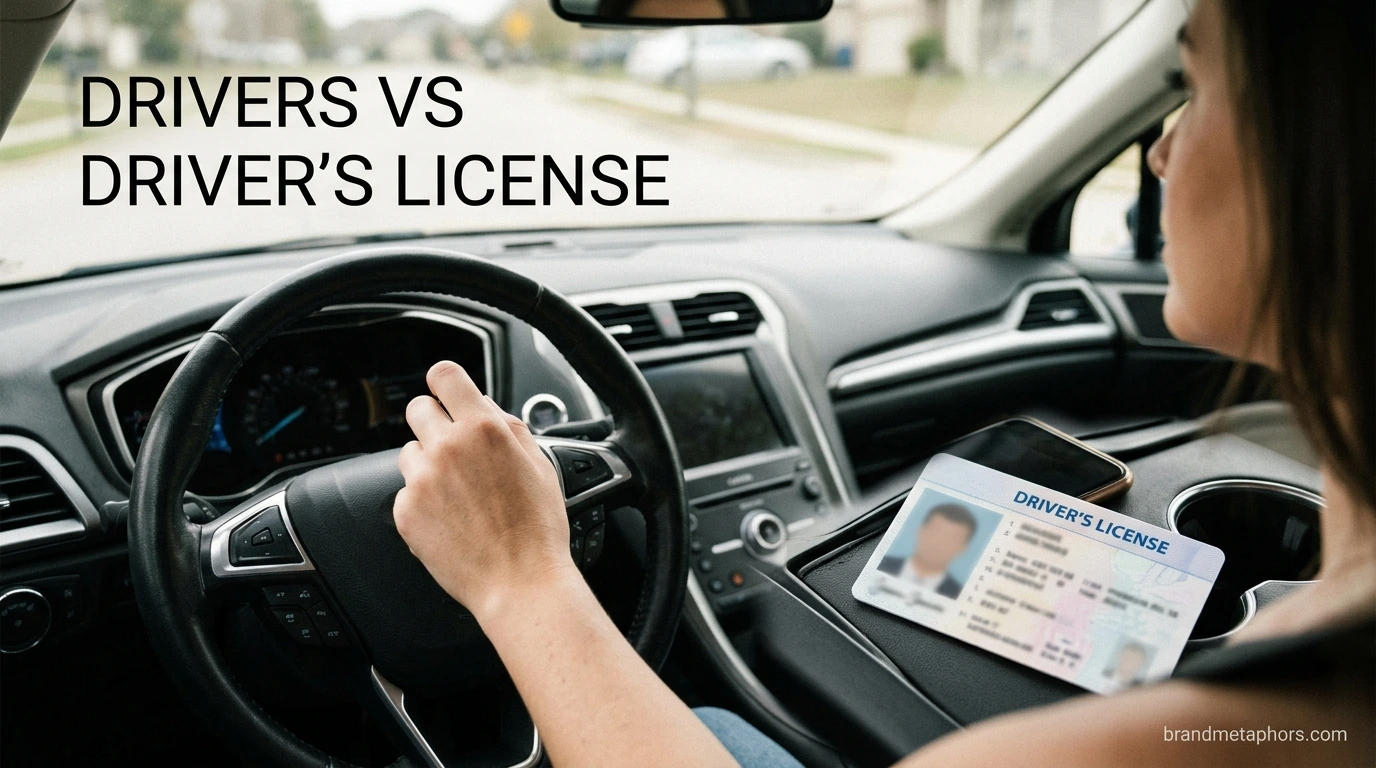
One common mistake in English is mixing up drivers and driver’s license. Although these terms are connected, they have completely different meanings. One refers to people who operate vehicles, while the other refers to the official document that gives someone legal permission to drive.
Students, English learners, writers, and professionals often confuse these expressions because they frequently appear in conversations about transportation, traffic laws, insurance, travel, and daily life. Learning the difference improves grammar, vocabulary, communication skills, and writing accuracy.
This guide explains the meanings, grammar, sentence examples, comparison tables, common mistakes, and practical tips so you can confidently choose the correct expression every time.
What Do “Drivers” and “Driver’s License” Mean?
Although these terms are related to driving, they describe different things.
TermMeaningPart of SpeechExampleDriversPeople who drive vehiclesNoun (plural)Drivers should obey traffic laws.Driver’s LicenseAn official document allowing someone to drive legallyNounI renewed my driver’s license yesterday.
The difference is simple:
- Drivers = People
- Driver’s license = Document
Think of it this way:
- A teacher has a teaching certificate.
- A doctor has a medical license.
- A driver has a driver’s license.
One is the person; the other is the permit.
Why People Confuse These Terms
Several reasons make these expressions confusing.
Similar Topic
Both relate to driving.
Example:
- New drivers must learn traffic signs.
- New drivers must obtain a driver’s license.
Similar Vocabulary
The word driver appears in both expressions.
Everyday Conversation
People often shorten expressions.
For example:
“I got my license.”
Everyone understands it means a driver’s license.
Learning English
English learners sometimes think adding license simply makes the word more formal. In reality, it changes the meaning completely.
Quick Comparison Table
FeatureDriversDriver’s LicenseRefers toPeopleDocumentCountableYesYesCan be pluralDriversDriver’s licensesCan perform actionsYesNoPhysical objectNoYesLegal documentNoYes
Example:
Correct:
- Drivers must wear seat belts.
- Carry your driver’s license while driving.
Incorrect:
- My driver is expired.
- The driver’s license parked outside.
Understanding “Drivers”
A driver is someone who operates a vehicle.
Examples include:
- Car drivers
- Truck drivers
- Taxi drivers
- Bus drivers
- Delivery drivers
- Race car drivers
Plural:
Drivers
Example Sentences
- Drivers should slow down during heavy rain.
- Experienced drivers stay calm in traffic.
- Young drivers often pay higher insurance rates.
- Drivers must stop at red lights.
- Safe drivers protect everyone on the road.
Types of Drivers
TypeDescriptionProfessional driverDrives for workCommercial driverOperates large vehiclesTaxi driverTransports passengersBus driverDrives public transportationDelivery driverDelivers packagesEmergency driverOperates ambulances or fire trucks
Understanding a Driver’s License
A driver’s license is an official government-issued identification card or document.
It proves that a person has permission to operate certain vehicles legally.
It usually contains:
- Name
- Photograph
- Birth date
- License number
- Expiration date
- Driving restrictions
Example Sentences
- I forgot my driver’s license at home.
- She passed the driving test and received her driver’s license.
- His driver’s license expires next month.
- Always carry your driver’s license while driving.
- The officer checked everyone’s driver’s license.
Plural Form
- Driver’s licenses
Example:
The office issued 500 new driver’s licenses this week.
Sentence Examples in Different Contexts
Everyday Conversation
- Drivers should be patient during rush hour.
- My driver’s license is in my wallet.
School Writing
- Many drivers support stricter traffic laws.
- Every driver should carry a valid driver’s license.
Business English
- Delivery drivers received new uniforms.
- Employees must provide a copy of their driver’s license.
Travel
- International drivers may need additional permits.
- Bring your driver’s license when renting a car.
Legal Context
- Drivers who break the law may receive fines.
- A suspended driver’s license prevents legal driving.
Grammar Rules and Usage Tips
Understanding grammar helps avoid confusion.
Drivers
Plural noun.
Examples:
- Drivers are waiting.
- Drivers follow directions.
- Drivers need experience.
Driver’s
Possessive form.
Example:
Driver’s license
The apostrophe shows that the license belongs to the driver.
Think of similar expressions:
- Teacher’s desk
- Doctor’s office
- Student’s notebook
- Driver’s license
Driver’s License vs Drivers License
Correct:
✅ Driver’s license
Incorrect:
❌ Drivers license
The apostrophe is necessary because the phrase means:
“The license belonging to a driver.”
Common Mistakes and How to Avoid Them
Mistake 1
Incorrect:
Drivers license
Correct:
Driver’s license
Mistake 2
Incorrect:
My driver expired.
Correct:
My driver’s license expired.
Mistake 3
Incorrect:
The driver’s parked outside.
Correct:
The drivers parked outside.
Mistake 4
Incorrect:
I forgot my drivers.
Correct:
I forgot my driver’s license.
Mistake 5
Incorrect:
The license are waiting.
Correct:
The drivers are waiting.
Comparison Examples
Example 1
Correct:
The drivers entered the parking lot.
Meaning:
People entered.
Correct:
The driver’s license was checked.
Meaning:
The document was checked.
Example 2
Correct:
Experienced drivers avoid distractions.
Correct:
Keep your driver’s license with you.
Example 3
Correct:
Thousands of drivers travel this highway daily.
Correct:
Everyone must renew their driver’s license every few years.
Using These Terms in Different Writing Styles
Although these expressions are not examples of figurative language, they often appear in descriptive and creative writing.
Formal Writing
- Drivers must comply with safety regulations.
- Every applicant needs a valid driver’s license.
Informal Writing
- I finally got my driver’s license!
- New drivers feel nervous at first.
Creative Writing
The young driver gripped the steering wheel with excitement as the freshly printed driver’s license rested safely in her pocket.
Narrative Writing
The experienced drivers guided visitors through winding mountain roads while police officers inspected each driver’s license at the checkpoint.
Figurative Language and Related Writing Skills
Understanding literal vocabulary like drivers and driver’s license builds a strong foundation for more advanced writing. Once you know the exact meaning of words, you can also recognize when writers use figurative language for effect.
Metaphor Example
- Life is a long highway.
Meaning: Life is compared to a journey.
Simile Example
- She drove like the wind.
Meaning: She drove very fast.
Idiom Example
- Backseat driver
Meaning: Someone who gives unwanted advice.
Descriptive Language
- The cautious driver carefully navigated the icy road.
Poetic Expression
- Every road carries a different story.
Vocabulary Enhancement
Related words:
- Motorist
- Chauffeur
- Operator
- Automobile
- Vehicle
- Highway
- Permit
- Certification
- Identification
- Transportation
Learning related vocabulary helps improve writing, reading comprehension, and speaking skills.
When to Use Each Expression
SituationCorrect ExpressionTalking about peopleDriversTalking about legal documentsDriver’s licenseWriting about trafficDriversApplying for driving permissionDriver’s licenseDiscussing road safetyDriversRenting a vehicleDriver’s license
Easy Memory Trick
Ask yourself:
Am I talking about a person?
Yes → Drivers
No?
Are you talking about the card?
Yes → Driver’s license
Practice Exercises
Exercise 1
Choose the correct answer.
- The police officer checked my ______.
a) drivers
b) driver’s license
Answer:
Driver’s license
- All ______ should obey speed limits.
a) drivers
b) driver’s license
Answer:
Drivers
- She forgot her ______ at home.
Answer:
Driver’s license
- Professional ______ receive special training.
Answer:
Drivers
Exercise 2
Correct the mistakes.
Incorrect:
My drivers expired.
Correct:
My driver’s license expired.
Incorrect:
Drivers license renewal is easy.
Correct:
Driver’s license renewal is easy.
Incorrect:
The driver’s are waiting.
Correct:
The drivers are waiting.
Exercise 3
Fill in the blanks.
- Every ______ should follow traffic rules.
- Bring your ______ when renting a car.
- Experienced ______ avoid distractions.
- His ______ expires next year.
Answers:
- driver
- driver’s license
- drivers
- driver’s license
Frequently Asked Questions
1. Is “drivers license” correct?
No. The correct form is driver’s license because the license belongs to the driver.
2. What is the difference between drivers and driver’s license?
Drivers are people who operate vehicles. A driver’s license is the official document that allows someone to drive legally.
3. Can driver’s license be plural?
Yes.
Example:
Driver’s licenses
4. Why is there an apostrophe?
The apostrophe shows possession.
It literally means:
“The driver’s license.”
5. Can I simply say “license”?
Yes.
In everyday conversation, many people simply say:
- I forgot my license.
- I renewed my license.
The meaning is usually understood from the context.
Conclusion
Understanding the difference between drivers and driver’s license is an important step toward better English. While the words are closely connected, they refer to completely different things. Drivers are the people who operate vehicles, whereas a driver’s license is the legal document that grants permission to drive.
Mastering this distinction improves grammar, vocabulary, and communication in both speaking and writing. Whether you are preparing for school assignments, professional documents, creative writing, or everyday conversations, using the correct term helps your message sound clear, accurate, and natural.
Keep practicing with real-life examples, pay attention to the apostrophe in driver’s license, and remember the simple rule: people are drivers; the card is a driver’s license. With consistent practice, this difference will become second nature and strengthen your overall English writing skills.