
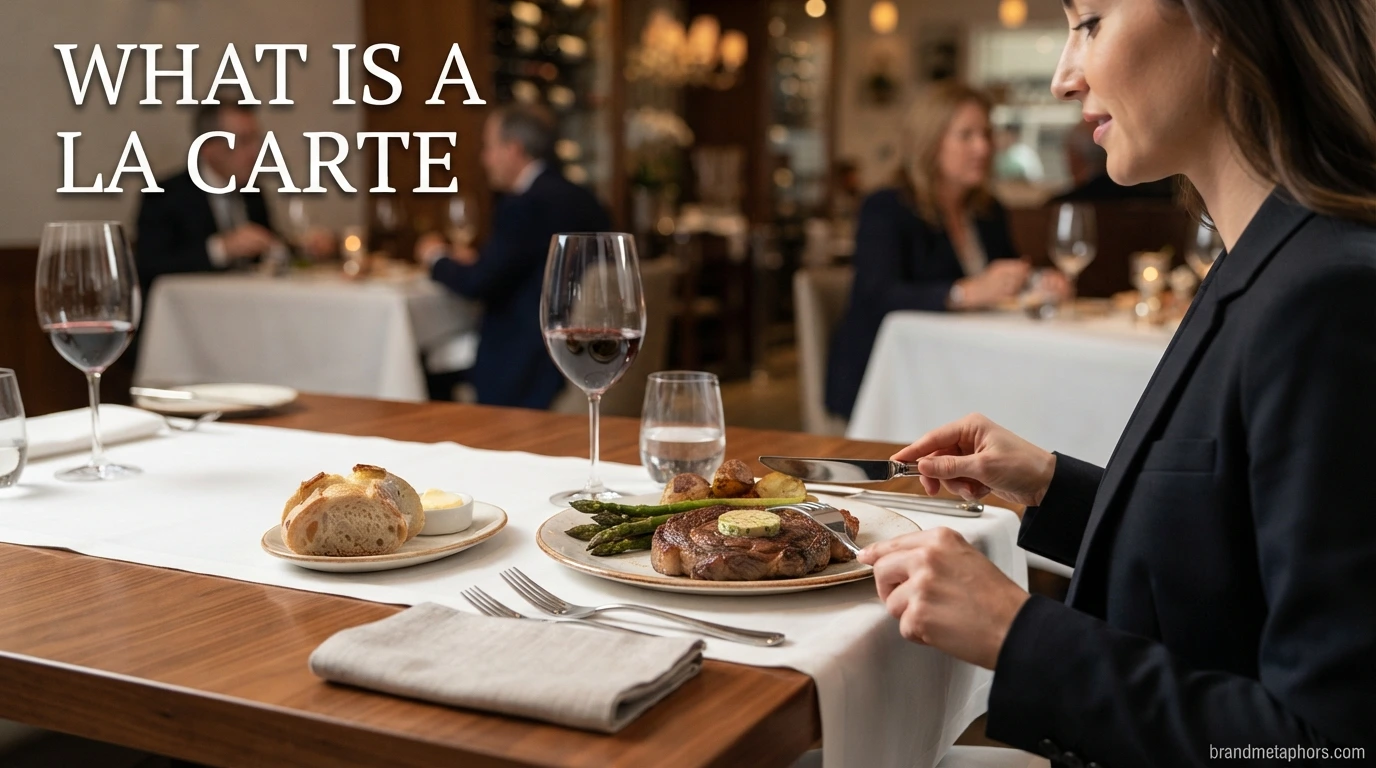
When you visit a restaurant, you may notice two different ways of ordering food. One option lets you pick each dish separately, while the other offers a complete meal at one fixed price. If you’ve ever wondered how these menu styles work, you’re not alone.
The first option is known as à la carte, a French phrase that has become common in restaurants around the world. Whether you’re dining at a café, ordering room service at a hotel, or booking a special meal on a cruise, understanding this menu style helps you make smarter choices.
In this guide, you’ll learn what this dining method means, how it works, when it is the best choice, how it compares with other menu styles, and why restaurants use it. You’ll also find practical examples, tips, and answers to common questions.
What Does À la Carte Mean?
The French phrase à la carte literally means “according to the menu.” In restaurants, it refers to ordering individual dishes separately instead of choosing a complete meal package.
Each item has its own price, allowing customers to build a meal based on their own preferences.
For example:
- Soup – $5
- Salad – $7
- Pasta – $15
- Dessert – $6
Instead of paying one fixed price for all courses, you pay only for the dishes you order.
This gives customers more freedom and flexibility.
How Does This Menu Style Work?
Ordering individual menu items is simple.
Here’s how it usually works:
- Look through the menu.
- Choose only the dishes you want.
- Each selected item has its own price.
- The final bill is the total of all chosen items.
Example
Imagine you order:
- Chicken soup – $6
- Grilled salmon – $20
- Cheesecake – $8
Your total bill would be:
ItemPriceChicken Soup$6Grilled Salmon$20Cheesecake$8Total$34
You only pay for what you order.
Where Is This Style Commonly Used?
Many places use individual pricing rather than fixed meals.
You’ll often see it in:
- Restaurants
- Cafés
- Hotel dining
- Fine dining establishments
- Steak houses
- Seafood restaurants
- Cruise ships
- Airport lounges
- Resorts
- Room service menus
Luxury restaurants especially prefer this style because guests often want customized meals.
Different Types of Menu Styles
Restaurants generally use several menu formats.
Menu TypeDescriptionPricingIndividual item menuEvery dish has its own priceSeparate pricesFixed-price menuSeveral courses includedOne priceBuffetUnlimited self-service foodOne priceFamily-styleLarge shared dishesUsually fixedTasting menuMultiple chef-selected coursesFixed price
Each format serves different customer needs.
Benefits of Ordering Individual Dishes
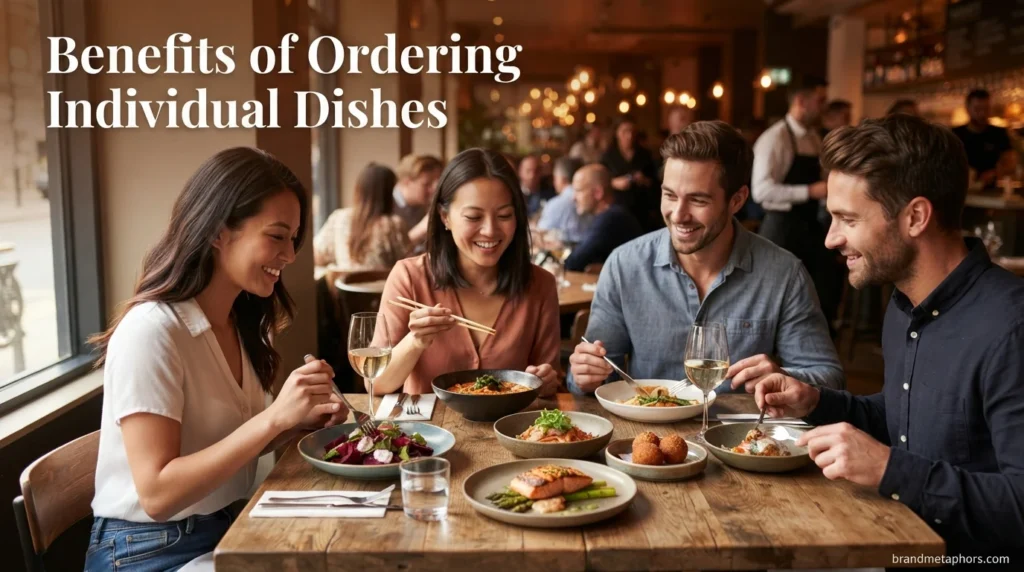
Many people enjoy this menu style because it offers flexibility.
Freedom of Choice
Customers choose exactly what they want.
There is no pressure to buy unwanted courses.
Better Portion Control
You can order:
- Just an appetizer
- Only a main course
- A dessert only
- Two appetizers instead of one entrée
Budget Control
People can spend as much or as little as they like.
For example:
- Small lunch
- Full dinner
- Light snack
Everything depends on your budget.
Perfect for Dietary Needs
People with food allergies or dietary preferences can easily avoid certain dishes.
Examples include:
- Vegetarian
- Vegan
- Gluten-free
- Dairy-free
- Low-carb
Advantages for Restaurants
Restaurants also benefit from offering separate menu pricing.
Some advantages include:
Higher Customer Satisfaction
Guests enjoy personalized meals.
Easier Menu Updates
Restaurants can:
- Add seasonal dishes
- Remove unpopular items
- Introduce chef specials
without changing an entire meal package.
Better Food Cost Management
Each item is priced according to:
- Ingredients
- Preparation time
- Portion size
- Market prices
Increased Sales
Customers often add:
- Desserts
- Drinks
- Side dishes
- Extra toppings
This can increase revenue.
Individual Pricing vs. Fixed-Price Dining
Many people confuse these two menu styles.
Here are the biggest differences.
FeatureIndividual OrderingFixed-Price MealPricePay per itemOne total priceFlexibilityVery highLimitedPortion choicesCustomSetBest forPersonalized mealsComplete dining experienceBudget controlEasierLess flexibleVarietyCustomer choosesRestaurant decides
Both styles have advantages.
The better choice depends on your dining goals.
Real-Life Examples
Example 1
Sarah visits an Italian restaurant.
Her orders:
- Garlic bread
- Lasagna
- Lemonade
She skips dessert because she isn’t hungry.
She pays only for those three items.
Example 2
John visits a steakhouse.
He chooses:
- Steak
- Mashed potatoes
- Mushroom sauce
- Ice cream
Each item appears separately on his bill.
Example 3
Emma orders room service at a hotel.
She selects:
- Coffee
- Sandwich
- Fruit bowl
Each has its own listed price.
Tips for Ordering Smartly

Following a few simple tips can help save money.
Read Prices Carefully
Individual dishes can add up quickly.
Check Portion Sizes
Some restaurants serve large portions.
Sharing may be a good idea.
Look for Specials
Daily specials sometimes offer better value.
Avoid Ordering Too Much
Choose only what you’ll actually eat.
Compare Meal Packages
Sometimes a fixed-price meal costs less than ordering each item separately.
Common Situations Where This Dining Style Is Best
Individual ordering works well in many situations.
It is especially useful when:
- You are not very hungry.
- You want only one course.
- Everyone at the table likes different foods.
- You have dietary restrictions.
- You want to control your spending.
- You enjoy mixing different dishes.
- You’re trying a restaurant for the first time.
Common Misunderstandings
Some people misunderstand how restaurant menus work.
Let’s clear up a few myths.
Myth 1: It Is Always More Expensive
Not always.
If you order only one or two dishes, it may actually cost less than a full meal package.
Myth 2: It Is Only for Fancy Restaurants
False.
Many casual restaurants also use individual pricing.
Myth 3: Portions Are Smaller
Not necessarily.
Portion size depends on the restaurant, not the pricing style.
Myth 4: Drinks Are Included
Usually they are not.
Beverages often have separate prices.
How to Decide Which Menu Option Is Better
Ask yourself these questions:
- Am I very hungry?
- Do I want several courses?
- Is there a meal deal available?
- Am I dining alone?
- Do I have food allergies?
- Do I want to control my budget?
If you want flexibility, ordering dishes separately is often the better choice.
If you plan to eat multiple courses, a fixed-price menu might save money.
Why Understanding Restaurant Menu Styles Matters
Knowing how restaurants price their food helps you become a smarter customer.
You’ll be able to:
- Compare prices
- Plan your budget
- Avoid surprises on the bill
- Choose meals that fit your appetite
- Enjoy a more personalized dining experience
This knowledge is useful whether you’re eating at a local café or traveling abroad.
Frequently Asked Questions
1. What does the French phrase literally mean?
It literally means “according to the menu,” referring to ordering individual dishes instead of a complete meal.
2. Is ordering separate dishes more expensive?
It depends on what you order. Sometimes it costs less, while ordering many items may cost more than a fixed-price meal.
3. Can I order just one item?
Yes. Most restaurants allow customers to order only one dish.
4. Is this style available only in expensive restaurants?
No. Many casual restaurants, cafés, and hotels also offer it.
5. Are drinks included?
Usually not. Drinks are normally priced separately.
6. What is the opposite of ordering items separately?
The opposite is a fixed-price or set menu, where several courses are included for one price.
7. Is this option good for people with food allergies?
Yes. It makes it easier to choose only foods that meet your dietary needs.
8. Which option saves more money?
If you only want one or two dishes, paying for individual items may save money. If you plan to enjoy several courses, a fixed-price meal may offer better value.
Conclusion
Understanding à la carte dining makes eating out much easier and more enjoyable. Instead of paying one fixed price for a complete meal, you choose each dish individually based on your appetite, taste, and budget. This flexible approach gives customers greater control over what they eat while helping restaurants offer a wider variety of choices.
Whether you’re visiting a neighborhood café, a luxury hotel, or a fine dining restaurant, knowing how individual menu pricing works helps you order confidently and avoid unexpected costs. By comparing menu options, checking prices carefully, and choosing only the dishes you truly want, you can enjoy a meal that perfectly matches your preferences and spending plan.