
Introduction
Good writing is more than using correct grammar. It is also about choosing the right words. When you know the difference between similar-looking words, your writing becomes clearer, stronger, and more interesting. This is especially important in creative writing, school assignments, emails, and everyday conversations.
Figurative language, descriptive language, similes, metaphors, and other literary devices help writers express ideas in exciting ways. However, even the best figurative language loses its power if the wrong word is used. Many English learners confuse similar words because they look or sound alike. One common example is trawling vs trolling.
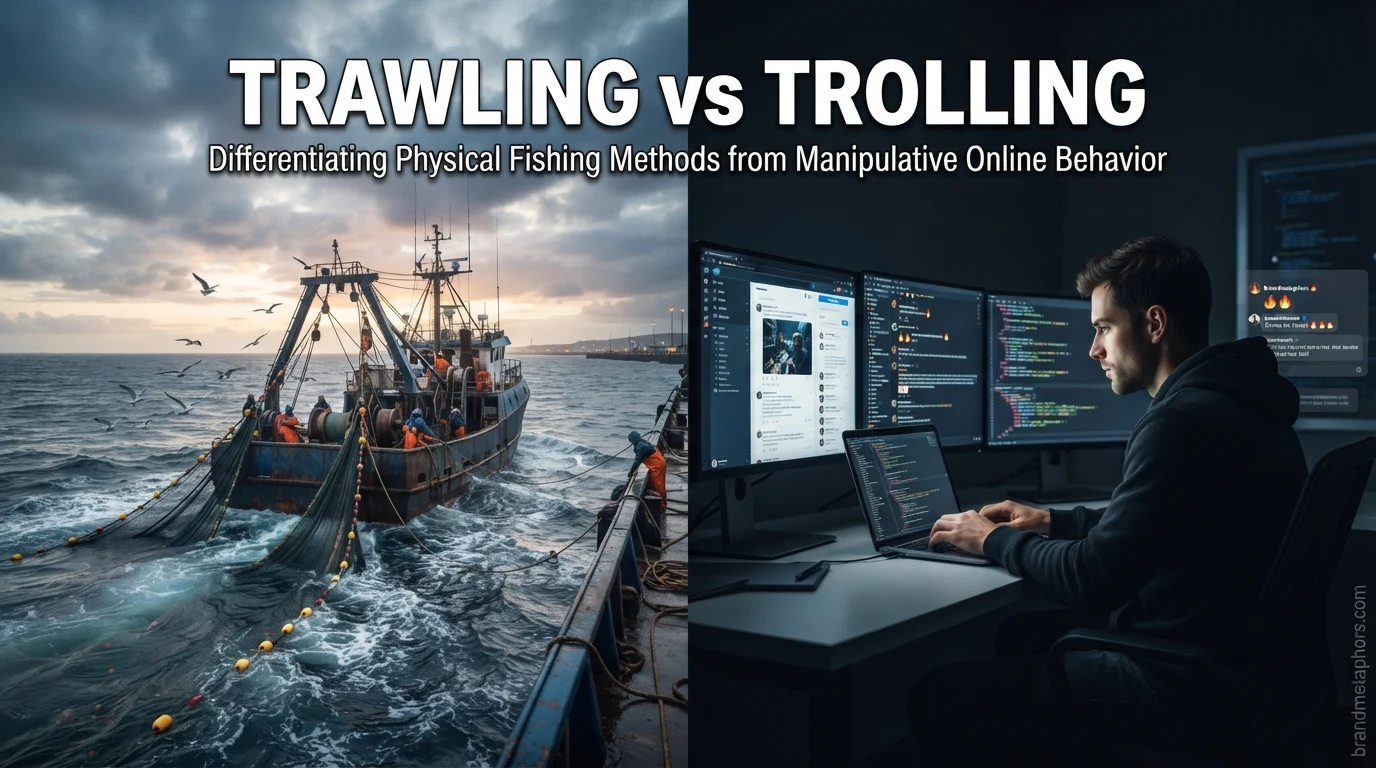
Although these words share similar spelling, they have very different meanings. One mainly relates to fishing or searching carefully, while the other often refers to provoking people online or moving slowly through water while fishing. Understanding these meanings helps improve vocabulary, writing skills, reading comprehension, and communication.
In this guide, you will learn the meanings, differences, examples, common mistakes, comparison tables, writing tips, figurative uses, practice exercises, and frequently asked questions. Everything is explained in simple language that is easy for students in Grades 6–9 to understand.
What Does “Trawling” Mean?
Trawling comes from the word trawl, which originally refers to fishing with a large net that is pulled through the water behind a boat.
Main Meaning
Trawling means:
- Catching fish by pulling a large fishing net.
- Searching through a large amount of information carefully.
- Looking through many records, websites, or documents to find something.
Simple Definition
Think of trawling as searching widely and carefully until you find what you need.
Examples
- The fishermen spent all day trawling the sea.
- She was trawling through old photos for her project.
- Police were trawling security videos for evidence.
- I spent hours trawling job websites.
- Scientists are trawling research papers for useful data.
Common Situations
- Fishing
- Research
- Investigations
- Internet searches
- Looking through archives
What Does “Trolling” Mean?
The word trolling has more than one meaning.
Meaning 1: Fishing
In fishing, trolling means pulling bait or fishing lines slowly behind a moving boat to catch fish.
Example:
- They were trolling for salmon in the lake.
Meaning 2: Internet Behavior
Today, trolling is most commonly used online.
It means:
- Posting messages to upset others.
- Starting arguments on purpose.
- Making rude or offensive comments for attention.
Examples
- Someone was trolling the discussion forum.
- Ignore people who are trolling online.
- The gamer was banned for trolling other players.
- She refused to respond to internet trolls.
- Social media companies remove trolling behavior.
Quick Comparison Table
FeatureTrawlingTrollingMain MeaningSearching carefullyProvoking people onlineOriginal UseFishing with netsFishing with baitModern UseLooking through informationPosting upsetting commentsPositive or NegativeUsually neutralUsually negative onlineRelated ToResearch, searchingSocial media, online discussionsCommon VerbSearchProvoke
Origin and History of Both Words
Knowing where words come from helps you remember them.
Trawling
The word comes from old fishing methods where boats pulled large nets across the ocean floor.
Over time, English speakers began using it to describe searching through large amounts of information.
For example:
- trawling emails
- trawling newspaper archives
- trawling databases
Trolling
Its original fishing meaning described pulling bait through the water.
Later, internet users borrowed the word to describe people who throw out annoying comments to attract angry responses, just like fishing bait attracts fish.
Today, “internet trolling” is far more common than the fishing meaning.
Meaning in Everyday English

Here are simple situations.
Trawling
Imagine looking through:
- hundreds of books
- thousands of emails
- many websites
- old newspapers
- family photographs
That is trawling.
Trolling
Imagine someone online who:
- insults strangers
- starts unnecessary arguments
- posts offensive jokes
- enjoys upsetting others
That is trolling.
Sentence Examples
Trawling Examples
- My teacher spent hours trawling old records.
- Journalists were trawling government documents.
- Dad enjoys trawling antique shops.
- The detective was trawling through phone records.
- We were trawling the internet for answers.
- Scientists are trawling large data sets.
- She spent all weekend trawling libraries.
- They kept trawling until they found evidence.
- Fishermen were trawling the ocean.
- Researchers continued trawling historical archives.
Trolling Examples
- The moderator removed users who were trolling.
- Please stop trolling the conversation.
- Some people enjoy trolling celebrities online.
- He ignored the trolling comments.
- Online trolling can hurt people’s feelings.
- Don’t reward trolling with attention.
- Many websites block trolling accounts.
- She reported the trolling behavior.
- Trolls often want emotional reactions.
- Responsible users avoid trolling.
Figurative Language and Creative Writing
Although these words usually have literal meanings, writers sometimes use them figuratively.
Figurative Meaning of Trawling
A writer may describe someone as:
- trawling memories
- trawling emotions
- trawling dreams
- trawling history
Example:
She was trawling the deepest corners of her memory.
This creates vivid descriptive language.
Figurative Meaning of Trolling
Writers sometimes use trolling metaphorically.
Example:
His sarcastic remarks were trolling the entire classroom.
Here it means deliberately provoking people.
Simile Examples
Similes compare two things using like or as.
Examples:
- She searched like a fisherman trawling the sea.
- He argued like someone trolling every conversation.
- The detective looked through files like a captain trawling deep waters.
- She collected ideas like a boat trawling for treasure.
- His comments spread like internet trolling.
Metaphor Examples
Metaphors compare things without using “like” or “as.”
Examples
- Her mind was a trawling net collecting memories.
- The internet became an ocean of trolls.
- His words were fishing hooks looking for angry replies.
- The library became an endless sea waiting to be trawled.
- Curiosity is a net that catches knowledge.
These metaphor examples make writing more powerful.
Descriptive Language and Literary Devices
Good writers often use literary devices to make ideas memorable.
Examples include:
- imagery
- symbolism
- repetition
- metaphor
- simile
- personification
Example
The detective trawled through dusty files until forgotten stories came alive.
Example
The troll scattered angry words across the conversation like sparks.
These examples improve creative writing while helping readers imagine scenes clearly.
When to Use Each Word
Use Trawling When
- searching carefully
- researching
- fishing with large nets
- reviewing documents
- collecting information
- looking through records
Examples
- trawling databases
- trawling websites
- trawling archives
- trawling emails
Use Trolling When
- talking about internet behavior
- describing online arguments
- discussing fishing with bait behind a boat
Examples
- trolling social media
- trolling online forums
- trolling for fish
When to Avoid These Words
Avoid trawling when you simply mean:
- browsing quickly
- reading casually
- glancing
Avoid trolling if you only mean:
- joking kindly
- debating politely
- asking honest questions
Calling someone a troll without reason may offend them.
Common Mistakes
Mistake 1
❌ I was trolling through old books.
✅ I was trawling through old books.
Mistake 2
❌ Police were trolling CCTV footage.
✅ Police were trawling CCTV footage.
Mistake 3
❌ He spent the evening trawling people online.
✅ He spent the evening trolling people online.
Mistake 4
❌ The fisherman was trawling with fishing lines behind the boat.
This usually describes trolling, not trawling.
Mistake 5
Using trolling when discussing serious research.
Researchers trawl information.
They do not troll information.
Vocabulary Enhancement

Learning related vocabulary improves English.
Words Related to Trawling
- search
- examine
- investigate
- inspect
- explore
- scan
- review
- analyze
- browse
- sift
Words Related to Trolling
- provoke
- annoy
- insult
- tease
- harass
- mock
- bait
- ridicule
- disrupt
- antagonize
Building vocabulary makes reading and writing much easier.
Writing Tips for Students
Here are simple ways to remember the difference.
Remember This
Trawling = Searching
Think of a large fishing net collecting everything.
Trolling = Provoking
Think of someone trying to start arguments online.
Before Writing
Ask yourself:
- Am I talking about searching?
- Am I talking about online behavior?
- Am I describing fishing nets?
- Am I describing fishing lines?
Choosing the correct word makes your writing more accurate.
Practice Exercises
Exercise 1
Choose the correct word.
- Police were ________ through phone records.
- Someone kept ________ the gaming chat.
- Fishermen spent the day ________ the ocean.
- Report users who are ________ online.
- Scientists were ________ research papers.
Answers
- trawling
- trolling
- trawling
- trolling
- trawling
Exercise 2
Correct the mistakes.
- She was trolling old newspapers.
- They were trawling people online.
- Ignore anyone trawling social media arguments.
- Detectives were trolling evidence.
Answers
- She was trawling old newspapers.
- They were trolling people online.
- Ignore anyone trolling social media arguments.
- Detectives were trawling evidence.
Exercise 3
Fill in the blank.
- The researcher spent hours ________ archives.
- Internet ________ often seek attention.
- Fishermen were ________ deep water.
- Report anyone ________ the discussion board.
- We spent hours ________ old files.
Quick Memory Chart
If You Mean…Correct WordSearching recordsTrawlingFishing with netsTrawlingLooking through websitesTrawlingOnline harassmentTrollingStarting arguments onlineTrollingFishing with bait behind a boatTrolling
Frequently Asked Questions
1. Are trawling and trolling the same?
No. They have different meanings. Trawling usually means searching carefully or fishing with nets, while trolling often means posting messages online to upset others.
2. Why do people confuse these words?
They look similar, sound similar, and both originally came from fishing terms.
3. Which word is used more on social media?
Trolling is much more common because it describes harmful online behavior.
4. Can trawling be used outside fishing?
Yes. It is commonly used for searching information, documents, websites, emails, and research materials.
5. How can I remember the difference?
Remember:
- Trawling = searching with a net
- Trolling = provoking with bait
This simple memory trick works for most situations.
Conclusion
Understanding the difference between these two similar-looking words can greatly improve your grammar, vocabulary, and writing confidence. While one usually describes searching carefully through information or fishing with large nets, the other commonly refers to deliberately provoking people online or fishing with bait behind a moving boat.
Using the correct word helps readers understand exactly what you mean. It also strengthens creative writing, descriptive language, figurative expression, and everyday communication. As you continue building your English vocabulary, pay attention to words that look alike but have different meanings. Practicing with sentence examples, comparison tables, similes, metaphors, and writing exercises will help you remember the correct choice every time.