
Introduction
Good writing is more than using correct grammar. It also includes choosing the right words, creating clear sentences, and using figurative language to make ideas interesting and memorable. Literary devices such as metaphors, similes, personification, and idioms help writers paint pictures with words. Whether you are writing a school essay, a story, a poem, or an article, knowing the right vocabulary improves your communication.
Many English learners become confused by words that have different spellings but the same meaning. One common example is artefact vs artifact. At first glance, these spellings look different, but they refer to the same object. The difference mainly depends on the type of English you are using.
This guide explains everything you need to know in simple language. You will learn the meanings, spelling differences, pronunciation, sentence examples, comparison tables, common mistakes, writing tips, figurative language examples, and practice exercises. By the end, you will know exactly which spelling fits your audience and how to use it confidently.
What Do These Words Mean?
Both spellings describe the same thing.
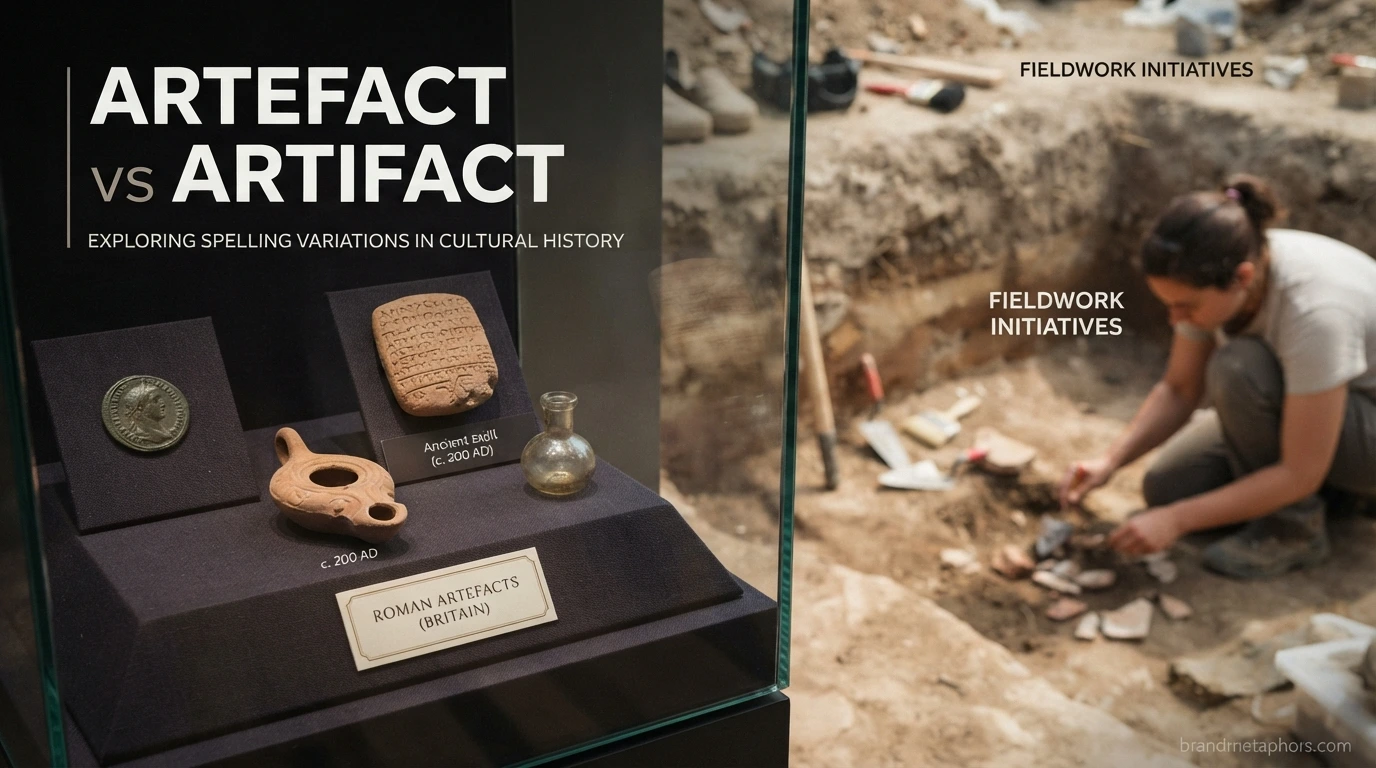
An artifact/artefact is an object that was made or changed by people, especially one from history or archaeology. The word can also describe something created by a process rather than naturally occurring.
The meaning changes slightly depending on the subject.
In archaeology
It is an object made by humans in the past.
Examples include:
- Ancient coins
- Stone tools
- Pottery
- Weapons
- Jewelry
- Statues
In technology
It can mean an unwanted mark or error created during recording, editing, scanning, or image processing.
Examples include:
- Digital image distortion
- Audio noise
- Video compression marks
In medicine
It may describe something seen during a medical scan that is caused by the equipment rather than the patient’s body.
The Main Difference
The difference is only in spelling.
FeatureArtefactArtifactMeaningSameSameBritish EnglishPreferredLess commonAmerican EnglishRarePreferredAustralian EnglishCommonLess commonCanadian EnglishBoth acceptedOften preferredPronunciationSameSame
The pronunciation is:
AR-tuh-fakt
There is no difference in meaning.
Why Are There Two Spellings?
English has developed differently in different countries.
British English often keeps older spellings that came from Latin and French.
American English simplified many spellings over time.
Examples include:
BritishAmericanColourColorFavouriteFavoriteCentreCenterTheatreTheaterArtefactArtifact
Neither spelling is wrong.
The important thing is consistency.
If you begin writing in British English, continue using British spellings throughout your work.
When Should You Use Each Spelling?
Choosing the correct spelling depends on your audience.
Use “artefact” when writing for
- UK schools
- British universities
- Australian readers
- New Zealand readers
- British publishers
Example:
The museum displayed a rare Roman artefact.
Use “artifact” when writing for
- American schools
- US colleges
- American companies
- Software documentation
- Technology articles
Example:
The archaeologists discovered a valuable artifact.
Always follow your teacher’s style guide if one is provided.
Comparison Examples
The meanings stay exactly the same.
British StyleAmerican StyleThis artefact is over 2,000 years old.This artifact is over 2,000 years old.Every artefact tells a story.Every artifact tells a story.The museum protects every artefact carefully.The museum protects every artifact carefully.The ancient artefact attracted visitors.The ancient artifact attracted visitors.
Sentence Examples in Different Contexts

Archaeology
The ancient artifact was found near the river.
Every artifact helps scientists understand history.
The broken pottery was an important artifact.
The museum added a new artifact to its collection.
The gold necklace became the most valuable artifact in the exhibition.
Technology
The software removed the image artifact.
Compression created visible artifacts in the photograph.
The engineer fixed the audio artifact.
The digital artifact disappeared after editing.
Video artifacts reduced picture quality.
Medical Imaging
The doctor explained that the strange mark was only an imaging artifact.
The MRI showed a small artifact caused by movement.
The technician recognized the artifact immediately.
Everyday Writing
The old family watch became an important artifact of family history.
The letter is an artifact from another generation.
The photograph became an artifact of childhood memories.
Figurative Language and Creative Writing
Although the word usually has a literal meaning, writers also use it creatively.
Figurative language makes writing stronger and easier to imagine.
Metaphor Examples
Her diary was an artifact of forgotten dreams.
His smile became an artifact of happier days.
The old classroom was an artifact of childhood.
Simile Examples
The necklace rested like an ancient artifact in a museum.
The diary looked like an artifact from another century.
The dusty book felt like an artifact waiting to tell its story.
Personification
The artifact whispered secrets from the past.
The ancient vase welcomed curious visitors.
The old sword remembered countless battles.
Idiom Connection
Although there is no common idiom using this word directly, it often appears with historical expressions such as:
- Piece of history
- Window into the past
- Lost treasure
- Hidden gem
Example:
The coin became a window into the past.
Poetic Expression
The silent stone carried centuries of forgotten voices.
The weathered bowl held the fingerprints of history.
The broken statue guarded memories that time refused to erase.
Writing Skills and Vocabulary Enhancement
Learning words with multiple spellings improves vocabulary and writing confidence.
Good writers always consider:
- Audience
- Country
- Style guide
- Consistency
Helpful related vocabulary includes:
- Relic
- Antique
- Fossil
- Object
- Discovery
- Excavation
- Ruins
- Heritage
- Ancient
- Historical
- Museum
- Civilization
- Culture
- Preservation
- Evidence
Using a variety of words keeps writing interesting.
Instead of repeating one word many times, choose suitable alternatives.
Common Mistakes
Mixing British and American spelling
❌ The museum displayed an artefact while another artifact was nearby.
✔ Choose one spelling style and keep it throughout the document.
Thinking the meanings are different
Many learners think one spelling refers to archaeology and the other to technology.
This is incorrect.
Both spellings can be used in every meaning.
Using the wrong spelling for your audience
American readers usually expect artifact.
British readers usually expect artefact.
Incorrect capitalization
❌ Artifact
✔ artifact
Only capitalize it at the beginning of a sentence or in titles.
Incorrect plural
Correct plural:
- artifacts
- artefacts
Not:
- artifactes
- artefactes
When to Use and When to Avoid
Use when
- Writing about archaeology
- Describing museum objects
- Discussing history
- Explaining digital image errors
- Writing about medical imaging
- Talking about historical discoveries
Avoid when
Do not use this word when you actually mean:
- Fossil
- Rock
- Mineral
- Natural object
A fossil is naturally formed.
An artifact is created or modified by people.
Quick Comparison Table

QuestionAnswerSame meaning?YesSame pronunciation?YesBritish spellingArtefactAmerican spellingArtifactCorrect in archaeology?BothCorrect in technology?BothCorrect in medicine?BothShould you mix them?No
Practice Exercises
Exercise 1
Choose the correct spelling for American English.
- The museum displayed a rare ______.
- The image contained a digital ______.
- The scientist examined the ancient ______.
Answers:
- artifact
- artifact
- artifact
Exercise 2
Choose the correct spelling for British English.
- The Roman ______ was carefully cleaned.
- Every ______ tells a story.
- The museum protected the valuable ______.
Answers:
- artefact
- artefact
- artefact
Exercise 3
Find the mistake.
The museum displayed one artifact and another artefact beside it.
Answer:
The spellings are mixed.
Use one style consistently.
Exercise 4
Complete the sentence.
The old coin became an important ______ of ancient civilization.
Answer:
artifact (American)
or
artefact (British)
Tips for Better Writing
- Know whether you are writing in British or American English.
- Stay consistent throughout your document.
- Read examples from trusted books.
- Learn related vocabulary.
- Practice writing complete sentences.
- Use figurative language to make stories more engaging.
- Check spelling before submitting assignments.
- Keep a personal vocabulary notebook.
- Read history articles to see these words used naturally.
- Ask yourself who will read your work before choosing a spelling.
These habits improve grammar, vocabulary, descriptive language, and overall writing skills.
Frequently Asked Questions
1. Which spelling is correct?
Both are correct. The choice depends on whether you are using British or American English.
2. Is there any difference in meaning?
No. They have exactly the same meaning.
3. Which spelling is more common in the United States?
American English almost always uses artifact.
4. Which spelling should students use?
Use the spelling required by your school, teacher, or style guide.
5. Can both spellings appear in one document?
No. Choose one spelling style and use it consistently throughout your writing.
Conclusion
Choosing between these two spellings is much easier once you understand that they represent the same word. The only real difference is the variety of English you are using. British English prefers artefact, while American English prefers artifact. Whether you are writing about archaeology, museums, history, technology, medicine, or creative storytelling, selecting the correct regional spelling and staying consistent will make your work look polished and professional.
Strong writing also goes beyond spelling. Building your vocabulary, using descriptive language, understanding figurative language, and practicing sentence construction help you communicate more clearly. By applying the examples, comparison tables, exercises, and writing tips in this guide, students, writers, and English learners can use this word confidently in any context while improving their overall English skills.