
1. Introduction: Why Figurative Language Improves Writing and Communication
Language is more than just a system of rules—it is a powerful tool for expression, imagination, and communication. When learners explore figurative language, such as metaphors, similes, and descriptive imagery, they begin to understand how words can carry deeper emotional and intellectual meaning beyond their literal definitions.
This is especially important in English learning, where small spelling differences or word confusion can change meaning completely. One common example of such confusion is the spelling mistake often seen in the word “receiver”, mistakenly written as reciever. Understanding correct spelling, usage, and context not only improves accuracy but also enhances writing skills, vocabulary enhancement, and creative writing ability.
In this article, we will explore the correct form, meaning, usage, and real-life applications of this commonly miswritten word while also connecting it to broader linguistic skills such as literary devices, idiom meaning, descriptive language, and poetic expression.
2. Meaning and Definition of “Receiver”
The correct spelling is receiver, a noun used widely in English.
Core meanings:
A receiver is:
- A person or thing that receives something
- A device that receives signals or messages
- In legal terms, someone appointed to manage assets or property
- In sports, especially American football, a player who catches the ball
Simple definition:
A receiver is anyone or anything that accepts, collects, or obtains something from another source.
Example meanings in context:
- A person receiving a message → “She is the receiver of the email.”
- A device receiving signals → “The radio receiver is not working.”
- A sports position → “The wide receiver caught the pass.”
This word is widely used in academic writing, technical fields, and everyday communication.
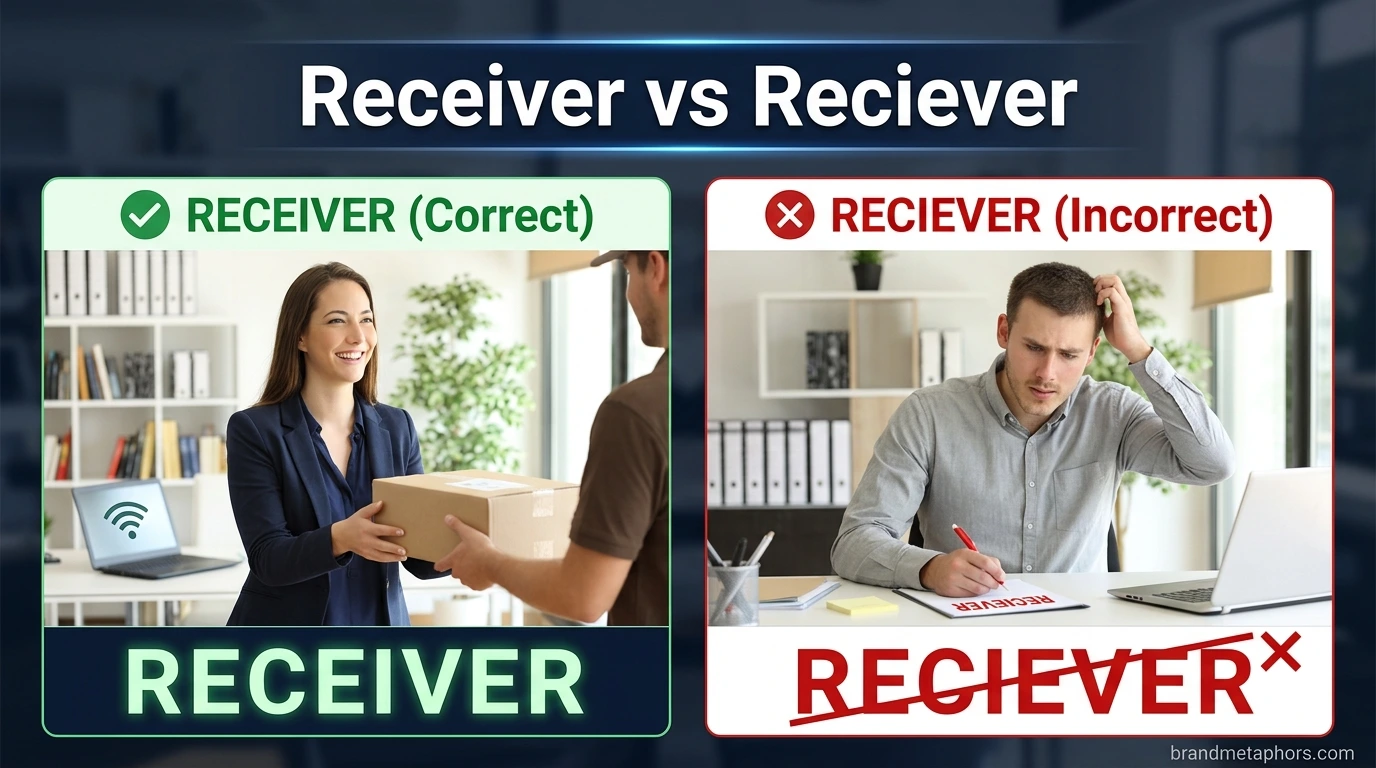
3. Why “Reciever” Is Incorrect
The spelling reciever is a common error caused by incorrect vowel order. English learners often confuse the “i before e” rule.
Correct spelling:
✔ receiver
Incorrect spelling:
❌ reciever
Why the mistake happens:
- Misapplication of the “i before e except after c” rule
- Phonetic spelling (writing it as it sounds)
- Lack of exposure to correct written forms
- Typing errors or autocorrect assumptions
Important note:
English spelling is not always phonetic, so memorization and exposure are essential for avoiding such errors.
4. Etymology and Word Formation

The word receiver originates from the verb receive, which comes from Latin:
- Latin: recipere (to take back, accept)
- Old French: receivre
- Middle English: receiven
Word formation:
- receive (verb) + -er (suffix meaning “one who does”) = receiver
This structure is common in English:
- teach → teacher
- write → writer
- receive → receiver
Understanding word formation improves vocabulary development and helps learners predict meanings of new words.
5. Grammar and Usage in Communication
The word “receiver” functions as a noun in sentences.
Grammatical roles:
- Subject: The receiver opened the letter.
- Object: She is the receiver of the award.
- Complement: He became the receiver of the estate.
Communication contexts:
- Formal writing (legal, academic, business)
- Technical communication (electronics, telecommunications)
- Everyday speech
Importance in writing skills:
Using correct spelling and grammar ensures clarity, professionalism, and credibility in both academic and workplace communication.
6. Receiver in Different Contexts
The word “receiver” has multiple meanings depending on context.
1. Communication context
A receiver is a person or device that receives messages.
- Email receiver
- Signal receiver
- Message receiver
2. Electronics and technology
A device that captures signals:
- Radio receiver
- Television receiver
- Network receiver
3. Legal context
A court-appointed individual managing assets:
- Bankruptcy receiver
- Court receiver
4. Sports context
A player who catches the ball:
- Wide receiver (American football)
- Pass receiver
5. Everyday usage
- Parcel receiver
- Gift receiver
This versatility makes it an essential word in both academic and professional English.
7. Common Spelling Mistakes and Memory Tricks
Many learners struggle with spelling consistency. Here are some ways to remember the correct form.
Common mistakes:
- reciever ❌
- recever ❌
- receaver ❌
Memory tricks:
- Think: “C comes before I in receive → so it stays in receiver”
- Break it down: re + ceive + er
- Repeat correct spelling in writing practice
- Use flashcards for vocabulary enhancement
Writing improvement tip:
Regular reading improves visual memory, which helps prevent spelling mistakes naturally over time.
8. Quick Comparison Table: Receiver vs Reciever
FeatureReceiverRecieverCorrect spelling✔ Yes❌ NoDictionary statusRecognized wordIncorrect formUsage in writingFormal & academicNot acceptableMeaningOne who receivesNo valid meaningCommon error levelLow (for native users)High (for learners)AcceptabilityStandard EnglishSpelling mistake
This table clearly shows that only receiver is correct and acceptable in all forms of English writing.
9. Sentence Examples in Different Contexts
Understanding usage through examples improves retention and fluency.
Everyday examples:
- The receiver signed for the package.
- She is the receiver of the award.
Academic examples:
- The receiver of information must verify its authenticity.
- Each receiver processes data differently.
Technical examples:
- The satellite receiver is malfunctioning.
- A digital receiver improves signal quality.
Legal examples:
- The court appointed a receiver to manage the property.
Sports examples:
- The wide receiver scored a touchdown.
Negative example (incorrect):
- ❌ He is the reciever of the message.
10. Figurative Language and Creative Writing Applications
Even though “receiver” is a technical word, it can be used creatively in figurative language, enhancing expressive writing and poetic expression.
Metaphor examples:
- “Her heart was a receiver of endless sorrow.”
- “The mind is a receiver of memories.”
Simile examples:
- “He stood like a receiver waiting for signals from the past.”
- “She was like a receiver catching every word in silence.”
Descriptive language:
Writers use “receiver” to symbolize emotional openness, communication, or sensitivity.
Literary devices connection:
- Metaphor
- Symbolism
- Personification
- Imagery
Creative writing insight:
Using such words in figurative contexts strengthens storytelling and helps writers build emotional depth in narratives.
11. Practice Exercises for Learners
1: Fill in the blanks
- The ______ of the message was confused.
- A radio ______ captures signals.
- The court appointed a ______ to manage assets.
2: Correct the spelling
- reciever
- recever
- receiver (already correct)
3: Sentence creation
Write three sentences using the word “receiver” in different contexts.
Exercise 4: Identify context
What does “receiver” mean in the sentence?
- “The receiver caught the ball and ran for a touchdown.”
Exercise 5: Creative writing
Write a short paragraph using “receiver” in a metaphorical sense.
These exercises help reinforce spelling accuracy, vocabulary enhancement, and creative usage.
12. Frequently Asked Questions (FAQs)
1. What is the correct spelling: receiver or reciever?
The correct spelling is receiver. “Reciever” is incorrect.
2. Why do people write reciever?
It is usually due to confusion with English vowel rules and pronunciation.
3. What does receiver mean in simple English?
It means a person or thing that receives something.
4. Is receiver used in formal writing?
Yes, it is widely used in academic, legal, technical, and business writing.
5. Can receiver be used in figurative language?
Yes, writers use it in metaphors and symbolic expressions in creative writing.
Conclusion
Understanding the correct usage of “receiver” is more than just a spelling correction—it is part of mastering English accuracy, communication clarity, and writing confidence. While the incorrect form reciever is a frequent mistake among learners, recognizing and correcting it improves both academic and professional writing.
By exploring its meanings, contexts, grammatical roles, and even figurative language applications, learners strengthen not only vocabulary enhancement but also creative writing skills and descriptive language ability.
Ultimately, mastering such words helps learners move from basic communication to more advanced and expressive use of English, where clarity and creativity work together effectively.