
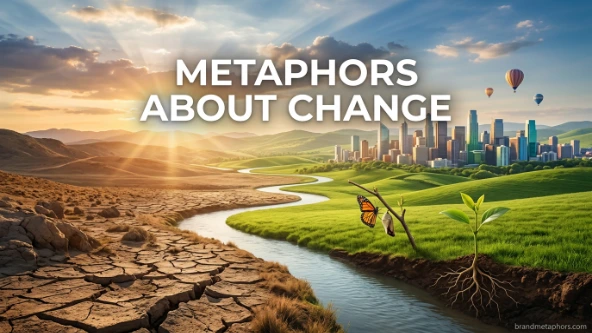
Introduction: When the Wind Shifts Direction
The air felt different that morning. The leaves trembled on the branches, clouds drifted into new shapes, and a familiar path suddenly seemed unfamiliar. Change often arrives like that—sometimes as a gentle breeze and sometimes as a powerful storm. It can surprise us, challenge us, and transform us in ways we never expected.
Every person experiences change. Childhood becomes adulthood. Seasons move from spring to winter. Relationships grow, careers evolve, and dreams take new forms. Because change can be difficult to explain directly, writers, speakers, and storytellers often use metaphors to capture its meaning. A well-crafted metaphor helps us see transformation not as an abstract idea but as something vivid and memorable.
Metaphors about change make complex emotions easier to understand. They help us describe growth, uncertainty, resilience, and renewal. Whether you are writing a story, creating social media content, giving a speech, or simply reflecting on your own life, these figurative comparisons can add depth and color to your words.
In this guide, you’ll discover powerful metaphors, practical examples, creative exercises, and useful tips for bringing the concept of transformation to life through language.
Why Metaphors About Change Matter
Understanding Transformation Through Imagery
Change is often invisible. We cannot always see personal growth, emotional healing, or shifting perspectives. Metaphors make these experiences visible.
When someone says, “Life is a river,” we instantly imagine movement, flow, and constant motion. The metaphor creates a picture that words like “development” or “transition” may not fully capture.
Metaphors help:
- Explain complicated emotions.
- Make writing more engaging.
- Improve storytelling.
- Create memorable messages.
- Connect with readers on a deeper level.
From ancient myths to modern novels, metaphors have helped people understand life’s transformations.
Change as a Flowing River
Meaning and Symbolism
One of the most popular metaphors for change is a river. Rivers never stay still. Their waters move forward every second, just as life continually evolves.
This metaphor highlights:
- Progress
- Adaptation
- Movement
- The inability to return to the past
Just as you cannot step into the same river twice, life never remains exactly the same.
Example Sentence
“After graduating from college, she realized her life was a river carrying her toward unknown horizons.”
Alternative Expressions
- Life is a winding stream.
- Change flows like water.
- The current of life keeps moving.
Sensory Details
Imagine cool water rushing over smooth stones. Hear the gentle murmur of the current. Feel the river pulling steadily forward. These sensations make the metaphor vivid and relatable.
Mini Story
A young traveler sat beside a river every evening. At first, he wished the water would stop so he could understand its path. Years later, he realized the beauty was not in stopping the river but in learning to travel with it.
Change as a Butterfly Emerging
A Symbol of Growth and Renewal
The butterfly is one of the world’s most beloved symbols of transformation. It begins as a caterpillar, enters a cocoon, and emerges completely changed.
This metaphor represents:
- Personal growth
- Self-discovery
- New beginnings
- Hidden potential
Many cultures view butterflies as symbols of hope and rebirth.
Example Sentence
“Her confidence unfolded like a butterfly emerging from its chrysalis.”
Alternative Expressions
- Spreading new wings.
- Emerging from the cocoon.
- Transforming into something beautiful.
Emotional Impact
This metaphor often inspires optimism because it suggests that difficult periods can lead to remarkable growth.
Literary Connection
Butterflies frequently appear in poetry and literature as symbols of transformation, reminding readers that change often requires patience and courage.
Change as the Turning of Seasons
Nature’s Lesson in Transformation
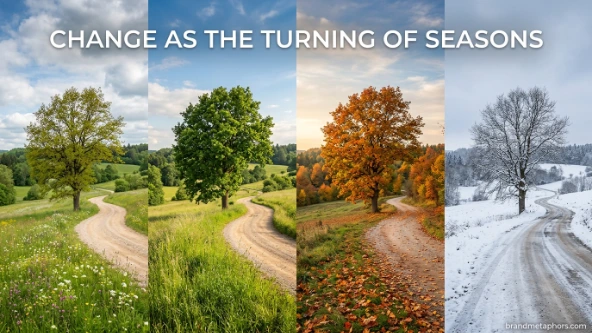
The changing seasons offer a powerful metaphor for life’s cycles. Spring brings growth, summer brings abundance, autumn brings release, and winter encourages rest.
This metaphor teaches that change is natural.
Example Sentence
“His life entered a new season after he moved to a different city.”
Alternative Expressions
- Entering a new chapter.
- Moving into a new season of life.
- Turning with the seasons.
Sensory Imagery
Picture bright spring blossoms, warm summer sunlight, colorful autumn leaves, and quiet winter snowfall. Each season reflects a different stage of change.
Real-Life Example
Many people use seasonal metaphors during major transitions such as retirement, parenthood, or career changes.
Three Powerful Metaphors About Change You Can Use Today
1. Change Is a River
Meaning
Life keeps moving whether we are ready or not.
Example
“The river of opportunity carried her toward a new career.”
Alternative Ways to Say It
- Life flows onward.
- The current moves us forward.
- Time is a stream.
2. Change Is a Butterfly
Meaning
Transformation often requires patience and growth.
Example
“He emerged from hardship like a butterfly from its cocoon.”
Alternative Ways to Say It
- Growing new wings.
- Becoming something new.
- Breaking free from the chrysalis.
3. Change Is a New Season
Meaning
Every ending creates space for a new beginning.
Example
“After years of struggle, she entered a bright new season.”
Alternative Ways to Say It
- Turning a new page.
- Beginning a fresh chapter.
- Welcoming a new season.
Change as a Road Under Construction
Building Something Better
Sometimes change feels messy and inconvenient. Roads under construction are often slow, noisy, and frustrating. Yet the purpose is improvement.
This metaphor represents:
- Temporary discomfort
- Long-term progress
- Development
- Growth through effort
Example Sentence
“My career felt like a road under construction, full of detours but leading somewhere worthwhile.”
Alternative Expressions
- Building a new path.
- Paving the way forward.
- Creating a stronger foundation.
Real-Life Connection
Career shifts, educational goals, and personal development often resemble construction projects. Progress may seem slow, but the final result can be rewarding.
Change as a Sunrise
The Promise of New Beginnings
A sunrise marks the end of darkness and the beginning of a new day. This metaphor emphasizes hope and possibility.
Example Sentence
“Her fresh start felt like a sunrise breaking across the horizon.”
Alternative Expressions
- A new dawn.
- Morning light.
- The first rays of possibility.
Sensory Details
Imagine golden light spilling across the sky, birds singing, and cool morning air touching your face. These details strengthen the emotional impact.
Cultural Reference
Sunrises often symbolize renewal in literature, films, and spiritual traditions around the world.
Change as a Tree Growing New Branches
Expanding Beyond Old Limits
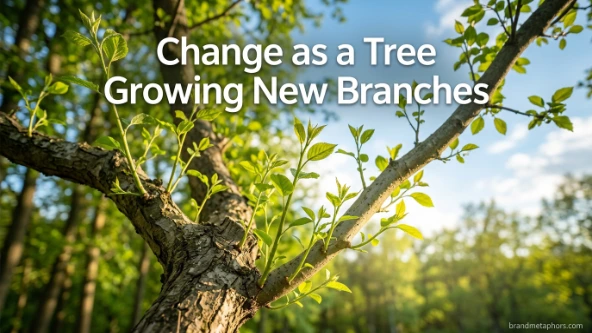
Trees continue growing throughout their lives. New branches stretch toward sunlight, symbolizing personal expansion.
Meaning
This metaphor represents:
- Learning
- Growth
- Adaptation
- Opportunity
Example Sentence
“Each challenge helped her grow new branches of wisdom.”
Alternative Expressions
- Reaching toward new horizons.
- Growing stronger roots.
- Extending into new possibilities.
Mini Story
A gardener worried when a young tree bent in strong winds. Years later, those same winds had strengthened its trunk and encouraged new growth.
Change as a Phoenix Rising
Transformation Through Adversity
The mythical phoenix burns and rises anew from its ashes. This dramatic metaphor highlights resilience.
Example Sentence
“After losing everything, he rose like a phoenix from the ashes.”
Alternative Expressions
- Starting over.
- Rebuilding from the ground up.
- Rising stronger than before.
Emotional Power
This metaphor resonates because it acknowledges pain while emphasizing recovery and renewal.
Literary Influence
The phoenix appears in myths, novels, and films as a symbol of hope after hardship.
How Writers Use Metaphors About Change
Creating Emotional Connections
Great writers use metaphors to make readers feel transformation rather than simply understand it.
Benefits include:
- Stronger imagery.
- Better engagement.
- Increased emotional impact.
- More memorable writing.
Example Comparison
Plain sentence:
“She changed after the experience.”
Metaphorical sentence:
“She emerged from the experience like a butterfly unfolding new wings.”
The second version creates a stronger emotional picture.
Creative Exercises for Practicing Metaphors About Change
Exercise 1: Complete the Sentence
Finish this statement:
“Change is like __________ because __________.”
Try creating five different answers.
Exercise 2: Use Nature
Choose one natural element:
- River
- Tree
- Storm
- Sunrise
- Mountain
Write three sentences comparing change to that element.
Exercise 3: Personal Reflection
Think about a major life change.
Ask yourself:
- What did it feel like?
- What image represents it?
- What object symbolizes the experience?
Turn your answer into a metaphor.
Exercise 4: Story Challenge
Write a short paragraph describing change without using the word “change.” Use only imagery and metaphor.
Bonus Tips for Using Metaphors in Writing and Daily Life
For Creative Writing
Use metaphors to reveal emotions and character growth.
Example:
“Her confidence blossomed like spring flowers.”
For Social Media
Short metaphors often perform well because they are memorable and shareable.
Example:
“Every sunrise is proof that endings create beginnings.”
For Public Speaking
Metaphors help audiences visualize your message.
Example:
“Our company is not standing still. We are a river finding new paths forward.”
For Personal Journaling
Metaphors can help process emotions.
Prompt:
“What metaphor best describes the season of life I’m currently experiencing?”
For Teaching and Coaching
Simple imagery makes complex ideas easier to understand.
Example:
“Growth is like planting a seed. Results take time.”
Common Mistakes When Using Metaphors About Change
Mixing Too Many Images
Avoid combining unrelated metaphors.
Confusing:
“Life is a river climbing a mountain through the sunrise.”
Clear:
“Life is a river moving steadily forward.”
Overusing Clichés
Popular metaphors can lose impact if repeated too often.
Try adding unique details to make them fresh.
Ignoring Context
Choose metaphors that fit the tone of your writing.
A phoenix may work in a dramatic story, while a sunrise may suit an inspirational article.
Forgetting Specific Details
Strong metaphors often include sensory imagery that helps readers visualize the comparison.
Conclusion
Change is one of life’s few constants. It shapes our stories, challenges our assumptions, and opens doors to new possibilities. Metaphors allow us to understand this journey through images we can see, feel, and remember. Whether change appears as a flowing river, a butterfly emerging from its cocoon, a turning season, a sunrise, a growing tree, or a phoenix rising from ashes, each metaphor offers a unique perspective on transformation.
The next time you face a transition, try describing it through imagery. You may discover new meaning in the experience. Writers, speakers, students, and everyday storytellers can all benefit from using vivid comparisons to communicate growth, resilience, and renewal. Like the seasons themselves, language continues to evolve, and metaphors remain one of the most beautiful ways to capture the movement of life.
FAQs
What are metaphors about change?
Metaphors about change are figurative comparisons that help describe transformation, growth, or transition using vivid imagery such as rivers, butterflies, seasons, or sunrises.
Why are metaphors useful for describing change?
They make abstract ideas easier to understand, create emotional connections, and help readers visualize personal or social transformation.
What is the most common metaphor for change?
The river metaphor is among the most common because it symbolizes continuous movement and the natural flow of life.
How can I create my own metaphor about change?
Think about an experience, object, or natural process that reflects movement, growth, or transformation, then compare it to the change you want to describe.
Where can I use metaphors about change?
You can use them in essays, stories, speeches, social media posts, journals, poems, presentations, and everyday conversations to make your message more memorable.