
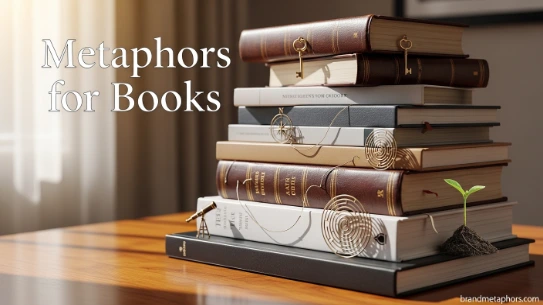
Books have a special kind of magic. Imagine walking into a quiet library on a rainy afternoon. The scent of paper drifts through the air. Shelves stretch like endless roads, each holding stories, ideas, and dreams waiting to be discovered. A single book can transport you to distant lands, introduce you to unforgettable characters, or teach lessons that stay with you for life.
This is why people often use metaphors to describe books. A metaphor helps us see something familiar in a new and vivid way. Instead of simply saying a book is interesting, we might call it a doorway, a treasure chest, or a time machine. These comparisons make our language richer and more memorable.
Understanding figurative language can improve writing, strengthen communication, and spark creativity. Whether you are a student, writer, teacher, or book lover, learning creative comparisons for literature can help you express ideas more effectively.
In this guide, you’ll discover powerful ways to describe books, examples of how to use them, practical exercises, and tips for applying them in everyday life.
Why We Use Metaphors for Books
Understanding the Power of Figurative Language
A metaphor compares two unlike things without using “like” or “as.” It creates a direct connection that helps readers imagine and feel an idea.
Books are more than stacks of paper. They can educate, entertain, inspire, and transform. Because of their many roles, they lend themselves naturally to imaginative comparisons.
For example, saying a book is a “window” suggests it provides a view into another world. Calling it a “compass” implies guidance and direction.
These comparisons create stronger emotional connections than plain descriptions.
A Book Is a Doorway
Entering New Worlds and Perspectives
One of the most popular comparisons is describing a book as a doorway.
A doorway leads from one place to another. In the same way, books transport readers into new experiences, cultures, and ideas.
Meaning: Books open access to knowledge, imagination, and adventure.
Example Sentence: “This novel became a doorway into a world I never knew existed.”
Alternative Expressions:
- A gateway
- An entrance
- A portal
- A passage
Sensory Detail: Imagine turning the first page and feeling as though you are stepping through an ancient wooden door into an unfamiliar kingdom.
Many fantasy stories use this concept. Readers often feel as if they have crossed into another reality.
A Book Is a Treasure Chest
Discovering Hidden Gems
A treasure chest holds valuable objects waiting to be found. Books work the same way.
Every chapter may contain wisdom, inspiration, or surprising discoveries.
Meaning: Books contain valuable information, lessons, and experiences.
Example Sentence: “That biography was a treasure chest filled with life-changing insights.”
Alternative Expressions:
- A vault of wisdom
- A gold mine
- A jewel box
- A chest of secrets
Mini Story: A student struggling with confidence picked up a self-help book. Each chapter offered practical advice that gradually transformed how she viewed herself. The book became her personal treasure chest.
A Book Is a Time Machine
Traveling Through History and Imagination
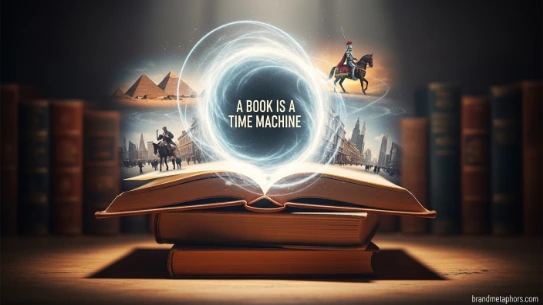
One of the most exciting comparisons is viewing a book as a time machine.
Readers can visit ancient civilizations, witness historical events, or imagine future worlds without leaving their chairs.
Meaning: Books allow readers to experience different periods and realities.
Example Sentence: “The history book acted as a time machine, taking me back centuries.”
Alternative Expressions:
- A time portal
- A historical bridge
- A journey through ages
- A vehicle of memory
Cultural Reference: Historical novels often make readers feel present during major events, creating a vivid connection to the past.
A Book Is a Mirror
Reflecting Human Experience
Some books help us understand ourselves better. They reflect our fears, hopes, dreams, and emotions.
Meaning: Books reveal personal truths and human experiences.
Example Sentence: “The novel was a mirror reflecting my own struggles and aspirations.”
Alternative Expressions:
- A reflection
- A looking glass
- A portrait of humanity
- A personal lens
Emotional Detail: Sometimes readers encounter a character who feels remarkably familiar. Their experiences mirror our own lives, creating a powerful emotional bond.
A Book Is a Window
Seeing Beyond Your Own World
While a mirror reflects ourselves, a window shows us something beyond our immediate surroundings.
Books allow readers to understand cultures, ideas, and lifestyles different from their own.
Meaning: Books broaden perspectives and encourage empathy.
Example Sentence: “This memoir served as a window into another culture.”
Alternative Expressions:
- A viewpoint
- A lens
- A lookout point
- A frame into another world
Real-Life Example: Many people develop greater understanding of global issues through literature that presents diverse voices and experiences.
A Book Is a Compass
Guiding Readers Through Life
Certain books provide direction during difficult times.
Whether it’s a guidebook, a philosophical work, or an inspiring memoir, books often help people navigate challenges.
Meaning: Books offer guidance and wisdom.
Example Sentence: “That leadership book became my compass during a career transition.”
Alternative Expressions:
- A guidepost
- A roadmap
- A navigator
- A beacon
Mini Story: An entrepreneur facing uncertainty found encouragement in a business book. The lessons helped him make decisions with greater confidence.
A Book Is a Garden
Growing Ideas and Imagination
Gardens flourish when cared for properly. Books nourish the mind in much the same way.
Each chapter plants seeds of thought that may continue growing long after reading ends.
Meaning: Books cultivate knowledge, creativity, and personal growth.
Example Sentence: “The collection of essays was a garden where new ideas bloomed.”
Alternative Expressions:
- A field of possibilities
- A forest of thoughts
- A landscape of imagination
- A blooming sanctuary
Sensory Detail: Picture each page as fertile soil where curiosity takes root and blossoms into understanding.
A Book Is a Lighthouse
Providing Guidance During Storms
Life can sometimes feel uncertain and overwhelming. During those moments, meaningful books often provide clarity.
A lighthouse helps ships find safe passage through darkness. Likewise, books can illuminate solutions and hope.
Meaning: Books offer comfort, wisdom, and direction.
Example Sentence: “That inspirational book was a lighthouse during a difficult year.”
Alternative Expressions:
- A beacon
- A guiding light
- A signal fire
- A source of illumination
Emotional Connection: Many readers return to favorite books during challenging periods because they provide reassurance and perspective.
A Book Is a Bridge
Connecting People and Ideas
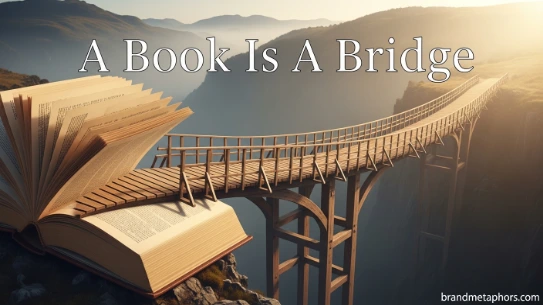
Books connect generations, cultures, and experiences.
They help readers understand people who may live far away or have entirely different backgrounds.
Meaning: Books create understanding and connection.
Example Sentence: “The novel served as a bridge between different cultures.”
Alternative Expressions:
- A connector
- A pathway
- A link
- A crossing
Literary Example: Classic literature often bridges centuries, allowing modern readers to engage with voices from the distant past.
A Book Is an Adventure
Exploring the Unknown
Every book offers a journey.
Whether the destination is a fantasy kingdom, a scientific discovery, or a personal transformation, readers embark on adventures whenever they open a new title.
Meaning: Books provide exploration and discovery.
Example Sentence: “Each chapter felt like another step in an unforgettable adventure.”
Alternative Expressions:
- A quest
- An expedition
- A voyage
- A journey
Sensory Detail: The excitement of turning pages often resembles the thrill of exploring an uncharted path.
How to Create Your Own Creative Comparisons for Books
Developing Original and Memorable Expressions
Creating fresh figurative language is easier than many people think.
Follow these steps:
- Think about what the book does.
- Identify an object with a similar function.
- Connect the two creatively.
- Add sensory or emotional details.
For example:
- A book is a campfire warming lonely evenings.
- A book is a telescope revealing distant possibilities.
- A book is a key unlocking hidden knowledge.
The more personal the comparison, the more memorable it becomes.
Interactive Exercises for Practicing Book Metaphors
Build Your Creativity Through Writing
Try these exercises to strengthen your skills.
Exercise 1: Complete the Sentence
Finish these statements:
- A book is a ________ because ________.
- Reading is a ________ that ________.
- My favorite novel is a ________ because ________.
Exercise 2: Create Three New Comparisons
Think of three objects and connect them to books.
Examples:
- Mountain
- River
- Lantern
Explain why each comparison works.
Exercise 3: Story Challenge
Write a short paragraph describing your favorite book using at least three metaphors.
This exercise helps improve creativity and descriptive writing.
Bonus Tips for Using Book Metaphors in Writing and Daily Life
Making Your Language More Engaging
Strong figurative language can enhance many forms of communication.
For Creative Writing
- Use metaphors to deepen emotional impact.
- Avoid clichés when possible.
- Connect comparisons to your story’s theme.
For Social Media
Instead of saying:
“I loved this book.”
Try:
“This novel was a lighthouse guiding me through a storm of uncertainty.”
Such language attracts attention and encourages engagement.
For School Assignments
Creative comparisons can strengthen essays and presentations by making ideas more memorable.
For Everyday Conversation
Metaphors make discussions more vivid and enjoyable.
Rather than saying a book taught you something, describe it as a compass or treasure chest.
For Public Speaking
Figurative language helps audiences visualize and remember key points.
Frequently Asked Questions
What is a metaphor for a book?
A metaphor for a book is a creative comparison that describes a book as something else, such as a doorway, treasure chest, compass, or time machine, to highlight its qualities.
Why are metaphors useful when describing books?
They make descriptions more vivid, engaging, and memorable while helping readers understand deeper meanings and emotions.
What is the most common metaphor for a book?
One of the most common comparisons is describing a book as a doorway because it opens access to new worlds, ideas, and experiences.
Can students use book metaphors in essays?
Yes. Creative comparisons can improve writing quality, strengthen imagery, and make essays more engaging for readers.
How can I create my own metaphor for a book?
Think about what the book does for readers and compare it to an object, place, or experience that performs a similar function.
Conclusion
Books are far more than printed pages bound together. They are doorways that lead to unexplored worlds, treasure chests filled with wisdom, time machines that cross centuries, mirrors reflecting our lives, and windows opening new perspectives. They can serve as compasses during uncertainty, gardens where ideas flourish, lighthouses in darkness, bridges between people, and adventures waiting to unfold.
By understanding and using creative comparisons, you can enrich your writing, communicate more effectively, and appreciate literature in new ways. The next time you open a favorite story, ask yourself what it truly feels like. You may discover that every book is its own unique metaphor, waiting to be expressed through imagination and creativity.