

Have you ever stood beneath a sky full of stars and felt something bigger than yourself? Perhaps you watched a sunrise paint the horizon with gold or listened to the steady rhythm of ocean waves. In moments like these, people often search for words to describe the mysterious presence they call God.
Yet describing God is not easy. Across cultures, religions, and centuries, people have struggled to express the nature of the divine. Since God is often viewed as infinite, eternal, and beyond human understanding, ordinary language can seem too small. This is where metaphors become powerful. They provide bridges between the known and the unknown.
A metaphor compares one thing to another, helping us grasp complex ideas through familiar images. When we call God a shepherd, a light, or a rock, we are not saying God literally is those things. Instead, we use their qualities to understand divine characteristics such as guidance, protection, strength, wisdom, and love.
In this article, we will explore some of the most meaningful metaphors for God, their symbolism, practical uses in writing and daily life, and creative ways to develop your own spiritual imagery. Whether you are a writer, student, believer, or simply curious, these metaphors can deepen your understanding and enrich your language.
Why Metaphors for God Matter
Understanding the Unseen
Human beings understand new ideas through comparison. Since God cannot be fully seen or measured, metaphors help make spiritual concepts more approachable.
A lighthouse guiding ships through a storm can help us imagine divine guidance during difficult times.
Building Emotional Connection
Metaphors create feelings, not just explanations. They allow people to experience spiritual truths on a personal level.
Instead of saying “God helps people,” saying “God is a shelter in the storm” creates a stronger emotional picture.
Enhancing Writing and Speech
Writers, speakers, teachers, and spiritual leaders often use metaphors because they make messages memorable and vivid.
God as a Light
Meaning and Symbolism
One of the most universal metaphors is God as light. Light represents truth, wisdom, goodness, clarity, and hope.
Just as sunlight removes darkness, divine wisdom removes confusion and fear.
Example Sentence
“God is the light that guides my path through the darkest valleys.”
Alternative Expressions
- A radiant sunrise
- A guiding lantern
- A shining star
- A beacon in the night
Sensory Details
Imagine warm sunlight touching your face after a long night. The feeling of comfort and certainty mirrors what many people associate with divine presence.
God as a Shepherd
Meaning and Symbolism
The shepherd metaphor emphasizes care, guidance, and protection. A shepherd watches over the flock, keeps it safe, and leads it toward nourishment.
Example Sentence
“God is my shepherd, leading me through uncertain terrain.”
Alternative Expressions
- Guardian of the flock
- Gentle guide
- Keeper of wandering souls
- Protector of travelers
Mini Storytelling Example
Imagine a sheep lost in thick fog. Unable to find its way, it hears the familiar voice of its shepherd calling from a distance. That image beautifully captures how many believers view divine guidance.
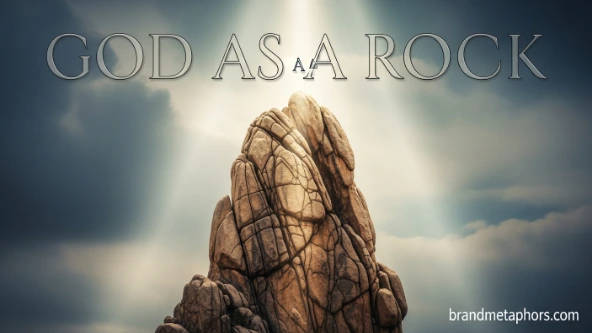
God as a Rock
Meaning and Symbolism
A rock symbolizes stability, strength, and dependability. Life changes constantly, but a rock remains firm.
Example Sentence
“When everything around me shifted, God remained my rock.”
Alternative Expressions
- Solid foundation
- Mountain of strength
- Steady cliff
- Unshakable pillar
Emotional Impact
During times of uncertainty, this metaphor provides reassurance that something permanent exists amid chaos.
God as a Father
Meaning and Symbolism
Many traditions describe God as a father figure. This metaphor highlights love, care, wisdom, discipline, and provision.
Example Sentence
“God is a loving father who welcomes his children home.”
Alternative Expressions
- Caring parent
- Wise guardian
- Loving protector
- Family guide
Cultural References
Throughout literature and religious texts, the father metaphor appears frequently because family relationships are universally understood.
God as an Ocean
Meaning and Symbolism
An ocean represents vastness, mystery, depth, and power. The metaphor suggests that God’s nature extends far beyond human comprehension.
Example Sentence
“God is an endless ocean whose depths can never be fully explored.”
Alternative Expressions
- Boundless sea
- Infinite waters
- Eternal tide
- Deep current
Sensory Details
Picture standing at the shoreline. The waves stretch beyond the horizon. That feeling of awe mirrors the spiritual wonder many associate with God.
God as a Potter
Meaning and Symbolism
A potter carefully shapes clay into something meaningful. This metaphor highlights creation, purpose, and transformation.
Example Sentence
“God is the potter, and we are the clay being shaped.”
Alternative Expressions
- Master craftsman
- Divine artist
- Skilled creator
- Patient sculptor
Real-Life Application
Just as clay undergoes pressure and shaping, people often grow through life’s challenges and experiences.
God as a Fortress
Meaning and Symbolism
A fortress symbolizes protection, safety, and refuge during hardship.
Example Sentence
“In moments of fear, God became my fortress.”
Alternative Expressions
- Safe harbor
- Stronghold
- Castle of refuge
- Shielding wall
Mini Storytelling Example
A traveler caught in a violent storm finds shelter within thick stone walls. The relief they feel reflects the comfort many seek in their faith.
God as a Gardener
Meaning and Symbolism
Gardeners nurture growth patiently. This metaphor emphasizes care, development, and spiritual growth.
Example Sentence
“God is the gardener who helps every seed reach its potential.”
Alternative Expressions
- Tender cultivator
- Keeper of the garden
- Patient nurturer
- Careful grower
Emotional Significance
Growth takes time. This metaphor reminds people that personal transformation often happens gradually.
God as a Fire
Meaning and Symbolism
Fire represents purification, passion, energy, and divine power.
Example Sentence
“God is a refining fire that transforms the heart.”
Alternative Expressions
- Sacred flame
- Eternal spark
- Holy blaze
- Living ember
Literary Reference
Many ancient stories use fire to symbolize divine presence, inspiration, and revelation.
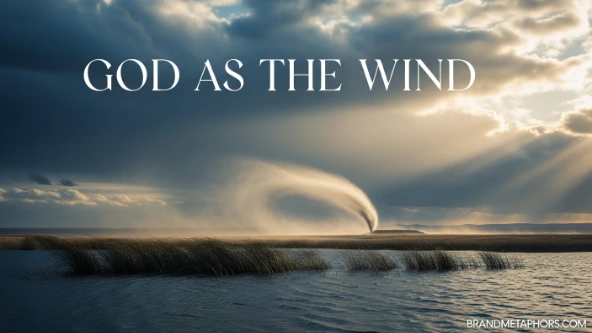
God as the Wind
Meaning and Symbolism
Wind is invisible but powerful. People cannot see it directly, yet they witness its effects.
Example Sentence
“God is the wind moving quietly through every season of life.”
Alternative Expressions
- Gentle breeze
- Mighty current
- Invisible force
- Whispering air
Sensory Details
Feel a breeze brush across your skin. Though unseen, its presence is undeniable. This perfectly illustrates why the wind is such a meaningful metaphor for God.
How to Create Your Own Metaphors for God
Start with Nature
Nature offers countless images that reflect spiritual ideas.
Examples:
- God is a sunrise.
- God is a river.
- God is a mountain.
Consider Human Experiences
Think about relationships, emotions, and daily activities.
Examples:
- God is a teacher.
- God is a compass.
- God is a healer.
Focus on One Quality
Ask yourself what characteristic you want to highlight.
For example:
- Love → God is a warm hearth.
- Wisdom → God is a guiding star.
- Strength → God is an ancient oak.
Three Creative Exercises for Practicing Metaphors for God
Exercise 1: The Nature Challenge
Choose something from nature and connect it to a divine quality.
Example:
“The waterfall reminds me of God’s endless generosity.”
Exercise 2: The Five Senses Exercise
Describe God using sight, sound, touch, smell, or taste.
Example:
“God is the scent of rain after a drought.”
Exercise 3: The Story Prompt
Write a short paragraph where a traveler encounters a symbol of God during a journey.
This exercise helps build creative and meaningful spiritual imagery.
Bonus Tips for Using Metaphors for God in Writing and Daily Life
In Creative Writing
Use metaphors to create emotional depth and memorable descriptions.
On Social Media
Short metaphors work especially well.
Examples:
- “God is my anchor in rough waters.”
- “God is the sunrise after a long night.”
In Personal Reflection
Keep a journal of spiritual images that resonate with you.
In Public Speaking
Use vivid metaphors to make abstract ideas easier to understand.
In Everyday Conversation
Simple comparisons often communicate spiritual ideas more effectively than lengthy explanations.
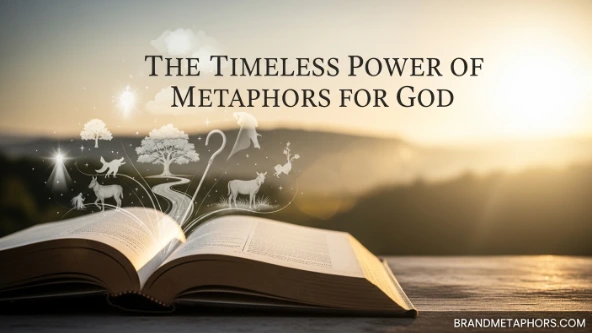
The Timeless Power of Metaphors for God
Why These Images Endure
Metaphors continue to thrive because they connect human experience with spiritual mystery.
Finding Your Own Language
Every person experiences the divine differently. The metaphor that speaks deeply to one individual may differ from another’s.
Embracing the Mystery
No single metaphor can fully capture God. Each one reveals a small piece of a much larger reality.
Conclusion
Metaphors for God provide beautiful bridges between the human and the divine. They transform abstract spiritual concepts into vivid images that people can understand, feel, and remember. Whether God is described as a light, shepherd, rock, ocean, father, gardener, fortress, fire, wind, or potter, each metaphor highlights a unique aspect of the divine character.
The true power of these metaphors lies not in perfect definition but in deeper connection. They invite reflection, spark imagination, and help people express experiences that often seem beyond words. As you explore and create your own metaphors for God, you may discover fresh perspectives on faith, spirituality, and the mysteries that inspire awe in the human heart.
FAQs About Metaphors for God
What is a metaphor for God?
A metaphor for God is a symbolic comparison that helps people understand divine qualities through familiar images, such as light, shepherd, rock, or ocean.
Why are metaphors used to describe God?
Metaphors make complex spiritual concepts easier to understand by connecting them to everyday experiences and emotions.
What is the most common metaphor for God?
One of the most common metaphors is God as light because it symbolizes truth, hope, wisdom, and guidance.
Can I create my own metaphor for God?
Yes. Many people create personal metaphors based on nature, relationships, experiences, or qualities they associate with the divine.
How do metaphors for God improve writing?
They add vivid imagery, emotional depth, and memorability, making spiritual or philosophical ideas more engaging and relatable.