
Introduction: When Hunger Feels Like Something Bigger Than Food
The stomach growls again—low, insistent, almost like a distant drum echoing through an empty valley. You glance at the clock, but time seems slower when hunger arrives. It doesn’t just sit in your belly; it spreads into your thoughts, colors your mood, and sharpens every scent that drifts nearby. Even the simplest smell of bread can feel like a memory you can almost touch.
“Hunger” is more than a physical need. In writing, storytelling, and everyday speech, it becomes a powerful emotion that can symbolize desire, survival, ambition, or emptiness. That’s where metaphors come in. They help us describe hunger not just as a sensation but as an experience—something vivid, relatable, and deeply human.
In this article, we will explore creative metaphors for hungry, how they work in writing, and how you can use them to make your language more expressive, poetic, and emotionally engaging.
Hunger Metaphors Meaning and Why They Matter in Writing
What Are Hunger Metaphors?
Hunger metaphors are imaginative comparisons that describe the feeling of being hungry using symbolic language instead of literal explanation. For example, saying “my stomach is a roaring lion” is far more expressive than simply saying “I am hungry.”
Why Writers Use Them
Writers use hunger metaphors to:
- Add emotional depth to descriptions
- Make readers feel the sensation instead of just reading about it
- Turn simple experiences into vivid imagery
- Connect physical hunger with emotional or symbolic hunger
Real-Life Emotional Connection
Hunger isn’t always about food. It can represent:
- Hunger for success
- Hunger for love
- Hunger for freedom
- Hunger for meaning
This dual meaning makes hunger metaphors powerful in poetry, novels, speeches, and even social media captions.
Metaphor 1: “My Stomach Is a Roaring Beast”
Meaning and Explanation
This metaphor compares hunger to a wild animal—loud, uncontrollable, and demanding attention. It suggests that hunger is not gentle; it is urgent and overpowering.
Example Sentence or Scenario
After skipping breakfast and running across town, I felt like my stomach was a roaring beast demanding to be fed immediately.
Sensory and Emotional Detail
You can almost “hear” the growl, like thunder trapped inside your body. It creates urgency and slight discomfort, even humor in extreme hunger situations.
Alternative Expressions
- My stomach is growling like a hungry wolf
- My hunger is a wild animal pacing inside me
- My belly is a restless lion
Mini Storytelling Moment
Imagine a traveler lost in a desert. The sun burns overhead, and every step feels heavier. Inside him, hunger roars louder than the wind. It is not just a feeling anymore—it is a living creature demanding attention.
Metaphor 2: “I Am an Empty Bowl Waiting to Be Filled”
Meaning and Explanation
This metaphor focuses on emptiness and readiness. It presents hunger as a hollow space that needs nourishment.
Example Sentence or Scenario
After a long day at school, I felt like an empty bowl waiting to be filled with something warm and comforting.
Sensory and Emotional Detail
This metaphor feels softer and calmer than the first. Instead of chaos, it suggests silence, anticipation, and quiet need.
Alternative Expressions
- I am an empty cup waiting to overflow again
- My stomach is a hollow vessel
- I feel like a blank plate waiting for color and flavor
Cultural or Literary Reference
In many cultures, food is seen as life-giving energy. The “empty bowl” metaphor reflects not just physical need but emotional longing for comfort, warmth, and care.
Interactive Exercise
Think of your own version:
- What object best represents your hunger right now?
- Is it empty, broken, cracked, or waiting?
Write a sentence using that object.
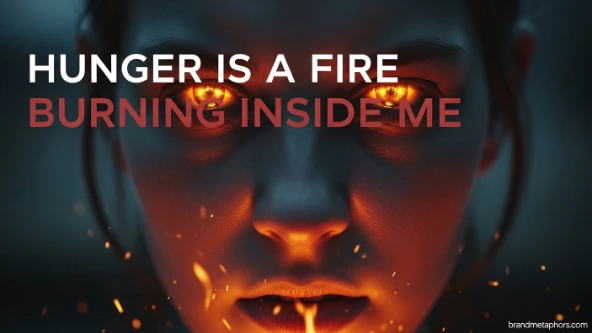
Metaphor 3: “Hunger Is a Fire Burning Inside Me”
Meaning and Explanation
This metaphor compares hunger to fire—something intense, growing, and hard to ignore. It is often used to describe strong desire or urgent craving.
Example Sentence or Scenario
By evening, hunger had become a fire burning inside me, pushing every thought toward food.
Sensory and Emotional Detail
You can imagine warmth spreading in your stomach, becoming stronger with time. It feels restless and consuming.
Alternative Expressions
- My hunger is a flame that won’t go out
- I am burning with need for food
- My stomach is a furnace of emptiness
Mini Storytelling Moment
A student studies late into the night. Pages blur, focus fades, and hunger quietly grows. At first, it is a spark. Then it becomes a flame. Soon, it is all she can think about—until she finally walks into the kitchen, guided by that inner fire.
Hunger in Literature and Everyday Language
How Writers Use Hunger Symbolically
In literature, hunger often represents more than food. It can symbolize:
- Poverty and struggle in survival stories
- Desire and ambition in character development
- Emotional emptiness in poetry
Famous Example Idea
In many classic survival stories, characters face hunger not just as a physical challenge but as a test of willpower and hope.
Everyday Speech Use
People often say:
- “I’m starving for success”
- “I’m hungry for change”
- “She has a hunger for knowledge”
These phrases show how deeply hunger metaphors are embedded in language.
Creative Writing Exercise: Build Your Own Hunger Metaphor
Step 1: Choose a Feeling
Decide what kind of hunger you want to express:
- Physical hunger
- Emotional hunger
- Ambition or desire
Step 2: Pick an Object or Force
Choose something symbolic:
- Animal (lion, wolf, bird)
- Element (fire, wind, storm)
- Object (bowl, cup, machine)
Step 3: Combine Them
Example:
- “My hunger is a storm breaking inside me.”
- “My stomach is a broken clock ticking only for food.”
Bonus Challenge
Write three different metaphors for the same feeling. Notice how each one changes the mood.
Metaphor 4: “Hunger Is a Silent Shadow Following Me”
Meaning and Explanation
This metaphor presents hunger as something quiet but constant. It does not roar or burn—it follows, lingers, and refuses to leave.
Example Sentence or Scenario
Even after drinking water, hunger remained like a silent shadow following me through the afternoon.
Sensory and Emotional Detail
This creates a feeling of subtle discomfort—like something always present but not loud enough to fight.
Alternative Expressions
- Hunger is a quiet ghost beside me
- My stomach carries a shadow of emptiness
- I am followed by an invisible craving
Mini Storytelling Moment
A young worker skips lunch to save money. He continues his day, pretending everything is fine. But hunger walks with him—silent, patient, and unshakable—until the day finally ends.
Using Hunger Metaphors in Social Media and Daily Writing
Captions and Posts
Instead of saying “I’m hungry,” try:
- “My stomach is writing poetry in growls today.”
- “A fire is negotiating peace with my fridge.”
Blog and Story Writing
Use metaphors to:
- Add emotion to simple scenes
- Make readers feel present in the moment
- Turn ordinary moments into memorable imagery
Daily Speech Upgrade
Even casual conversations become more expressive:
- “I could eat a mountain right now.”
- “My stomach is protesting loudly.”
Cultural Views on Hunger Expressions
Across Languages and Traditions
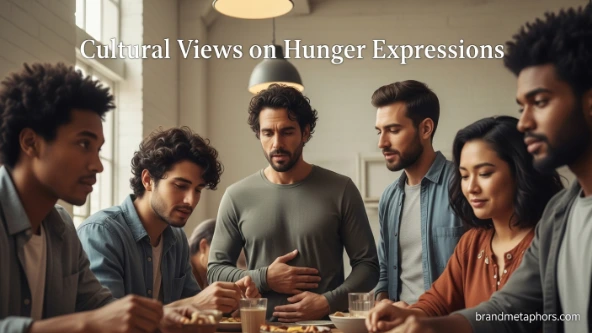
Different cultures express hunger creatively:
- Some compare it to animals
- Others to weather or natural forces
- Many connect it to emotional longing
Why It Matters
These expressions show that hunger is a universal experience. Everyone understands it, but each culture paints it differently.
Reflective Insight
Language turns survival into art. Hunger becomes not just a need, but a story.
Advanced Writing Tips for Strong Hunger Metaphors
Tip 1: Use Sensory Language
Include sound, smell, and touch:
- “My stomach growled like distant thunder.”
Tip 2: Avoid Overused Phrases
Instead of “I’m starving,” try fresh comparisons.
Tip 3: Match Emotion with Image
- Calm hunger → empty bowl
- Intense hunger → roaring beast
- Emotional hunger → silent shadow
Bonus Idea
Combine metaphors:
- “My hunger is both a roaring beast and a quiet shadow, depending on how long I wait.”
Conclusion
Hunger is one of the most basic human experiences, yet language allows us to transform it into something rich, imaginative, and deeply expressive. Through metaphors, we don’t just say we are hungry—we show it, feel it, and even share its emotional weight with others.
Whether it is a roaring beast, a burning fire, or a silent shadow, each metaphor adds a different shade of meaning. As you use these expressions in writing or daily life, you begin to see how even simple feelings can become powerful storytelling tools.
FAQs
What are metaphors for hungry?
They are creative comparisons used to describe hunger in symbolic or imaginative ways instead of literal language.
Why are hunger metaphors important in writing?
They make descriptions more vivid, emotional, and engaging for readers.
Can hunger metaphors describe emotions too?
Yes, hunger often symbolizes desire, ambition, or emotional emptiness.
What is a simple hunger metaphor example?
“My stomach is a roaring beast.”
How can I create my own hunger metaphor?
Combine a feeling with an object, animal, or natural force to create a vivid comparison.