
H2: Sweet Beginnings: Ice Cream Metaphors in Everyday Language
H3: A Scoop of Memory and a Drip of Imagination
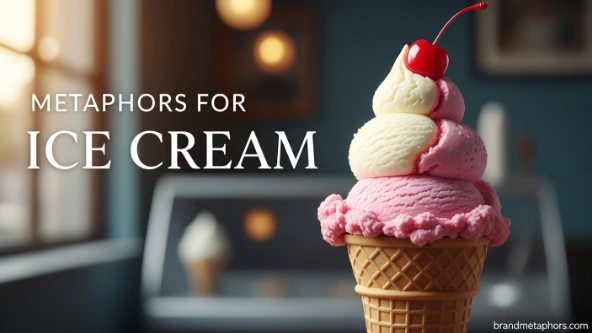
There is a moment everyone knows—the first bite of ice cream on a hot day. The cold rush, the sudden sweetness, the way it melts faster than you expect. Now imagine that moment turning into language. That is what metaphors for ice cream do: they take something simple and edible and turn it into meaning.
Ice cream often appears in our speech and writing without us even noticing. We say life is “melting away,” or a moment is “sweet.” We describe happiness as “a treat” or sadness as “melting under pressure.” These expressions are more than decorative language—they help us feel ideas instead of just thinking them.
H3: Why Ice Cream Metaphors Matter
Ice cream metaphors matter because they connect emotion with sensory experience. Readers don’t just understand them—they taste them. That makes writing more vivid, storytelling more engaging, and communication more human.
In this article, we will explore how ice cream becomes a powerful symbolic tool in language, storytelling, and creativity.
H2: Ice Cream as a Symbol of Joy and Childhood Memory
H3: The Emotional Roots of Sweetness
Ice cream is often tied to childhood—birthday parties, summer evenings, or rewards after school. Because of this, it naturally becomes a metaphor for joy, innocence, and carefree moments.
H3: Cultural and Personal Associations
In many cultures, ice cream represents celebration. In movies, it often appears during happy endings or bonding scenes. It is more than food—it is emotional shorthand.
H3: Example in Life
Imagine someone saying:
“Her laughter was like ice cream on a summer afternoon.”
This suggests warmth, happiness, and a fleeting but memorable joy.
H3: Alternative Expressions
- “A spoonful of happiness”
- “Cold sweetness of joy”
- “A childhood wrapped in flavor”
H2: Metaphor 1 – Ice Cream as Life’s Sweet Escape
H3: Meaning and Emotional Depth
Life can be stressful, unpredictable, and overwhelming. Ice cream becomes a metaphor for escape—small, comforting moments that soften reality.
H3: Example Sentence
“After a long, exhausting day, the quiet scoop of vanilla was her escape from the noise of the world.”
H3: Mini Story
A man sits alone after work, holding a cone on a crowded street. The world moves fast, but he slows down with each bite. For a few minutes, nothing else matters—not deadlines, not worries—just sweetness melting away tension. That is life’s escape in edible form.
H3: Alternative Expressions
- “A pause in life’s heat”
- “A frozen moment of peace”
- “A sweet retreat from reality”
H3: Sensory Detail
Cold cream softening against the tongue, the slow drip down the cone, the way time feels slightly less urgent.
H2: Metaphor 2 – Melting Moments of Time
H3: Meaning and Symbolism
Ice cream melts quickly, making it a perfect metaphor for time—beautiful but temporary. It teaches impermanence in a soft, emotional way.
H3: Example Sentence
“Their summer together was like ice cream in the sun—beautiful, brief, and impossible to hold onto.”
H3: Mini Story
Two friends share ice cream on a bench, laughing without checking the time. But the sun keeps moving, the ice cream keeps melting, and eventually the moment must end. They don’t notice the loss immediately—it happens slowly, like flavor dissolving.
H3: Alternative Expressions
- “Moments that melt into memory”
- “Time dripping like softened cream”
- “Fleeting sweetness of life”
H3: Emotional Layer
This metaphor often carries nostalgia, reminding readers that the best moments are often the shortest.
H2: Metaphor 3 – Scoops of Personality
H3: Meaning and Characterization
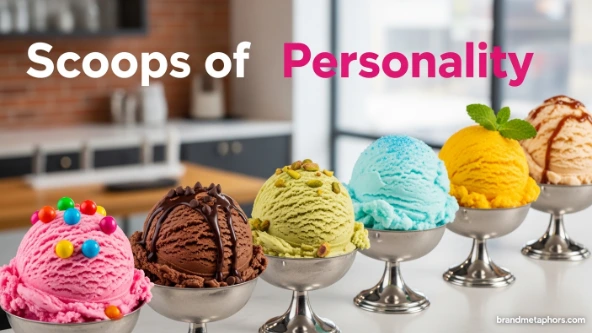
People are not one flavor—they are many. Ice cream becomes a way to describe personality traits as “scoops,” each representing a different emotion or behavior.
H3: Example Sentence
“He was a mix of mint calmness, chocolate depth, and a sudden scoop of unpredictable caramel.”
H3: Mini Story
A writer describes her friend as an ice cream shop. Some days she is bright strawberry—energetic and social. Other days she is quiet pistachio—thoughtful and distant. No single flavor defines her completely.
H3: Alternative Expressions
- “Layers of flavor in a single soul”
- “Human sundae of emotions”
- “A blend of emotional scoops”
H3: Creative Use
Writers often use this metaphor to show complexity in characters without direct explanation.
H2: Ice Cream in Literature and Pop Culture
H3: Symbolism in Stories
Ice cream appears in novels, films, and poems as a symbol of innocence, love, or fleeting happiness. It is often used in coming-of-age stories.
H3: Movie Moments
Think of romantic scenes where couples share ice cream while walking. The simplicity highlights emotional connection more than dialogue.
H3: Cultural Meaning
In advertising, ice cream often represents freedom, summer, and indulgence—universal emotions that transcend language barriers.
H3: Insight
Ice cream is visually and emotionally universal, making it a powerful storytelling tool across cultures.
H2: Emotional Layers – Ice Cream as Comfort Language
H3: Comfort in Cold Sweetness
Ice cream is often eaten during emotional highs and lows. It becomes comfort food, symbolizing healing and softness in difficult times.
H3: Example Sentence
“She didn’t need advice, only a quiet room and a bowl of ice cream to make the world feel manageable again.”
H3: Mini Reflection
After heartbreak or stress, many people reach for something cold and sweet. It doesn’t solve problems—but it makes them feel lighter.
H3: Alternative Expressions
- “A spoonful of emotional softness”
- “Cold comfort in a warm world”
- “Sweetness against sorrow”
H2: Creative Writing Exercises with Ice Cream Metaphors
H3: Exercise 1 – Describe Emotion as Flavor
Write sadness as chocolate, happiness as strawberry, anger as spicy mango.
H3: Exercise 2 – Personify Ice Cream
Imagine ice cream talking. What would it say about melting time or being enjoyed slowly?
H3: Exercise 3 – Memory Mapping
Recall a childhood memory and rewrite it using ice cream imagery.
H3: Why This Works
These exercises train the brain to think symbolically, improving storytelling and emotional expression.
H2: Using Ice Cream Metaphors in Social Media & Daily Life
H3: Writing Captions
Ice cream metaphors make captions more engaging:
“Summer tastes like melted happiness.”
H3: Everyday Conversation
Instead of saying “I’m happy,” one might say:
“I feel like a double scoop of joy today.”
H3: Branding and Creativity
Brands often use ice cream imagery to evoke nostalgia and pleasure. Writers and marketers can use similar emotional triggers.
H3: Practical Tip
Keep a “flavor journal”—write emotions as ice cream flavors daily.
H2: Bonus Tips – Advanced Ice Cream Imagery and Common Mistakes
H3: Tip 1 – Avoid Overuse
Too many sweet metaphors can weaken impact. Use them sparingly.
H3: Tip 2 – Mix Sensory Details
Combine taste, texture, and temperature for stronger imagery.
H3: Tip 3 – Pair With Contrast
Ice cream metaphors become stronger when contrasted with heat, stress, or sadness.
H3: Common Mistake
Avoid clichés like “sweet as ice cream” without deeper meaning or context.
H3: Advanced Idea
Blend metaphors: ice cream + time, ice cream + memory, ice cream + identity.
H2: Frequently Asked Questions
H3: What is a metaphor for ice cream?
It is a symbolic comparison where ice cream represents emotions, experiences, or abstract ideas like joy, time, or comfort.
H3: Why is ice cream used in metaphors?
Because it is sensory, emotional, and universally understood, making abstract ideas easier to feel.
H3: Can ice cream metaphors be used in academic writing?
Yes, but usually in creative or illustrative sections, not formal analysis.
H3: What emotions does ice cream symbolize?
Happiness, nostalgia, comfort, innocence, and fleeting moments.
H3: How can I create my own ice cream metaphor?
Think of an emotion, then match it with flavor, texture, or melting behavior.
Conclusion
Ice cream is more than a dessert—it is a language of emotion. It melts like time, comforts like memory, and delights like joy itself. Through metaphors, it becomes a bridge between taste and thought, between experience and expression.
When we describe life as ice cream, we are not just being poetic—we are recognizing how fragile, sweet, and temporary everything truly is. Each scoop reminds us to slow down, savor moments, and appreciate the beauty before it melts away.