

The Firelight in the Storm
The wind howled across the valley as the travelers huddled around a flickering fire. One person stood quietly, feeding the flames, watching the horizon, and guiding the group through the dark. No loud speeches. No crown. Just calm direction when everyone else felt lost.
That is leadership.
Leadership is not only about power, titles, or commanding a room. It is about influence, trust, courage, and vision. Sometimes a leader is a lighthouse in rough seas. Sometimes they are a gardener helping others grow. And sometimes they are the steady heartbeat of a struggling team.
Metaphors for leadership help us understand these deeper qualities in vivid and memorable ways. They turn abstract ideas into living pictures we can feel and remember. Writers use them to create emotional impact. Teachers use them to inspire students. Coaches, speakers, and business leaders use them to motivate teams and shape culture.
In this article, you will explore powerful metaphors for leadership, learn what they mean, discover creative ways to use them, and practice applying them in your own writing and daily life. Along the way, you will find storytelling examples, emotional imagery, practical exercises, and bonus tips to make your communication stronger and more engaging.
Why Metaphors for Leadership Matter
Leadership Becomes Easier to Understand
Leadership can feel abstract. People often struggle to explain what makes someone a great leader. Metaphors solve this problem by painting clear mental images.
When you say, “A leader is a lighthouse,” people instantly imagine guidance, stability, and hope during storms.
That image stays in the mind longer than a simple definition.
Metaphors Create Emotional Connection
Facts inform people, but images move them emotionally.
A sentence like “She led the company well” feels flat. But “She steered the ship through dangerous waters” feels alive and dramatic.
Readers connect emotionally because they can picture the struggle.
They Strengthen Writing and Speaking
Whether you write blogs, speeches, captions, or stories, metaphors add rhythm and beauty to language. They make ordinary communication memorable.
Great leaders throughout history used symbolic language. Ancient philosophers compared leaders to shepherds. Modern speakers compare leadership to navigation, teamwork, or gardening.
Metaphors help ideas bloom.
Leadership as a Lighthouse
Meaning and Symbolism
One of the most famous metaphors for leadership is the lighthouse.
A lighthouse stands firm during storms. It does not control the sea, but it guides ships safely through danger. In the same way, leaders provide clarity during confusion.
This metaphor highlights:
- Guidance
- Stability
- Wisdom
- Hope
- Direction
Example Scenario
Imagine a school principal during a crisis. Parents panic. Teachers feel overwhelmed. Students are anxious.
The principal stays calm, communicates clearly, and helps everyone move forward step by step.
That leader becomes the lighthouse in the storm.
Alternative Ways to Express This Metaphor
Variations
- A beacon in the dark
- A guiding star
- A lantern on the shore
- A compass in chaos
Sensory and Emotional Details
Think of crashing waves, cold rain, and distant thunder. Then imagine the warm beam of light cutting through the darkness.
That feeling of relief captures strong leadership perfectly.
Mini Storytelling Example
During World War II, many leaders became symbols of hope for frightened nations. Their speeches acted like lighthouse beams guiding people through uncertainty.
Words became light.
Leadership as the Captain of a Ship

Meaning and Explanation
A captain leads the crew toward a destination. They make decisions, face storms, and take responsibility when danger appears.
This metaphor emphasizes:
- Responsibility
- Decision-making
- Team coordination
- Courage
- Strategic thinking
Example Sentence
“He captained the company through financial storms without losing sight of the mission.”
Real-Life Connection
In business, CEOs are often compared to captains steering organizations through changing markets and unexpected challenges.
A strong captain does not panic when waves rise.
Alternative Expressions
Similar Metaphors
- Steering the ship
- Holding the wheel
- Navigating rough waters
- Charting a course
Emotional Layer
This metaphor creates tension and adventure. Readers can almost hear creaking wood, roaring waves, and shouted commands across the deck.
Leadership suddenly feels cinematic.
Leadership as a Gardener
Meaning Behind the Metaphor
Some leaders do not dominate. They nurture.
A gardener prepares the soil, waters plants, removes weeds, and patiently waits for growth. Great leaders often help people develop rather than control them.
This metaphor highlights:
- Patience
- Mentorship
- Growth
- Care
- Long-term vision
Example Scenario
A teacher encourages shy students, celebrates small progress, and creates a safe environment for learning.
Like a gardener, the teacher helps hidden potential bloom.
Alternative Ways to Say It
Creative Variations
- Planting seeds of success
- Helping others blossom
- Watering talent
- Cultivating growth
Literary and Cultural Reflection
In many cultures, gardens symbolize wisdom and harmony. Ancient philosophers often compared education and leadership to tending a garden.
Growth cannot be forced. It must be nurtured.
Emotional Imagery
Imagine sunlight warming leaves after rain. Imagine tiny green shoots breaking through dark soil.
That quiet miracle mirrors leadership beautifully.
Leadership as a Bridge
Understanding the Metaphor
A bridge connects separated places. Leaders often connect people, ideas, and communities.
This metaphor focuses on:
- Unity
- Communication
- Trust
- Cooperation
- Understanding
Example Sentence
“She became a bridge between management and employees during difficult negotiations.”
Why This Metaphor Works
Modern workplaces and communities often suffer from division. Strong leaders reduce conflict and create connection.
Bridges help people move forward together.
Alternative Expressions
Similar Ideas
- Closing the gap
- Building connections
- Linking hearts and minds
- Crossing divides
Mini Storytelling
Think about civil rights leaders who united people across race, culture, or belief systems. Their leadership built bridges where walls once stood.
That is transformational leadership.
Leadership as a Compass

Meaning and Importance
A compass points north even when travelers feel lost. Leaders help teams stay focused on values and goals.
This metaphor represents:
- Vision
- Integrity
- Purpose
- Moral guidance
- Direction
Example Scenario
A nonprofit organization faces pressure to compromise its values for funding. The director refuses to abandon the mission.
That leader becomes the moral compass.
Alternative Ways to Express It
Related Phrases
- Guiding direction
- Staying true north
- Pointing the way
- Leading with purpose
Emotional and Sensory Details
Imagine wandering through thick fog with no path visible. Then imagine finding a compass in your pocket.
That sudden clarity reflects the comfort of wise leadership.
Bonus Writing Tip
Use compass metaphors in motivational posts or speeches to create inspiration and emotional focus.
Example: “True leaders do not follow every shifting wind. They follow their compass.”
Leadership as a Flame
Symbolic Meaning
Fire can warm people, inspire action, and spread energy. Leadership often works the same way.
This metaphor highlights:
- Passion
- Inspiration
- Motivation
- Energy
- Courage
Example Sentence
“Her passion lit a fire inside the entire team.”
Why People Love This Metaphor
Flames symbolize life and transformation in myths, literature, and history. Leaders who inspire others often seem to radiate energy.
Alternative Expressions
Creative Variations
- Sparking change
- Igniting passion
- Carrying the torch
- Fueling ambition
Cultural and Literary Reference
In ancient mythology, fire often represented wisdom and power. Prometheus bringing fire to humanity symbolized knowledge and progress.
Leadership often begins with inspiration.
Emotional Imagery
Picture cold hands reaching toward a campfire at night. That warmth represents the emotional comfort strong leaders provide.
Leadership as an Orchestra Conductor
Meaning and Explanation
An orchestra conductor does not play every instrument. Instead, they coordinate talent so everyone works together beautifully.
This metaphor reflects:
- Teamwork
- Coordination
- Timing
- Harmony
- Communication
Example Scenario
A project manager organizes designers, writers, developers, and marketers into one smooth team effort.
Like a conductor, they create harmony from many moving parts.
Alternative Ways to Say It
Related Expressions
- Creating harmony
- Bringing voices together
- Conducting success
- Synchronizing talents
Why This Metaphor Feels Powerful
An orchestra without a conductor can become chaotic. Leadership often means helping people work together with rhythm and shared purpose.
Sensory Details
Readers can almost hear violins rising, drums echoing, and music swelling through a concert hall.
Leadership becomes art.
Leadership as a Mountain Guide
Understanding the Metaphor
Climbing mountains is difficult and dangerous. A guide helps travelers survive the journey and reach the summit safely.
This metaphor symbolizes:
- Experience
- Protection
- Encouragement
- Endurance
- Wisdom
Example Sentence
“She guided the young team up the mountain of uncertainty.”
Real-Life Example
Athletic coaches, mentors, and military leaders often act like mountain guides. They prepare people for challenges ahead.
Alternative Variations
Similar Phrases
- Leading the climb
- Reaching the summit
- Showing the path upward
- Helping others rise
Emotional and Sensory Imagery
Imagine thin mountain air, icy winds, and aching legs. Then imagine a trusted guide saying, “We are almost there.”
That reassurance captures the heart of leadership.
Leadership as a Rooted Tree
Meaning and Symbolism
Trees survive storms because their roots run deep. Leaders also need strong values and emotional stability.
This metaphor emphasizes:
- Strength
- Stability
- Protection
- Wisdom
- Growth
Example Scenario
During economic uncertainty, a calm business owner protects employees and reassures customers instead of spreading fear.
That leader stands like a deeply rooted tree.
Alternative Expressions
Creative Variations
- Standing tall in storms
- Deep roots of wisdom
- Branches of support
- Providing shelter
Literary Reflection
Many ancient cultures viewed trees as sacred symbols of wisdom, endurance, and life itself.
Leadership, like a tree, grows slowly over time.
Emotional Imagery
Picture leaves rustling in strong wind while the trunk remains steady.
That quiet resilience defines powerful leadership.
How to Use Leadership Metaphors in Writing and Daily Life
Make Speeches More Memorable
Metaphors help audiences remember your message.
Instead of saying: “We need teamwork.”
Try: “We must row this boat together.”
The second version creates a visual image.
Improve Social Media Captions
Short metaphors work perfectly for motivational posts.
Examples
- “Be the lighthouse someone needs today.”
- “Strong roots survive strong storms.”
- “Great leaders plant trees they may never sit under.”
Use Metaphors in Conversations
You can use leadership metaphors in teaching, mentoring, coaching, or everyday encouragement.
Example: “You do not need to control the storm. Just guide people through it.”
Writing Tip
Avoid overloading paragraphs with too many metaphors at once. One strong image usually works better than five weak ones.
Creative Exercises for Practicing Leadership Metaphors
Exercise 1: Describe a Leader Without Using the Word “Leader”
Think about someone you admire.
Now describe them using only metaphorical language.
Example: “She was the bridge that kept the family together.”
This exercise strengthens creativity and emotional writing.
Exercise 2: Build Your Own Metaphor
Ask yourself:
- What object reminds me of leadership?
- Why?
- What emotions does it create?
Maybe leadership feels like:
- A sunrise
- A shield
- A map
- A river
Expand the image into a paragraph.
Exercise 3: Rewrite Plain Sentences
Turn simple statements into vivid metaphors.
Plain Sentence
“He motivated the team.”
Metaphorical Rewrite
“He lit a fire beneath exhausted hearts.”
Notice the emotional difference.
Bonus Prompt for Journal Writing
Write about a difficult moment in your life and describe the person who helped you using a leadership metaphor.
Did they act like a lighthouse? A tree? A guide?
This creates emotional depth and self-reflection.
Common Mistakes When Using Leadership Metaphors
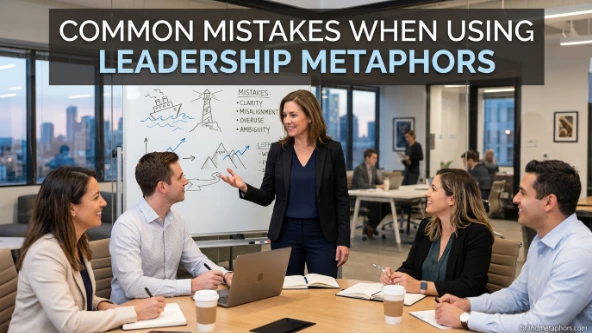
Mixing Too Many Images
Avoid combining unrelated metaphors.
Example: “She steered the ship while planting seeds of victory beneath the lighthouse.”
Too many images confuse readers.
Using Clichés Without Creativity
Popular metaphors work best when personalized.
Instead of: “He was a rock.”
Try: “He stood like a cliff against crashing fear.”
Fresh details make language memorable.
Forgetting Emotional Connection
Good metaphors create feeling, not just decoration.
Ask yourself: Does this image create emotion, tension, comfort, or inspiration?
If not, strengthen it.
Conclusion
Leadership is more than authority. It is guidance, courage, patience, vision, and connection. Metaphors help us capture these qualities in ways ordinary language cannot.
A leader may become a lighthouse during storms, a gardener nurturing growth, a captain steering through danger, or a bridge connecting divided people. These images stay alive in our minds because they speak to both logic and emotion.
Whether you are a writer, speaker, teacher, manager, student, or dreamer, leadership metaphors can sharpen your communication and deepen your understanding of human influence. They add beauty to writing, power to speeches, and meaning to everyday conversations.
The next time you think about leadership, do not ask only who gives orders.
Ask who carries the lantern when the path grows dark.
FAQs About Metaphors for Leadership
What are metaphors for leadership?
Metaphors for leadership are symbolic comparisons that describe leadership qualities through vivid images, such as a lighthouse, captain, gardener, or compass.
Why are leadership metaphors useful?
They make complex ideas easier to understand, create emotional impact, and improve writing, speeches, and communication.
What is the most common leadership metaphor?
The lighthouse is one of the most popular leadership metaphors because it symbolizes guidance, hope, and stability during difficult times.
How can I create my own leadership metaphor?
Think about objects, places, or experiences that reflect qualities like strength, guidance, growth, or teamwork. Then connect those images to leadership traits.
Can leadership metaphors improve writing?
Yes. They make writing more memorable, emotional, and visually engaging while helping readers connect deeply with ideas and stories.