

Loneliness is not always loud. Sometimes it doesn’t announce itself with tears or dramatic silence—it arrives like a slow fog slipping through an open window at night. It sits quietly in the corners of a room, even when the room is full of people. It can exist in a crowded city street, inside a glowing phone screen, or in the pause between two unread messages.
We often think of loneliness as simply being alone, but it is more complex than that. It is the feeling of disconnection, of being unseen or unheard, even when surrounded by noise and movement. That is why metaphors for loneliness matter—they give shape to something invisible. They help us name what we feel, express what is hard to explain, and even heal through understanding.
In this article, we’ll explore powerful metaphors for loneliness, how they work, and how you can use them in writing, storytelling, social media, or personal reflection. Each metaphor will open a small window into human emotion, showing that even isolation can be described in beautiful, relatable ways.
Loneliness as an Empty Room: Metaphors for Emotional Emptiness
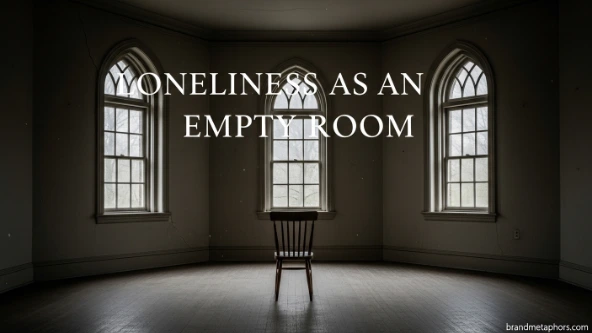
The Silent House with Unopened Doors
Loneliness is often compared to an empty house where every room is perfectly intact—but no one is home. The furniture is arranged, the lights still work, but there is no warmth of presence.
Meaning: This metaphor highlights emotional emptiness despite external stability.
Example: “After her friends moved away, her life felt like a silent house with unopened doors.”
Alternative expressions:
- A house without footsteps
- A home with echoing walls
- A place waiting for laughter
Emotional detail: You can almost hear the faint creak of floorboards, like memory itself walking through empty space.
Mini storytelling example
Imagine returning home after a long journey, expecting comfort—but everything feels unfamiliar. Not because the house changed, but because you did. That shift is what loneliness often feels like.
Loneliness as a Glass Wall: Seeing but Not Touching
The Invisible Barrier Between People
One of the strongest metaphors for loneliness is a glass wall. You can see others laughing, talking, and connecting—but you cannot reach them.
Meaning: This metaphor captures emotional isolation despite physical proximity.
Example: “At the party, she felt like she was standing behind a glass wall, watching life happen without her.”
Alternative expressions:
- A transparent prison
- A window into other lives
- A silent separation
Sensory detail: You see warmth on the other side, hear muffled laughter, but feel only cold air around you.
Cultural reference
Many modern films depict this feeling in crowded classrooms or offices, where characters are surrounded by people yet emotionally disconnected.
Interactive exercise
Think of a time you felt unseen in a group. Describe it using the “glass wall” metaphor in 3–4 sentences. What was on the other side?
Loneliness as a Dimming Light: Emotional Fading Over Time
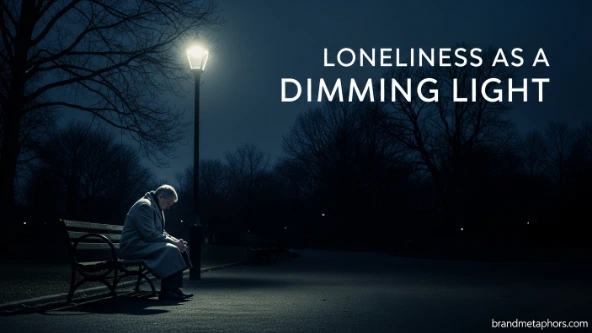
The Flickering Lamp in an Empty Street
Loneliness can be like a streetlight slowly fading at dusk. At first, it glows brightly, but gradually, its light weakens until it barely holds the darkness back.
Meaning: This metaphor reflects emotional exhaustion and fading connection.
Example: “His excitement for social life dimmed like a streetlamp losing power in the rain.”
Alternative expressions:
- A fading flame
- A weakening glow
- A candle burning low
Emotional tone: This is not sudden darkness—it is slow disappearance, almost unnoticed.
Bonus writing tip
Use “light-based metaphors” in storytelling when describing emotional decline. They are powerful and universally understood.
Loneliness as an Ocean Without Shore: Infinite Emotional Distance
Drifting Without Direction
Imagine floating in a vast ocean with no land in sight. That is how loneliness feels when it stretches over long periods.
Meaning: This metaphor expresses emotional vastness and lack of grounding.
Example: “After moving abroad, he felt like he was drifting in an ocean without shore.”
Alternative expressions:
- A sea without maps
- Waves without direction
- Floating in endless water
Sensory detail: You feel weightless but unstable, surrounded by silence that is too large to comprehend.
Mini storytelling
A traveler boards a plane to a new country, excited at first. Weeks pass, and excitement turns into distance—not physical, but emotional. Even in a city full of voices, the heart floats alone.
Creative prompt
Write a short paragraph describing your goals using the “ocean” metaphor. Are you drifting, sailing, or searching?
Loneliness as an Unanswered Phone Call: The Silence of Disconnection
The Ring That Never Connects
Loneliness can feel like calling someone important and hearing endless ringing—but no answer.
Meaning: This metaphor represents emotional longing and lack of response or connection.
Example: “Her messages felt like unanswered phone calls echoing into silence.”
Alternative expressions:
- A silent inbox
- A message left on read
- A call lost in space
Emotional detail: The longer the silence continues, the heavier it feels, like holding a phone that grows colder in your hand.
Social media reflection
In the digital age, this metaphor becomes even stronger—seen messages, delayed replies, and digital silence amplify feelings of isolation.
Loneliness as a Shadow That Never Leaves
Always Present, Never Touchable
Loneliness can behave like a shadow—following you wherever you go, especially when the light of connection fades.
Meaning: This metaphor shows constant emotional presence of loneliness.
Example: “Even in crowded rooms, loneliness walked beside him like an unshakable shadow.”
Alternative expressions:
- A silent companion
- A dark reflection
- A hidden twin
Sensory detail: You may not always see it, but you feel its presence in every pause and silence.
Interactive reflection
Write down three moments when your “shadow” felt strongest. What triggered it?
Loneliness as a Broken Bridge: Lost Paths to Others
Connection Interrupted
A broken bridge symbolizes lost access between two sides—people, relationships, or emotional states.
Meaning: This metaphor highlights damaged or lost relationships.
Example: “Their friendship became a broken bridge no one dared to cross again.”
Alternative expressions:
- Collapsed connection
- Gap between hearts
- Paths that no longer meet
Emotional tone: There is longing, but also hesitation—wanting to cross, yet fearing the fall.
Bonus tip for writing
Use bridge metaphors when writing about relationships, separation, or reconciliation themes.
Loneliness as a Library of Unread Books: Silent Inner World
Stories That No One Reads
Imagine a library filled with books that remain unopened. Each book represents thoughts, emotions, and memories that are never shared.
Meaning: This metaphor shows inner richness hidden by emotional isolation.
Example: “Her mind felt like a library of unread books—full, but unseen.”
Alternative expressions:
- A silent archive
- Shelves of untold stories
- Pages never turned
Cultural reference Writers often use libraries to symbolize both knowledge and isolation—especially in poetry and introspective literature.
Creative exercise
Write a short “book title list” describing your emotions today as if they were books in your internal library.
Loneliness as a Winter Without End: Emotional Coldness
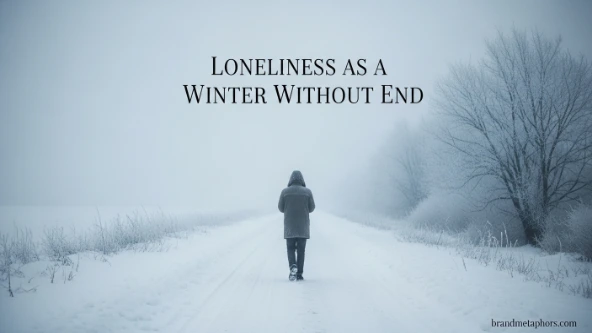
Perpetual Emotional Season
Loneliness can feel like winter that never transitions into spring. Everything is still, quiet, and cold.
Meaning: This metaphor reflects emotional numbness and prolonged isolation.
Example: “After the breakup, his world became a winter without end.”
Alternative expressions:
- Endless frost
- Permanent chill
- Snow that never melts
Sensory detail: Even sunlight feels distant, as if warmth has forgotten your name.
Mini storytelling
A city wakes up under snow. People rush with scarves and warmth. One person stands still, not noticing the cold anymore—not because it is gone, but because they have grown used to it.
Loneliness as a Locked Diary: Private Emotional World
Stories Hidden From Everyone
A locked diary represents thoughts and feelings that remain unshared.
Meaning: This metaphor expresses emotional privacy and hidden pain.
Example: “His loneliness was a locked diary no one had the key to.”
Alternative expressions:
- Sealed emotions
- Hidden chapters
- A book with no reader
Emotional tone: There is secrecy, but also a desire for understanding.
Interactive prompt
If your loneliness were a diary entry, what would the first sentence say?
Using Metaphors for Loneliness in Writing, Social Media, and Life
Creative Writing Enhancement
Metaphors make emotional writing powerful. Instead of saying “I feel lonely,” you can say:
- “I feel like a lighthouse with no ships in sight.”
This creates imagery that readers emotionally connect with.
Social media expression
Short metaphor-based captions work well:
- “Tonight I am an ocean without a shore.”
- “Just a glass wall between me and the world.”
Personal reflection tool
Metaphors help you understand your emotions better. Naming your feeling makes it less overwhelming.
Bonus tip
Keep a “metaphor journal” where you describe your daily emotions using imagery. Over time, you’ll notice emotional patterns more clearly.
Conclusion
Loneliness is not just an absence—it is an experience that shapes how we see ourselves and others. Through metaphors, we give it form, color, and voice. Whether it is a glass wall, a fading light, or an ocean without shore, each image helps us understand what words alone often fail to express.
More importantly, metaphors remind us that loneliness is universal. Everyone, at some point, has stood behind that glass wall or drifted in that silent ocean. And in recognizing these shared feelings, we begin to reduce the distance between ourselves and others.
FAQs
What are metaphors for loneliness?
Metaphors for loneliness are figurative expressions that describe emotional isolation using imagery like empty rooms, oceans, or shadows.
Why are metaphors important in describing loneliness?
They help express complex emotions in relatable and vivid ways, making feelings easier to understand and communicate.
Can metaphors help with emotional healing?
Yes, they allow people to externalize emotions, making them easier to reflect on and process.
How can I use loneliness metaphors in writing?
You can use them in stories, poetry, social media captions, or journaling to add emotional depth and imagery.
What is the most powerful metaphor for loneliness?
It depends on experience, but common powerful ones include “a glass wall,” “an empty house,” or “an ocean without shore.”