
1. The Quiet Architecture of Lies: A Sensory Introduction to Deception
A lie rarely arrives with noise. It slips in quietly—like a door that doesn’t quite close properly, or a shadow that stretches a little too far across the floor. You might not notice it at first, but something feels off. A conversation that once felt solid now feels slightly hollow, like walking across wood that might not hold your weight.
Human beings have always struggled to describe lying directly, so we reach for metaphors—because deception is not just an action, it’s an atmosphere. It is a feeling before it is a fact. We say someone is “wearing a mask,” “spinning a web,” or “building a house of cards,” because these images help us see what cannot easily be proven in the moment.
Metaphors for lying matter because they turn invisible emotional experiences into something we can recognize, discuss, and understand. They appear in literature, everyday speech, politics, relationships, and even social media culture. When used well, they sharpen writing and deepen emotional truth. When ignored, deception becomes harder to detect—even harder to name.
In this article, we’ll explore powerful metaphors for lying, their meanings, emotional textures, and how you can use them in writing and daily expression. You’ll also get creative exercises to help you turn abstract deception into vivid imagery of your own.
2. What Are Metaphors for Lying and Why Do They Matter?
Metaphors for lying are symbolic comparisons that describe deception through imagery rather than literal explanation. Instead of saying “someone is lying,” we say “they are weaving a web,” suggesting complexity, entrapment, and intention.
These metaphors matter because lying is rarely simple. It has layers—emotion, motive, consequence, and perception. A metaphor compresses all of that into a single image the mind can grasp instantly.
For example:
- A “mask” suggests hidden identity
- A “web” suggests entanglement and control
- A “house of cards” suggests fragility and collapse
Writers use these metaphors to create emotional depth, while everyday speakers use them to make sense of trust and betrayal. Even in journalism or politics, metaphors shape how deception is perceived by the public.
When you understand these metaphors, you don’t just improve your language—you improve your ability to read between the lines of human behavior.
3. Why We Describe Lies Through Imagery Instead of Facts
Lying is not only about words—it is about intention, timing, tone, and emotional consequence. That’s why literal descriptions often feel insufficient.
Metaphors help us:
- Visualize hidden behavior
- Express emotional discomfort
- Communicate complexity quickly
- Make abstract dishonesty feel tangible
In storytelling traditions across cultures, deception has always been framed through imagery. Ancient myths described trickery as disguises, illusions, and traps. Shakespeare famously explored deception through disguise and performance, especially in plays like Othello and Hamlet, where truth is buried beneath layers of appearance.
In modern life, we still rely on these images because they mirror reality more accurately than plain statements ever could. A lie is rarely just a sentence—it is a structure, a performance, or even a collapsing system of trust.
4. The Lie as a Mask: Hidden Faces and Broken Truths
One of the most common metaphors for lying is the mask. A lie as a mask suggests something hidden behind a false face—intentional disguise meant to manipulate perception.
Meaning & Explanation
A mask represents concealment of identity or truth. The liar presents one version of themselves while hiding another.
Example Sentence
“She smiled warmly, but it felt like a mask hiding something colder beneath.”
Alternative Expressions
- Wearing a false face
- Putting on an act
- Hiding behind a facade
Sensory & Emotional Texture
Masks feel smooth on the outside but suffocating underneath. They suggest controlled breathing, forced expressions, and tension between what is shown and what is real.
Mini Storytelling Moment
In a small café, a man tells his friend he is happy for her promotion. His words are polite, rehearsed. But his eyes flick away too quickly, like they are avoiding sunlight. The mask fits perfectly—but only from a distance.
Cultural Reference
In theatre traditions like classical drama, masks were used to represent different emotional states. Over time, the idea evolved into a universal symbol for deception in human behavior.
5. The Lie as a Web: Entanglement and Growing Complexity
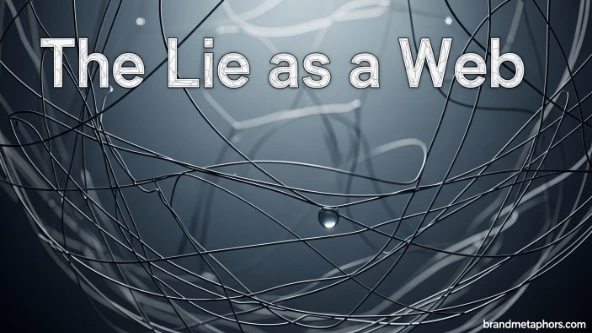
Another powerful metaphor is the web of lies—a structure that expands as more deception is added.
Meaning & Explanation
A web suggests interconnected lies. One falsehood requires another to support it, creating a fragile but sticky structure.
Example Sentence
“He told one small lie, but soon he was trapped in a web he couldn’t escape.”
Alternative Expressions
- Tangled in lies
- Spinning deception
- Caught in a network of falsehoods
Sensory & Emotional Texture
A web feels sticky, tightening, and hard to move through. It implies gradual entrapment rather than instant collapse.
Mini Storytelling Moment
A student forgets to submit an assignment. He says his laptop crashed. Then he says the internet was down. Later, he claims he emailed it to the wrong address. Each explanation adds another strand, until the truth is no longer visible—only the web remains.
Literary Echo
In detective fiction, especially noir stories, lies often function like webs—each clue leading deeper into confusion until truth becomes almost unreachable.
6. The Lie as a House of Cards: Fragile Construction of Falsehood
A house of cards is a striking metaphor for lies built on instability.
Meaning & Explanation
This metaphor suggests that lies may look structured but are extremely fragile. Remove one element, and everything collapses.
Example Sentence
“His story was a house of cards—one question was enough to bring it down.”
Alternative Expressions
- Fragile illusion
- Unstable story
- Built on weak foundations
Sensory & Emotional Texture
You can almost hear the quiet trembling of paper-thin stability. There is tension, anticipation, and inevitable collapse.
Mini Storytelling Moment
During an interview, a politician confidently explains inconsistencies in their record. But when pressed on one small detail, the explanation falters. The audience watches as the narrative collapses—not loudly, but with a subtle, uncomfortable silence.
Cultural Reference
The phrase is often used in journalism and legal settings to describe testimonies or arguments that cannot withstand scrutiny.
7. The Lie as a Shadow: Presence Without Substance
A shadow metaphor captures how lies follow truth without fully existing on their own.
Meaning & Explanation
A shadow suggests something dependent, secondary, and often misleading in shape but not substance.
Example Sentence
“Her explanation followed him like a shadow—close, but never fully real.”
Alternative Expressions
- Dark echo of truth
- Faint imitation
- False reflection
Sensory & Emotional Texture
Shadows are quiet, cool, and slightly unsettling. They change shape depending on perspective, just like deceptive stories.
Mini Storytelling Moment
A rumor spreads through a workplace. It doesn’t have a clear source, but it follows one employee everywhere she goes. Like a shadow, it shifts and distorts, never fully disappearing even in bright light.
8. The Lie as Poison: Slow Damage to Trust
The metaphor of poison emphasizes the harmful, often delayed impact of deception.
Meaning & Explanation
A lie as poison suggests gradual damage—something that may seem harmless at first but spreads internally over time.
Example Sentence
“His words were like poison, slowly eroding the trust between them.”
Alternative Expressions
- Toxic truth distortion
- Slow corruption
- Emotional contamination
Sensory & Emotional Texture
Poison is invisible, silent, and slow-moving. It creates anxiety because damage is happening before it is visible.
Mini Storytelling Moment
A friendship begins to weaken after a small lie about money. Nothing changes immediately, but over time, suspicion grows. Every conversation feels slightly contaminated, as if something invisible has altered the emotional air between them.
9. When Metaphors Come Alive: Stories of Deception in Real Life
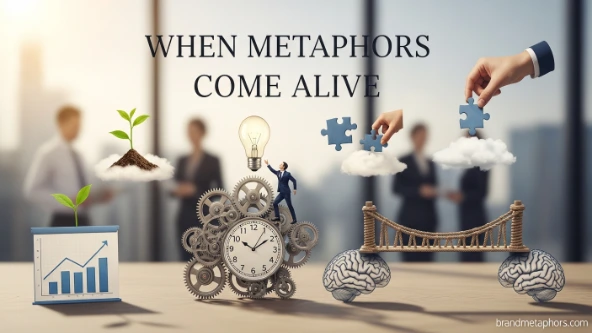
In everyday life, we constantly shift between these metaphors without noticing.
A couple arguing might describe broken trust as a “cracked foundation.” A journalist might describe misinformation as a “flood.” A teacher might call academic dishonesty a “shortcut that leads to a dead end.”
These metaphors shape perception. They influence how seriously we take deception and how we emotionally process it.
Imagine a workplace where small lies begin as “harmless masks.” Over time, they become a “web,” then a “house of cards,” and finally a “poison” that erodes teamwork. The progression of metaphors mirrors the progression of damage.
That is the power of figurative language—it doesn’t just describe reality; it maps emotional transformation over time.
10. Creative Exercises: Using Metaphors for Lying in Writing and Speech
Now it’s your turn to work with these ideas.
Exercise 1: Build Your Own Metaphor
Think of a lie you’ve heard (real or fictional). Now describe it using:
- An object (mask, web, mirror, smoke)
- A natural force (storm, fire, shadow)
- A structure (bridge, wall, house)
Write one sentence using that metaphor.
Exercise 2: Transform Emotion into Image
Take the feeling of betrayal and describe it without using the words “lie” or “lying.” Focus only on imagery.
Exercise 3: Expand a Metaphor Chain
Start with: “A small lie is like a thread…”
Then expand it into a web, structure, or collapse.
Bonus Tips for Daily Use
- In writing: use metaphors sparingly but deliberately for emotional impact
- On social media: use short metaphorical phrases for storytelling captions
- In conversation: use metaphors to soften difficult truths or explain complex emotions
Strong metaphors don’t just decorate language—they clarify it.
FAQs: Metaphors for Lying
1. Why do we use metaphors for lying instead of direct language?
Because lying involves emotional complexity. Metaphors make hidden behavior easier to visualize and understand.
2. What is the most common metaphor for lying?
“Wearing a mask” and “web of lies” are among the most widely used metaphors.
3. Are metaphors for lying used in literature?
Yes. Writers like Shakespeare and modern novelists use them to represent deception, identity, and truth.
4. Can metaphors make writing more persuasive?
Yes. They create emotional imagery that helps readers connect more deeply with abstract ideas.
5. How can I create my own metaphors for lying?
Think about how deception feels (fragile, sticky, hidden, toxic) and match that feeling with a physical image or object.
Conclusion
Metaphors for lying reveal something essential about human communication: truth is rarely simple, and deception is never just words. It is a structure of emotion, intention, and consequence that we can only fully understand through imagery.
Whether it is a mask hiding intention, a web trapping truth, a fragile house of cards, or a shadow that follows silently, each metaphor gives us a different lens to interpret dishonesty.
By learning and using these metaphors, you don’t just become a better writer—you become more aware of how language shapes perception. And in a world where truth often competes with appearance, that awareness is invaluable.