
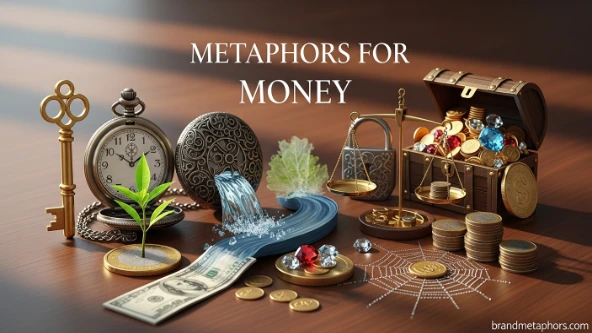
Introduction: When Money Feels Like Something More Than Numbers
Late at night, a small shopkeeper counts crumpled notes under a flickering bulb. Outside, the world is quiet, but inside his mind, money is not just paper—it is breath, it is pressure, it is hope folded into rectangles. For some, money feels like water slipping through fingers. For others, it is a heavy anchor keeping life stable in stormy seas.
We often think of money in purely logical terms: income, expenses, savings, profit. But in reality, money lives in our imagination first. The way we describe money shapes the way we use it. That’s where metaphors for money become powerful. They help us understand financial life not as cold arithmetic, but as something deeply human—something emotional, visual, and even poetic.
In this article, we’ll explore rich and creative metaphors for money, how they shape thinking, and how you can use them in writing, storytelling, social media, and even your personal financial mindset. You’ll also find practical exercises to turn abstract ideas into creative expression.
Money as Water: Flowing, Draining, and Nourishing Financial Life
One of the most common and powerful metaphors for money is water.
Money flows. It pours in. It drains out, gets trapped, evaporates.
Meaning and Explanation
This metaphor emphasizes movement and fluidity. Just like water, money is never static. It circulates through income, expenses, investments, and debts.
Example Scenario
A freelancer says, “This month, money is flowing in like a river after rain, but I need to build a dam for savings.”
Alternative Expressions
- Cash flow
- Financial streams
- Income tide
- Money leak
Sensory & Emotional Layer
Imagine standing near a riverbank: when it flows steadily, you feel secure. When it dries, anxiety creeps in. When it floods, you feel overwhelmed. Money behaves the same way in human emotion.
Mini Storytelling Element
In coastal villages, fishermen often describe earnings as tides. “Good tide today,” they say—not meaning luck alone, but timing, patience, and rhythm. This language reflects a deeper truth: money is not just earned, it moves with life’s cycles.
Interactive Exercise
Write three sentences describing your current financial situation using water metaphors. Example prompts:
- Is your money flowing, leaking, or pooling?
- What would a “financial drought” look like in your life?
Money as Seeds: Planting Wealth for Future Harvest
Another powerful metaphor is money as seeds.
Meaning and Explanation
Money is not just something to spend—it is something to plant. Investments, savings, and long-term planning are seeds that grow into future stability.
Example Sentence
“She treated every saved coin like a seed buried in fertile soil, trusting it would grow into security one day.”
Alternative Expressions
- Planting capital
- Growing wealth
- Financial gardening
- Investment roots
Emotional & Sensory Detail
Think of soil in your hands—dark, warm, full of potential. You cannot see what happens underground, but you trust growth is happening. That is what saving money feels like for disciplined investors.
Cultural Reference
In many agrarian cultures, farmers don’t call saving “keeping money.” They call it “holding seed grain.” It reflects patience, discipline, and faith in the unseen future.
Interactive Exercise
Imagine your monthly income as a handful of seeds. Where would you plant:
- 50% for survival soil (expenses)?
- 20% for growth soil (investments)?
- 10% for emergency soil (backup)?
Write your own “financial garden plan.”
Money as Fire: Power, Danger, and Transformation
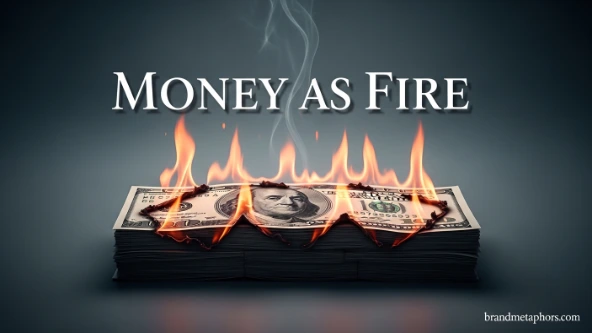
Fire is a metaphor that captures money’s dual nature—its power to create and destroy.
Meaning and Explanation
Money can warm lives or burn them down depending on control and intention.
Example Scenario
“His ambition turned money into fire—bright enough to inspire him, but dangerous when left unchecked.”
Alternative Expressions
- Burning cash
- Fueling ambition
- Financial wildfire
- Economic spark
Emotional Layer
Fire gives comfort when controlled, like a fireplace in winter. But uncontrolled, it becomes destruction. Money behaves similarly in debt, addiction, or reckless spending.
Literary Note
Many classic novels portray wealth as flame—glittering, tempting, but often consuming characters who chase it without balance.
Interactive Exercise
Answer these questions:
- When does money feel like warmth in your life?
- When has it felt like pressure or “burning stress”?
- How can you “contain your financial fire”?
Money as Time: The Hidden Currency of Life
Time and money are deeply connected metaphors—sometimes even interchangeable.
Meaning and Explanation
Money represents hours of labor, days of effort, and years of life energy stored in economic form.
Example Sentence
“She stopped saying ‘I don’t have money’ and started saying ‘I don’t have time I can afford to trade.’”
Alternative Expressions
- Time wealth
- Life currency
- Hourly value
- Energy exchange
Sensory Detail
Imagine holding a ticking clock in your hand. Every coin you earn represents something you will never get back—your time.
Cultural Reflection
Modern productivity culture often equates time with money: “time is money.” But deeper thinking suggests something more profound: money is compressed time.
Interactive Exercise
Track one day of spending and ask:
- How many hours of work did this purchase cost me?
- Was it worth my time?
Money as Blood: Circulating Lifeblood of Economy
Money is often compared to blood in a living body.
Meaning and Explanation
Just as blood circulates to keep the body alive, money circulates through economies to sustain life.
Example Scenario
“When small businesses close, it feels like arteries in the city are blocked, slowing everything down.”
Alternative Expressions
- Economic circulation
- Financial lifeline
- Cash bloodstream
- Market pulse
Emotional Layer
This metaphor creates a sense of dependency—when money stops moving, systems weaken, just like a body without circulation.
Mini Story
During economic downturns, journalists often describe “stalled blood flow in the economy,” showing how deeply this metaphor is embedded in real-world thinking.
Interactive Exercise
Think of your community:
- Where does money flow in?
- Where does it get stuck?
- What “blockages” exist in your financial ecosystem?
Money as a Tool: Building, Fixing, and Creating Life Structures
Money is not just abstract—it is functional, like a tool.
Meaning and Explanation
Money helps build homes, solve problems, and shape reality.
Example Sentence
“Used wisely, money is a hammer that builds stability; used carelessly, it becomes a broken tool in your hands.”
Alternative Expressions
- Financial instrument
- Economic toolkit
- Wealth mechanism
- Resource lever
Emotional Detail
A tool gives control. When you hold money as a tool, you feel empowered rather than overwhelmed.
Practical Insight
This metaphor shifts mindset from emotional fear to practical action. Instead of “money controls me,” it becomes “I use money.”
Interactive Exercise
List three problems in your life. Now rewrite how money could act as a “tool” to solve each one.
Money as a Mirror: Reflecting Values and Identity
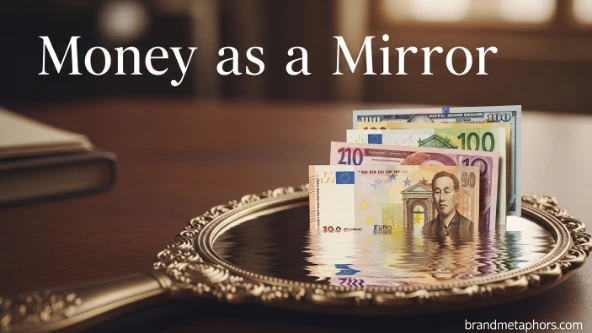
Money often reflects who we are more than what we have.
Meaning and Explanation
Spending habits, saving patterns, and financial decisions mirror personal values.
Example Scenario
“Her bank statement was a mirror—showing generosity, curiosity, and sometimes impulsive joy.”
Alternative Expressions
- Financial reflection
- Wealth identity
- Spending mirror
- Economic self-image
Emotional Layer
Looking at money habits can feel like looking at a mirror you didn’t expect to see. Honest, sometimes uncomfortable, but revealing.
Cultural Insight
Philosophers often argue that money does not change character—it reveals it.
Interactive Exercise
Review last month’s spending and ask:
- What does this say about my priorities?
- What story does my money tell about me?
Money as a Game: Strategy, Risk, and Reward
Money can also be understood through the metaphor of a game.
Meaning and Explanation
Financial decisions involve strategy, planning, risk-taking, and rewards.
Example Sentence
“He treated investing like chess, not lottery—every move was intentional.”
Alternative Expressions
- Wealth strategy
- Financial gameplay
- Economic competition
- Risk-reward system
Emotional Layer
Games bring excitement and tension. Money behaves similarly—uncertainty mixed with opportunity.
Mini Story
In stock markets, traders often speak of “winning streaks” and “losing hands,” borrowing language from games to describe financial reality.
Interactive Exercise
Think of your financial life as a game:
- What are the rules you are playing by?
- What is your winning strategy?
- Are you playing defensively or boldly?
Money as a River of Society: Connection and Movement
Beyond personal finance, money connects society like a vast river system.
Meaning and Explanation
It flows between individuals, businesses, governments, and institutions, shaping economies.
Example Scenario
“Every purchase he made felt like dropping a stone into a larger river of global trade.”
Alternative Expressions
- Economic river
- Financial network
- Trade current
- Market flow
Emotional Layer
This metaphor expands perspective—you are not isolated. You are part of a moving system.
Interactive Exercise
Trace one product you use daily. Ask:
- Where did the money go?
- Who benefited from it?
- How far did it travel?
Money as Light: Illumination, Clarity, and Direction

Finally, money can be seen as light—not just fuel, but illumination.
Meaning and Explanation
Money helps reveal possibilities, open choices, and guide decisions.
Example Sentence
“For her, financial stability was not luxury—it was light that made life visible.”
Alternative Expressions
- Economic clarity
- Wealth illumination
- Financial brightness
- Opportunity light
Emotional Layer
Light removes fear of darkness. Similarly, financial stability removes uncertainty.
Interactive Exercise
Write:
- How does money bring “light” into your life?
- Where does lack of money create “darkness”?
Conclusion
Money is not just currency—it is story, emotion, movement, and meaning. When we describe money as water, seeds, fire, time, blood, tools, mirrors, games, rivers, or light, we are not just being poetic—we are reshaping how we understand and interact with it.
Metaphors give us control over something that often feels uncontrollable. They transform financial anxiety into visual understanding, and abstract numbers into lived experience.
The more consciously we choose our metaphors, the more consciously we can shape our financial lives.
FAQs About Metaphors for Money
1. Why are metaphors for money important?
They help people understand financial concepts emotionally and visually, making money easier to relate to and manage.
2. Can metaphors influence financial behavior?
Yes. The way you think about money can affect spending, saving, and investment decisions.
3. What is the most common money metaphor?
“Money as water” is one of the most widely used because it reflects flow, movement, and scarcity.
4. How can I use money metaphors in writing?
Use them in storytelling, blogging, social media captions, or personal reflections to make financial ideas more engaging.
5. Are money metaphors culturally different?
Yes. Agricultural cultures may use seeds and harvest, while industrial societies often use machines, flow, or time-based metaphors.