
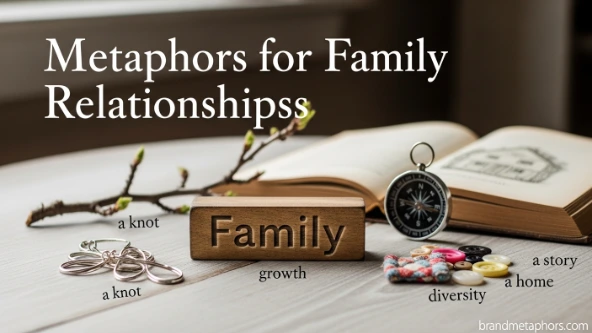
Introduction: The Threads That Hold Us Together
Picture a crowded dinner table on a rainy evening. Steam rises from bowls of soup, laughter bounces off the walls, and someone tells the same old story everyone already knows by heart. In another room, two siblings argue over something small, while a grandparent quietly smiles at the noise. Families are rarely simple. They are warm and messy, comforting and complicated all at once.
That is why metaphors for family relationships feel so powerful. Sometimes plain words cannot fully explain the love between siblings, the tension between parents and children, or the silent loyalty that survives difficult years. Metaphors give shape to emotions that are hard to describe. They turn relationships into bridges, roots, storms, gardens, and countless other vivid images.
Whether you are a writer searching for emotional language, a student exploring figurative speech, or simply someone trying to express feelings more beautifully, family metaphors can deepen communication. They help us see familiar relationships from fresh angles. They also make storytelling, social media captions, speeches, and personal reflections more memorable.
In this guide, you will explore creative metaphors for family relationships, learn their meanings, discover ways to use them naturally, and practice creating your own. Along the way, you may even recognize parts of your own family hidden between the lines.
Family as a Tree: Roots, Branches, and Growth
One of the most timeless metaphors for family relationships is the image of a tree. Families often resemble living trees with deep roots, growing branches, and seasons of change.
The roots symbolize ancestors, traditions, and values passed through generations. Branches represent children and relatives spreading into different directions while still remaining connected.
Meaning and Explanation
A tree survives storms because its roots hold firm. In the same way, families often endure hardship through shared history and emotional support.
Example Sentence
“My grandmother was the root of our family tree, quietly holding everyone together.”
Alternative Ways to Express It
- Family roots
- Branches of the same tree
- Deeply rooted love
- A growing family tree
Emotional Details
This metaphor often creates feelings of stability, belonging, and continuity. It reminds readers that family bonds can stretch without breaking.
Mini Storytelling Example
In many cultures, family trees are more than diagrams. Ancient traditions in places like China and Africa honored ancestors through stories and ceremonies, treating family history like living roots feeding future generations.
Bonus Tip
Use tree metaphors in graduation speeches, family reunion captions, or reflective writing about heritage.
Family Relationships as a Bridge
Some family members act like bridges. They connect relatives during conflict, distance, or emotional separation.
A bridge metaphor highlights communication, healing, and emotional connection.
Meaning and Explanation
Bridges help people cross difficult spaces. In families, certain individuals create understanding between generations or repair broken relationships.
Example Sentence
“My older sister became the bridge between my father and me after years of silence.”
Alternative Expressions
- Building bridges
- Crossing emotional distance
- A bridge over troubled waters
- Connecting hearts
Sensory and Emotional Details
This metaphor feels hopeful and gentle. Readers can imagine standing above rushing water while moving toward safety and understanding.
Real-Life Reflection
Many families experience periods of tension. Often, one compassionate person helps everyone reconnect. That person becomes the emotional bridge no one realized they needed.
Interactive Prompt
Think about your family. Who acts as the “bridge” during disagreements? Write three sentences describing how they reconnect people.
Family as a Quilt Stitched Together
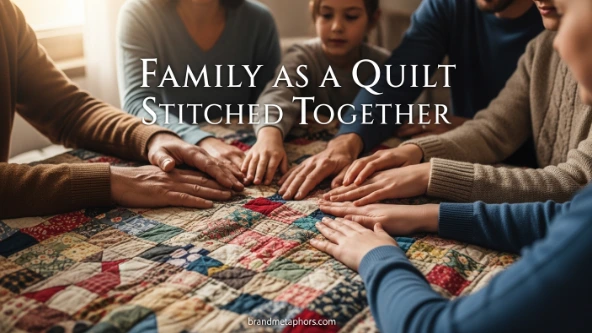
A quilt is made from different fabrics, patterns, and textures sewn into one meaningful piece. Families often work the same way.
Every member brings unique experiences, personalities, and flaws.
Meaning and Explanation
This metaphor celebrates diversity within unity. No two pieces are identical, yet together they create warmth and beauty.
Example Sentence
“Our family was a patchwork quilt stitched together by love and patience.”
Alternative Ways to Say It
- Patchwork family
- Sewn together through memories
- Threads of love
- A woven family bond
Literary Feeling
Quilt metaphors create warmth and nostalgia. They often appear in stories about grandparents, traditions, or blended families.
Cultural Reference
In American literature and African storytelling traditions, quilts often symbolize memory, resilience, and family history passed through generations.
Practical Writing Tip
This metaphor works beautifully in emotional essays, memoirs, and wedding speeches.
Metaphors for Sibling Relationships
Sibling relationships can feel like sunshine one moment and thunderstorms the next. They are layered with competition, loyalty, teasing, and companionship.
Siblings as Mirrors
Brothers and sisters often reflect parts of ourselves.
Example Sentence
“My brother was a mirror showing me both my strengths and flaws.”
Meaning
This metaphor suggests deep familiarity and emotional reflection.
Siblings as Teammates
Some siblings move through life like players on the same team.
Example Sentence
“No matter how much we argued, my sister was always my teammate when life became difficult.”
Meaning
This image highlights loyalty and shared struggles.
Siblings as Fire and Ice
This metaphor describes opposite personalities within one family.
Example Sentence
“They were fire and ice, constantly clashing yet impossible to separate.”
Emotional Effect
It creates dramatic contrast while emphasizing connection despite differences.
Interactive Exercise
Describe your sibling relationship using weather imagery. Is it a calm sunrise, a hurricane, or shifting seasons?
Parents as Anchors in Life’s Storms
Parents are often compared to anchors because they provide stability during uncertain times.
Meaning and Explanation
An anchor keeps a ship from drifting away. Parents frequently guide children through fear, mistakes, and change.
Example Sentence
“My mother was the anchor that kept our family steady during hard years.”
Alternative Expressions
- Emotional anchor
- Steady harbor
- Guiding lighthouse
- Safe shoreline
Sensory Details
This metaphor creates images of crashing waves, cold winds, and a ship finally finding calm waters.
Real-Life Example
During financial struggles or illness, many families rely on parental reassurance. Even small gestures like late-night talks or shared meals become emotional anchors.
Bonus Tip for Social Media
This metaphor works wonderfully for heartfelt Mother’s Day or Father’s Day captions.
Example:
“Thank you for being my anchor through every storm.”
Family Relationships as a Garden

Gardens require patience, care, sunlight, and attention. Relationships within families thrive under similar conditions.
Meaning and Explanation
Love grows when nurtured consistently. Neglect, however, can cause emotional distance.
Example Sentence
“Our family became a garden where kindness allowed everyone to bloom.”
Alternative Phrases
- Planting seeds of trust
- Growing together
- Blooming relationships
- Pulling emotional weeds
Emotional and Sensory Imagery
Garden metaphors feel peaceful and alive. Readers may imagine warm soil, spring rain, or flowers opening in sunlight.
Mini Storytelling
Imagine a grandfather teaching his grandchildren how to plant tomatoes every summer. Years later, those small gardening lessons become symbols of patience, tradition, and quiet love.
Interactive Prompt
Write about one relationship in your family that needs more “watering.” What actions could strengthen it?
Family as a Team Facing Life Together
Sports and teamwork metaphors are especially effective for describing cooperation within families.
Meaning and Explanation
Families often succeed through support, shared effort, and encouragement.
Example Sentence
“When my father lost his job, our family became a team determined to survive together.”
Alternative Expressions
- Playing on the same side
- Family teamwork
- Passing the baton
- Carrying each other through the game
Emotional Impact
This metaphor creates feelings of resilience and unity.
Writing Tip
Team metaphors work well in motivational speeches, parenting blogs, and inspirational storytelling.
Cultural Connection
Movies and novels often portray families overcoming challenges like sports teams preparing for championship games. Each member contributes differently, but everyone matters.
Metaphors for Toxic or Difficult Family Relationships
Not every family relationship feels warm or supportive. Some metaphors help describe emotional complexity and pain honestly.
Family as a Cage
This metaphor describes relationships that feel restrictive or emotionally suffocating.
Example Sentence
“For years, their expectations felt like a cage around my dreams.”
Meaning
It reflects pressure, control, or lack of freedom.
Family as a Battlefield
Conflict-heavy families may resemble constant war zones.
Example Sentence
“Every holiday dinner turned into a battlefield of old arguments.”
Emotional Tone
This metaphor creates tension and emotional exhaustion.
Family as Cracked Glass
Some families remain connected despite emotional fractures.
Example Sentence
“We looked whole from the outside, but inside we were cracked glass.”
Meaning
This image symbolizes hidden pain and fragility.
Important Reflection
Difficult metaphors can help people process emotions through writing and creativity. They offer honesty without directly attacking others.
Family Relationships as a Compass
Some family members guide us morally and emotionally, much like a compass points north.
Meaning and Explanation
A compass metaphor represents guidance, wisdom, and direction.
Example Sentence
“My grandfather was the compass that guided our family through uncertainty.”
Alternative Ways to Express It
- Moral compass
- Guiding direction
- Leading star
- Inner navigation
Literary Feel
This metaphor often appears in reflective or inspirational writing.
Real-Life Application
Think about someone in your family whose advice still influences your choices today. That person may be your emotional compass.
Interactive Exercise
Write about a lesson from a family member that still guides your life decisions.
The Power of Food Metaphors in Family Bonds
Food often symbolizes comfort, tradition, and connection.
Family as Shared Bread
Bread represents nourishment and togetherness in many cultures.
Example Sentence
“Our family was like warm bread, simple yet comforting.”
Family Recipes as Time Machines
Old recipes can carry memories across generations.
Example Sentence
“My grandmother’s soup recipe was a time machine back to childhood.”
Family Dinner as a Fireplace
A shared meal can become the emotional center of the home.
Meaning
This metaphor emphasizes warmth, safety, and gathering.
Sensory Details
The smell of spices, the sound of plates clinking, and soft laughter make food metaphors especially vivid.
Bonus Tip
Use food metaphors in memoirs, holiday captions, or emotional storytelling.
Creative Exercises for Building Your Own Family Metaphors
Creating original metaphors helps strengthen both writing skills and emotional awareness.
Exercise 1: Compare Family to Nature
Ask yourself:
- Is your family like a river?
- A mountain?
- A changing season?
Write five comparisons and explain each one.
Exercise 2: Use Objects as Symbols
Choose a household object and connect it to family dynamics.
Examples:
- Clock = routines and traditions
- Window = openness and honesty
- Candle = warmth and hope
Exercise 3: Create a Metaphor Journal
Keep a notebook where you record emotional comparisons from daily life.
Example:
“My cousins filled the room like fireworks, loud and impossible to ignore.”
Why This Helps
Practicing metaphors improves storytelling, poetry, journaling, and communication skills.
Tips for Using Family Metaphors in Writing and Daily Life

Strong metaphors feel natural rather than forced. Here are practical ways to use them effectively.
Keep the Imagery Relatable
Readers connect more deeply with familiar images like gardens, homes, rivers, and storms.
Match the Emotion
Gentle metaphors fit loving moments, while sharper metaphors suit conflict or tension.
Avoid Overcomplicating
Simple metaphors are often more memorable.
Instead of:
“Our family was an intergalactic constellation of emotional contradictions.”
Try:
“Our family was a stormy sea learning to stay afloat together.”
Use Metaphors in Everyday Communication
Family metaphors are useful for:
- Instagram captions
- Wedding speeches
- Therapy journaling
- School essays
- Poetry writing
- Greeting cards
Quick Practice Prompt
Finish this sentence in three different ways:
“My family is like __________ because __________.”
Conclusion
Families shape the way we love, communicate, heal, and remember. Yet these relationships are often too layered for plain language alone. Metaphors allow us to express emotional truths with color, texture, and feeling. A family can be a tree with deep roots, a bridge across pain, a garden needing care, or even a battlefield filled with unresolved tension.
The beauty of metaphors for family relationships lies in their flexibility. They help writers create vivid imagery, allow speakers to express heartfelt emotions, and encourage everyday people to better understand their own connections. Sometimes one simple metaphor can explain years of emotion more clearly than an entire conversation.
As you continue exploring language creatively, pay attention to the metaphors already living around you. Listen to family stories. Notice recurring symbols. Observe the ways love, conflict, tradition, and growth appear in daily life.
You may discover that every family carries its own hidden poetry.
FAQs About Metaphors for Family Relationships
1. What are metaphors for family relationships?
Metaphors for family relationships are figurative comparisons that describe family dynamics using symbolic imagery, such as trees, bridges, gardens, or storms.
2. Why are family metaphors important in writing?
They make emotions more vivid, relatable, and memorable. Metaphors also help readers connect deeply with personal experiences.
3. What is the most common family metaphor?
The family tree is one of the most common metaphors because it represents roots, growth, generations, and connection.
4. Can metaphors describe difficult family relationships?
Yes. Metaphors like cages, battlefields, or cracked glass can express emotional pain, conflict, or distance honestly and creatively.
5. How can I create my own family metaphors?
Start by comparing your family to objects, nature, weather, or places. Think about emotions, behaviors, and shared experiences to build meaningful comparisons.