
Introduction
The email refuses to send. The traffic light turns red again. The words you want sit trapped somewhere behind your teeth while your patience slowly unravels like an old sweater thread.
Frustration is one of the most universal emotions humans experience, yet it can be surprisingly difficult to describe. Sometimes “I’m annoyed” feels too small. “I’m angry” feels inaccurate. What we really need are vivid images that capture the heat, pressure, chaos, and exhaustion simmering inside us. That is where metaphors for frustration become powerful.
Metaphors transform emotions into something we can see, hear, and almost touch. They help writers create emotional depth, help speakers communicate more clearly, and help everyday people explain what they are feeling without sounding repetitive. Instead of saying “I’m frustrated,” you might say, “I feel like a kettle about to whistle,” or “My brain is stuck in traffic.”
These expressive comparisons bring emotion alive. They add color to storytelling, poetry, journaling, social media captions, and conversations. In this article, you will explore creative metaphors for frustration, understand their meanings, learn how to use them naturally, and discover practical exercises to sharpen your emotional writing skills.
Why Metaphors for Frustration Matter in Writing and Speech
Frustration is emotional friction. It happens when desire crashes into obstacles. Without imagery, descriptions of frustration can feel flat or repetitive. Metaphors give the emotion texture.
Think about the difference between these sentences:
- “She felt frustrated.”
- “She felt like a storm trapped inside a glass jar.”
The second sentence creates tension, movement, and emotion instantly.
Metaphors for frustration matter because they:
- Make emotions easier to visualize
- Deepen storytelling and character development
- Improve poetry and creative writing
- Help readers emotionally connect
- Make conversations more expressive
- Add originality to social media captions and journaling
Writers from classic literature to modern films rely on metaphorical language to express emotional struggle. Even everyday speech is full of hidden metaphors. We say we are “boiling over,” “hitting a wall,” or “spinning our wheels.” These phrases paint emotional pictures more effectively than literal explanations ever could.
Frustration as a Boiling Kettle
One of the most common metaphors for frustration compares the emotion to boiling water trapped inside a kettle.
Meaning and Explanation
Frustration often builds gradually. Small annoyances pile up until pressure becomes impossible to contain. Like steam inside a kettle, emotions rise until they burst outward.
This metaphor works especially well because frustration rarely appears instantly. It simmers.
Example Scenario
After three hours of technical problems during her presentation, Maya felt like a kettle shrieking on the stove.
Alternative Ways to Express It
- Boiling with anger
- Simmering under pressure
- Ready to explode
- Steaming with irritation
Sensory and Emotional Details
This metaphor carries heat, noise, and pressure. Readers can almost hear the whistle and feel the steam against their skin.
Mini Storytelling Example
Imagine a father trying to assemble a toy on Christmas Eve while tiny screws roll under the couch. The instructions make no sense. Tape sticks to itself. Batteries are missing. Slowly, his patience whistles louder and louder until he slams the manual shut.
That is frustration as a boiling kettle.
Bonus Tip for Writers
Use heat-related verbs when expanding this metaphor:
- simmered
- burned
- bubbled
- hissed
- erupted
These words intensify emotional imagery naturally.
Frustration as Hitting a Brick Wall
Sometimes frustration feels less explosive and more exhausting. The brick wall metaphor captures blocked progress perfectly.
Meaning and Explanation
This metaphor describes repeated effort that leads nowhere. A wall symbolizes resistance, limitation, and immovable obstacles.
Example Sentence
Every attempt to solve the problem felt like running headfirst into a brick wall.
Alternative Expressions
- Going nowhere fast
- Stuck at a dead end
- Crashing into obstacles
- Trapped behind barriers
Emotional Texture
Unlike fiery metaphors, this one feels heavy and draining. It captures hopelessness more than rage.
Real-Life Example
Students often experience this feeling while learning difficult subjects. You reread the same paragraph repeatedly, yet understanding never arrives. Your thoughts bounce back like rubber against stone.
Literary Reference
In many classic novels, walls symbolize emotional confinement. Characters trapped by society, expectations, or personal fears often encounter physical barriers that mirror inner frustration.
Practical Writing Tip
Combine physical sensations with emotional struggle:
“His thoughts slammed against invisible walls until his head ached with exhaustion.”
This makes the frustration feel embodied and real.
Frustration as a Tangled Ball of Yarn
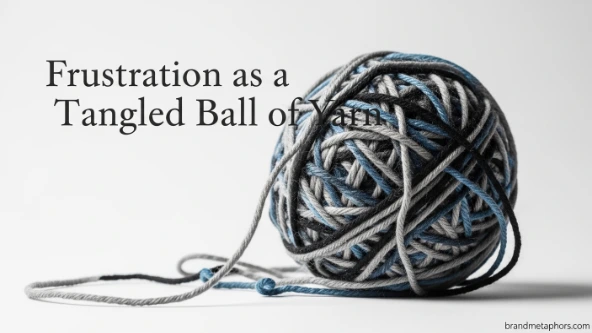
Not all frustration is loud. Sometimes it feels messy, confusing, and impossible to untangle.
Meaning and Explanation
This metaphor works well for mental frustration, especially when problems become overly complicated.
Example Scenario
Trying to organize her finances felt like untangling a giant knot of yarn in the dark.
Alternative Comparisons
- A knotted rope
- A twisted maze
- A web of confusion
- A pile of crossed wires
Emotional and Sensory Details
This metaphor creates tactile frustration. Readers imagine fingers pulling uselessly at knots that tighten instead of loosening.
Mini Storytelling Moment
A teenager sits at a desk surrounded by homework, unanswered messages, and unfinished plans. Every task connects to another problem. The more they try to fix one issue, the more tangled everything becomes.
Bonus Tip for Social Media Captions
This metaphor works beautifully in relatable posts:
“My thoughts today are basically tangled headphones in a pocket.”
It feels modern, visual, and emotionally familiar.
Frustration as a Storm Brewing Inside
Some frustrations stay hidden beneath calm surfaces. The storm metaphor captures emotional intensity building quietly.
Meaning and Explanation
Storms symbolize powerful emotions gathering strength. Thunderclouds represent tension before release.
Example Sentence
A storm brewed behind his polite smile as the meeting dragged on.
Alternative Expressions
- Thunderclouds of irritation
- Emotional lightning
- Tempest of anger
- Hurricane of stress
Sensory Details
This metaphor adds sound, darkness, movement, and atmosphere. Readers can almost feel heavy air before rain.
Cultural and Literary References
Storm imagery appears everywhere in literature, from Shakespearean tragedies to modern films. Weather often mirrors emotional states because humans instinctively connect nature to feeling.
Creative Writing Tip
Use environmental imagery alongside emotions:
“Her frustration rolled through her chest like distant thunder.”
This creates poetic rhythm without becoming overly dramatic.
Frustration as Spinning Wheels in Mud
This metaphor perfectly captures wasted effort and lack of progress.
Meaning and Explanation
Imagine a car trapped in mud. The wheels spin faster and faster, but the vehicle remains stuck. That is frustration.
Example Scenario
Trying to convince the stubborn committee felt like spinning wheels in thick mud.
Alternative Phrases
- Running in circles
- Going nowhere
- Burning energy uselessly
- Stuck in place
Emotional Impact
This metaphor combines exhaustion and helplessness. It suggests action without achievement.
Real-Life Example
Job hunting often creates this feeling. Applications disappear into silence. Interviews lead nowhere. Effort continues, but progress seems invisible.
Bonus Tip for Daily Conversations
This metaphor sounds natural in everyday speech:
“I’ve been spinning my wheels all week.”
Simple metaphors often feel the most authentic.
Frustration as an Itchy Sweater You Cannot Remove
Some frustration is constant and irritating rather than explosive.
Meaning and Explanation
This metaphor describes ongoing discomfort that slowly wears down patience.
Example Sentence
The unfinished project clung to her mind like an itchy sweater she could not take off.
Alternative Comparisons
- Sand in your shoe
- A buzzing mosquito
- A dripping faucet
- Nails scraping glass
Sensory Texture
This metaphor is effective because it feels physical. Readers understand irritation instantly.
Mini Storytelling Example
Imagine trying to sleep while hearing a faint dripping tap every few seconds. At first it seems minor. Hours later, it feels unbearable.
That is slow-burning frustration.
Writing Tip
Small sensory annoyances can symbolize deeper emotional tension. Tiny details often create stronger emotional realism than dramatic descriptions.
Frustration as a Volcano Ready to Erupt
This is one of the strongest metaphors for emotional overload.
Meaning and Explanation
Volcanoes remain quiet for long periods while pressure builds beneath the surface. Frustration works the same way.
Example Scenario
Years of ignored complaints turned his frustration into a volcano trembling before eruption.
Alternative Expressions
- Exploding emotions
- Bursting under pressure
- Lava of anger
- Emotional eruption
Emotional Power
This metaphor suggests danger, intensity, and uncontrollable release.
Literary Example
Many tragic characters in literature suppress emotions until one catastrophic outburst changes everything. Volcano imagery reflects that hidden build-up beautifully.
Bonus Writing Technique
Contrast calm appearances with violent imagery:
“She answered softly, though a volcano rumbled beneath every word.”
This contrast creates dramatic tension.
Frustration as Being Trapped in Traffic
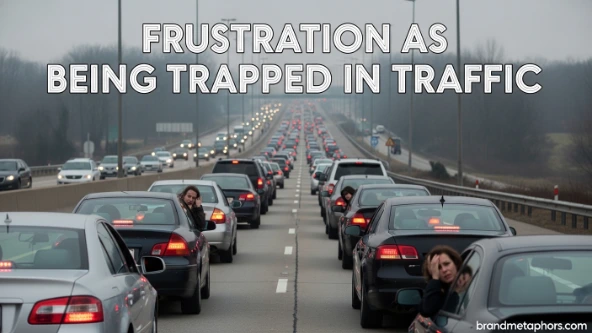
Modern life has made traffic one of the most relatable symbols of frustration.
Meaning and Explanation
Traffic represents delay, helplessness, and interrupted momentum.
Example Sentence
His creativity felt trapped in rush-hour traffic, inching forward painfully slowly.
Alternative Comparisons
- Emotional gridlock
- Jammed thoughts
- Mental congestion
- Stalled progress
Real-Life Connection
Everyone understands the helpless irritation of being unable to move despite wanting to reach a destination.
Social Media-Friendly Example
“My motivation today is stuck in traffic without GPS.”
Short, relatable metaphors perform especially well online because they feel conversational and visual.
Creative Exercise
Think about daily inconveniences and transform them into emotional metaphors. Elevators, slow internet, and lost keys can all symbolize frustration creatively.
How to Create Your Own Metaphors for Frustration
The best metaphors often come from personal experience. You do not need to copy common phrases endlessly. Create your own imagery.
Step 1: Identify the Feeling
Ask yourself:
- Does the frustration feel hot?
- Heavy?
- Sharp?
- Chaotic?
- Exhausting?
Step 2: Connect It to a Physical Experience
Think of sensory situations that feel similar:
- A flickering lightbulb
- Shoes full of rainwater
- A locked door without a key
- A phone battery dying at 1%
Step 3: Add Emotion and Context
Instead of saying:
“I felt frustrated.”
Try:
“I felt like a painter forced to work without colors.”
Practice Prompt
Finish these sentences creatively:
- My frustration felt like…
- My patience cracked like…
- The situation tangled around me like…
Do not overthink. The strongest metaphors often arrive instinctively.
Interactive Exercises to Practice Frustration Metaphors
Creative language improves through practice. Here are exercises to sharpen your metaphor skills.
Exercise 1: Emotion Mapping
Choose one frustrating memory. Write:
- What did you hear?
- What did your body feel?
- What object or situation matches that feeling?
Turn the answers into metaphors.
Exercise 2: Everyday Object Challenge
Pick random objects around you:
- fan
- mirror
- pencil
- backpack
Now connect each one to frustration creatively.
Example:
“My frustration was a backpack filled with invisible bricks.”
Exercise 3: Rewrite Plain Sentences
Transform basic emotional statements into vivid imagery.
Plain:
“He was frustrated.”
Improved:
“He paced like a storm trapped inside four narrow walls.”
Exercise 4: Social Caption Practice
Create short frustration metaphors suitable for captions:
- “Mentally buffering.”
- “Emotionally out of battery.”
- “Today feels like tangled headphones.”
Short metaphors can still be powerful.
Bonus Tips for Using Frustration Metaphors in Daily Life and Writing
Keep Metaphors Relatable
The best metaphors connect to experiences readers already understand.
Avoid Overloading Sentences
Too many metaphors together can confuse readers. Choose one strong image instead of five weak ones.
Match Tone Carefully
Funny metaphors work in casual writing:
“My patience left the chat.”
Darker metaphors fit dramatic storytelling better:
“His frustration crawled through him like wildfire.”
Use Sensory Language
Strong metaphors often involve:
- heat
- sound
- pressure
- movement
- texture
Read Poetry and Fiction
Poets and novelists are masters of metaphor. Reading expressive writing naturally strengthens your own creativity.
Try Journaling with Metaphors
Instead of recording events plainly, describe emotions visually. This improves both emotional awareness and writing skill.
The Emotional Psychology Behind Frustration Metaphors
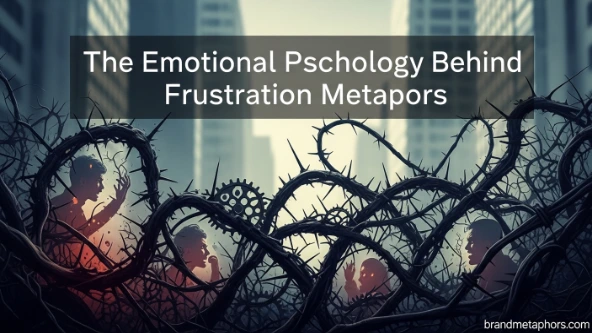
Humans naturally understand emotions through physical imagery. Psychologists call this conceptual metaphor theory. We connect abstract feelings to sensory experiences.
That is why phrases like:
- “boiling mad”
- “carrying emotional weight”
- “feeling trapped”
make intuitive sense.
Our brains process emotional metaphors almost like real experiences. When readers imagine heat or pressure, they emotionally feel those sensations too.
This is why metaphorical language creates such strong emotional impact in stories, speeches, songs, and conversations.
Metaphors do more than decorate language. They help people process emotion itself.
Common Mistakes When Using Metaphors for Frustration
Even strong imagery can fail if used poorly.
Mixing Too Many Images
Avoid:
“Her frustration exploded like a stormy brick wall on fire.”
The imagery clashes.
Using Overly Complicated Comparisons
Simple metaphors are often strongest. Readers should understand them instantly.
Repeating Clichés Constantly
Common metaphors are useful, but originality adds freshness. Try personal experiences and unusual details.
Forgetting Emotional Context
A metaphor should match the situation emotionally. Tiny frustrations do not always require volcanic imagery.
FAQs About Metaphors for Frustration
What is a metaphor for frustration?
A metaphor for frustration compares frustration to another object, situation, or experience to make the emotion more vivid and understandable. Examples include “a boiling kettle” or “hitting a brick wall.”
Why are metaphors useful in writing?
Metaphors create emotional imagery, improve reader engagement, and make descriptions more memorable. They help readers feel emotions instead of simply reading about them.
What are some common frustration metaphors?
Popular metaphors include:
- boiling over
- spinning wheels
- trapped in traffic
- storm brewing
- volcano erupting
- tangled knots
Can metaphors improve everyday communication?
Yes. Metaphors make conversations more expressive and relatable. They help people explain emotions clearly and creatively.
How can I create original metaphors?
Focus on sensory experiences, personal memories, and physical situations that emotionally resemble frustration. Then connect those experiences through vivid comparison.
Conclusion
Frustration is rarely just frustration. Sometimes it burns like steam trapped in metal. Sometimes it weighs like wet cement. Attimes it buzzes softly for hours like a mosquito you cannot catch in the dark.
Metaphors allow us to transform invisible emotions into unforgettable imagery. They give shape to emotional tension, making writing richer and conversations more human. Whether you are crafting fiction, journaling your thoughts, creating social media captions, or simply trying to explain how your day feels, metaphorical language opens emotional doors ordinary words cannot.
The next time frustration creeps into your chest, pause before saying, “I’m annoyed.” Ask yourself what the emotion resembles. A thunderstorm? A tangled rope? A stalled engine?
The answer may become your most powerful sentence yet.