
Introduction: The Quiet Power Behind Blue Eyes
There are moments when someone’s gaze feels less like a look and more like a landscape. Blue eyes, in particular, often carry that effect—cool yet deep, distant yet strangely familiar, like standing at the edge of a sea you cannot quite name. They can remind us of winter mornings where light breaks softly through frost, or of ocean water so clear it seems to hold another world beneath its surface.
Writers, poets, and storytellers have long used metaphors for blue eyes to capture this mix of beauty, mystery, and emotion. A simple description like “blue eyes” often feels incomplete in literature; metaphors bring them alive, turning color into feeling and sight into imagination. Whether you’re writing poetry, crafting characters, posting on social media, or simply trying to express admiration in a more creative way, metaphors help transform ordinary description into emotional impact.
In this article, we’ll explore rich, vivid, and SEO-friendly metaphors for blue eyes, breaking down their meanings, emotional tones, and creative uses. You’ll also find storytelling examples, writing exercises, and practical tips to help you use these expressions naturally and effectively.
Metaphors for Blue Eyes Meaning and Symbolism in Writing
Blue eyes are often associated with depth, calmness, mystery, and emotional clarity. In literature, they are not just a physical trait but a symbol—of serenity, sadness, truth, or even distance.
Writers use metaphors for blue eyes to:
- Create emotional imagery
- Build character personality
- Suggest hidden emotional states
- Enhance poetic tone in storytelling
For example, saying “her blue eyes were stormless oceans” tells us not only about color but also about emotional calm or hidden depth. Metaphors allow readers to feel the character before they understand them.
Ocean Metaphors for Blue Eyes: Depth, Mystery, and Emotion
One of the most powerful ways to describe blue eyes is through the ocean.
Blue eyes often resemble the sea—unpredictable, layered, and emotionally rich.
Meaning & Explanation:
Ocean metaphors suggest depth and emotional complexity. They often imply that a person has feelings hidden beneath a calm surface.
Example Sentences:
- “His blue eyes were a quiet ocean, holding secrets beneath still waves.”
- “She looked at me with ocean-deep eyes, endless and unreadable.”
Alternative Expressions:
- Sea-like gaze
- Tide-colored eyes
- Deep water eyes
Sensory & Emotional Detail:
Imagine standing on a shore. The water is calm, but you know storms can live beneath it. That duality is what ocean metaphors bring to blue eyes.
Mini Story:
A traveler once described meeting a stranger on a train whose blue eyes “felt like a coastline at dusk.” He never spoke to her, but the memory stayed like salt in his thoughts—soft, lingering, impossible to forget.
Sky Metaphors for Blue Eyes: Freedom, Light, and Infinity
Blue eyes are often compared to the sky—vast, open, and endlessly expressive.
Meaning & Explanation:
Sky metaphors suggest openness, hope, and emotional clarity. They often reflect innocence or a free spirit.
Example Sentences:
- “Her blue eyes stretched like a summer sky after rain.”
- “He had sky-colored eyes, bright with unspoken dreams.”
Alternative Expressions:
- Heaven-tinted eyes
- Azure sky gaze
- Horizon-blue eyes
Sensory & Emotional Detail:
Think of a clear morning sky—soft light, endless space, and a sense of calm possibility. That emotional openness defines this metaphor.
Mini Story:
In a small village, an old painter said he never needed blue paint for skies after meeting a boy with eyes “already holding the whole horizon.” He painted less afterward, claiming reality had already perfected itself.
Ice and Crystal Metaphors for Blue Eyes: Cold Beauty and Clarity
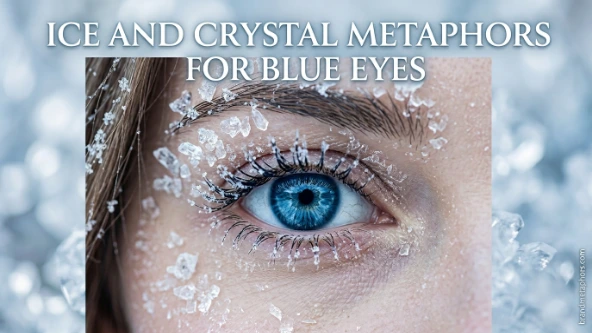
Not all blue eye metaphors are warm. Some emphasize sharpness, coldness, or clarity.
Meaning & Explanation:
Ice and crystal metaphors suggest precision, emotional distance, or striking beauty. They often create a sense of awe mixed with caution.
Example Sentences:
- “Her blue eyes were frozen lakes under winter light.”
- “He stared with crystal-clear eyes, sharp as broken ice.”
Alternative Expressions:
- Frost-lit gaze
- Glacier eyes
- Crystal-blue stare
Sensory & Emotional Detail:
You can almost feel the chill—clean air, quiet snowfall, and silence that feels heavy but beautiful.
Mini Story:
A detective once recalled a suspect whose blue eyes never blinked under pressure. He later described them as “ice under interrogation lights”—beautiful, but unreadable, like truth trapped in frozen glass.
Gemstone Metaphors for Blue Eyes: Sapphire, Lapis, and Precious Light
Blue eyes are also often compared to gemstones, especially sapphires.
Meaning & Explanation:
Gemstone metaphors highlight rarity, value, and brilliance. They suggest something precious and deeply admired.
Example Sentences:
- “Her sapphire eyes sparkled like hidden treasure.”
- “He had lapis-colored eyes that caught the light like polished stone.”
Alternative Expressions:
- Sapphire gaze
- Jewel-blue eyes
- Lapis light eyes
Sensory & Emotional Detail:
Think of light reflecting off a polished gem—controlled yet dazzling, delicate yet strong.
Mini Story:
A jeweler once said he stopped valuing stones the same way after meeting a woman with sapphire eyes. “No gem in my shop ever felt alive after that,” he admitted.
Three Powerful Metaphors for Blue Eyes (With Creative Breakdown)
1. “Blue eyes like stormless oceans”
Meaning: Calm surface hiding emotional depth Use Case: Romantic or introspective writing
Example Sentence:
- “He spoke softly, his blue eyes like stormless oceans watching everything but revealing nothing.”
Alternative Expressions:
- Calm sea gaze
- Silent deep water eyes
Emotional Tone: Peaceful, mysterious, controlled emotion
2. “Blue eyes like the first light of morning sky”
Meaning: Freshness, innocence, hope
Example Sentence:
- “She entered the room with blue eyes like the first light of morning sky, soft and full of promise.”
Alternative Expressions:
- Dawn-colored eyes
- Sunrise-blue gaze
Emotional Tone: Hopeful, warm, uplifting
3. “Blue eyes like frozen glass under moonlight”
Meaning: Emotional distance, intensity, beauty with restraint
Example Sentence:
- “His blue eyes were like frozen glass under moonlight—beautiful but impossible to read.”
Alternative Expressions:
- Moon-iced gaze
- Glassy winter eyes
Emotional Tone: Cool, distant, dramatic
Interactive Writing Exercises: Create Your Own Blue Eye Metaphors
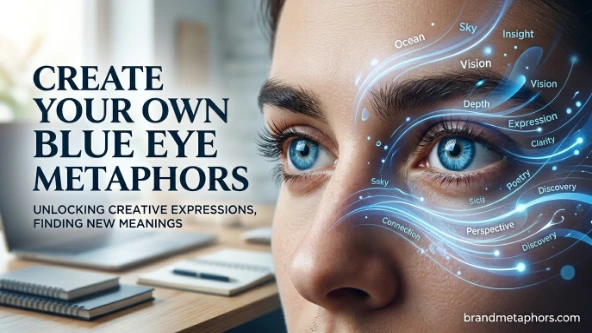
Try these creative prompts to build your own metaphors:
- Nature Swap Exercise: Describe blue eyes using only elements from nature (sky, water, ice, wind).
- Emotion Mapping: Choose an emotion (love, sadness, mystery) and write a blue eye metaphor that expresses it.
- Memory Lens: Think of a memorable gaze you’ve seen and rewrite it as a poetic metaphor.
- Object Transformation: Turn everyday objects into metaphors:
- glass → “blue eyes like polished glass”
- silk → “blue eyes like soft silk under light”
- Three-Line Challenge: Write three different metaphors for the same blue eyes using:
- nature
- emotion
- object
These exercises help train your imagination to think in imagery rather than literal description.
How to Use Blue Eye Metaphors in Writing, Poetry, and Social Media
Metaphors are powerful tools, but they work best when used with intention.
Writing Tips:
- Don’t overload descriptions—choose one strong metaphor per moment
- Match metaphor tone with character personality
- Use contrast (warm vs cold imagery) for emotional tension
Poetry Tips:
- Repeat metaphors for rhythm and emotional depth
- Pair metaphors with sensory details (light, sound, weather)
Social Media Tips:
- Short metaphors work best:
- “Blue eyes like quiet oceans 🌊”
- “Sky-born gaze, full of light ☁️”
- Use metaphors to create mood, not just description
Common Mistakes When Using Blue Eye Metaphors
Even beautiful metaphors can lose impact if overused or poorly chosen.
Mistakes to Avoid:
- Using clichés too often (“deep blue eyes like the ocean” without variation)
- Mixing too many metaphors in one sentence
- Forcing comparisons that don’t match tone
Better Approach:
Focus on originality. Instead of saying “blue like sky,” try:
- “blue like the silence before rain breaks the sky open”
Fresh imagery always leaves a stronger impression.
Conclusion
Blue eyes are more than a physical trait—they are a canvas for imagination. Through metaphors, they become oceans of feeling, skies of possibility, and crystals of emotion caught in light.
Whether you choose the calmness of water, the openness of sky, or the sharp beauty of ice, each metaphor adds a new emotional layer. The real power of writing lies not in describing what is seen, but in revealing what is felt.
When used thoughtfully, metaphors for blue eyes can transform simple description into something unforgettable—something that lingers like a memory you cannot quite name but never fully forget.
FAQs About Metaphors for Blue Eyes
1. Why are blue eyes often used in metaphors?
Blue eyes naturally resemble elements like sky and water, making them ideal for symbolic and emotional descriptions.
2. What is the most common metaphor for blue eyes?
The most common metaphor is comparing blue eyes to the ocean or sea due to their depth and color.
3. How can I make blue eye metaphors more unique?
Avoid clichés and combine unexpected imagery, such as weather, glass, or abstract emotions.
4. Can blue eye metaphors be used in everyday writing?
Yes, they work well in poetry, storytelling, character descriptions, and even social media captions.
5. What emotions do blue eye metaphors usually express?
They often express calmness, mystery, sadness, hope, or emotional depth depending on context.