

Introduction
Have you ever looked at money and felt it behaves like something more than paper or numbers in a bank account? One day it feels like water slipping through your fingers, and another day it feels like a strong wall that protects your future. Imagine a worker waiting for payday, counting every hour like grains of sand falling in an hourglass.
At the same time, a business owner may see money as seeds planted today for a harvest in the future. These mental images are not just creative thoughts—they shape how people earn, spend, save, and invest.
Money is not only an economic tool; it is also a psychological force. The way we describe money influences how we treat it in real life. This is why metaphors for money matter so much.
They help us understand complex financial ideas in simple ways. They also reveal our beliefs about wealth, success, and security. In this article, we will explore powerful metaphors for money and uncover what they teach us about life, behavior, and decision-making.
What Money Metaphors Really Mean
Money metaphors are simple comparisons that help us understand money in human terms. Instead of thinking of money as just currency, we relate it to things we already understand—like water, time, or energy. These comparisons shape how we behave with money, even without us noticing it.
For example, if someone sees money as “water,” they may think it flows in and out easily. If they see it as “seeds,” they may focus on saving and investing. These ideas are not just poetic—they influence real financial habits.
Metaphors help the brain simplify complex ideas. Money is abstract, but metaphors make it real and emotional. They connect financial choices with everyday experiences. A person who views money as “fuel” may focus on productivity, while someone who sees it as “security” may focus on saving.
Understanding these metaphors is important because they reveal hidden beliefs. Many financial struggles are not just about income—they are about mindset. When people change how they see money, they often change how they use it. That is the real power of money metaphors: they shape behavior through imagination.
Money as Water: Flow, Control, and Leakage
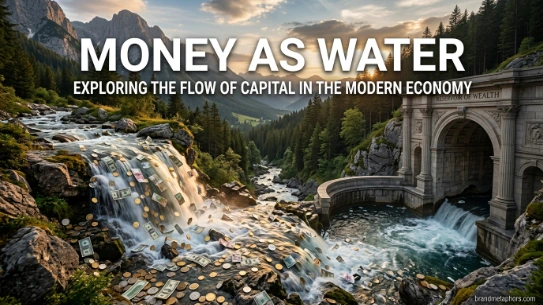
One of the most common metaphors for money is water. In this view, money flows in and out of life like a river. Income is the incoming stream, while expenses are the outgoing flow.
Flow of Income
When money flows smoothly, life feels stable. A steady job is like a calm river bringing regular water. People feel safe when this flow is consistent.
Leakage of Money
However, small leaks—like unnecessary spending—can drain financial health. Just like a leaking pipe, unnoticed expenses can empty savings over time.
Emotional Meaning
This metaphor teaches balance. Too much control can block flow, while no control causes waste. People who think of money as water often focus on budgeting and tracking expenses.
In real life, someone earning well but spending without care may feel like they are “leaking money.” On the other hand, someone who manages flow carefully feels more in control. The water metaphor reminds us that money is dynamic—it must move, but it must also be guided.
Money as Seeds: Growth Over Time
Another powerful metaphor is money as seeds planted in soil. In this view, money is not just for spending—it is something that can grow.
Planting Seeds
Saving money is like planting seeds. Each dollar saved is a seed placed in the ground, waiting for time and care.
Growth and Patience
Investments are like watering plants. They need time to grow. The results are not immediate, but they can become large over time.
Harvest
Eventually, these seeds become a harvest—returns, profits, or financial stability.
This metaphor teaches patience. People who understand it are more likely to invest rather than spend everything immediately. For example, a young worker who saves a small amount monthly may not see results at first. But years later, that money grows significantly.
The seed metaphor also teaches care. Just like plants need attention, money needs planning and discipline. Without effort, seeds do not grow. Without financial care, money does not multiply.
Money as Fuel: Energy for Life

Money is often seen as fuel that powers life activities. Just like fuel runs a car, money supports daily living.
Driving Goals
With fuel, a vehicle can move forward. Similarly, money allows people to pursue goals like education, travel, or business.
Limited Resource
Fuel is limited. If used carelessly, it runs out quickly. This reminds us that money must be managed wisely.
Refueling
Income is like refueling. People work to refill their financial energy so life can continue smoothly.
This metaphor highlights movement and action. Without money, many plans remain stuck. However, with proper use, money becomes a powerful source of progress.
For example, a student may use money to pay for education, which then leads to better opportunities. In this sense, money is not just stored value—it is active energy.
Money as a Tool: Building Life
Seeing money as a tool changes everything. A tool is something used to create or build something valuable.
Purpose Over Emotion
A hammer is not emotional—it is useful. Similarly, money is not good or bad; it depends on how it is used.
Creating Value
People use money to build homes, start businesses, or gain education. It becomes a means, not the goal.
Skill and Mastery
Just like tools require skill, money requires knowledge. Without understanding, a tool can be misused.
This metaphor helps people avoid emotional attachment to money. It teaches that money should serve life goals, not control them.
For example, a business owner uses money to expand operations. A parent uses it to support a child’s education. In both cases, money acts as a tool for building something meaningful.
Money as Time: Life Energy Stored
Money can also be seen as stored time. When you earn money, you are exchanging hours of your life.
Time Conversion
A worker trades time for income. Each salary represents hours of effort.
Value of Time
This metaphor makes people more careful with spending. Wasting money becomes like wasting time.
Life Awareness
It encourages reflection: “Is this purchase worth my time?”
For example, if someone spends money on unnecessary items, they are indirectly spending hours of their life. This creates a deeper awareness of financial decisions.
This metaphor often leads to better choices, as people begin to value both time and money equally.
Money as a Game: Strategy and Decisions
Money can also be viewed as a game with rules, strategies, and outcomes.
Rules of the Game
There are financial rules—saving, investing, earning—that guide success.
Winning and Losing
Good decisions lead to growth, while poor decisions lead to loss.
Strategy Matters
Just like games require planning, money requires strategy.
This metaphor makes finance feel more engaging. It turns budgeting and investing into a challenge rather than a burden.
For example, someone may set savings goals like levels in a game. Each milestone gives a sense of achievement.
Money as a Magnet: Attraction of Wealth
Some people see money as a magnet that attracts more money when used correctly.
Positive Attraction
Good financial habits attract opportunities and growth.
Momentum Effect
Once money starts growing, it can grow faster through investments.
Energy of Behavior
Smart behavior attracts better financial results.
This metaphor is often used in mindset thinking. It encourages discipline, positive habits, and long-term planning.
For example, someone who invests wisely may attract more opportunities due to increased financial stability.
Money as Security: A Protective Wall

Money is also seen as protection. It acts like a wall that shields people from financial problems.
Safety Net
Savings protect against emergencies like illness or job loss.
Peace of Mind
Having money reduces stress and worry.
Stability
Financial security allows people to focus on growth instead of survival.
This metaphor is deeply emotional. It connects money with safety and comfort.
For example, an emergency fund feels like a safety wall that protects a family during difficult times.
Money as Freedom: Choice and Possibility
Money is often described as freedom. It gives people choices in life.
Freedom of Movement
Money allows travel, relocation, and exploration.
Freedom of Time
It can reduce dependency on strict work schedules.
Freedom of Decision
It allows people to choose how they live.
This metaphor is powerful because it connects money with independence. It is not about luxury—it is about options.
For example, financial stability may allow someone to pursue passion instead of just survival jobs.
Money as a Teacher: Lessons in Life
Money also teaches lessons. It reflects behavior and decisions.
Learning Through Mistakes
Financial losses teach responsibility.
Discipline and Patience
Money rewards careful planning and patience.
Self-Awareness
Spending habits reveal personality and priorities.
This metaphor shows that money is not just a resource—it is also feedback. It helps people understand their choices and grow from them.
Common Misunderstandings About Money Metaphors
Many people misunderstand money metaphors and take them too literally.
Over-Simplification
Money is not only water or only seeds—it is complex.
Emotional Bias
People may become too attached to one metaphor.
Ignoring Balance
Each metaphor shows only one side of money.
The truth is that money behaves differently in different situations. It can be flow, energy, tool, or security—all at once. Understanding this balance is important for healthy financial thinking.
Practical Lessons from Money Metaphors
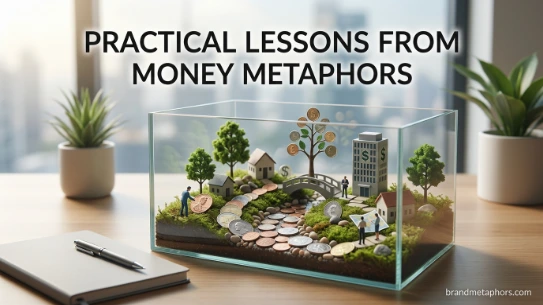
Money metaphors are not just ideas—they offer real-life guidance.
Mix Different Perspectives
Use multiple metaphors to understand money better.
Build Awareness
Notice how you personally view money.
Improve Decisions
Let metaphors guide smarter financial habits.
For example, combining “money as seeds” with “money as fuel” helps balance saving and spending. This creates a healthier financial lifestyle.
Conclusion
Money is more than numbers—it is a reflection of how we think, feel, and act. Metaphors like water, seeds, fuel, and tools help us understand its many roles in life. Each metaphor reveals a different truth: money flows, grows, powers, protects, and teaches. When we see money through different lenses, we become more aware of our habits and choices.
The real value of these metaphors is not just understanding money, but understanding ourselves. They shape how we save, spend, and plan for the future. By using these ideas wisely, we can build a healthier relationship with money—one that supports growth, stability, and freedom in everyday life.