

Introduction
Life rarely moves in a straight line. One moment everything feels steady, and the next, a sudden problem appears like a closed door in front of you. A plan fails, a relationship gets complicated, or an unexpected change forces you to rethink everything. In these moments, challenges can feel heavy and confusing, almost like walking through fog without a clear direction.
This is where metaphors for challenges become powerful. They help us understand difficult experiences by comparing them to familiar things like mountains, storms, journeys, or fire. Instead of seeing problems as random pain, metaphors give them meaning. They turn confusion into clarity.
When we say “I am climbing a mountain” or “I am going through a storm,” we are not just speaking creatively—we are trying to make sense of struggle in a human way. These images help us express emotions, stay motivated, and find direction when life feels overwhelming. In real life, metaphors can change how we respond to problems, helping us stay patient, strong, and hopeful.
This article explores deep and meaningful metaphors for challenges, showing how each one reflects a different kind of struggle and what we can learn from it in everyday life.
Challenges as Mountains to Climb
One of the most common metaphors for challenges is a mountain. A mountain is tall, difficult, and requires effort to climb. In the same way, life challenges often feel slow, tiring, and demanding. You cannot rush a mountain—you must take one step at a time.
When people say they are “climbing a difficult phase,” they mean progress is slow but possible. The top of the mountain represents success, clarity, or relief. But the real value is not only in reaching the top—it is in the strength built during the climb.
The Meaning Behind the Climb
Climbing a mountain teaches patience. You rest, you breathe, and then you continue. Life challenges work the same way. You may not solve everything at once, but steady effort still moves you forward.
Real-Life Reflection
A student preparing for exams may feel like they are climbing a steep hill. Each chapter studied is one step upward. Even when progress feels slow, every effort counts.
Mountains remind us that challenges are not meant to stop us—they are meant to shape our strength.
Life Challenges as Storms
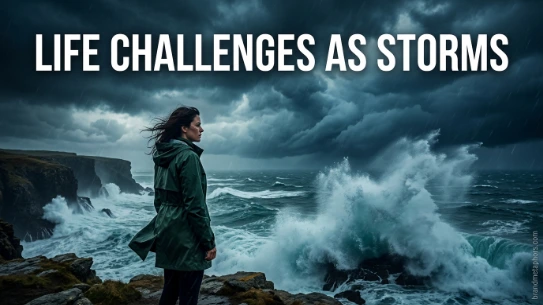
Storms are sudden, loud, and sometimes frightening. They appear without warning and can change everything in a short time. This is why storms are a powerful metaphor for emotional and life challenges.
When someone says, “I am going through a storm,” it often means they are facing confusion, stress, or emotional pain. Like real storms, these moments feel uncontrollable.
Surviving the Weather
Storms do not last forever. They pass. This is the most important lesson in this metaphor. Even the hardest emotional phase eventually settles.
What Storms Teach Us
Storms force us to find shelter, protect what matters, and stay patient. In life, this means leaning on support systems, slowing down decisions, and waiting for clarity.
A person dealing with family conflict may feel lost in heavy rain, but with time, communication, and patience, the sky clears again. Storms remind us that difficulty is temporary, even when it feels overwhelming.
Challenges as Life Journeys
Life is often compared to a long road or journey. This metaphor highlights movement, direction, and continuous learning. Challenges become part of the path, not obstacles outside it.
A journey is not about speed but experience. You may face delays, wrong turns, or rough roads, but each part adds meaning.
H3: Detours and Unexpected Paths
Sometimes life takes us in directions we never planned. These detours may feel frustrating, but they often lead to important lessons or opportunities.
H3: Traveling Light
On a journey, carrying too much weight slows you down. Similarly, emotional baggage like fear, regret, or doubt can make challenges harder. Letting go becomes essential.
A job seeker facing rejection after rejection is still on the journey. Each attempt is a step closer, even if the road is longer than expected.
This metaphor teaches patience, openness, and acceptance of change.
Fire as a Test of Strength
Fire is intense, transformative, and powerful. It destroys weak structures but strengthens strong materials. This makes it a deep metaphor for challenges that shape character.
When people say they are “forged in fire,” they mean hardship has made them stronger, not weaker.
H3: Pressure Creates Strength
Just like metal is hardened in fire, humans often grow stronger under pressure. Difficult situations test emotional and mental strength.
H3: Burning Away the Unnecessary
Fire also removes what is not needed. In life, challenges can help us let go of toxic habits, relationships, or beliefs.
For example, someone recovering from failure may come out wiser, more focused, and more self-aware. Fire teaches that pain can transform into strength.
Challenges as Competitive Games

Life challenges are often compared to games or sports. In games, there are rules, opponents, wins, and losses. This metaphor helps people see challenges as structured and manageable rather than random chaos.
Learning the Rules
Every challenge has patterns. Understanding them increases your chance of success, just like learning strategies in a game.
Winning and Losing
Not every attempt leads to victory, but every attempt builds skill. Losing in life does not mean failure—it means learning.
A business owner facing competition may feel pressure, but like a player improving with each match, experience builds confidence.
This metaphor encourages resilience, strategy, and continuous improvement.
Gardens and Personal Growth
A garden represents slow but meaningful growth. Seeds do not become trees overnight. They need water, sunlight, and time. Similarly, personal challenges often lead to inner growth.
H3: Patience in Growth
You cannot rush a garden. In life, emotional healing and success also take time.
H3: Weeding Out Negativity
Gardens require removing weeds. In life, this means letting go of negativity, distractions, or unhealthy influences.
Someone working on self-improvement may feel slow progress, but like a garden, visible change comes with consistent care.
This metaphor teaches patience, self-care, and trust in the process.
Rivers and Life Obstacles
A river flows continuously, even when it meets rocks or narrow paths. It finds its way around obstacles instead of stopping completely. This makes it a powerful metaphor for challenges.
Flowing Around Problems
Instead of breaking against resistance, rivers adapt. Similarly, flexibility helps people handle difficulties better.
Constant Movement
Even when progress is slow, the river keeps moving. In life, this means not giving up even during setbacks.
A person dealing with financial difficulty may need to adjust plans, but continued effort ensures forward movement. Rivers remind us that adaptability is strength.
Walls and Barriers in Life
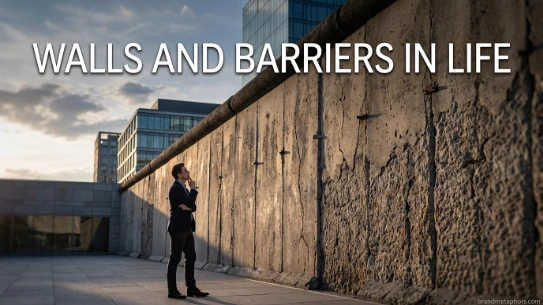
Walls represent obstacles that block progress. They can feel permanent, strong, and frustrating. However, walls also test determination.
Finding a Way Over or Through
Some walls can be climbed, some broken, and some walked around. The key is not stopping at the wall.
Internal Walls
Sometimes the biggest barriers are inside us—fear, doubt, or lack of confidence. These mental walls are often harder than external ones.
A student afraid of failure may feel blocked, but breaking this inner wall opens new opportunities. Walls remind us that limits are often temporary.
Shadows and Fear in Challenges
Shadows are created when light is blocked. They represent fear, uncertainty, and doubt that appear during challenges.
Fear as an Illusion
Shadows often look bigger than the objects creating them. Similarly, fears in life often feel larger than reality.
Facing the Light
When you move toward light, shadows disappear. In life, knowledge, courage, and action reduce fear.
A person afraid of public speaking may feel overwhelmed at first, but practice and exposure reduce the fear over time. Shadows teach that fear loses power when faced directly.
Challenges as Life Lessons
Challenges can also be seen as classrooms. Every difficulty teaches something new, whether it is patience, strength, or wisdom.
H3: Learning Through Experience
Books and advice help, but real understanding comes from experience. Challenges become teachers in disguise.
H3: Mistakes as Part of Learning
In a classroom, mistakes are expected. In life, mistakes are also part of growth, not signs of failure.
A person who loses a job may learn new skills or discover a better path. This metaphor helps people see challenges as education rather than punishment.
Bridges and Crossing Difficult Times

Bridges connect two places separated by gaps. They allow movement from one side to another. This makes bridges a strong metaphor for overcoming challenges.
H3: Transition and Change
Bridges represent movement from difficulty to stability. Every challenge is a transition phase.
H3: Support Systems as Bridges
Friends, family, and mentors act like bridges, helping us cross difficult times.
Someone facing emotional struggles may rely on support to move forward. Bridges remind us that no one has to cross life’s difficulties alone.
Conclusion
Metaphors for challenges help us understand life in a deeper and more meaningful way. Whether it is a mountain to climb, a storm to survive, a journey to continue, or fire that strengthens us, each image gives clarity to struggle. These metaphors remind us that challenges are not just obstacles—they are experiences that shape who we become.
When we see problems through these lenses, fear becomes manageable, confusion becomes clearer, and pain becomes part of growth. Life becomes less about avoiding difficulties and more about learning from them. In the end, challenges are not the end of the story—they are the chapters that build strength, wisdom, and resilience for the journey ahead.