

Introduction
Have you ever met someone whose presence feels like sunlight slipping through a cold room, instantly warming everything without asking for attention? Or perhaps you’ve encountered a person whose words feel like soft rain after a long drought—quiet, gentle, and unexpectedly healing.
We often describe such people as “nice,” but the word itself feels too small for something so deeply human. That’s where metaphors come in. They stretch language beyond its limits, helping us capture the texture of kindness in ways plain words cannot.
Metaphors for nice are more than decorative language tools; they shape how we understand empathy, warmth, and human connection. They allow us to translate emotional experiences into vivid imagery—turning abstract goodness into something we can see, feel, and remember. In everyday life, whether in writing, conversation, or reflection, these metaphors help us recognize kindness not as a vague idea but as something alive, tangible, and deeply impactful. Exploring them gives us not just better language, but a deeper appreciation of what it truly means to be “nice.”
1. Kindness as Sunshine Breaking Through Clouds
One of the most common metaphors for nice is comparing a kind person to sunlight breaking through clouds. This image captures the sudden emotional shift that happens when someone gentle enters a tense or gloomy environment.
Think of a classroom after a difficult exam. Students sit quietly, shoulders heavy with stress. Then one person cracks a light joke or offers reassurance. The atmosphere doesn’t just improve—it changes entirely, like gray skies parting to reveal a warm sky.
This metaphor works because sunlight is universal, natural, and life-giving. It doesn’t force itself; it simply arrives and transforms. Similarly, a nice person doesn’t need to dominate attention. Their presence alone can soften emotional heaviness.
Emotional Meaning Behind the Metaphor
Sunlight suggests hope, clarity, and emotional renewal. When applied to kindness, it emphasizes how “nice” people often restore balance without effort or demand.
Real-Life Interpretation
A supportive friend checking in during a stressful week can feel like stepping out of emotional shadow into warmth. That is the quiet power of kindness as sunlight.
2. Kindness as a Warm Blanket on a Cold Night
Another powerful metaphor for nice is a warm blanket. This imagery emphasizes comfort, safety, and emotional security.
Imagine coming home after a difficult day, exhausted and emotionally drained. You wrap yourself in a soft blanket, and suddenly the world feels less sharp. That is how kind people often make others feel—protected from emotional “coldness.”
Why This Metaphor Works
A blanket doesn’t fix problems, but it creates a space where healing becomes possible. Similarly, nice people don’t always solve everything, but they offer emotional shelter.
Everyday Example
A teacher who patiently explains a concept again, or a colleague who listens without judgment, acts like a blanket in a stressful environment.
Deeper Insight
This metaphor highlights that kindness is not always dramatic. Sometimes, being “nice” simply means being consistently soft in a world that can feel harsh.
3. Kindness as Gentle Rain Nourishing Dry Soil

Rain as a metaphor for nice reflects nourishment, renewal, and quiet transformation. Just as dry soil absorbs rain and slowly becomes fertile again, people often “grow” emotionally when treated kindly.
H3: Emotional Growth Through Kindness
A supportive word at the right moment can revive confidence in someone who feels invisible or undervalued.
H3: Subtle but Lasting Impact
Unlike thunder or storms, gentle rain works quietly. Similarly, nice people often influence others in ways that are not immediately visible but deeply long-lasting.
Real-Life Scenario
A mentor who consistently encourages a struggling student may never see immediate results, but over time, that student’s confidence blossoms.
This metaphor reminds us that kindness is not about intensity but consistency. Like rain, it works through repetition and care.
4. Kindness as a Soft Lamp in a Dark Room
A soft lamp symbolizes guidance, calm presence, and emotional clarity. When we think of nice people as lamps, we imagine someone who doesn’t overpower the room but still makes everything visible and safe.
H3: Light Without Pressure
Unlike a spotlight, a lamp doesn’t expose—it simply helps you see.
H3: Emotional Safety
A nice person often helps others “see clearly” in confusion without adding pressure or judgment.
Example
A friend who listens carefully during a crisis and gently helps you think through solutions acts like a steady lamp in emotional darkness.
This metaphor teaches that kindness is often about presence rather than control. It doesn’t demand attention—it simply makes navigation easier.
5. Kindness as a Bridge Between Hearts
A bridge symbolizes connection, understanding, and emotional distance being reduced. When someone is described as nice, they often help others feel less isolated.
H3: Connecting Differences
Kind people often connect individuals with different opinions, backgrounds, or emotions.
H3: Emotional Accessibility
A bridge allows movement both ways, just like kindness allows mutual understanding.
Real-Life Example
In workplaces, a friendly colleague who helps resolve misunderstandings acts as a bridge between conflicting perspectives.
This metaphor highlights that being nice is not passive—it actively reduces emotional distance between people.
6. Kindness as a Quiet River Flowing Steadily
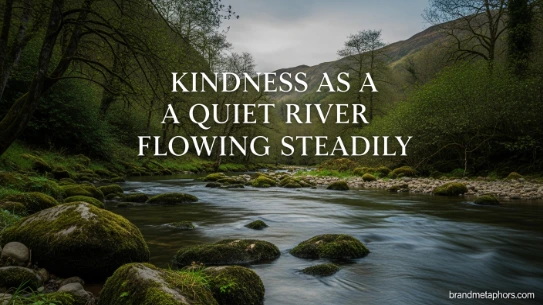
A river represents consistency, calm strength, and natural movement. Unlike storms, rivers are not chaotic—they are steady and reliable.
H3: Emotional Stability
Nice people often provide a sense of stability in unpredictable environments.
H3: Continuous Presence
Just as a river keeps flowing, kindness is most powerful when it is consistent rather than occasional.
Scenario
A parent who consistently supports their child through small daily encouragements mirrors the steady flow of a river shaping emotional landscapes over time.
This metaphor shows that kindness is not about dramatic acts but about steady emotional presence.
7. Kindness as a Garden That Grows Others
A garden metaphor emphasizes nurturing, patience, and growth. Nice people often help others flourish simply by believing in them.
H3: Growth Requires Care
Like plants, people grow best in supportive environments.
H3: Emotional Gardening
Encouragement, patience, and understanding act like water and sunlight for human confidence.
Example
A coach who believes in a beginner athlete helps them grow far beyond their initial limits.
This metaphor teaches that kindness is an investment in human potential.
8. Kindness as Music That Soothes the Mind
Music is a universal metaphor for emotional harmony. A nice person often brings emotional rhythm into chaotic situations.
H3: Emotional Harmony
Just as music balances sound, kindness balances emotional tension.
H3: Healing Through Presence
Calm voices, gentle laughter, or supportive words can reduce stress like soothing music.
Example
A friend who talks you through anxiety feels like a calming melody during emotional noise.
This metaphor shows that kindness often works through emotional resonance rather than logic.
9. Kindness as a Lighthouse in Stormy Seas
A lighthouse symbolizes guidance, safety, and reliability during uncertainty.
H3: Direction in Confusion
Nice people often help others find clarity when life feels overwhelming.
H3: Steady Reliability
Like a lighthouse that never moves, kindness provides emotional stability.
Scenario
During personal crises, a supportive family member can feel like a lighthouse guiding someone safely back to stability.
This metaphor emphasizes trust and emotional grounding.
10. Kindness as a Feather Touch on the Heart

A feather symbolizes softness, gentleness, and emotional delicacy.
H3: Emotional Sensitivity
Nice people often approach others with care, avoiding harm or harshness.
H3: Subtle Impact
Even small acts of kindness can leave deep emotional impressions.
Example
A simple “Are you okay?” at the right moment can feel like a feather touching a heavy heart, easing emotional weight.
This metaphor highlights that kindness is often quiet but deeply meaningful.
11. Why Metaphors for Nice Matter in Everyday Life
Metaphors for nice are not just poetic expressions—they shape how we interpret human behavior. When we describe kindness as light, warmth, or nature, we begin to see it as essential rather than optional.
These metaphors help in communication, writing, teaching, and emotional understanding. They also encourage empathy by making abstract emotions more relatable.
In real life, people who understand these metaphors often become more emotionally aware. They recognize kindness in subtle actions rather than only grand gestures. This awareness strengthens relationships and improves emotional intelligence.
Ultimately, metaphors for nice remind us that kindness is not just a trait—it is an experience that can be felt, shared, and remembered in many forms.
Conclusion
Kindness is one of the most familiar human experiences, yet one of the hardest to define in simple words. That is why metaphors for nice are so powerful—they transform an everyday concept into something vivid, emotional, and deeply human. Whether it is sunlight breaking through clouds, a steady river, or a soft lamp in darkness, each image helps us understand kindness in a richer way.
These metaphors remind us that being “nice” is not a small thing. It is warmth in cold moments, guidance in confusion, and comfort in emotional storms. In a world that often feels fast and fragmented, kindness becomes the quiet force that holds human connection together. By seeing it through metaphors, we don’t just describe kindness—we begin to truly recognize and value it in everyday life.