
It begins quietly. You’re sitting with a page—maybe blank, maybe crowded with lines that don’t quite feel right yet. Outside, the world hums along: a distant car horn, the whisper of wind, the soft rhythm of your own thoughts. And then, almost without warning, a phrase arrives.
Not a direct statement, not a plain description—but something richer. “The night is a velvet curtain.” Suddenly, the world deepens. The ordinary becomes layered, textured, alive.
This is the power of metaphor in poetry. It is the art of saying one thing is another, not to confuse but to reveal. Metaphors allow poets to express emotions that are otherwise difficult to name, to connect inner experience with outer imagery, and to invite readers into a shared space of imagination.
In everyday life, we already think metaphorically—when we call time a thief or love a journey. Poetry simply refines this instinct into something deliberate and beautiful.
In this article, we’ll explore metaphors for poetry from multiple angles—how they work, what they reveal, and how you can use them to enrich your own writing and understanding of the world.
What Are Metaphors for Poetry, Really?
At first glance, a metaphor seems simple: a comparison without “like” or “as.” But in poetry, it is far more than a grammatical device—it is a way of thinking. When a poet says “hope is a fragile bird,” they are not merely comparing hope to a bird; they are giving hope wings, vulnerability, and movement.
Metaphors in poetry function as bridges between the abstract and the tangible. They translate emotions—often invisible and complex—into images we can see, hear, or touch. This is why poetry feels so immediate. Instead of explaining sadness, a poet might show it as “rain tapping endlessly on a closed window.” Suddenly, sadness is not just understood—it is felt.
In everyday life, we use metaphors constantly without noticing. We say we’re “under pressure,” “carrying baggage,” or “feeling stuck.” Poetry heightens this natural habit, making it intentional and precise.
Ultimately, metaphors for poetry are about connection—between ideas, between people, and between the inner and outer worlds. They turn language into experience, inviting readers to participate rather than simply observe.
Why Metaphors Are the Soul of Poetry
Imagine a poem stripped of metaphors. It might still communicate information, but it would lack depth, resonance, and emotional texture. Metaphors are what give poetry its soul—they transform it from mere language into art.
Metaphors allow poets to compress meaning. A single image can carry layers of interpretation, making the poem richer without becoming longer. For instance, calling memory “a fading photograph” instantly conveys nostalgia, fragility, and the passage of time.
They also create intimacy. When a reader encounters a metaphor, they participate in its meaning-making. They visualize it, interpret it, and connect it to their own experiences. This active engagement makes poetry feel personal, even when it speaks of universal themes.
There’s also a sense of discovery in metaphors. A well-crafted metaphor surprises the reader—it reveals a connection they hadn’t considered before. That moment of recognition is what often makes poetry memorable.
Without metaphors, poetry would be like a painting without color. With them, it becomes vivid, layered, and alive—capable of touching both the intellect and the heart.
Poetry as a Window: Seeing Beyond the Surface
One of the most enduring metaphors for poetry is the idea of poetry as a window. A window suggests perspective, access, and revelation. Through poetry, we glimpse worlds we might not otherwise see—another person’s emotions, a hidden truth, or even a new understanding of ourselves.
Seeing Into Others
When reading a poem about grief, for example, you may not share the poet’s exact experience, but the metaphor allows you to see into their emotional landscape. It’s like standing at a window, looking into a room filled with someone else’s memories.
Seeing Into Yourself
Sometimes, the window turns inward. A metaphor might illuminate something you’ve felt but never articulated. You recognize yourself in the imagery, as if the poem has quietly opened a window within you.
Everyday Example
Think of a time you read a line that stayed with you long after. Perhaps it described love as “a quiet room filled with light.” That image becomes a window—not just into the poet’s mind, but into your own understanding of love.
In this way, poetry doesn’t just show us the world—it changes how we see it.
Poetry as Music Without Sound
Poetry often feels musical, even when read silently. This leads to a powerful metaphor: poetry as music without sound. It suggests rhythm, harmony, and emotional resonance beyond literal meaning.
The Rhythm of Words
Every poem has a pulse. The arrangement of words, the pauses, the repetition—all create a rhythm that mirrors emotion. A fast, fragmented rhythm might convey anxiety, while a slow, flowing one evokes calm.
Emotional Melody
Just as music can make us feel joy or sadness without lyrics, poetry can evoke emotion through structure and imagery. A line break, a repeated phrase, or a carefully chosen word can function like a musical note.
Real-Life Reflection
Think about how certain lines “stick” in your mind. You may find yourself repeating them, almost like a song. That’s because poetry, like music, resonates on a deeper, almost subconscious level.
This metaphor reminds us that poetry is not just read—it is experienced, felt, and sometimes even heard in the silence.
Poetry as a Flame: Igniting Emotion and Change
Another vivid metaphor for poetry is the flame. Fire represents energy, transformation, and intensity—qualities that poetry often embodies.
A poem can ignite something within us: a memory, a feeling, a new perspective. It can warm us with comfort or burn with truth. Some poems challenge us, forcing us to confront uncomfortable realities. Others offer light in dark moments.
Consider how certain lines linger, sparking thought long after you’ve finished reading. That is the flame at work. It continues to flicker, influencing how you think and feel.
Historically, poetry has also been a tool for change. It has been used to inspire movements, express resistance, and give voice to the unheard. In this sense, the flame is not just personal—it is collective.
Like fire, poetry must be handled with care. Too much intensity can overwhelm, while too little may fail to engage. The balance lies in crafting metaphors that illuminate without consuming.
Poetry as a Mirror: Reflecting Truth and Identity
Poetry is often described as a mirror, reflecting both the poet and the reader. This metaphor emphasizes self-awareness and recognition.
When you read a poem that resonates deeply, it can feel like looking into a mirror that reveals not just your appearance, but your thoughts and emotions. It reflects truths you may not have consciously acknowledged.
For poets, writing becomes a process of self-discovery. Through metaphor, they explore their inner world, uncovering layers of meaning. The act of writing is like holding up a mirror and asking, What do I see?
For readers, the mirror works differently. You bring your own experiences to the poem, shaping its meaning. Two people may read the same line and interpret it in entirely different ways—and both interpretations can be valid.
This metaphor highlights the deeply personal nature of poetry. It is not just about expression; it is about reflection, connection, and understanding.
Poetry as a Journey: Movement Through Meaning
Poetry can also be seen as a journey—one that takes both the writer and the reader from one place to another.
The Beginning
A poem often starts with a simple idea or image. Like the first step of a journey, it sets the direction but does not reveal the destination.
The Middle
As the poem unfolds, metaphors guide the reader through different emotional landscapes. There may be twists, surprises, or moments of clarity.
The End
By the final line, the reader has arrived somewhere new—not necessarily with answers, but with a changed perspective.
Everyday Parallel
Think of how a single poem can shift your mood or perspective. You begin reading with one mindset and finish with another. That shift is the journey.
This metaphor emphasizes growth and transformation, reminding us that poetry is not static—it moves, evolves, and carries us along.
Poetry as a Bridge: Connecting Ideas and People
A bridge connects two separate points, and poetry often serves this role. It links emotions, cultures, and experiences that might otherwise remain distant.
Through metaphor, poetry can make unfamiliar ideas accessible. A complex emotion becomes understandable when compared to something tangible. This creates empathy—allowing readers to relate to experiences they have never lived.
In a broader sense, poetry can connect communities. Shared metaphors can resonate across cultural boundaries, creating a sense of unity.
Consider how a simple metaphor like “life is a journey” appears in many cultures. It speaks to a universal human experience, making it widely relatable.
This metaphor reminds us that poetry is not just personal—it is also communal. It builds connections that extend beyond individual experience.
Poetry as a Garden: Cultivating Meaning
A garden grows over time, requiring care, patience, and attention. Similarly, poetry is cultivated through thought, revision, and creativity.
Each metaphor is like a seed. Some grow quickly, while others take time to develop. A well-crafted poem is not rushed—it is nurtured, shaped, and refined.
For readers, a poem can also feel like a garden. Each reading reveals something new, like discovering a hidden flower you hadn’t noticed before.
Growth Through Practice
Writers often revisit their work, trimming unnecessary words and strengthening imagery. This process mirrors gardening—removing weeds to allow stronger ideas to flourish.
Seasonal Change
Just as gardens change with seasons, a poem’s meaning can evolve over time. What resonates with you today may feel different years later.
This metaphor highlights the organic, evolving nature of poetry.
Poetry as a Puzzle: Inviting Interpretation
Not all poetry is immediately clear. Some poems feel like puzzles, requiring thought and interpretation.
This metaphor emphasizes the interactive nature of poetry. The reader is not passive—they actively engage, piecing together meaning from imagery and metaphor.
Layers of Meaning
A single metaphor can have multiple interpretations. For example, “the ocean” might represent freedom, danger, or the unknown, depending on context.
Reader Participation
Each reader brings their own perspective, influencing how they interpret the poem. This makes poetry dynamic and personal.
The Joy of Discovery
Solving the “puzzle” of a poem can be deeply satisfying. It creates a sense of connection and accomplishment.
This metaphor reminds us that poetry does not always offer clear answers—and that’s part of its beauty.
Poetry as a Shelter: Offering Comfort and Escape
In difficult times, poetry can feel like a shelter—a place of refuge and understanding.
A comforting metaphor can provide reassurance, helping readers process emotions and find meaning. For example, describing hope as “a small light in the dark” can be deeply soothing.
Emotional Safety
Poetry allows us to explore difficult feelings in a safe space. Through metaphor, painful experiences can be expressed indirectly, making them easier to confront.
Everyday Application
Many people turn to poetry during moments of grief, confusion, or change. It offers a sense of companionship, reminding them they are not alone.
This metaphor highlights the therapeutic potential of poetry.
Poetry as a Lens: Changing Perspective
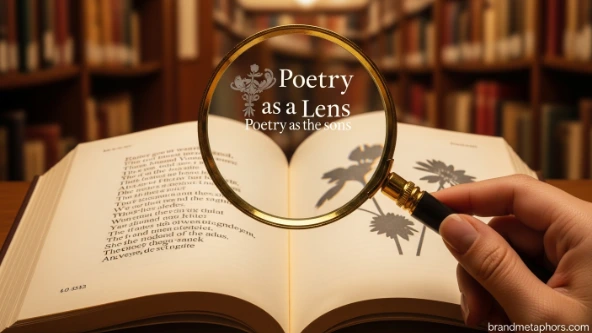
A lens alters how we see the world, and poetry often functions in the same way.
Through metaphor, poetry can shift perspective, revealing new ways of thinking. A familiar object or idea is presented in an unexpected way, prompting reevaluation.
Reframing Reality
A simple metaphor can transform how you view an experience. For example, seeing failure as “a stepping stone” changes its emotional impact.
Expanding Awareness
Poetry encourages us to look beyond the surface, noticing details we might otherwise overlook.
This metaphor underscores poetry’s ability to reshape perception and deepen understanding.
Common Misunderstandings About Metaphors in Poetry
Despite their importance, metaphors are often misunderstood. Some people believe they must be overly complex or obscure to be effective. In reality, simplicity can be just as powerful.
Another misconception is that metaphors have a single “correct” meaning. While some interpretations may be more supported by the text, poetry often allows for multiple valid perspectives.
There is also a tendency to overuse metaphors, which can make a poem feel cluttered. The key is balance—using metaphors thoughtfully and purposefully.
Understanding these misconceptions helps both writers and readers approach poetry with greater confidence and clarity.
Practical Ways to Use Metaphors in Your Own Poetry
Creating effective metaphors is a skill that improves with practice.
Start with Emotion
Choose a feeling and ask what it resembles. Let your imagination guide you.
Use Sensory Details
Engage the senses—sight, sound, touch—to make your metaphors vivid and relatable.
Keep It Authentic
Your metaphors should feel natural, not forced. Draw from your own experiences and observations.
Revise and Refine
Not every metaphor will work. Experiment, adjust, and refine until it feels right.
By practicing regularly, you can develop a stronger sense of metaphorical thinking and enhance your poetic voice.
Conclusion
Metaphors are more than literary devices—they are the essence of poetry itself. They transform language into something alive, bridging the gap between thought and feeling, imagination and reality. Through metaphors, poetry becomes a window, a flame, a journey, and so much more.
As both readers and writers, embracing metaphors allows us to see the world differently. It invites us to look deeper, feel more fully, and connect more meaningfully. Whether you’re crafting your own verses or simply exploring the words of others, remember that every metaphor is an invitation—to imagine, to reflect, and to discover something new.