
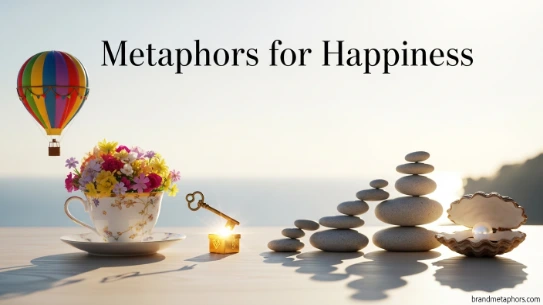
A Spark in the Morning Light
The first sip of tea on a quiet morning. The soft warmth spreads through your chest, like sunlight slipping through curtains and resting gently on your skin. In that small, fleeting moment, happiness isn’t loud or dramatic—it’s a whisper, a glow, a presence. Yet, when we try to describe it, words often feel too plain, too rigid for something so alive.
That’s where metaphors step in.
Metaphors for happiness give shape to something abstract. They allow us to feel language instead of just reading it. Whether you’re a writer, a poet, or someone trying to better understand your emotions, learning how to express happiness through metaphor can deepen both your creativity and your connection to life itself.
What Are Metaphors for Happiness?
A metaphor is a comparison that describes something by saying it is something else. Instead of saying “I feel happy,” you might say, “I’m walking on sunshine.” The feeling becomes vivid, sensory, and memorable.
Happiness is especially suited to metaphor because it’s complex. It can be calm or explosive, quiet or overwhelming. By using metaphors, we capture its different shades—like painting with more than one color.
Why does this matter? Because language shapes experience. The way you describe happiness can actually influence how deeply you feel and remember it.
Why Metaphors Make Happiness More Powerful
When you describe happiness metaphorically, you engage the senses—sight, sound, touch, even taste. Instead of a flat statement, you create an experience.
Think about the difference:
- “She felt happy.”
- “Her happiness bubbled like a pot about to overflow.”
The second line invites imagination. It adds movement, tension, and warmth.
Metaphors also:
- Make writing more engaging
- Help you express subtle emotional differences
- Improve storytelling and communication
- Make social media captions more memorable
In short, they turn emotion into art.
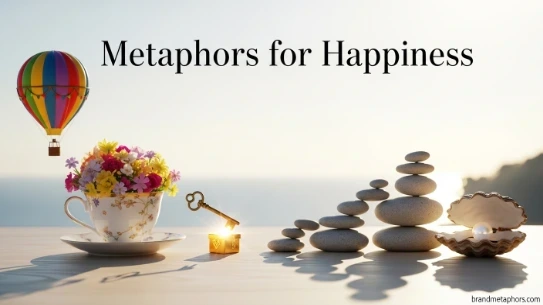
Metaphor 1: Happiness as Sunshine
Meaning & Explanation
Sunshine is one of the most common and powerful metaphors for happiness. It represents warmth, clarity, and life. Just as sunlight brightens a dark room, happiness lifts the spirit.
Example Sentence
“Her laughter spilled into the room like sunshine after a long winter.”
Alternative Expressions
- “A ray of joy”
- “A golden glow in my chest”
- “Light breaking through clouds”
Sensory & Emotional Details
Imagine the gentle heat on your skin, the brightness that makes you squint slightly, the sense of ease that comes with a clear sky. That’s what this metaphor evokes.
Mini Storytelling
Think of a child running outside after days of rain, arms wide open, face tilted upward. That moment—pure, unfiltered delight—is sunshine in human form.
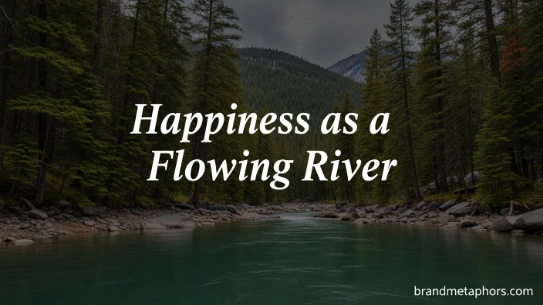
Metaphor 2: Happiness as a Flowing River
Meaning & Explanation
This metaphor captures happiness as something continuous and evolving. It’s not always intense—it can be calm, steady, and quietly fulfilling.
Example Sentence
“Happiness flowed through him like a slow, steady river.”
Alternative Expressions
- “A gentle current of joy”
- “Drifting on a peaceful stream”
- “A tide of calm contentment”
Sensory & Emotional Details
You can almost hear the soft ripple of water, feel the cool breeze, and sense the calm rhythm. This metaphor emphasizes peace rather than excitement.
Real-Life Reflection
Many people experience this kind of happiness not during big celebrations, but in everyday routines—reading a book, sharing a meal, or walking at dusk.
Metaphor 3: Happiness as Fireworks
Meaning & Explanation
Fireworks symbolize explosive, short-lived bursts of joy. This metaphor works well for moments of excitement, achievement, or celebration.
Example Sentence
“When she heard the news, her happiness exploded like fireworks in the night sky.”
Alternative Expressions
- “A burst of joy”
- “Sparks flying in my chest”
- “An explosion of light and color”
Sensory & Emotional Details
Bright flashes, loud cracks, vivid colors—this metaphor is intense and energetic. It captures the thrill of happiness at its peak.
Cultural Note
Fireworks are often tied to celebrations—weddings, festivals, victories. This makes the metaphor universally relatable.
How to Create Your Own Happiness Metaphors
You don’t need to rely on common phrases. Creating your own metaphors makes your writing unique and personal.
Try This Process:
- Think about how happiness feels in your body
- Match that feeling to something physical
- Add sensory details
Example:
- Feeling: Warm and light
- Object: A floating balloon
- Metaphor: “My happiness drifted upward like a balloon escaping gravity.”
Tip
The more specific your comparison, the more powerful it becomes.
Interactive Exercise: Build Your Own Metaphor

Try these prompts:
- Happiness is like ______ because ______
- When I feel happy, it’s as if ______
- My joy feels like ______ on a ______ day
Creative Challenge
Write three different metaphors for happiness:
- One calm
- One intense
- One unexpected
Bonus Twist
Turn one of them into a short 2–3 sentence story.
Using Happiness Metaphors in Writing & Social Media
Metaphors can elevate even the simplest content.
For Writing:
- Use them in openings to hook readers
- Add them to emotional scenes
- Avoid overusing—keep them fresh
For Social Media:
- “Today feels like sunshine wrapped in a smile.”
- “Collecting small moments that sparkle like fireworks.”
Tip
Short, vivid metaphors perform best online. Think visual and emotional.
Literary & Cultural Inspirations
Writers across history have used metaphors to describe happiness in unforgettable ways.
- Poets often compare joy to nature—light, flowers, seasons
- Novelists tie happiness to movement—flight, rivers, wind
- Modern storytelling uses everyday objects—coffee, music, city lights
Example Reflection
Think of how often happiness is linked to light. This isn’t accidental—light symbolizes clarity, hope, and life across cultures.
Common Mistakes to Avoid
Even beautiful metaphors can lose their impact if misused.
Watch Out For:
- Overused clichés (“walking on air” without variation)
- Mixed metaphors (“a river of sunshine exploding”)
- Overloading sentences with too many comparisons
Fix It
Keep it simple. One strong metaphor is better than three weak ones.
Bonus Tips for Everyday Life
Metaphors aren’t just for writing—they can shape how you think.
- Describe your day metaphorically in a journal
- Use metaphors to express emotions in conversations
- Reframe negative moments creatively
Example
Instead of “I had a bad day,” try: “Today felt like walking through fog, but I’m starting to see the light again.”
This subtle shift can change your perspective.
FAQs About Metaphors for Happiness
1. What is the best metaphor for happiness?
There’s no single “best” metaphor. It depends on the feeling—sunshine for warmth, rivers for calm, fireworks for excitement.
2. Can metaphors improve my writing?
Yes. They make your writing more vivid, emotional, and memorable.
3. How do I avoid clichés?
Add specific details or combine ideas in new ways. Personal experience helps.
4. Are metaphors useful in everyday communication?
Absolutely. They help express emotions more clearly and creatively.
5. How can I practice using metaphors?
Write daily, describe emotions creatively, and experiment with different comparisons.
Conclusion
Happiness is fleeting, layered, and often difficult to describe. But metaphors give it form—they turn emotion into something we can see, hear, and feel.
Whether it’s sunshine warming your skin, a river flowing quietly, or fireworks lighting up the night, each metaphor captures a different shade of joy. And the more you explore them, the more you’ll discover that happiness isn’t just something you feel—it’s something you can create through words.
So next time you feel a spark of joy, don’t just say you’re happy.
Describe it. Shape it. Let it shine.