
The First Drop: A Sensory Beginning
Close your eyes for a moment and listen. Somewhere, water is moving—maybe it’s the soft hush of rain tapping against a window, the rhythmic crash of waves folding into the shore, or the quiet swirl of tea in a cup. Water is never truly still; even in silence, it carries motion, memory, and meaning.
I remember standing by a river once at dusk, watching the current glide past like time itself—unbothered, unstoppable, and strangely comforting. That moment made me realize something powerful: water isn’t just something we see or touch—it’s something we feel, deeply and instinctively.
And that’s exactly why metaphors for water are so compelling. They give language a fluid, emotional depth that rigid words often cannot.
What Are Metaphors for Water (And Why They Matter)?
A metaphor for water is a figurative way of describing something by comparing it to water or its qualities—flow, depth, clarity, turbulence, and more. These metaphors help us express emotions, ideas, and experiences in a way that feels natural and vivid.
Water is universal. It exists in every culture, every landscape, and every human life. That universality makes it one of the most powerful tools in storytelling, poetry, and even everyday communication.
Using water metaphors can:
- Add emotional resonance to your writing
- Make abstract ideas easier to understand
- Create vivid imagery that lingers in the reader’s mind
- Enhance creativity in storytelling, social media, and personal expression
Let’s dive into some powerful examples and explore how you can use them effectively.
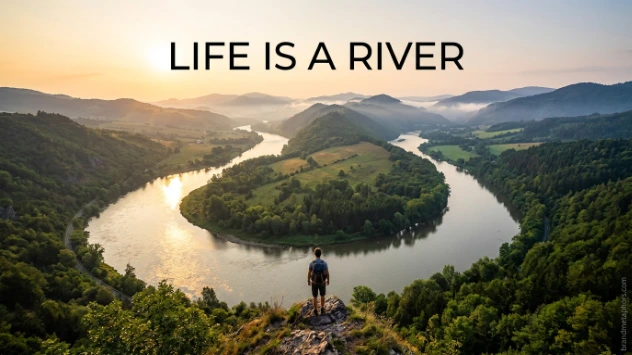
🌊 1. “Life is a River” – The Metaphor of Continuous Flow
Meaning & Explanation
When we say life is a river, we’re comparing life to something that is always moving forward. A river twists, turns, speeds up, slows down—but it never stops.
This metaphor highlights change, unpredictability, and the inevitability of moving ahead.
Example Scenario
After losing his job, Ahmed felt lost—but deep down, he knew life was a river. Eventually, it would carry him somewhere new.
Alternative Expressions
- Life flows like a stream
- Time moves like water
- Existence drifts like a current
Sensory & Emotional Layer
Imagine standing knee-deep in cool water, feeling the current push gently against your legs. There’s resistance—but also guidance. That’s life: a blend of struggle and surrender.
Mini Storytelling Moment
In many cultures, rivers symbolize journeys. Think of ancient travelers following rivers to find new lands—or stories where characters cross rivers as a symbol of transformation. The river becomes not just a path, but a passage into change.
💧 2. “Emotions Are Like Waves” – The Rise and Fall of Feeling
Meaning & Explanation
This metaphor compares emotions to ocean waves—sometimes calm, sometimes overwhelming.
It reminds us that feelings are temporary. Even the strongest wave eventually breaks and recedes.
Example Sentence
Her anger rose like a wave, crashing loudly—but just as quickly, it dissolved into quiet regret.
Alternative Ways to Express It
- Feelings come in tides
- Emotions ebb and flow
- Moods ripple like water
Sensory & Emotional Detail
Picture the ocean during a storm—loud, chaotic, unpredictable. Then imagine it at sunrise—smooth and reflective. Both are the same ocean, just different moments.
Real-Life Connection
This metaphor is often used in mindfulness and mental health practices. Therapists encourage people to “ride the wave” of emotion instead of resisting it, knowing it will pass.
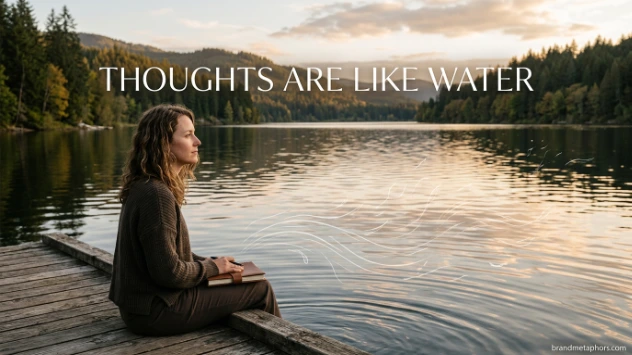
🌫️ 3. “Thoughts Are Like Water” – Clarity, Chaos, and Reflection
Meaning & Explanation
Water can be clear or murky, still or turbulent—just like our thoughts. This metaphor is often used to describe mental clarity or confusion.
Example Scenario
After a long walk alone, her thoughts settled like still water, reflecting answers she hadn’t seen before.
Alternative Expressions
- A mind like a calm lake
- Thoughts flowing freely
- Ideas swirling like currents
Sensory Layer
Imagine looking into a perfectly still lake—you can see your reflection clearly. Now imagine muddy, disturbed water—you can’t see anything. That’s how clarity works in the mind.
Cultural & Literary Touch
In many philosophies, especially Eastern traditions, calm water symbolizes wisdom and inner peace. A still mind, like still water, reflects truth without distortion.
🌧️ Interactive Exercises: Practice Your Own Water Metaphors
Ready to get creative? Try these simple exercises to sharpen your metaphor skills:
✍️ Exercise 1: Fill the Flow
Complete this sentence in three different ways:
- “My thoughts today feel like water because…”
Try making one version calm, one chaotic, and one mysterious.
✍️ Exercise 2: Emotion Mapping
Pick an emotion (joy, anger, fear, love) and describe it using water imagery:
- Is it a storm? A drizzle? A waterfall?
✍️ Exercise 3: Memory as Water
Think of a memory and describe it as a form of water:
- A fading puddle?
- A deep ocean?
- A rushing river?
This helps you connect feelings with imagery, making your writing more vivid.
💡 Bonus Tips: Using Water Metaphors in Daily Life & Writing
For Writing
- Use water metaphors to describe transitions or emotional shifts
- Avoid overusing the same imagery—mix rivers, oceans, rain, and mist
- Pair metaphors with sensory details (sound, temperature, movement)
For Social Media
- “Let your worries flow away 🌊”
- “Today feels like calm waters after a storm”
- “Riding the waves of change”
These phrases are short, relatable, and emotionally engaging—perfect for captions.
For Daily Conversations
Instead of saying: “I’m overwhelmed” Try: “It feels like I’m caught in a storm right now.”
It’s more expressive and helps others understand your emotions better.
🌍 Why Water Metaphors Resonate Across Cultures
Water is one of the few elements that every human understands. Whether it’s monsoon rains, desert wells, or ocean tides, water shapes how people live and think.
In literature, religion, and folklore, water often symbolizes:
- Life and renewal
- Change and transformation
- Purity and cleansing
- Mystery and depth
That’s why water metaphors feel so natural—they tap into something deeply human.
🖋️ Expanding Your Creativity: Mix and Layer Metaphors
Don’t stop at simple comparisons. Combine water metaphors with other imagery:
- “Her words flowed like water, but cut like ice.”
- “His thoughts were a storm trapped inside a glass.”
- “Hope trickled in like the first drops of rain after drought.”
Layering metaphors adds richness and complexity to your writing.
❓ FAQs About Metaphors for Water
### What are metaphors for water used for?
They are used to describe emotions, thoughts, and experiences in a vivid and relatable way, often adding depth and imagery to writing.
### Why is water a common metaphor?
Because it is universal, dynamic, and rich in symbolic meaning—making it easy for people to connect with emotionally and visually.
### Can water metaphors be used in everyday speech?
Yes! Phrases like “go with the flow” or “test the waters” are common examples used in daily conversations.
### How can I create my own water metaphors?
Think about the qualities of water (movement, clarity, depth) and match them to what you’re trying to describe.
### Are water metaphors useful for mental health writing?
Absolutely. They are often used to describe emotions and coping strategies, especially in mindfulness and therapy contexts.
Conclusion
Water teaches us something simple yet profound: movement is natural, change is constant, and depth is always there—waiting to be explored.
When you use metaphors for water, you’re not just decorating your language—you’re giving it life, motion, and emotion. You’re allowing your words to ripple outward, touching readers in ways plain sentences never could.
So the next time you write, speak, or even think—ask yourself: What kind of water is this moment?
Is it a calm lake, a rushing river, or a quiet drizzle?
Whatever it is, let it flow.