

The rain tapped softly against the window as I sat staring at a blank page, searching for words to describe myself. Not the usual labels—student, friend, dreamer—but something deeper, something that felt alive. Suddenly, a thought appeared: What if I’m not just a person, but a lighthouse in a restless sea?
That single metaphor changed everything.
We often define ourselves with rigid identities, but metaphors open a door to something more fluid, imaginative, and revealing. They allow us to see ourselves not just as we are, but as we feel, as we grow, and as we hope to become. In this article, we’ll explore how metaphors for yourself can reshape your self-image, deepen your creativity, and give your voice a richer, more poetic edge.
What Are Metaphors for Yourself?
A metaphor is a way of describing something by saying it is something else. When applied to yourself, it becomes a powerful tool for self-reflection and expression.
Instead of saying, “I’m strong,” you might say, “I’m a mountain that weathers every storm.”
This shift matters because it transforms abstract traits into vivid imagery. It gives your identity texture, color, and emotion.
Why Self-Metaphors Matter for Personal Growth
The language you use shapes how you see yourself. If you constantly describe yourself in limiting ways, your mindset follows. But when you use rich, empowering metaphors, your identity expands.
Think about it:
- “I’m stuck” feels heavy and permanent.
- “I’m a seed waiting for the right season” feels hopeful and temporary.
Metaphors don’t just describe you—they guide your narrative.
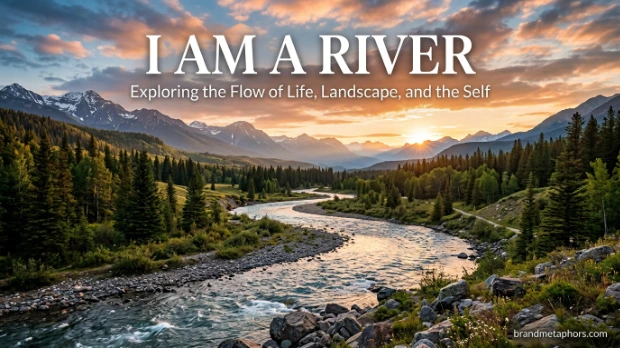
Metaphor #1: “I Am a River”
Meaning and Explanation
Seeing yourself as a river suggests movement, adaptability, and quiet strength. Rivers don’t resist obstacles—they flow around them, carving new paths over time.
Example Scenario
After facing repeated setbacks, you might say: “I’m a river. I may bend, but I never stop moving forward.”
Alternative Ways to Express It
- “I flow through life’s challenges.”
- “I reshape my path with time and persistence.”
- “I am always becoming.”
Sensory & Emotional Details
Imagine cool water slipping over smooth stones, sunlight flickering on the surface. There’s a calm determination in a river’s journey—steady, patient, unstoppable.
Mini Storytelling
A young artist once felt lost after rejection from galleries. Instead of quitting, she embraced the idea of being a river. Years later, her work found its audience—not because she forced success, but because she kept flowing.
Metaphor #2: “I Am a Garden”
Meaning and Explanation
A garden represents growth, care, and cycles. It reminds you that you need nurturing—rest, learning, and time—to flourish.
Example Scenario
During a period of self-improvement: “I’m a garden. I’m planting better habits and removing what no longer serves me.”
Alternative Expressions
- “I cultivate my own growth.”
- “I’m blooming in my own time.”
- “I’m learning what to water and what to let go.”
Sensory & Emotional Details
Picture soft soil under your fingers, the scent of fresh blooms, sunlight warming your skin. Growth feels gentle yet powerful.
Cultural Reference
Gardens have long symbolized renewal in literature—from ancient poetry to modern storytelling. They remind us that beauty comes from patience and care.
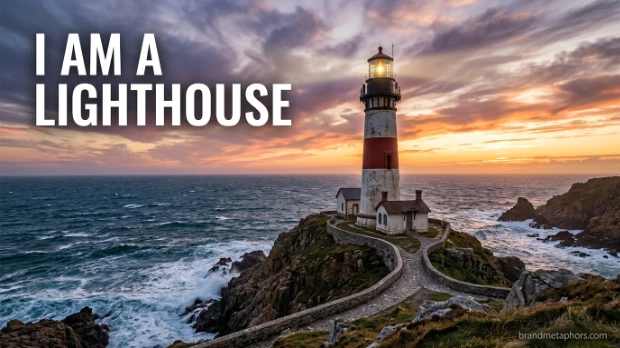
Metaphor #3: “I Am a Lighthouse”
Meaning and Explanation
A lighthouse stands firm, offering guidance even in storms. This metaphor reflects resilience, purpose, and quiet leadership.
Example Scenario
When supporting others through tough times: “I’m a lighthouse. I stay steady so others can find their way.”
Alternative Expressions
- “I shine even in darkness.”
- “I guide without losing myself.”
- “I remain grounded in chaos.”
Sensory & Emotional Details
Hear the crash of waves, feel the wind against your face, see the steady beam cutting through fog. There’s strength in standing still when everything else moves.
Mini Storytelling
A teacher once described herself as a lighthouse for her students—never forcing them, but always guiding. Years later, her students remembered not her lessons, but her light.
How to Create Your Own Personal Metaphors
Creating metaphors for yourself is both an art and a discovery process. Here’s how to begin:
1. Reflect on Your Current State
Ask yourself:
- What emotions am I feeling?
- What challenges am I facing?
2. Think in Images
Turn those feelings into visuals. Feeling overwhelmed? Maybe you’re “a storm-tossed ship.” Feeling hopeful? Maybe you’re “a sunrise breaking through clouds.”
3. Keep It Personal
Your metaphor should resonate with you. It doesn’t have to impress anyone else—it just has to feel true.
Interactive Exercise: Discover Your Metaphor

Take a moment and try this:
trust 1: “I am like a ______ because ______.”
Prompt 2: “If my life were a landscape, it would be a ______.”
Prompt 3: “What object or element reflects my current journey?”
Write freely. Don’t overthink. Let your imagination lead.
Using Metaphors in Writing and Daily Life
Metaphors aren’t just for reflection—they can enhance your communication.
In Writing
They make your words more vivid and memorable. Instead of plain descriptions, your ideas come alive.
On Social Media
A unique metaphor can turn a simple post into something powerful: “Still growing, still blooming—just a garden finding its rhythm.”
In Conversations
They help you express complex emotions in relatable ways: “I feel like I’m climbing a mountain right now.”
Common Mistakes to Avoid
While metaphors are powerful, they can lose impact if misused.
- Overcomplicating: Keep it simple and clear.
- Using clichés: Try fresh, personal imagery.
- Forcing meaning: Let the metaphor feel natural.
Authenticity matters more than perfection.
Bonus Tips for Crafting Strong Self-Metaphors
- Draw inspiration from nature (oceans, forests, skies).
- Use contrasts (light vs. dark, calm vs. chaos).
- Revisit and update your metaphors as you grow.
Remember: your metaphor today might not be your metaphor tomorrow—and that’s a beautiful thing.
Expanding Your Identity Through Metaphor
You are not just one thing. You can be a river and a lighthouse, a garden and a storm.
Metaphors allow you to hold multiple truths at once. They remind you that identity isn’t fixed—it’s evolving, layered, and rich with possibility.
Turning Metaphors into Personal Affirmations
Once you find a metaphor that resonates, turn it into a daily affirmation:
- “I am a river, always moving forward.”
- “I am a garden, growing with care.”
- “I am a lighthouse, steady and strong.”
Repeat it. Write it. Live it.
FAQs About Metaphors for Yourself
1. What is a self-metaphor?
A self-metaphor is a figurative way of describing yourself using imagery or comparison to express deeper meaning.
2. Why should I use metaphors to describe myself?
They help you understand your emotions, reshape your mindset, and communicate more creatively.
3. Can I have more than one metaphor?
Absolutely. You can have different metaphors for different stages or aspects of your life.
4. How do I know if my metaphor is good?
If it feels meaningful and resonates with your experience, it’s the right one.
5. Can metaphors really change how I see myself?
Yes. The language you use influences your thoughts, and metaphors can shift your perspective in powerful ways.
Conclusion
At the end of the day, you are more than a label—you are a story waiting to be told. And metaphors are the language of that story, painting your identity in colors that plain words cannot capture.
So the next time you struggle to describe yourself, pause. Look inward. Ask yourself not just who you are, but what you are like.
happen you’re a river, carving your path through uncertainty. Maybe you’re a garden, quietly blooming. Maybe you’re a lighthouse, shining through the storm.
Whatever you choose, let it be something that feels alive—because you are.