
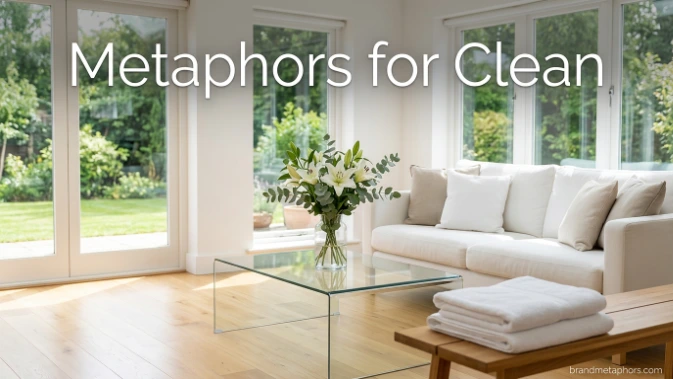
Imagine opening a window after a long, rainy night. Cool air moves through the room, the curtains lift softly, and everything suddenly feels lighter. Nothing may have changed except the air, yet the whole space seems renewed. That feeling is exactly why Metaphors for Clean can make simple descriptions more vivid and memorable. Instead of only saying that something is spotless, fresh, pure, or well-organized, a metaphor can help readers see and feel it. Moreover, these comparisons work in many settings, from poems and stories to school writing, social media captions, and everyday conversation. Whether you are describing a sparkling kitchen, a fresh shirt, a clear mind, or an honest heart, the right metaphor can turn ordinary words into a strong image.
What Are Metaphors for Clean? (Definition & Purpose)
A metaphor is a figure of speech that describes something by comparing it to something else—without using “like” or “as.” When we talk about “metaphors for clean,” we’re looking for creative ways to describe cleanliness beyond the literal.
Instead of saying:
- “The room was clean,”
You might say:
- “The room was a blank canvas waiting for life.”
This shifts the focus from a basic observation to a vivid image.
Why They Matter
- They enhance writing quality
- They engage readers emotionally
- They make ordinary descriptions memorable
Cleanliness, often associated with order and clarity, becomes a gateway to deeper meaning.
The Power of Clean Imagery in Writing

Clean imagery taps into something universal. We all recognize the relief of a freshly cleaned space or the clarity after chaos. Writers use this shared experience to build connection.
Think of it:
- Clean = peace
- Clean = renewal
- Clean = control
A well-crafted metaphor can turn a simple scene into something cinematic.
For example:
“Her thoughts were swept clean, like a beach after high tide.”
You can almost hear the waves, feel the calm.
Why “Clean” Is More Than Just Hygiene

“Clean” isn’t just about removing dirt—it symbolizes transformation.
It can represent:
- Emotional healing
- New beginnings
- Moral clarity
- Simplicity and minimalism
In storytelling, a clean space often signals a turning point—a character letting go, starting over, or finding clarity.
Clean as a Blank Canvas” — Metaphor of Possibility
Meaning
This metaphor suggests purity and potential. A blank canvas is untouched, ready for creation.
Example Sentence
“After clearing out the clutter, her mind felt like a blank canvas, ready for new ideas.”
Alternative Expressions
- “An unwritten page”
- “A fresh start”
- “A reset button”
Sensory & Emotional Layer
You might imagine:
- The faint smell of fresh paint
- The silence of an empty studio
- The anticipation before creation
Mini Story
A young artist stands before a newly cleaned studio. The chaos of yesterday—paint spills, crumpled sketches—is gone. In that quiet, clean space, creativity returns. The metaphor becomes real: clean equals possibility.
Clean as a Mountain Breeze” — Metaphor of Freshness

Meaning
This metaphor emphasizes purity and natural freshness, often linked to air and nature.
Example Sentence
“The sheets smelled as clean as a mountain breeze after the rain.”
Alternative Expressions
- “Fresh as morning dew”
- “Crisp as winter air”
- “Pure as untouched snow”
Sensory Details
- Cool air brushing your skin
- The scent of pine trees
- A feeling of openness and clarity
Cultural Reference
In many cultures, mountains symbolize purity and distance from pollution or chaos. This metaphor taps into that deep-rooted association.
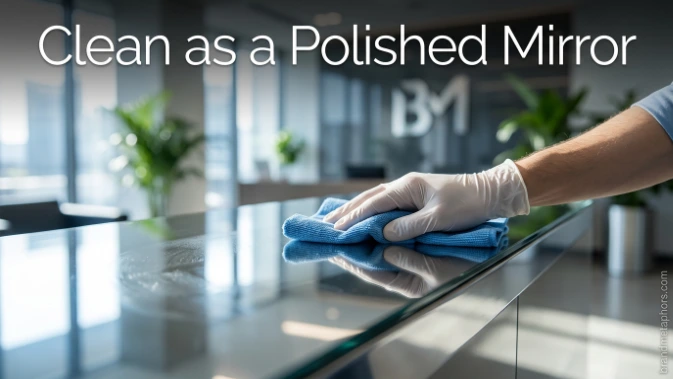
Clean as a Polished Mirror” — Metaphor of Clarity
Meaning
This metaphor highlights clarity, reflection, and transparency.
Example Sentence
“His explanation was as clean as a polished mirror—nothing hidden, everything clear.”
Alternative Expressions
- “Crystal clear”
- “Sharp as glass”
- “Clear as daylight”
Emotional Layer
A polished mirror reflects truth. It suggests honesty and precision.
Real-Life Scenario
Imagine a detective finally solving a case. The confusion fades. Everything becomes “clean”—not physically, but mentally.
Using Clean Metaphors in Everyday Writing
Metaphors aren’t just for novels—they’re useful everywhere.
fly Social Media
- “Decluttered my room and my mind—feels like a fresh chapter.”
- “Clean desk, clear thoughts.”
In Professional Writing
- “We aim for clean, streamlined processes.”
- “The design is clean and user-friendly.”
In Daily Conversations
- “That explanation really cleared things up—it’s spotless now.”
Creative Exercises: Practice Metaphors for Clean

Try these exercises to sharpen your skills:
Sensory Rewrite
Take a simple sentence:
- “The kitchen is clean.”
Rewrite it using senses:
- What does it smell like?
- What does it look like?
Example:
“The kitchen gleamed, smelling of citrus and sunlight.”
Emotion-Based Metaphors
Think of a feeling (relief, joy, calm).
Create a metaphor for clean that matches it.
Example:
- Relief → “Clean as a sigh after tears.”
Nature Comparisons
Use elements of nature.
Examples:
- “Clean as a river after rain”
- “Clean as a cloudless sky”
Tips for Writing Powerful Clean Metaphors

Use Sensory Language
Don’t just describe—make readers feel.
Keep It Relatable
Choose images people recognize.
Avoid Overuse
Too many metaphors can overwhelm. Use them strategically.
Match the Tone
A poetic metaphor may not fit a technical document.
Common Mistakes to Avoid
- Clichés: “Clean as a whistle” can feel overused.
- Mixed Metaphors: Don’t combine unrelated images.
- Overcomplication: Simplicity often works best.
Bad example:
“Clean as a roaring ocean breeze of glass clarity” (Too confusing)
Better:
“Clean as a quiet morning sky.”
Expanding Your Metaphor Vocabulary

To improve, read widely and observe carefully.
Sources of Inspiration
- Nature (rain, wind, snow)
- Art (painting, sculpture)
- Daily life (laundry, cooking, organizing)
Keep a notebook of phrases that feel vivid and original.
Bonus Tips: Using Clean Metaphors Creatively
In Storytelling
Use clean metaphors to signal change:
- Before vs. after transformation
In Branding
Companies often use “clean” to suggest simplicity and trust:
- “Clean design”
- “Clean ingredients”
In Personal Growth
Use metaphors to reframe your mindset:
- “I’m clearing space for better things.”
Bringing It All Together: Clean as a Language of Renewal

Cleanliness, in metaphor, becomes something much bigger than spotless surfaces. It becomes clarity after confusion, peace after chaos, and hope after heaviness.
When you say something is “clean,” you’re not just describing it—you’re telling a story about transformation.
FAQs About Metaphors for Clean
What is a simple metaphor for clean?
A simple one is “clean as a blank page,” which suggests freshness and new beginnings.
Are metaphors for clean only used in writing?
No—they’re used in speech, marketing, storytelling, and even everyday conversation.
How can I make my metaphors more original?
Focus on personal experiences and sensory details instead of common clichés.
Can clean metaphors describe emotions?
Yes! Clean can symbolize clarity, relief, peace, or emotional renewal.
What’s the difference between a simile and a metaphor?
A simile uses “like” or “as,” while a metaphor makes a direct comparison.
What is a metaphor for something very clean?
A strong metaphor is “as clean as a fresh sheet of white paper.” It suggests purity, simplicity, and freedom from marks or clutter.
What is a metaphor for freshness?
“Fresh as a garden after rain” is a vivid metaphor for freshness. It suggests cool air, clean leaves, natural beauty, and renewal.
What metaphor describes a clean mind?
“A mind like a clear window” works well because it suggests that confusion and stress have disappeared, leaving thoughts that are easier to see and understand.
What is a metaphor for a clean and organized room?
“A quiet harbor after a storm” can describe a room that has moved from messy and stressful to calm and orderly.
How can I make cleanliness descriptions more creative?
Instead of only using words like clean or spotless, compare cleanliness with familiar images such as clear glass, fresh rain, white paper, sunlight, or still water.
Conclusion
The best metaphors for clean do more than say that something has no dirt. Instead, they show freshness, purity, clarity, peace, and order through images readers can picture.
A fresh sheet of paper suggests a new beginning. Clear glass suggests honesty and a clear view. Meanwhile, a garden after rain suggests natural freshness and renewal.
Therefore, the right metaphor depends on the mood you want to create. When you choose an image that matches that feeling, even a simple description can become vivid and memorable.
Ultimately, cleanliness is not only something we see. It can also be something we feel: a lighter mind, a calmer room, a fresh beginning, or a quiet sense that everything is finally in its place.