

Imagine waking up one morning and noticing that your body feels unusually light. Your breathing is easy, your mind is clear, and even the simple act of walking across the room feels effortless. You may not think about your health much when everything works well. Like clean air or steady sunlight, it can become almost invisible.
Then one small ache, a sleepless night, or a day filled with exhaustion can make you realize how precious good health really is.
Health is more than the absence of illness. It can involve physical strength, emotional balance, mental clarity, rest, nourishment, relationships, and the ability to take part in everyday life. Because health is such a broad and sometimes difficult concept to describe, metaphors for health can make it easier to understand.
A metaphor compares one thing with another to create a vivid mental picture. Instead of simply saying, “Health is important,” you might say, “Health is the foundation of a house.” Suddenly, the idea becomes easier to see: when the foundation is strong, everything built upon it has greater stability.
Below are vivid metaphors for health, along with meanings, examples, alternative expressions, storytelling ideas, and creative exercises you can use in writing, conversation, schoolwork, social media, or everyday life.
What Are Metaphors for Health and Why They Matter

Metaphors are bridges between the known and the unknown. When we say “health is a journey” or “your body is a temple,” we’re not just decorating language—we’re shaping understanding.
Metaphors for health help us:
- Make abstract ideas tangible
- Communicate emotions and experiences
- Inspire action and awareness
- Reframe challenges into opportunities
They’re powerful tools not just for writers, but for anyone trying to live more consciously. When you change how you describe your health, you often change how you treat it.
Health as a Garden: Growth, Care, and Patience
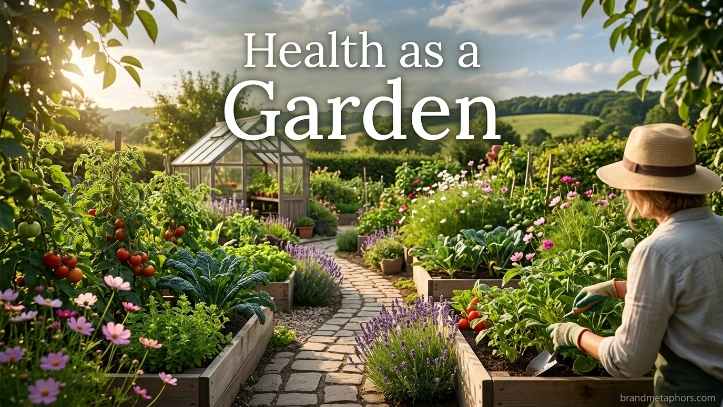
Imagine your health as a garden.
Some days, it blooms effortlessly. Other days, weeds creep in, and the soil feels dry. But always, it responds to care.
Meaning & Explanation
This metaphor emphasizes that health requires consistent nurturing. Just like plants need water, sunlight, and attention, your body and mind need proper care to thrive.
Example Scenario
After weeks of stress and poor sleep, you pause and think: “I’ve been neglecting my garden. No wonder things feel overgrown and tangled.”
Alternative Expressions
- “Your health is a landscape—shape it gently.”
- “Well-being is something you cultivate.”
- “Tend to yourself like fertile soil.”
Sensory & Emotional Layer
Picture the smell of damp earth after rain, the texture of leaves brushing your fingers, the quiet satisfaction of seeing something grow because of your effort.
Mini Story
A woman once started growing herbs on her windowsill during a difficult time. Each morning, watering them became her ritual. Slowly, as the plants thrived, so did she. Her anxiety softened, replaced by a quiet sense of control and hope.
Health as a Bank Account: Invest, Don’t Just Withdraw

Your energy, strength, and resilience function like currency.
Meaning & Explanation
Every healthy choice is a deposit. Every unhealthy habit is a withdrawal. If you keep withdrawing without replenishing, you’ll eventually run into “debt.”
Example Sentence
“I’ve been skipping sleep all week—it feels like I’m overdrawing my health account.”
Alternative Ways to Express It
- “Save your energy wisely.”
- “Make daily deposits into your well-being.”
- “Don’t spend tomorrow’s energy today.”
Real-Life Reflection
Think of athletes who carefully balance training and recovery. Their success isn’t just about effort—it’s about managing resources wisely.
Emotional Layer
There’s a subtle anxiety in feeling depleted, like watching numbers drop in an account. But there’s also calm confidence in knowing you’ve built reserves.
Health as a Symphony: Balance and Harmony

Your body is not a machine—it’s music.
Meaning & Explanation
Health is about harmony between different systems: physical, mental, emotional. When one instrument is off, the whole symphony feels discordant.
Example Scenario
You’re physically fine but mentally exhausted. You think: “One section of my orchestra is out of tune.”
Alternative Expressions
- “Find your rhythm.”
- “Bring your life back into harmony.”
- “Tune your inner instruments.”
Cultural Reference
In many traditions, from Eastern medicine to classical philosophy, balance is the foundation of health. Harmony isn’t perfection—it’s alignment.
Sensory Detail
Hear the swell of strings, the steady pulse of drums, the gentle rise of a flute. Now imagine one instrument screeching out of tune—it disrupts everything.
Creative Metaphors for Health You Can Use Today
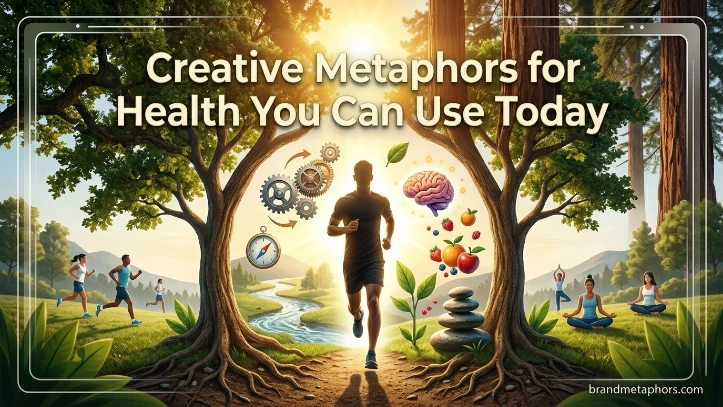
Health as a Lighthouse
Meaning
Your well-being guides you through life’s storms. When your health is strong, it illuminates the path forward.
Example
“Even in chaos, I try to keep my lighthouse lit—eating well, resting, staying grounded.”
Alternatives
- “Be your own beacon.”
- “Let your health guide your direction.”
Emotional Layer
A lighthouse stands firm against crashing waves. There’s resilience, steadiness, and quiet strength.
Health as a Story You’re Writing
Meaning
Every choice is a sentence. Every habit is a chapter.
Example
“I didn’t like the direction my health story was going, so I started rewriting it.”
Alternatives
- “Turn the page on unhealthy habits.”
- “Write a better chapter for yourself.”
Mini Storytelling
Think of someone who transformed their lifestyle—not overnight, but gradually. Each day was a new line in a story of change.
Health as a Flame
Meaning
Your vitality is like fire—it needs fuel, oxygen, and protection.
Example
“I’ve been burning too bright without rest—my flame is flickering.”
Alternatives
- “Keep your fire alive.”
- “Don’t let burnout extinguish you.”
Sensory Detail
Feel warmth on your skin, see flickering light, hear the gentle crackle. A flame can comfort—but it can also fade if neglected.
How to Use Health Metaphors in Daily Life
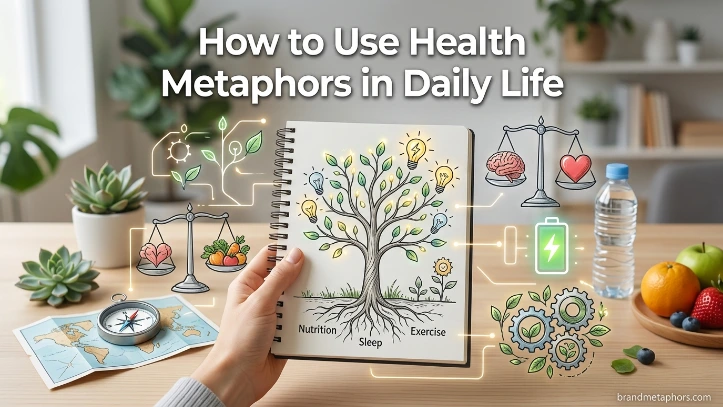
Metaphors aren’t just for writing—they can reshape how you think.
Practical Uses
- Self-talk: “I need to water my garden today.”
- Goal setting: “I’m investing in my energy.”
- Reflection: “Where is my harmony off?”
Social Media Ideas
- Share a photo of your meal with: “Fueling the flame 🔥”
- Post a morning routine: “Tending my garden today 🌱”
Writing Tip
Use sensory details—what does your metaphor feel, sound, or smell like?
Interactive Exercise: Discover Your Personal Health Metaphor
Take a moment and ask yourself:
- If your health were an object, what would it be?
- What condition is it in right now?
- What does it need?
Creative Challenge
Try expressing the same idea using three different metaphors.
Bonus Tips for Writers and Creators
- Mix metaphors carefully—don’t confuse your reader
- Keep them consistent within a paragraph
- Use them to simplify, not complicate
- Add personal or cultural touches for authenticity
Real-Life Applications: From Therapy to Motivation

Therapists often use metaphors to help clients understand emotions. Coaches use them to inspire action.
For example:
- “You’re carrying too much weight” (emotional burden)
- “You’re running on empty” (burnout)
These phrases stick because they feel true.
Common Mistakes to Avoid
- Overusing clichés (“body is a temple” without fresh context)
- Mixing unrelated metaphors
- Being too abstract without grounding in real experience
Bringing It All Together: Living Your Metaphor
Your metaphor isn’t just language—it’s a lens.
If you see your health as fragile, you may act cautiously. If you see it as resilient, you may act boldly.
Choose a metaphor that empowers you.
FAQs About Metaphors for Health
What is a metaphor for health?
A metaphor for health is a figurative way of describing well-being using comparisons, like “health is a garden” or “health is a journey.”
Why are metaphors useful in health communication?
They make complex or abstract ideas easier to understand and more emotionally engaging.
Can metaphors actually improve my health habits?
Yes—by changing how you think about health, they can influence your behavior and motivation.
What are some simple health metaphors?
Common ones include:
- Health as a journey
- Health as a balance
- Health as energy
How can I create my own metaphor?
Think about something familiar (nature, objects, systems) and compare it to your health experience.
What is a good metaphor for health?
A strong metaphor for health is “health is a garden.” It suggests that wellness requires patience, nourishment, attention, and consistent care.
What is a metaphor for being healthy?
You can describe being healthy as having a strong foundation, because good health supports many other areas of life.
What is a metaphor for healing?
A useful metaphor for healing is “healing is a journey.” It communicates that recovery can involve progress, setbacks, patience, and gradual change.
What is a metaphor for good physical health?
Good physical health can be described as a well-tended garden, a strong tree, or a sturdy foundation. Each image emphasizes strength and ongoing care.
What is a metaphor for mental health?
Mental health can be compared to a compass, garden, or balance scale. These metaphors can communicate direction, nurturing, emotional growth, and balance.
Conclusion
Health is not simply a number, a diagnosis, a workout, or a meal. It is a living part of the human experience.
Sometimes it feels like a garden that needs tending.
Sometimes it resembles a journey where the next step matters more than the final destination.
And sometimes it is like a tree standing quietly through the storm, bending without breaking.
The metaphor you choose depends on the story you are trying to tell.
So take a moment and finish this sentence:
“My health is like ______ because ______.”
Then ask yourself:
What does this metaphor teach me?
Maybe it tells you to slow down. Maybe it encourages patience. Or perhaps it simply helps you appreciate something that is easy to overlook when everything feels fine.
The most meaningful metaphors do more than decorate language.
They change the way we see ordinary life.