
The internet has created a language of its own, filled with abbreviations, emojis, and slang that can confuse anyone who isn’t familiar with them. One short abbreviation that often appears in text messages, social media comments, and online conversations is JP. Many people search for jp meaning in text after seeing it in a chat and wondering whether it is a joke, an insult, or something else entirely.
Learning internet slang helps you avoid misunderstandings and communicate more naturally with friends, classmates, coworkers, and online communities. It also makes it easier to understand conversations on popular platforms like TikTok, Instagram, WhatsApp, and Snapchat. In this guide, you’ll learn exactly what JP means in texting, where it came from, how people use it today, common mistakes to avoid, and the best ways to reply when someone sends it.
What Does JP Mean in Text?
The most common jp meaning in text is:
JP = Just Playing
It tells the other person that the previous message was meant as a joke and should not be taken seriously.
People usually type JP after teasing someone, making an exaggerated statement, or pretending to be upset.
For example:
- “You’re the worst friend ever… JP 😂”
- “I’m deleting your number. JP!”
- “I can’t believe you forgot my birthday… JP.”
In these examples, JP removes any confusion and lets readers know the speaker is only joking.
Because text messages don’t include facial expressions or tone of voice, abbreviations like JP help prevent misunderstandings.
JP Full Form in Texting
The most widely accepted JP full form is:
Just Playing
It has the same purpose as saying:
- Just kidding
- Only joking
- I’m joking
- I wasn’t serious
Many people use JP interchangeably with these phrases.
Although “Just Playing” is the standard slang meaning, the letters JP can stand for many different things outside internet conversations. The meaning depends entirely on the context.
Why People Use JP in Online Conversations
People use JP because written messages can sometimes sound harsher than intended.
Instead of writing an entire sentence explaining they were joking, they simply add JP.
Common reasons include:
- Light teasing
- Friendly sarcasm
- Making funny exaggerations
- Preventing misunderstandings
- Keeping conversations casual
Using JP helps create a relaxed and playful tone.
The Origin and Rise of JP in Internet Slang
Early Chat Rooms
JP began appearing in online chat rooms, gaming communities, and instant messaging platforms where users wanted fast, short replies.
Typing “Just Playing” every time took longer than writing “JP.”
Text Messaging Era
As SMS texting became popular, people looked for shorter abbreviations to save characters.
JP became one of many shorthand expressions like:
- JK (Just Kidding)
- LOL (Laugh Out Loud)
- BRB (Be Right Back)
Social Media Growth
Today, JP occasionally appears on:
- TikTok
- Snapchat
- Discord
- Messenger
- X (formerly Twitter)
Although newer slang constantly appears, JP remains recognizable to many internet users.
How JP Is Used in Real Conversations
Friendly Teasing
HumanA: You’re officially banned from pizza night.
Person B: Seriously?
Person A: JP 😂
Joking About Plans
Friend: I’m moving to Antarctica tomorrow.
You: Wait…really?
Friend: JP.
Fake Complaints
Human A: I can’t believe you beat me again.
Person B: Sorry!
Person A: JP. Good game.
Casual Group Chats
Friend: I’m never speaking to you again.
You: What happened?
Friend: JP lol.
JP Meaning on WhatsApp
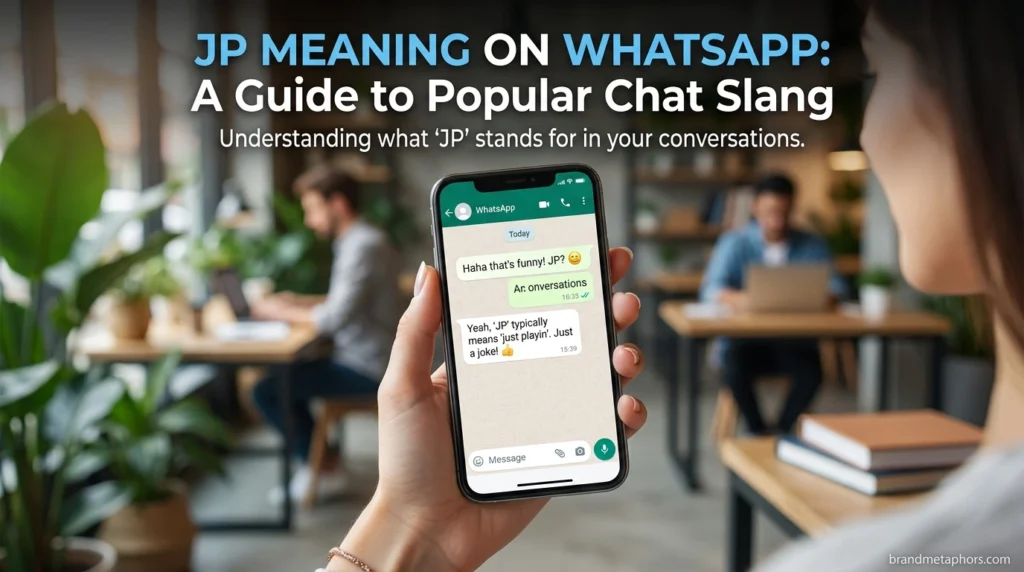
WhatsApp conversations often happen quickly between family and friends.
Here, JP usually softens playful jokes.
Examples:
- “You’re paying for dinner. JP 😂”
- “I blocked you…JP.”
- “Don’t ever text me again. JP.”
On WhatsApp, it usually signals humor rather than seriousness.
JP Meaning on Instagram
Instagram users often include JP in:
- Comments
- Direct Messages
- Story replies
- Reels comments
Example:
“I unfollowed you…JP 😂”
It lets followers know the comment is playful.
JP Meaning on TikTok
TikTok comments move quickly, and humor is everywhere.
The jp meaning on TikTok is still “Just Playing.”
Examples include:
- “Worst dance ever…JP.”
- “I’m deleting TikTok after this…JP.”
Creators often tease one another before adding JP.
JP Meaning on Snapchat
Snapchat is known for casual conversations.
People often use JP after:
- Funny selfies
- Playful insults
- Random jokes
- Friendly roasting
Example:
“You owe me $500…JP 😂”
The abbreviation helps avoid unnecessary confusion.
What Does JP Mean in Chat?
When someone asks what does JP mean in chat, the answer is usually simple:
This means the sender was joking.
It tells readers:
- Don’t take that seriously.
- I’m only teasing.
- I’m having fun.
- I didn’t really mean it.
It acts like a quick disclaimer after a joke.
Common Chat Examples
Example 1
Friend: “I’m deleting your Netflix account.”
Reply: “Wait, what?”
Friend: “JP 😂”
Example 2
Friend: “I won the lottery.”
Reply: “Really?”
Friend: “JP.”
Example 3
Friend: “I hate pizza.”
Reply: “No way.”
Friend: “JP lol.”
Other Meanings of JP
Although Just Playing is the most common texting meaning, JP may represent different things depending on context.
Examples include:
- Japan
- Japanese
- Job Position
- Justice of the Peace
- Jet Propulsion
- Journal Publication
- Personal initials
For example:
“I’m flying to JP.”
Here, the writer may mean Japan rather than “Just Playing.”
Always consider the surrounding conversation before deciding what JP means.
What JP Does Not Mean
People sometimes confuse JP with other internet abbreviations.
JP is not the same as:
- JK (Just Kidding)
- JKJK (Really just kidding)
- J/P as punctuation
- JPEG abbreviation
- JP Morgan (company name)
- Japan in every conversation
Context determines the correct meaning.
If someone says:
“I’m JP.”
They may be referring to their initials rather than internet slang.
Common Misunderstandings
Thinking the Joke Was Serious
Many people stop reading before noticing JP at the end.
Always read the entire message.
Confusing It With Someone’s Name
Someone named JP may simply be signing their message.
Example:
“See you tomorrow. —JP”
This is not slang.
Assuming It Means Japan
Travel discussions often use JP to mean Japan.
Conversation context matters.
Similar Slang Terms and Alternatives
If you understand JP, you’ll probably recognize these abbreviations too.
SlangMeaningJKJust KiddingJKJKReally Just KiddingLOLLaugh Out LoudLMAOLaughing Very HardROFLRolling on the Floor LaughingIDCI Don’t CareIMOIn My OpinionTBHTo Be HonestBRBBe Right BackFRFor Real
These expressions often appear together in online conversations.
How to Reply When Someone Says JP
The best response depends on the conversation.
Polite Responses
If someone was joking:
- Haha, you got me.
- Good one.
- You almost fooled me.
- That’s funny.
- Nice joke.
Flirty Responses
If you’re chatting with someone you like:
- You’re lucky you said JP.
- I almost believed you.
- You’re pretty convincing.
- You nearly gave me a heart attack.
- Keep joking like that and I’ll get even.
Keep the tone playful and respectful.
Boundary-Respecting Responses
Sometimes jokes make people uncomfortable.
You can politely respond:
- I know you’re joking, but that one wasn’t for me.
- Thanks for clarifying.
- I’d rather not joke about that.
- I appreciate you saying JP.
- Let’s joke about something else.
Healthy communication includes respecting personal boundaries.
When Should You Use JP?

JP works best when:
- Teasing close friends
- Making harmless jokes
- Sending playful messages
- Being sarcastic without causing confusion
Avoid using JP:
- During serious conversations
- In professional emails
- While discussing emergencies
- During important workplace discussions
Formal communication usually requires clear language instead of internet slang.
Is JP Still Popular?
Current Popularity
JP is still used, but it isn’t as common as abbreviations like:
- JK
- LOL
- FR
- NGL
- IMO
Many Gen-Z users recognize it, although some prefer newer slang.
JP in Gen-Z Culture
Modern internet slang changes rapidly.
While JP remains understandable, younger users may choose newer expressions depending on the platform.
Still, many gamers, long-time internet users, and casual texters continue using it.
That means you’ll still encounter JP from time to time, especially in relaxed conversations.
Tips for Understanding Internet Slang
Learning online abbreviations becomes easier if you:
- Read the whole message before reacting.
- Consider the conversation’s context.
- Notice emojis that suggest humor.
- Ask politely if you’re unsure.
- Learn common texting abbreviations gradually.
Remember that many abbreviations have multiple meanings.
Context is always the key.
Frequently Asked Questions
What does JP mean in text?
JP usually means Just Playing, which tells someone a previous statement was meant as a joke.
What is the JP slang meaning?
The slang meaning is “Just Playing.” It signals playful teasing or humor in online conversations.
What is the JP full form?
The most common full form is Just Playing.
What does JP mean on TikTok?
On TikTok, JP generally means “Just Playing” and is often used in comments or replies after a joke.
What does JP mean on Instagram?
On Instagram, people use JP in comments, direct messages, and stories to show they’re joking.
What does JP mean on WhatsApp?
On WhatsApp, JP usually tells friends or family not to take a previous message seriously.
What does JP mean on Snapchat?
On Snapchat, JP commonly appears after playful messages, jokes, or friendly teasing.
Is JP the same as JK?
No. They are very similar, but JP means Just Playing, while JK means Just Kidding. Both indicate humor, but JK is generally more common.
Conclusion
Understanding jp meaning in text makes online conversations much easier to follow. In most cases, JP stands for Just Playing, letting others know that a message was intended as a joke rather than a serious statement. Whether you see it on WhatsApp, Instagram, TikTok, Snapchat, or in everyday text messages, recognizing its meaning helps prevent misunderstandings and keeps conversations friendly.
Remember that JP can have different meanings in other contexts, so always look at the surrounding conversation before interpreting it. Once you know how it works, you’ll be able to understand the slang confidently, use it naturally when appropriate, and respond in a polite, playful, or respectful way depending on the situation.