
Introduction
Good writing is about more than just correct grammar and spelling. It is also about choosing the right words, using descriptive language, and understanding how English works in different parts of the world. Figurative language, including metaphors, similes, idioms, and other literary devices, makes writing more interesting and memorable. It helps readers picture ideas clearly, express emotions, and connect with the message. Whether you are writing an essay, a story, an email, or a poem, strong vocabulary and clear word choices improve communication.
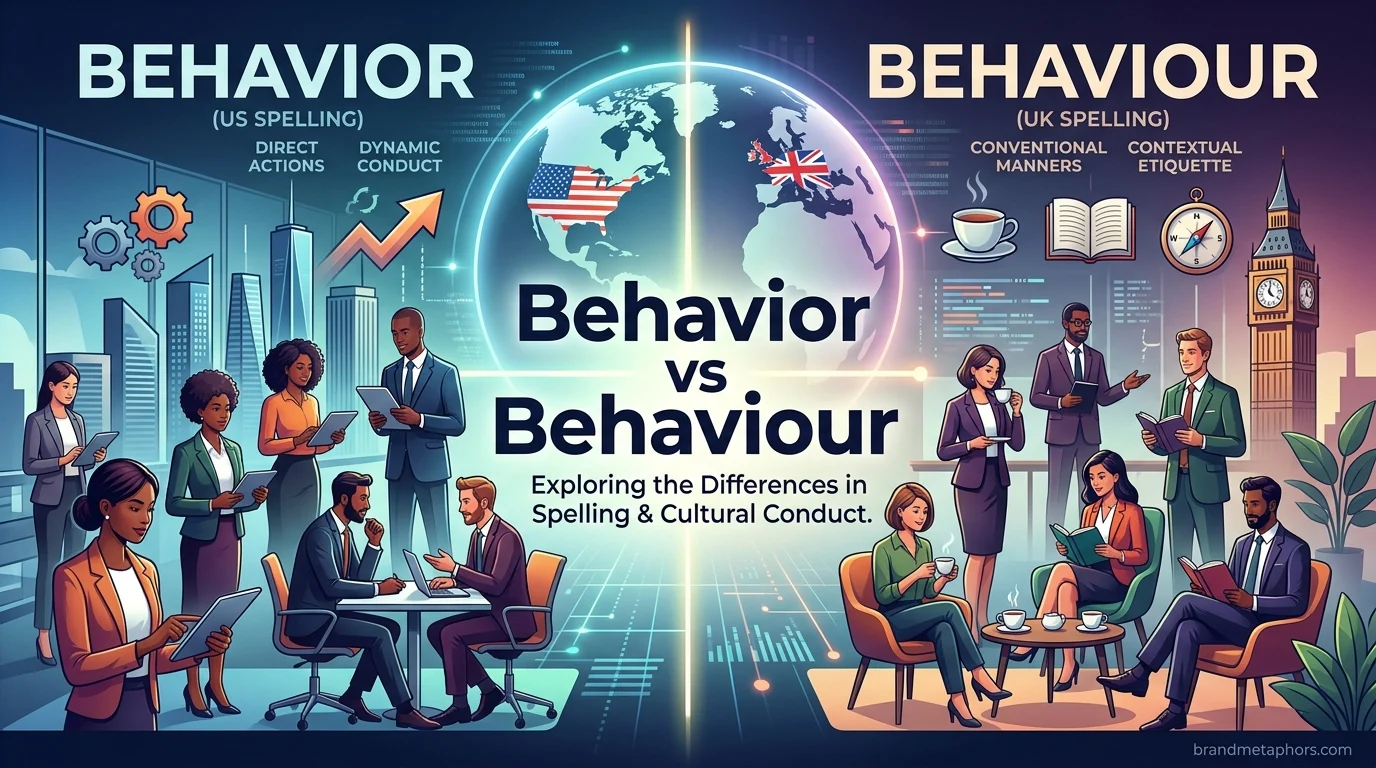
One spelling question that often confuses students and English learners is behavior vs behaviour. At first glance, they look like different words, but they actually have the same meaning. The only difference is the variety of English being used. Understanding this distinction will help you write confidently for school, exams, business, and international audiences.
This guide explains the meaning, spelling differences, grammar rules, examples, common mistakes, writing tips, and practical exercises. By the end, you will know exactly which spelling to choose and when to use it.
What Does the Word Mean?
The word refers to the way a person, animal, or thing acts or responds in different situations. It can describe actions, manners, habits, or reactions.
Simple Definition
It means:
- The way someone acts
- The way something functions
- The response to a situation
- Conduct or manners
Examples
- The teacher praised the student’s good behavior.
- The dog’s behavior changed after training.
- Scientists studied the behavior of dolphins.
- Good classroom behavior helps everyone learn.
The meaning never changes regardless of spelling.
The Main Difference Between the Two Spellings
The difference is based only on regional English.
SpellingUsed InExampleBehaviorAmerican EnglishThe child’s behavior improved.BehaviourBritish EnglishThe child’s behaviour improved.
Countries that usually use behavior
- United States
Countries that usually use behaviour
- United Kingdom
- Canada (mostly)
- Australia
- New Zealand
- Ireland
- South Africa
Both spellings are correct.
Why Are There Two Spellings?
English has developed differently in various countries.
American English often removes the extra “u” found in many British spellings.
Examples include:
American EnglishBritish EnglishColorColourFavoriteFavouriteHonorHonourNeighborNeighbourBehaviorBehaviour
This spelling difference began in the early 1800s when American dictionaries promoted simpler spellings.
The meaning and pronunciation remain almost identical.
When Should You Use Each Spelling?
Choose the spelling based on your audience.
Use the American spelling when writing for:
- American schools
- American businesses
- US universities
- American newspapers
- Websites aimed at US readers
Use the British spelling when writing for:
- UK schools
- British publishers
- Australian organizations
- Canadian audiences
- International exams using British English
Academic Tip
Always stay consistent.
Do not switch between spellings in the same paper.
Correct:
- The student’s behavior improved throughout the semester.
Also correct:
- The student’s behaviour improved throughout the semester.
Incorrect:
- The student’s behavior improved because his behaviour changed.
Comparison Table
FeatureAmerican VersionBritish VersionMeaningSameSamePronunciationSameSameGrammarSameSamePart of SpeechNounNounFormal WritingCorrectCorrectInformal WritingCorrectCorrect
Sentence Examples in Different Situations
School
- Good behavior creates a positive classroom.
- Her behavior impressed the principal.
- Classroom behavior affects learning.
Workplace
- Professional behavior builds trust.
- His respectful behavior earned praise.
- Good workplace behavior improves teamwork.
Family
- Parents teach good behavior at home.
- Children’s behavior often reflects their environment.
- Kind behavior strengthens relationships.
Science
- Researchers observed animal behavior.
- Bird behavior changes during migration.
- Scientists record social behavior in groups.
Sports
- Fair behavior is important during competitions.
- The coach rewarded respectful behavior.
- Positive behavior motivates teammates.
Figurative Language and Creative Writing

Although the word itself is not figurative, it appears often in figurative language.
Learning creative writing techniques helps describe actions more effectively.
Metaphor Examples
- His behavior was a mirror reflecting his true character.
- Her behavior became a bridge between two angry friends.
- Kind behavior is the sunshine of friendship.
Simile Examples
- His behavior was as calm as still water.
- She behaved like a guiding star.
- Their behavior was as predictable as sunrise.
Idiom Examples
- Actions speak louder than words.
- Walk the talk.
- Lead by example.
- Practice what you preach.
These expressions make writing more vivid.
Literary Devices That Describe Actions
Writers often use literary devices when describing people’s actions.
Personification
- Kindness knocked on every door through her behavior.
Hyperbole
- His bad behavior shook the entire school.
Imagery
- Her gentle actions painted peace across the classroom.
Symbolism
- White flowers symbolized peaceful behavior.
Alliteration
- Polite people practice positive behavior.
These techniques improve storytelling and descriptive language.
Vocabulary Enhancement
Instead of repeating the same word, use suitable alternatives depending on context.
Formal Alternatives
- Conduct
- Actions
- Manner
- Deportment
- Demeanor
- Performance
Informal Alternatives
- Attitude
- Way of acting
- Habits
- Manners
- Reactions
Related Words
- Respect
- Discipline
- Courtesy
- Character
- Personality
- Ethics
- Responsibility
- Cooperation
Using varied vocabulary makes writing stronger.
Common Mistakes and How to Avoid Them
Mixing American and British Spelling
Incorrect
- Her behavior showed excellent behaviour.
Correct
Choose one spelling style.
Thinking One Is Wrong
Both spellings are correct.
Only the region changes.
Confusing Behavior with Personality
Behavior refers to actions.
Personality refers to long-term characteristics.
Example
- She has a cheerful personality.
- Her behavior was polite.
Confusing Behavior with Attitude
Attitude means feelings or opinions.
Behavior means actions.
Example
- He has a positive attitude.
- His behavior reflects that attitude.
Using the Wrong Style Guide
Always follow your school’s or employer’s preferred English style.
Tone, Style, and Writing Tips
Formal Tone
Suitable for
- Essays
- Reports
- Research papers
- Business writing
Example
Professional behavior contributes to organizational success.
Neutral Tone
Suitable for
- Newspapers
- Blogs
- Educational writing
Example
The child’s behavior improved after counseling.
Friendly Tone
Suitable for
- Conversations
- Social media
- Personal writing
Example
Your good behavior made everyone smile.
Creative Tone
Suitable for
- Stories
- Poems
- Fiction
Example
Her behavior blossomed like flowers after spring rain.
When to Use and When to Avoid

Use It When
- Talking about actions
- Discussing manners
- Writing psychology papers
- Explaining classroom conduct
- Describing animal actions
- Discussing workplace ethics
Avoid It When
Instead of using it repeatedly, vary your vocabulary.
Instead of
- His behavior…
- His behavior…
- His behavior…
Write
- His conduct…
- His actions…
- His manners…
- His attitude…
This improves readability.
Practice Exercises
Exercise 1
Choose the correct spelling for American English.
- Good ________ helps learning.
Answer
Behavior
Exercise 2
Choose the correct spelling for British English.
The student’s ________ improved.
Answer
Behaviour
Exercise 3
Fill in the blank.
Parents encourage polite __________.
Answer
Behavior (American)
Behaviour (British)
Exercise 4
Rewrite using a synonym.
Original
His behavior surprised everyone.
Possible Answer
His conduct surprised everyone.
Exercise 5
Identify the figurative language.
“His behavior was a lighthouse during difficult times.”
Answer
Metaphor
Quick Summary Table
QuestionAnswerSame meaning?YesSame pronunciation?YesGrammar difference?NoneAmerican spellingBehaviorBritish spellingBehaviourCan both be correct?YesShould both appear in one document?No
Frequently Asked Questions
1. Which spelling is correct?
Both are correct. The choice depends on whether you use American or British English.
2. Is there any difference in meaning?
No. They have exactly the same meaning.
3. Which spelling should students use?
Use whichever spelling your school or teacher requires, and stay consistent.
4. Is one spelling more formal?
No. Both are equally formal in their own varieties of English.
5. Can I use both spellings in one essay?
No. Choose one style and use it consistently throughout your writing.
Conclusion
Choosing between the American and British spelling is not about right or wrong—it is about writing for the correct audience. Both versions mean exactly the same thing, have the same pronunciation, and follow the same grammar rules. The only difference is regional spelling preference.
For students, writers, and English learners, consistency is the most important rule. If you are writing for an American audience, use the American spelling throughout your work. If you are writing for readers in the United Kingdom, Australia, Canada, or other countries that follow British English, use the British spelling consistently.
Building strong writing skills also means expanding your vocabulary, understanding descriptive language, practicing figurative language, and using literary devices effectively. Whether you are writing essays, stories, business documents, or creative pieces, clear and consistent language helps your ideas shine. Mastering small spelling differences like this one is another step toward becoming a confident and skilled English writer.