
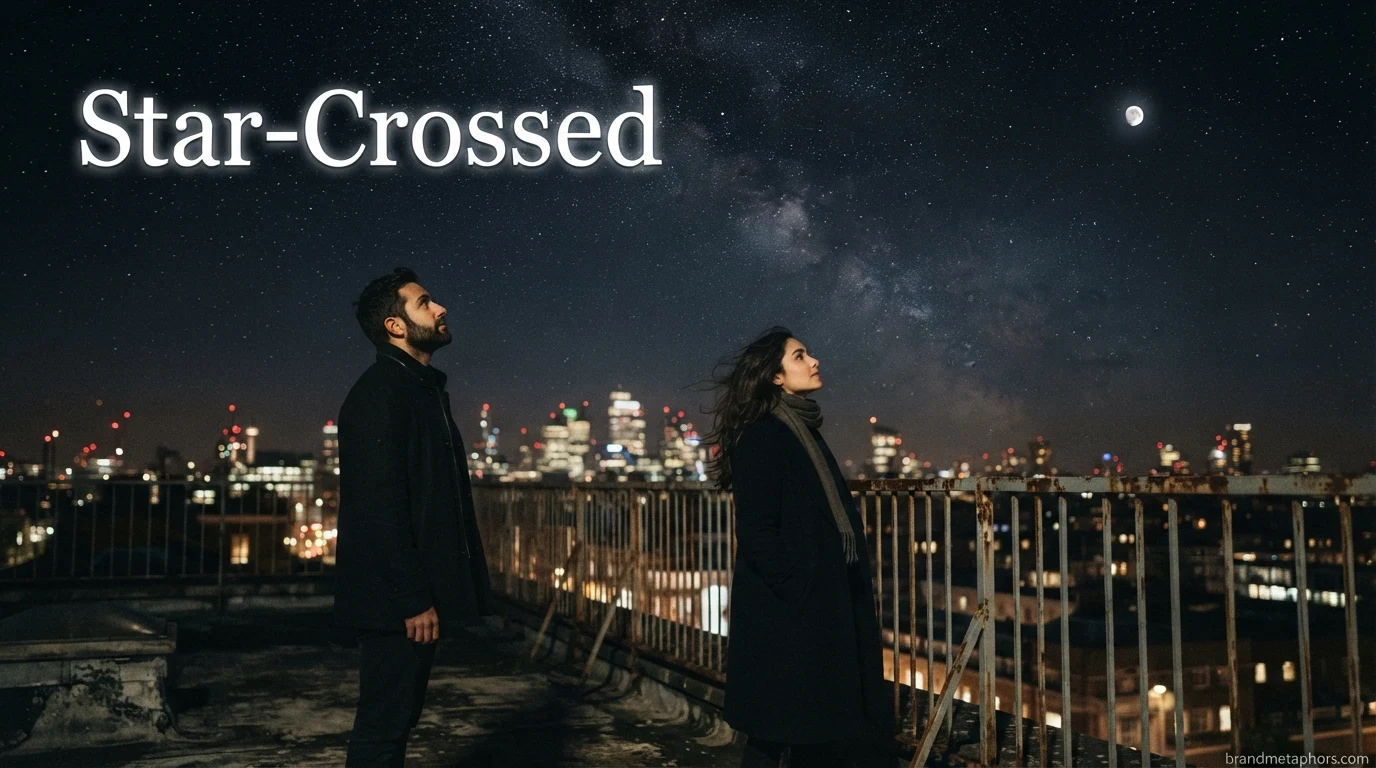
Some words carry deep emotion and tell a whole story in just a few syllables. One such expression describes people whose love or dreams seem destined to face obstacles no matter how hard they try. It appears in classic literature, modern novels, movies, songs, and everyday conversations.
Many English learners hear this phrase but are unsure what it really means. Does it describe bad luck? Is it only about romance? Can it be used outside of love stories?
This guide explains everything in simple language. You’ll learn its meaning, history, different uses, examples, comparisons with similar expressions, common mistakes, and writing tips. Whether you’re a student, writer, or someone improving English skills, this article will help you understand and use this beautiful literary expression correctly.
What Does This Expression Mean?
It describes two people or a situation that seems fated to face difficulties or failure, especially in love. The idea is that outside forces, destiny, or bad luck keep preventing happiness.
Most often, it refers to lovers who deeply care for each other but cannot stay together because of circumstances beyond their control.
Simple definition
Two people whose relationship is doomed because fate, society, or circumstances work against them.
The problems may include:
- Family disagreements
- Different cultures
- Social class differences
- Long distances
- War
- Bad timing
- Misunderstandings
- Unfortunate events
The key idea is that the obstacles seem impossible to overcome.
The Origin and History
This famous expression comes from the English playwright William Shakespeare.
He used it in the opening lines of Romeo and Juliet, where the young couple is described as being controlled by unfortunate destiny.
The idea behind the phrase is much older than Shakespeare. In ancient times, many people believed that the stars influenced human lives. If someone’s stars were unfavorable, they were expected to experience hardship.
Because of this belief:
- Stars represented destiny.
- Badly placed stars symbolized misfortune.
- Lovers affected by unlucky destiny became symbols of tragic romance.
Today, people no longer use the expression literally. Instead, it serves as a poetic way to describe relationships filled with unavoidable challenges.
Main Characteristics
Relationships described this way usually share several common features.
CharacteristicExplanationDeep loveThe people truly care about each other.Serious obstaclesBig problems stand in their way.Outside forcesThe challenges are often beyond their control.Emotional struggleThe relationship involves sadness and sacrifice.Tragic outcomeIt often ends unhappily or with great loss.
Not every difficult relationship fits this description. The obstacles should feel larger than normal disagreements.
Common Situations Where It Is Used
Although romance is the most common use, it can describe many situations.
Romantic relationships
Examples include:
- Families refusing to accept a marriage
- Different religions causing conflict
- Long-distance couples separated by circumstances
- Political conflicts dividing lovers
Friendships
Sometimes two close friends are repeatedly separated by life events.
Dreams and ambitions
People may use it to describe goals that seem impossible because of constant setbacks.
Example:
His dream of becoming a pilot seemed doomed by one obstacle after another.
Fiction and storytelling
Authors often use this idea because readers naturally connect with emotional struggles.
Different Types of Tragic Relationships
Not every difficult love story is the same.
Family conflict
Parents or relatives refuse to accept the relationship.
Example:
Two teenagers fall in love, but their families have hated each other for years.
Cultural differences
Different traditions or beliefs create major challenges.
Example:
A couple struggles because their communities expect them to marry within their own culture.
Distance and separation
Sometimes life itself keeps people apart.
Examples include:
- Military service
- Immigration
- Studying abroad
- Work assignments
Social class differences
Money or status creates barriers.
Classic literature often explores this theme.
Historical events
Wars, political unrest, or natural disasters separate people who wish to stay together.
Examples in Literature, Movies, and Popular Culture

Many famous stories use this theme.
Romeo and Juliet
Perhaps the most famous example.
Their families’ hatred makes happiness impossible despite their deep love.
Titanic
Jack and Rose come from different social classes.
Their relationship already faces major challenges before tragedy strikes.
West Side Story
Two young people fall in love despite conflict between rival groups.
The Fault in Our Stars
The characters face heartbreaking circumstances beyond anyone’s control.
Modern television
Many TV dramas include couples who repeatedly struggle because of:
- Family pressure
- Careers
- Distance
- Secrets
- Social expectations
These stories remain popular because audiences connect with emotional conflict.
How to Use This Expression Correctly
Here are several correct sentence examples.
In conversations
- They seemed destined for heartbreak from the beginning.
- Everyone supported them, but life kept pulling them apart.
- Their romance felt tragic from the start.
In writing
Example paragraph:
The novel follows two young people whose relationship is challenged by politics, family expectations, and distance. Every time they find hope, another obstacle appears.
In creative storytelling
Writers often use this idea to create:
- Emotional tension
- Sympathy
- Suspense
- Character growth
Similar Expressions and Their Differences
Several English expressions have related meanings.
ExpressionMeaningDifferenceDoomed romanceA relationship certain to failLess poeticIll-fated loveUnlucky relationshipSimilar meaningForbidden loveLove that others do not allowFocuses on rules rather than destinyUnlucky loversCouples facing bad luckMore casualTragic romanceSad love storyBroader meaning
Each expression adds a slightly different emotional tone.
Why Writers Love This Theme
This idea has survived for hundreds of years because it creates powerful stories.
It helps readers:
- Feel empathy
- Experience suspense
- Think about destiny
- Reflect on sacrifice
- Understand human emotions
Stories become memorable when characters must choose between love and impossible circumstances.
Many famous novels, movies, and poems continue using this pattern because audiences never stop connecting with it.
Common Mistakes to Avoid
Many learners misunderstand this literary expression.
Mistake 1: Using it for every breakup
Not every failed relationship fits this description.
Correct:
A couple separated by war.
Incorrect:
A couple breaks up after one argument.
Mistake 2: Thinking it always means bad luck
Sometimes society, family, or history—not luck—is the main obstacle.
Mistake 3: Using it only in romance
Although most common in love stories, it can also describe dreams, friendships, or partnerships facing overwhelming challenges.
Mistake 4: Taking it literally
Today, people do not usually believe stars control relationships.
The expression is figurative language rather than a literal statement.
Benefits of Learning Literary Expressions
Understanding expressions like this improves your English in many ways.
Better reading skills
You understand novels and poetry more easily.
Stronger writing
Creative writing becomes more emotional and descriptive.
Richer vocabulary
Learning figurative language expands your word choices.
Better communication
You can describe emotional situations more naturally.
Improved literary analysis
Students can better understand classic works studied in school.
Tips for Remembering the Meaning
Use these simple tricks.
- Think of lovers separated by fate.
- Remember Romeo and Juliet.
- Imagine obstacles beyond human control.
- Associate it with tragic romance rather than ordinary problems.
- Practice using it in your own sentences.
The more examples you read, the easier it becomes to recognize this expression in books and movies.
Real-Life Examples
Although the phrase is literary, people sometimes use it to describe real situations.
Example 1
A couple meets while studying abroad.
One must return home because of immigration rules.
Example 2
Two people love each other but their families strongly oppose the relationship.
Example 3
Partners are separated by military service for many years.
Example 4
Two childhood friends repeatedly lose contact because their families move to different countries.
These examples show how outside circumstances—not personal choice—create the conflict.
Frequently Asked Questions
1. What does this expression mean?
It describes people whose relationship or situation seems doomed because of fate or unavoidable obstacles.
2. Is it only about romantic relationships?
No. It can also describe friendships, dreams, partnerships, or other situations facing overwhelming challenges.
3. Where did it come from?
It became famous through Shakespeare’s Romeo and Juliet.
4. Is it still used today?
Yes. It appears in books, movies, TV shows, music, and everyday conversations.
5. Does it mean bad luck?
Sometimes, but it more often refers to destiny, circumstances, or powerful outside forces.
6. Is it literal or figurative?
It is figurative language. People are not literally controlled by the stars.
7. Can I use it in school essays?
Yes. It is appropriate for literature analysis, creative writing, and discussions about relationships or tragic stories.
8. What are similar expressions?
Common alternatives include ill-fated love, tragic romance, forbidden love, doomed relationship, and unlucky lovers.
Conclusion
This timeless literary expression has remained popular for centuries because it captures one of the most powerful human experiences: loving someone while facing obstacles that seem impossible to overcome. Originally made famous by Shakespeare, it has grown into a universal symbol of tragic romance, destiny, sacrifice, and emotional struggle.
Understanding its meaning helps readers enjoy literature, appreciate classic stories, and recognize figurative language in modern books, movies, and conversations. It also strengthens writing by adding emotional depth and descriptive power. Whether you are studying English, analyzing literature, or improving your creative writing, knowing how and when to use this expression will enrich your vocabulary and communication skills for years to come.