
Introduction
Good writing helps people share ideas clearly. One way to improve writing is by using descriptive language, figurative language, and comparison examples. These writing tools make sentences more interesting and easier to understand. Whether you are a student, writer, or English learner, knowing how to compare places accurately can improve your writing skills and vocabulary enhancement.
One common topic in geography, English writing, and daily conversation is understanding the difference between a city, a town, and a village. Many people use these words interchangeably, but they have different meanings. Learning these differences can help you communicate more clearly and choose the right word in essays, stories, reports, and conversations.
In this article, we will explore city vs town vs village, their meanings, characteristics, examples, sentence usage, common mistakes, and much more in simple and easy-to-understand language.
What Is a City?
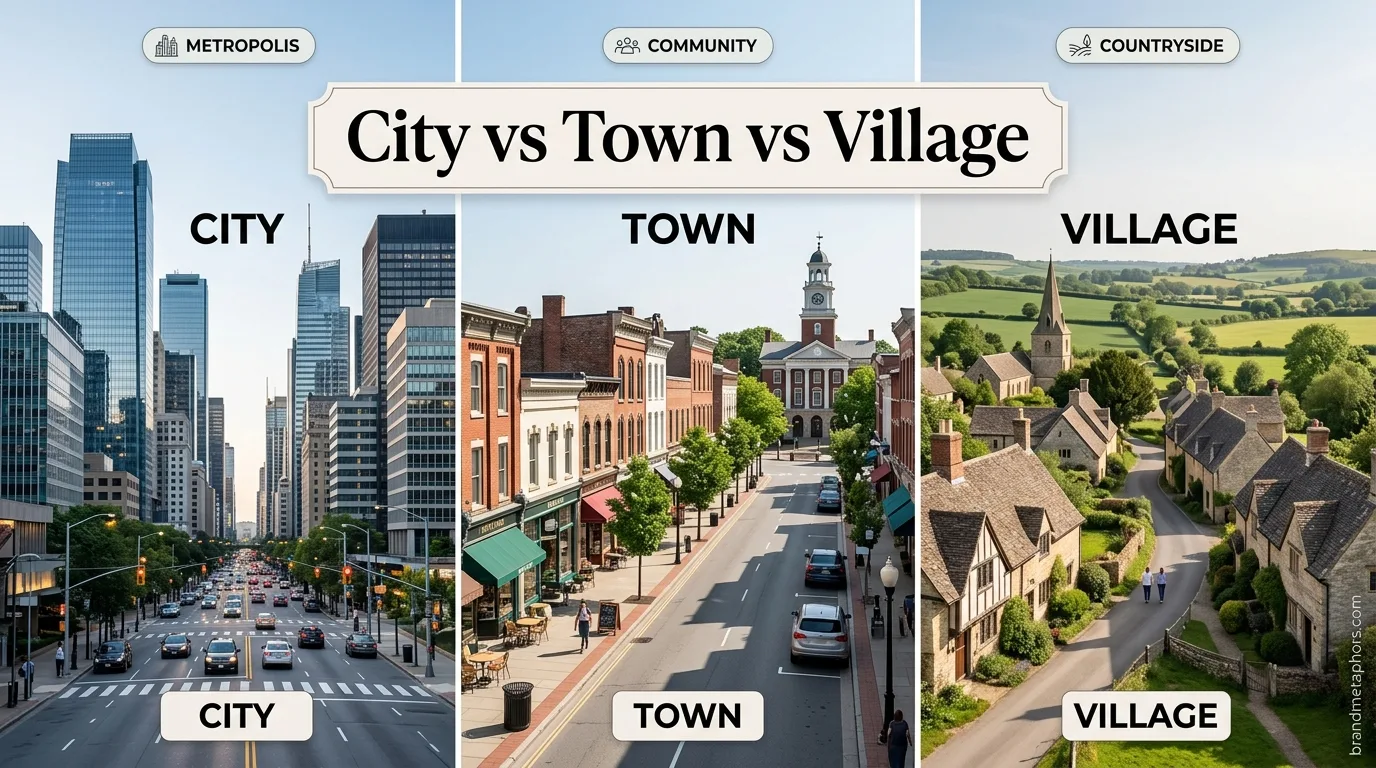
A city is a large and highly developed urban area. Cities usually have a large population, modern infrastructure, government offices, hospitals, universities, shopping centers, and transportation systems.
Characteristics of a City
- Large population
- Many buildings and businesses
- Advanced transportation
- More job opportunities
- Educational institutions
- Healthcare facilities
Examples of Cities
- New York
- London
- Tokyo
- Karachi
- Lahore
Sentence Examples
- Karachi is one of the largest cities in Pakistan.
- The city offers many employment opportunities.
- She moved to the city to attend university.
What Is a Town?
A town is smaller than a city but larger than a village. Towns usually have a moderate population and provide basic services such as schools, markets, and healthcare centers.
Characteristics of a Town
- Medium-sized population
- Local businesses and markets
- Basic public services
- Less crowded than cities
- Strong community connections
Examples of Towns
- Reading in England
- Banff in Canada
- Murree in Pakistan
Sentence Examples
- The town has a beautiful central market.
- He lives in a small town near the mountains.
- Many families enjoy the peaceful atmosphere of the town.
What Is a Village?
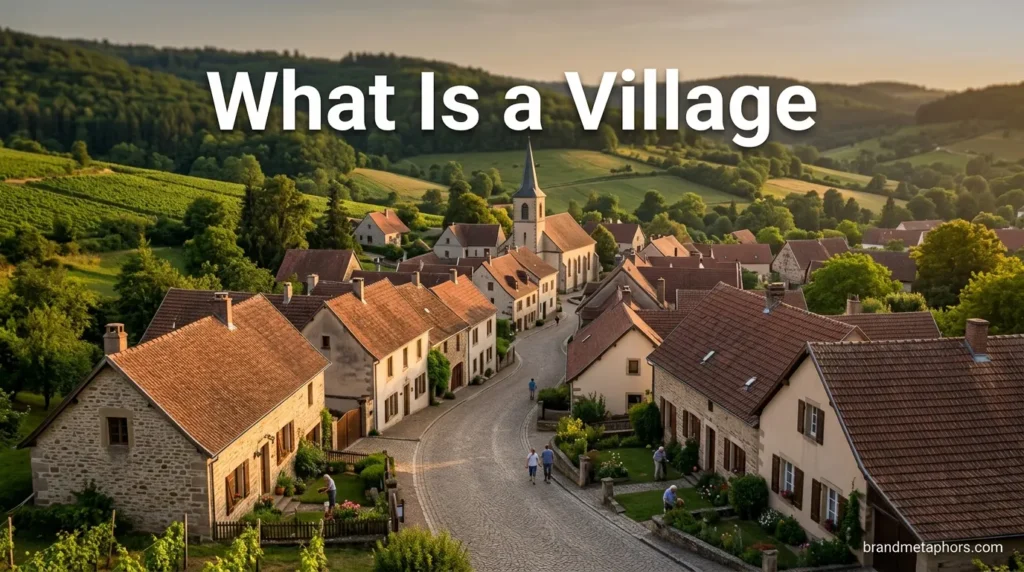
A village is a small settlement with a relatively low population. Villages are often found in rural areas and are closely connected to agriculture and nature.
Characteristics of a Village
- Small population
- Rural environment
- Close-knit community
- Limited facilities
- More natural surroundings
Examples of Villages
- Rural villages in Pakistan
- Traditional villages in India
- Small farming villages in Europe
Sentence Examples
- My grandparents live in a quiet village.
- The village is surrounded by green fields.
- Farming is the main occupation in the village.
Quick Comparison Table
FeatureCityTownVillagePopulationVery LargeMediumSmallBuildingsManyModerateFewTransportationAdvancedBasic to ModerateLimitedJob OpportunitiesHighModerateLimitedLifestyleFast-PacedBalancedPeacefulFacilitiesExtensiveBasic to GoodLimitedEnvironmentUrbanSemi-UrbanRural
Population Differences
Population is one of the main factors that distinguish cities, towns, and villages.
City Population
Cities may have hundreds of thousands or millions of residents.
Town Population
Towns usually contain thousands or tens of thousands of people.
Village Population
Villages often have a few hundred to several thousand residents.
However, population standards can vary from country to country.
Lifestyle Comparison
Life in a City
City life is often busy and fast. People usually have access to better education, healthcare, entertainment, and employment.
Advantages
- Better career opportunities
- Advanced facilities
- Diverse culture
Disadvantages
- Traffic congestion
- Pollution
- Higher living costs
Life in a Town
Town life offers a balance between urban and rural living.
Advantages
- Less crowded
- Moderate living expenses
- Strong community relationships
Disadvantages
- Fewer opportunities than cities
- Limited entertainment options
Life in a Village
Village life is peaceful and closely connected to nature.
Advantages
- Clean environment
- Strong social bonds
- Lower living costs
Disadvantages
- Limited services
- Fewer educational institutions
- Reduced employment options
Descriptive Language for Cities, Towns, and Villages
Using descriptive language helps readers imagine places more clearly.
Describing a City
Words:
- Bustling
- Crowded
- Vibrant
- Modern
- Energetic
Example: “The bustling city glowed with thousands of lights.”
Describing a Town
Words:
- Friendly
- Charming
- Comfortable
- Welcoming
Example: “The charming town welcomed visitors with colorful shops.”
Describing a Village
Words:
- Peaceful
- Quiet
- Scenic
- Green
- Traditional
Example: “The peaceful village rested among rolling hills.”
Figurative Language and Literary Devices
Writers often use literary devices to make descriptions more vivid.
Simile Examples
A simile compares two things using “like” or “as.”
- The city was as busy as a beehive.
- The village was quiet like a sleeping child.
- The town felt as welcoming as an old friend.
Metaphor Examples
A metaphor directly compares two things.
- The city is a giant machine that never sleeps.
- The village is a green jewel in the countryside.
- The town is a bridge between rural and urban life.
Personification
- The city never sleeps.
- The village welcomed visitors with open arms.
- The town smiled under the morning sun.
Poetic Expression
- The village whispered through the rustling trees.
- The town danced beneath the evening lights.
- The city roared with endless energy.
Tone Usage in Writing
Choosing the right tone is important.
Formal Tone
Used in reports and academic writing.
Example: “The city provides extensive economic opportunities.”
Informal Tone
Used in conversations and personal writing.
Example: “I love spending weekends in that small town.”
Creative Tone
Used in stories and descriptive writing.
Example: “The village rested peacefully beneath the golden sky.”
When to Use Each Word

City” When
- Referring to a large urban area
- Discussing major infrastructure
- Talking about large populations
Town” When
- Referring to medium-sized communities
- Describing balanced urban-rural environments
Village” When
- Talking about rural settlements
- Describing agricultural communities
- Mentioning small populations
Common Mistakes and How to Avoid Them
Mistake 1: Using City for Every Urban Area
Incorrect: “That small community is a city.”
Correct: “That small community is a town.”
Mistake 2: Confusing Villages and Towns
Incorrect: “The village has a population of two million.”
Correct: “The city has a population of two million.”
Mistake 3: Ignoring Context
Always consider population, facilities, and location before choosing the word.
Vocabulary Enhancement
City Vocabulary
- Urban
- Metropolitan
- Downtown
- Skyscraper
- Municipality
Town Vocabulary
- Community
- Marketplace
- Suburban
- Residential
- Civic
Village Vocabulary
- Rural
- Countryside
- Farming
- Hamlet
- Settlement
Learning these words can improve your writing and speaking skills.
Practice Exercises
Exercise 1: Fill in the Blank
- My uncle lives in a small ______ surrounded by farms.
- The ______ has many tall buildings and offices.
- We visited a beautiful ______ with local shops.
Answers:
- Village
- City
- Town
Exercise 2: Choose the Correct Word
- Tokyo is a:
- Village
- Town
- City
Answer: City
- A farming community with a few hundred residents is usually a:
- Village
- City
- Metropolitan area
Answer: Village
Exercise 3: Write Your Own Sentences
Write one sentence using:
- City
- Town
- Village
This helps strengthen writing skills and vocabulary.
Idiom Meaning and Related Expressions

Although there are no major idioms specifically for cities, towns, or villages, related expressions include:
“A Small Fish in a Big Pond”
Meaning: A person who feels unimportant in a large environment.
Example: “When he moved to the city, he felt like a small fish in a big pond.”
“Close-Knit Community”
Meaning: A group of people who share strong relationships.
Example: “The village is a close-knit community.”
Frequently Asked Questions (FAQs)
1. What is the main difference between a city and a town?
A city is generally larger, more populated, and more developed than a town.
2. Is a village smaller than a town?
Yes. Villages usually have fewer people and fewer facilities than towns.
3. Can a town become a city?
Yes. As population and development increase, a town may officially become a city.
4. Are villages always rural?
Most villages are rural, but definitions can vary by country.
5. Which is better: city, town, or village?
There is no universal answer. The best choice depends on personal preferences, lifestyle, career goals, and community needs.
Conclusion
Understanding the differences between cities, towns, and villages helps students, writers, and English learners communicate more accurately. Cities are large urban centers with extensive facilities and opportunities. Towns provide a balanced lifestyle with moderate populations and services. Villages are smaller rural communities known for their peaceful environment and strong social connections.
Using descriptive language, figurative language, simile examples, metaphor examples, literary devices, and creative writing techniques can make descriptions of these places more engaging and memorable. By learning the correct usage of city, town, and village, you can improve your writing skills, expand your vocabulary, and communicate more effectively in both academic and everyday situations.