
Introduction
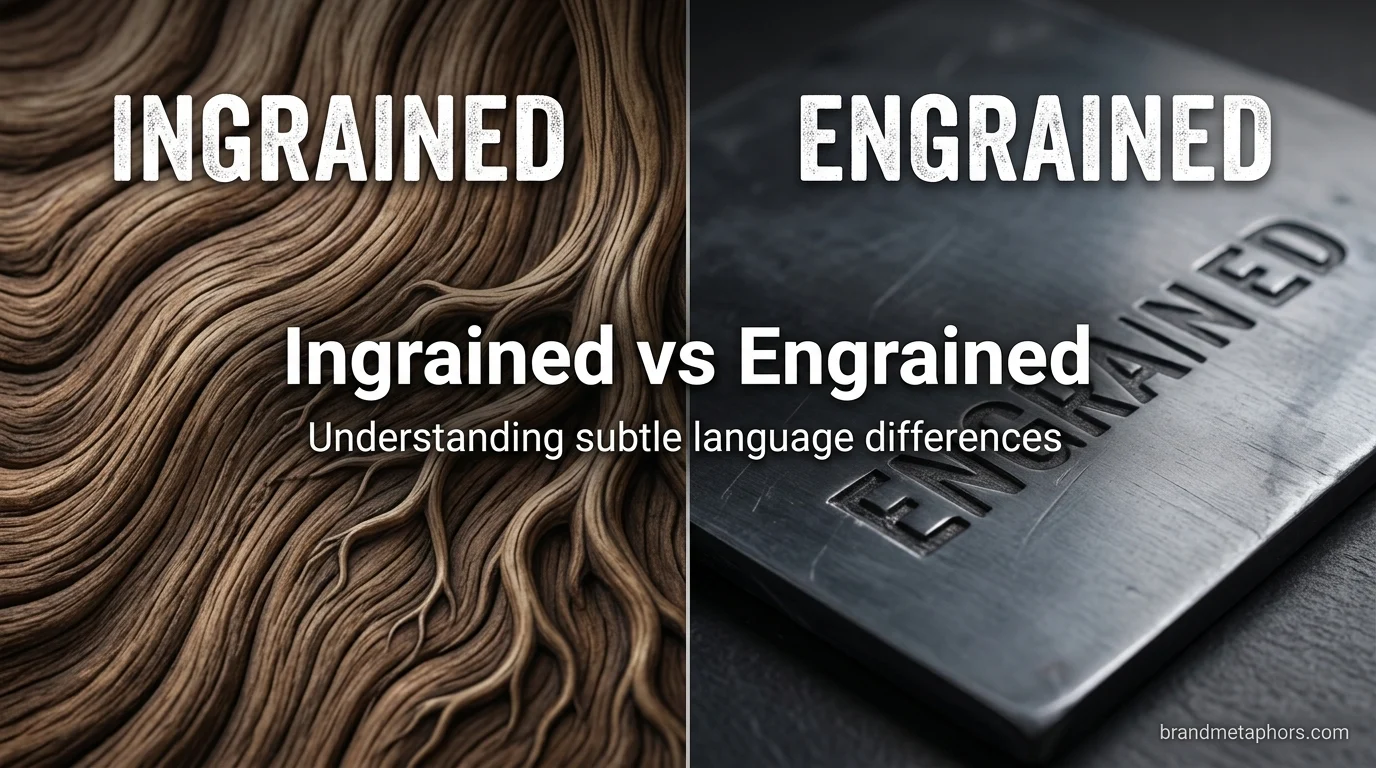
Figurative language makes writing more vivid, engaging, and memorable. It helps writers paint pictures with words, express emotions, and communicate ideas more effectively. Whether you are a student, writer, blogger, or English learner, understanding word choices is essential for improving writing skills. One common confusion in English is ingrained vs engrained. These two words look similar, sound similar, and are often used interchangeably, but many people wonder which one is correct and when each should be used.
Learning the difference between these words can improve your vocabulary enhancement, descriptive language, and overall communication skills. This guide explains their meanings, usage, examples, common mistakes, and practical exercises in simple language.
What Does Ingrained Mean?
Ingrained is an adjective that describes something deeply fixed, firmly established, or difficult to change.
The word originally referred to dye that penetrates deeply into fabric. Over time, it developed a figurative meaning to describe habits, beliefs, attitudes, traditions, and behaviors that become deeply rooted.
Simple Definition
Ingrained = deeply established and hard to remove or change.
Examples
- Good manners are ingrained in her personality.
- He has an ingrained habit of waking up early.
- The company’s values are ingrained in its culture.
- Fear of failure became ingrained in his thinking.
What Does Engrained Mean?
Engrained is also an adjective and has historically been used with the same meaning as ingrained.
However, modern English speakers and most dictionaries prefer ingrained. The word engrained is considered less common and sometimes viewed as a variant spelling.
Simple Definition
Engrained = deeply rooted or firmly fixed.
Examples
- Their traditions are engrained in local culture.
- The belief became engrained over generations.
Although these examples are acceptable, many editors would replace “engrained” with “ingrained.”
Ingrained vs Engrained: Quick Comparison Table
FeatureIngrainedEngrainedModern UsageVery commonLess commonDictionary AcceptanceStandardVariant formPreferred by EditorsYesUsually NoMeaningDeeply rootedDeeply rootedFormal WritingRecommendedOften avoidedEveryday EnglishCommonRare
Key Point
In modern English, ingrained is usually the preferred spelling.
Origins and History of the Words
Both words come from old dyeing processes. The root idea was that color became deeply embedded in cloth fibers.
Over time, people began using the words figuratively.
For example:
- Dye in cloth → deeply fixed color
- Habit in personality → deeply fixed behavior
This shift from literal meaning to figurative language is common in English.
Today, the figurative meaning is far more common than the original textile meaning.
When to Use Ingrained

Use ingrained when describing:
Habits
- She has an ingrained habit of checking her phone.
- Punctuality is ingrained in his routine.
Beliefs
- Respect for elders is ingrained in their culture.
- The idea became ingrained in society.
Attitudes
- His ingrained optimism helped him succeed.
- Negative thinking became ingrained over time.
Traditions
- These customs are ingrained in the community.
- The celebration is ingrained in local history.
Workplace Culture
- Teamwork is ingrained in the organization.
- Customer service is ingrained in company values.
When to Use Engrained
You may encounter engrained in:
Historical Texts
Older books and documents sometimes use engrained.
Regional Preferences
Some writers still prefer engrained due to personal style.
Literary Writing
Occasionally, authors choose engrained for stylistic reasons.
Example Sentences
- The tradition remained engrained for centuries.
- Certain beliefs became engrained within the culture.
Even in these situations, many style guides still recommend using ingrained.
Sentence Examples for Better Understanding
Ingrained in Sentences
- Honesty is ingrained in her character.
- Reading became an ingrained part of his daily life.
- The fear was deeply ingrained in his mind.
- Discipline is ingrained throughout the training program.
- Healthy habits should be ingrained from childhood.
Engrained in Sentences
- The values were engrained in the community.
- The memory remained engrained in his thoughts.
- Those customs were engrained across generations.
- Their beliefs became engrained over time.
- The practice was engrained in local tradition.
Figurative Language and the Use of Ingrained
Writers often use ingrained to create strong imagery.
Metaphor Examples
A metaphor compares two things without using “like” or “as.”
- Fear was ingrained in his heart.
- Hope was ingrained in her soul.
These examples suggest emotions are deeply rooted inside a person.
Simile Examples
A simile uses “like” or “as.”
- The lesson was ingrained like ink on paper.
- The memory stayed as ingrained as a permanent mark.
Poetic Expression
Poets often use ingrained to show permanence.
Example:
The old songs remained ingrained in the winds of memory.
This creates emotional depth and vivid imagery.
Tone and Style Usage
Formal Tone
In formal writing, use ingrained.
Examples:
- The behavior is ingrained within organizational culture.
- These values are ingrained in educational systems.
Informal Tone
In casual conversations:
- It’s an ingrained habit.
- That mindset is ingrained in him.
Academic Writing
Students should generally choose ingrained because it is the preferred modern form.
Creative Writing
Authors use ingrained to show deep emotions, traditions, and memories.
Common Mistakes to Avoid

Mistake 1: Thinking the Words Have Different Meanings
Many learners believe the words mean different things.
Incorrect assumption:
- Ingrained = habit
- Engrained = belief
Reality: Both generally mean the same thing.
Mistake 2: Using Engrained in Formal Documents
While not always wrong, many editors prefer ingrained.
Better:
- The value is ingrained in company culture.
Less preferred:
- The value is engrained in company culture.
Mistake 3: Confusing with Engraved
Some learners mix up these words.
Engrained
Means deeply rooted.
Example:
- Respect is ingrained in their culture.
Engraved
Means carved or etched.
Example:
- The name was engraved on the trophy.
Quick Comparison
WordMeaningIngrainedDeeply rootedEngrainedVariant of ingrainedEngravedCarved into a surface
Comparison Examples in Context
Example 1
✅ Good:
- Kindness is ingrained in her personality.
⚠ Less Common:
- Kindness is engrained in her personality.
Example 2
✅ Preferred:
- The tradition is ingrained in society.
⚠ Variant:
- The tradition is engrained in society.
Example 3
❌ Incorrect:
- The words were ingrained on the stone.
✅ Correct:
- The words were engraved on the stone.
Literary Devices and Descriptive Language
Writers frequently use ingrained in literary devices.
Symbolism
- The ingrained roots symbolized family traditions.
Personification
- The city’s history seemed ingrained in every street.
Imagery
- The smell of rain remained ingrained in his memory.
Hyperbole
- The lesson was so ingrained that he could never forget it.
These techniques improve creative writing and make content more engaging.
Vocabulary Enhancement: Similar Words and Synonyms
Learning related words expands vocabulary.
Synonyms of Ingrained
- Deep-rooted
- Established
- Fixed
- Embedded
- Entrenched
- Instilled
- Inbuilt
- Permanent
- Firmly rooted
- Internalized
Example Sentences
- The belief was deeply rooted.
- The habit became embedded in his routine.
- The tradition remained entrenched in society.
Practice Exercises
Exercise 1: Choose the Correct Word
- Respect is ______ in their culture.
- a) ingrained
- b) engraved
Answer: ingrained
- The message was ______ on the metal plate.
- a) ingrained
- b) engraved
Answer: engraved
- Teamwork is ______ in the company.
- a) ingrained
- b) engraved
Answer: ingrained
Exercise 2: Fill in the Blank
- Good study habits become __________ over time.
- The words were __________ on the monument.
- Honesty is __________ in her character.
Answers:
- ingrained
- engraved
- ingrained
Exercise 3: Rewrite the Sentence
Original:
- The belief was deeply rooted in society.
Possible rewrite:
- The belief was ingrained in society.
Tips for Students, Writers, and English Learners
For Students
- Use ingrained in essays and academic papers.
- Avoid uncommon spellings unless required.
For Writers
- Use ingrained to describe habits, traditions, and emotions.
- It strengthens descriptive language.
For English Learners
- Remember that ingrained is the standard modern spelling.
- Practice using it in everyday sentences.
Memory Trick
Think:
INgrained = INside and deeply fixed.
This simple trick helps remember the preferred spelling.
Frequently Asked Questions (FAQs)
1. Is engrained wrong?
No. Engrained is an accepted variant spelling, but ingrained is more common and generally preferred.
2. Which spelling should I use in essays?
Use ingrained because it is the standard modern form.
3. Do ingrained and engrained mean the same thing?
Yes. In most contexts, they carry the same meaning.
4. What is the difference between ingrained and engraved?
Ingrained means deeply rooted, while engraved means carved into a surface.
5. Can ingrained describe habits and beliefs?
Yes. It is commonly used for habits, beliefs, traditions, attitudes, and behaviors.
Final Comparison Table
SituationBest ChoiceSchool EssayIngrainedAcademic WritingIngrainedBusiness WritingIngrainedCreative WritingUsually IngrainedHistorical Text ReferenceIngrained or EngrainedReferring to Carving on MetalEngraved
Conclusion
Understanding the difference between ingrained vs engrained helps writers communicate more clearly and professionally. Although both words share the same meaning of being deeply rooted or firmly established, ingrained is the preferred spelling in modern English. It is widely used in academic writing, business communication, creative writing, and everyday conversation.
By learning the meanings, sentence examples, comparison tables, literary devices, figurative language uses, and common mistakes discussed in this guide, students, writers, and English learners can improve their writing skills and vocabulary enhancement. Whenever you want to describe a habit, belief, tradition, attitude, or behavior that is firmly fixed and difficult to change, ingrained will usually be the best and safest choice.