
Introduction
Figurative language makes writing more vivid, memorable, and engaging. It helps writers paint pictures with words, express emotions, and communicate ideas more effectively. Whether you are learning English, improving your writing skills, or creating creative content, understanding word choices is essential. One common pair of confusing words is prescribe or proscribe. Although they look similar and share Latin roots, they have very different meanings.
Many students, writers, and English learners accidentally mix up these words because they sound alike and appear in formal writing. Learning the difference can improve vocabulary enhancement, descriptive language, academic writing, and professional communication. This guide explains the meanings, uses, examples, comparisons, common mistakes, and practical exercises to help you master these important English words.
What Does Prescribe Mean?
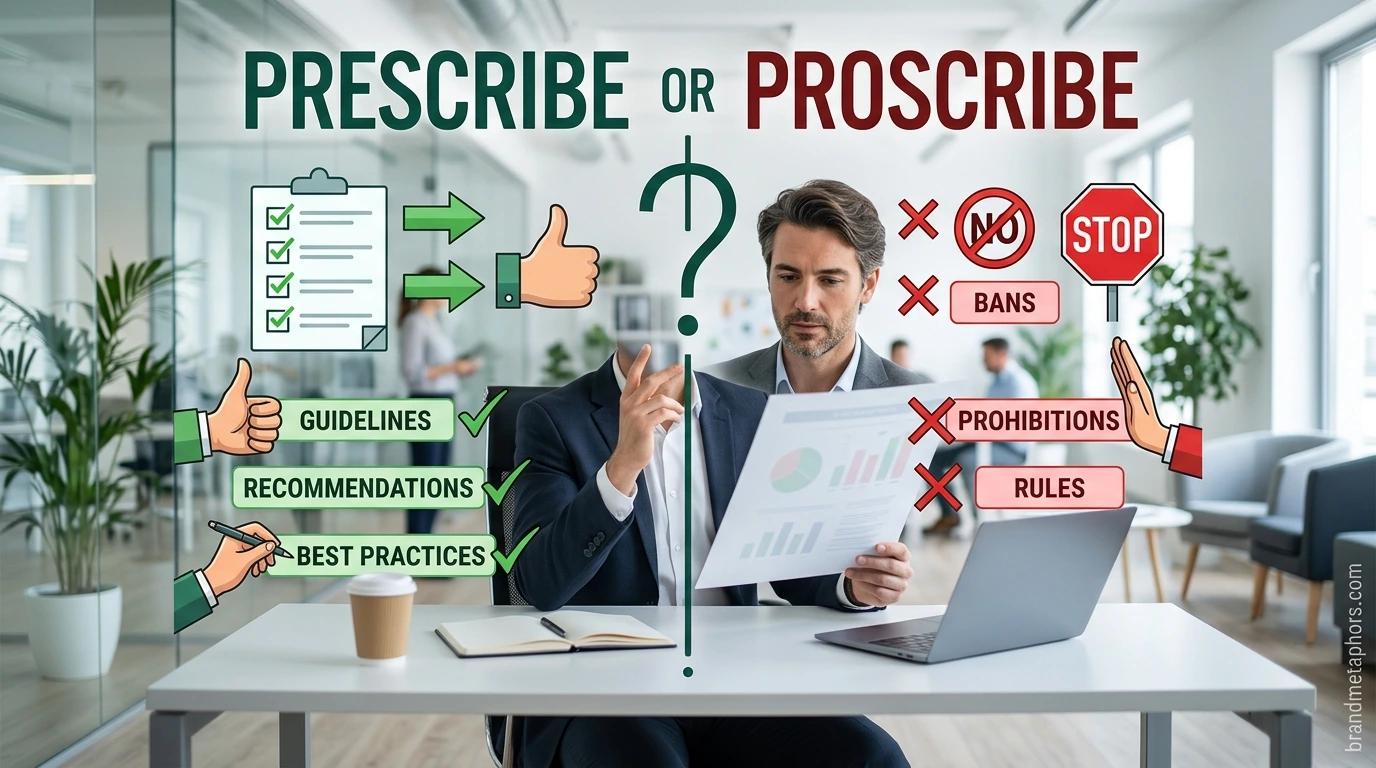
The verb prescribe means to officially recommend, authorize, order, or establish something as a rule or course of action.
Simple Definition
Prescribe = To recommend, authorize, or set as a rule.
Common Uses
- Doctors prescribe medicine.
- Teachers prescribe reading materials.
- Laws prescribe procedures.
- Organizations prescribe standards.
Sentence Examples
- The doctor prescribed antibiotics for the infection.
- The school prescribed a list of books for students.
- The law prescribes penalties for certain crimes.
- The coach prescribed a daily exercise routine.
- The instructor prescribed extra practice sessions.
Tone and Context
The word is commonly used in:
- Medical writing
- Academic writing
- Legal documents
- Professional communication
- Formal discussions
What Does Proscribe Mean?
The verb proscribe means to forbid, ban, prohibit, or condemn something officially.
Simple Definition
Proscribe = To ban or prohibit.
Common Uses
- Governments proscribe dangerous activities.
- Organizations proscribe unethical behavior.
- Rules may proscribe specific actions.
Sentence Examples
- The government proscribed the illegal organization.
- School rules proscribe cheating during examinations.
- The policy proscribes discrimination.
- The law proscribes certain harmful practices.
- The committee proscribed unauthorized access.
Tone and Context
The word often appears in:
- Legal writing
- Government documents
- Policy statements
- Formal reports
- Academic discussions
Quick Comparison Table

FeaturePrescribeProscribeMeaningRecommend or authorizeForbid or banPurposeTell what should be doneTell what must not be doneCommon ContextMedicine, education, rulesLaw, policies, regulationsTonePositive or directiveRestrictive or prohibitiveExampleThe doctor prescribed medicine.The law proscribed the activity.
Easy Memory Trick
- Prescribe = Promote
- Proscribe = Prohibit
Both start with “P,” but their meanings move in opposite directions.
Why Writers Confuse These Words
These words are among the most commonly confused vocabulary items in English.
Reasons for Confusion
- Similar spelling
- Similar pronunciation
- Formal usage
- Shared Latin origin
- Rare appearance in everyday conversation
Incorrect Example
❌ The law prescribed illegal gambling.
This means the law recommended gambling.
Correct Example
✅ The law proscribed illegal gambling.
This means the law banned gambling.
Understanding this distinction improves writing accuracy and communication clarity.
Prescribe in Academic and Professional Writing
The word prescribe often appears in formal writing.
Educational Examples
- The curriculum prescribes required courses.
- The handbook prescribes classroom expectations.
Business Examples
- Company policies prescribe safety procedures.
- The manager prescribed new workflow guidelines.
Legal Examples
- Regulations prescribe reporting requirements.
- The contract prescribes payment terms.
Using this word correctly strengthens professional and academic writing skills.
Proscribe in Legal and Policy Writing
The word proscribe is frequently found in legal and governmental contexts.
Legal Examples
- The statute proscribes fraud.
- National laws proscribe human trafficking.
Organizational Examples
- Workplace policies proscribe harassment.
- The code of conduct proscribes misconduct.
Government Examples
- Authorities proscribed the extremist group.
- The regulation proscribes dangerous substances.
This word often signals prohibition or restriction.
Comparison Examples in Sentences
Seeing both words side by side makes the difference clearer.
PrescribeProscribeDoctors prescribe medication.Laws proscribe illegal drugs.Teachers prescribe assignments.Schools proscribe bullying.The manual prescribes procedures.The policy proscribes violations.Trainers prescribe workouts.Rules proscribe unsafe practices.Experts prescribe solutions.Authorities proscribe harmful acts.
Paired Example
“The doctor prescribed a treatment, while the law proscribed the unsafe alternative.”
Using Prescribe and Proscribe in Creative Writing
Creative writing benefits from precise vocabulary.
Example in Narrative Writing
“The village healer prescribed herbal remedies to the sick.”
Example in Fiction
“The kingdom proscribed magic after a disastrous war.”
Example in Descriptive Language
“The ancient scroll prescribed sacred rituals and proscribed forbidden ceremonies.”
Such usage creates stronger storytelling and clearer meaning.
Writing Skills Benefit
Using exact words:
- Improves clarity
- Enhances vocabulary
- Strengthens storytelling
- Creates professional writing
Figurative Language Connections

Although prescribe and proscribe are literal words, they can appear in figurative language.
Metaphor Examples
- “Fear proscribed every dream in his heart.”
- “Hope prescribed a new path forward.”
Simile Examples
- “The rules spread through the office like a doctor prescribing medicine.”
- “The restrictions fell like laws proscribing freedom.”
Poetic Expression
Writers sometimes use these words symbolically.
Example:
“Love prescribed courage while doubt proscribed ambition.”
Literary Devices
These words can support:
- Metaphors
- Similes
- Symbolism
- Contrast
- Parallelism
Their formal tone adds depth to creative writing.
Common Mistakes to Avoid
Mistake 1: Reversing the Meanings
❌ The government prescribed the organization.
✅ The government proscribed the organization.
Mistake 2: Using Prescribe for Bans
❌ School rules prescribe cheating.
✅ School rules proscribe cheating.
Mistake 3: Using Proscribe for Recommendations
❌ Doctors proscribe vitamins.
✅ Doctors prescribe vitamins.
Mistake 4: Guessing Based on Similarity
Never assume similar-looking words have similar meanings.
Helpful Reminder
- Prescribe = Recommend
- Proscribe = Ban
When to Use and When to Avoid
Use Prescribe When
Giving instructions
Recommending actions
Establishing procedures
Referring to medical treatment
Avoid Prescribe When
✘ Talking about bans
✘ Discussing prohibited actions
Use Proscribe When
Discussing prohibitions
Referring to laws and restrictions
Explaining forbidden activities
Avoid Proscribe When
Giving recommendations
Suggesting actions
Discussing medical advice
Choosing the right word improves communication accuracy.
Practice Exercises
Exercise 1: Fill in the Blank
- The doctor ______ medication.
- The policy ______ discrimination.
- The handbook ______ safety procedures.
- The law ______ illegal activities.
- The trainer ______ a fitness program.
Answers
- prescribed
- proscribes
- prescribes
- proscribes
- prescribed
Exercise 2: Choose the Correct Word
- The government (prescribed/proscribed) the group.
- The teacher (prescribed/proscribed) extra reading.
- The law (prescribed/proscribed) the practice.
- The physician (prescribed/proscribed) treatment.
- The regulation (prescribed/proscribed) unsafe conduct.
Answers
- proscribed
- prescribed
- proscribed
- prescribed
- proscribed
Exercise 3: Create Your Own Sentences
Write:
- Three sentences using prescribe.
- Three sentences using proscribe.
This exercise helps build vocabulary and writing confidence.
Vocabulary Enhancement Tips

To remember the difference:
Prescribe
Think of:
- Prescription
- Recommendation
- Guidance
- Instruction
Proscribe
Think of:
- Prohibition
- Ban
- Restriction
- Forbid
Word Association Method
- Doctor = Prescribe
- Law = Proscribe
This simple association helps learners remember the meanings quickly.
Frequently Asked Questions
1. What is the main difference between prescribe and proscribe?
Prescribe means to recommend or authorize something, while proscribe means to forbid or ban something.
2. Is prescribe only used by doctors?
No. It can also refer to rules, procedures, standards, and instructions in many fields.
3. Is proscribe a common English word?
It is less common in everyday conversation but frequently appears in legal, governmental, and academic writing.
4. How can I remember the difference?
Remember:
- Prescribe = Recommend
- Proscribe = Prohibit
5. Can these words be used in creative writing?
Yes. Writers often use them in narratives, metaphors, symbolism, and poetic expression to create precise meanings.
Conclusion
Understanding the difference between prescribe and proscribe is essential for students, writers, and English learners. While the two words look similar, their meanings are almost opposite. Prescribe means to recommend, authorize, or establish a course of action, whereas proscribe means to forbid, ban, or prohibit. Correct usage improves writing skills, vocabulary enhancement, academic performance, and professional communication.
By studying definitions, comparison examples, sentence examples, literary devices, figurative language applications, and practice exercises, learners can confidently use these words in everyday writing. Mastering such commonly confused words strengthens descriptive language, improves clarity, and helps writers communicate ideas with greater precision and confidence.