
Introduction
Good writing is more than using correct grammar. It is about creating clear images in the reader’s mind. Writers often use figurative language, descriptive language, similes, metaphors, and other literary devices to make their work more engaging. However, choosing the right word is just as important as using creative expressions.
One common confusion in English is the choice between spatter and splatter. These words look similar and are often used in related situations, but they are not always interchangeable. Understanding their meanings can improve your vocabulary, writing skills, and communication.
This guide explains the spatter or splatter difference in simple language with examples, comparison tables, exercises, common mistakes, and practical writing tips.
What Do “Spatter” and “Splatter” Mean?
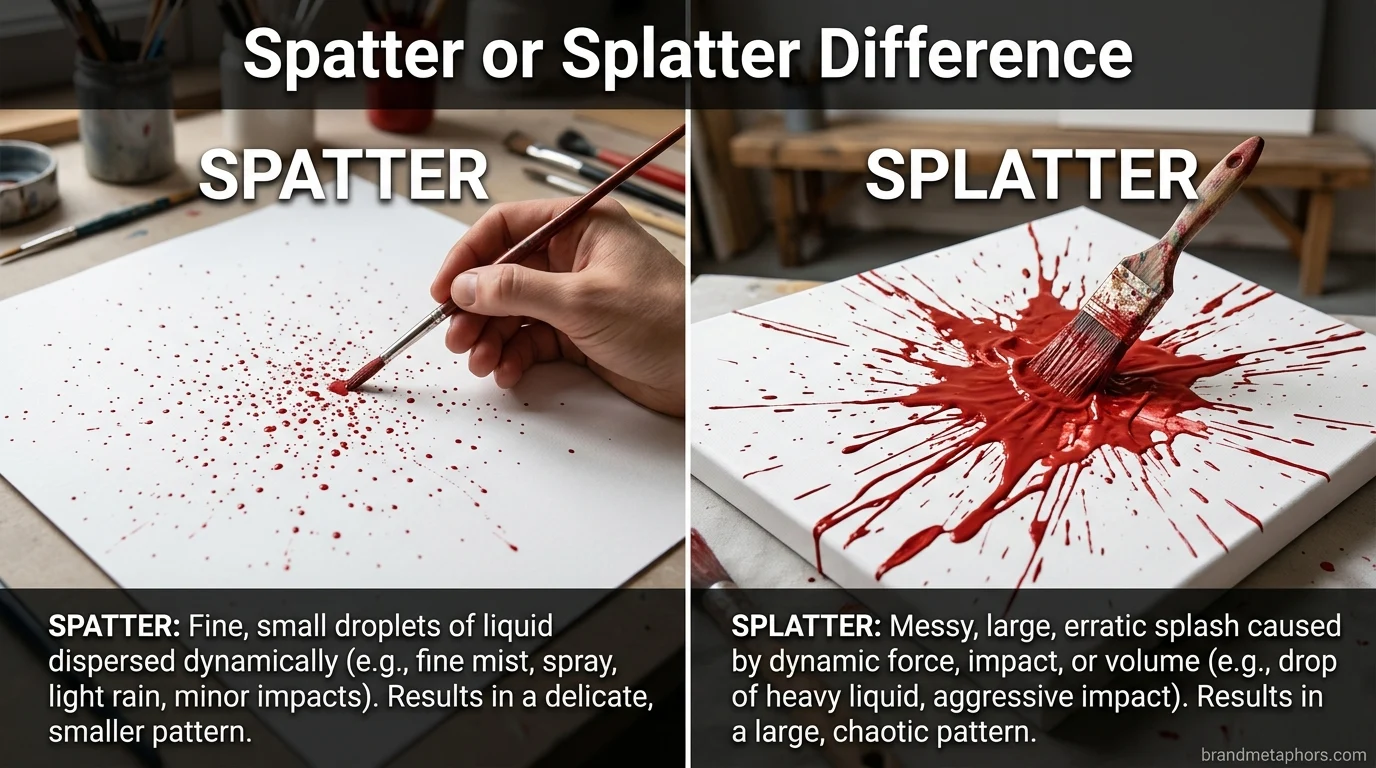
Both words describe liquid or small particles being scattered in different directions.
Spatter Meaning
Spatter means to scatter small drops of liquid, mud, paint, or another substance.
Examples:
- Rain spattered against the window.
- Mud spattered onto my shoes.
- The painter accidentally spattered paint on the floor.
The word often suggests smaller drops and less force.
Splatter Meaning
Splatter means to scatter liquid with more force, creating larger and messier drops.
Examples:
- The car drove through a puddle and splattered water everywhere.
- The chef splattered sauce across the kitchen counter.
- The wave splattered against the rocks.
The word usually suggests a larger mess and stronger impact.
Quick Comparison Table
FeatureSpatterSplatterSize of DropsSmallLargerForceLightStrongMessinessLess messyMore messyCommon ContextsRain, paint, mudWater, sauce, accidentsToneMildDramatic
Why Writers Should Know the Difference
Choosing precise words improves writing quality.
Consider these sentences:
- Rain spattered lightly on the roof.
- Rain splattered violently against the windows.
Both are correct, but they create different images.
Using accurate vocabulary helps:
- Improve creative writing
- Build descriptive language
- Create vivid imagery
- Enhance storytelling
- Increase vocabulary knowledge
- Strengthen communication skills
When to Use “Spatter”
Use spatter when describing:
Light Rain
- Tiny drops spattered on the pavement.
Small Paint Drops
- The artist spattered blue paint across the canvas.
Minor Mud Marks
- Mud spattered the bottom of his trousers.
Gentle Impact
- Water spattered softly from the fountain.
Tone Created
Spatter often creates:
- Gentle imagery
- Subtle action
- Realistic descriptions
- Calm scenes
When to Use “Splatter”
Use splatter when describing:
Large Messes
- The sauce splattered across the table.
Strong Impact
- The wave splattered against the cliff.
Fast Movement
- The truck splattered muddy water onto pedestrians.
Dramatic Scenes
- Paint splattered all over the wall.
Tone Created
Splatter often creates:
- Energy
- Chaos
- Action
- Strong visual effects
Sentence Examples of Spatter
Here are practical sentence examples:
Everyday Situations
- Rain spattered against the glass.
- Coffee spattered onto the newspaper.
- Mud spattered the side of the car.
Academic Writing
- Small droplets spattered across the experimental surface.
Creative Writing
- Moonlit rain spattered gently across the silent garden.
- The fountain spattered sparkling drops into the air.
Narrative Writing
- Dust and dirt spattered from the horse’s hooves.
- Tiny waves spattered the shoreline.
Sentence Examples of Splatter
Everyday Situations
- Water splattered across the bathroom floor.
- The blender splattered juice everywhere.
Story Writing
- The storm splattered rain against the cabin windows.
- The speeding vehicle splattered muddy water onto the road.
Descriptive Writing
- Bright paint splattered across the white wall.
- Ocean waves splattered foam against the rocks.
Dramatic Writing
- The bucket fell and splattered water across the room.
- Thick sauce splattered over the stovetop.
Spatter and Splatter in Creative Writing
Writers often choose words based on the mood they want to create.
Using Spatter for Gentle Imagery
Example:
Raindrops spattered softly on the leaves as the forest rested in silence.
This creates a peaceful image.
Using Splatter for Strong Imagery
Example:
Rain splattered violently against the windshield during the storm.
This creates tension and movement.
Writing Tip
Choose:
- Spatter for softer scenes.
- Splatter for dramatic scenes.
Figurative Language and Literary Devices
Although spatter and splatter are literal action words, they can also appear in figurative language.
Simile Examples
A simile compares two things using “like” or “as.”
- The paint spread like a splatter of fireworks.
- Raindrops fell like tiny spatters of silver.
Metaphor Examples
A metaphor directly compares things.
- Her memories were a splatter of colors across her mind.
- His thoughts became a spatter of unfinished ideas.
Imagery
Imagery helps readers see scenes.
Example:
Golden paint splattered across the sunset sky.
Personification
Giving human qualities to objects.
Example:
The rain spattered impatiently at the window.
Common Mistakes Learners Make
Mistake 1: Using Them as Exact Synonyms
Many people think both words always mean the same thing.
Incorrect understanding:
- Spatter = Splatter in every situation.
Better understanding:
- Spatter often suggests smaller drops.
- Splatter often suggests larger, messier drops.
Mistake 2: Ignoring Tone
Different words create different feelings.
Example:
- Rain spattered softly.
- Rain splattered aggressively.
Mistake 3: Overusing Dramatic Words
Not every scene needs “splatter.”
Too dramatic:
- Morning dew splattered on the flowers.
Better:
- Morning dew spattered on the flowers.
When to Avoid Using Spatter or Splatter
Avoid these words when:
No Scattering Happens
Incorrect:
- The water splattered in a glass.
Better:
- The water filled the glass.
Formal Technical Writing
Sometimes simpler words work better.
Example:
Instead of:
- Chemicals splattered onto the surface.
Use:
- Chemicals were distributed across the surface.
Unclear Context
Readers should know what substance is being scattered.
Poor Example:
- It splattered everywhere.
Better Example:
- Mud splattered everywhere.
Vocabulary Enhancement: Related Words
Learning related vocabulary improves language skills.
WordMeaningSplashLiquid striking a surfaceSprayFine droplets in the airSprinkleScatter lightlyScatterSpread in different directionsDripFall in dropsSpillAccidentally let liquid flow outSpeckleCover with tiny spotsSmearSpread messily
These words help create more varied and descriptive writing.
Practice Exercises
Exercise 1: Choose the Correct Word
- The truck ______ mud onto the sidewalk.
- Light rain ______ against the window.
- Paint ______ across the wall after the accident.
- Tiny droplets ______ from the fountain.
Answers
- Splattered
- Spattered
- Splattered
- Spattered
Exercise 2: Rewrite the Sentence
Original:
- Water went everywhere.
Improved:
- Water splattered across the floor.
Original:
- Small drops hit the leaves.
Improved:
- Small drops spattered across the leaves.
Exercise 3: Create Your Own Sentences
Write one sentence using:
- Spatter
- Splatter
- Simile
- Metaphor
This exercise strengthens writing skills and vocabulary.
Real-Life Usage Examples
Weather Reports
- Rain spattered across parts of the city.
Art Discussions
- The artist spattered paint onto the canvas.
Cooking
- Oil splattered from the frying pan.
Sports
- Mud splattered across the player’s uniform.
Fiction
- Waves splattered against the ship during the storm.
Quick Summary Table
SituationBetter ChoiceLight rainSpatterSmall paint dropsSpatterLarge paint messSplatterViolent wave impactSplatterTiny water dropletsSpatterLarge muddy splashSplatter
Frequently Asked Questions (FAQs)
1. Are spatter and splatter the same?
Not exactly. Both involve scattered liquid, but splatter usually suggests more force and a bigger mess.
2. Which word is more common?
Both are common, but splatter often appears in dramatic descriptions and everyday conversation.
3. Can I use them interchangeably?
Sometimes, yes. However, choosing the more precise word improves writing quality.
4. Is splatter always messy?
Usually yes. Splatter often suggests a larger or more noticeable mess.
5. Is spatter better for descriptive writing?
When describing small droplets or gentle movement, spatter is often the better choice.
Conclusion
Understanding the difference between spatter and splatter helps writers communicate more clearly and create stronger imagery. While both words describe liquid scattering in different directions, spatter usually refers to smaller droplets and gentler action, whereas splatter suggests larger drops, stronger force, and greater messiness.
For students, English learners, and writers, mastering this distinction improves vocabulary enhancement, descriptive language, creative writing, and overall communication skills. By choosing the right word for the situation, you can create clearer descriptions, stronger imagery, and more engaging writing that captures your reader’s attention.