
Introduction: Why Figurative Language Makes Writing Better
Figurative language is one of the most powerful tools in communication. It helps writers explain ideas in a creative and memorable way. Instead of saying something directly, figurative expressions use imagery, comparisons, and symbolic meanings to create a stronger impact on readers. Whether you are a student, writer, teacher, or English learner, understanding figurative language can improve your writing skills, vocabulary enhancement, and overall communication.
Idioms are an important part of figurative language. They add color, emotion, and depth to everyday conversations and written texts. Learning idioms also helps readers understand literature, creative writing, and spoken English more effectively.
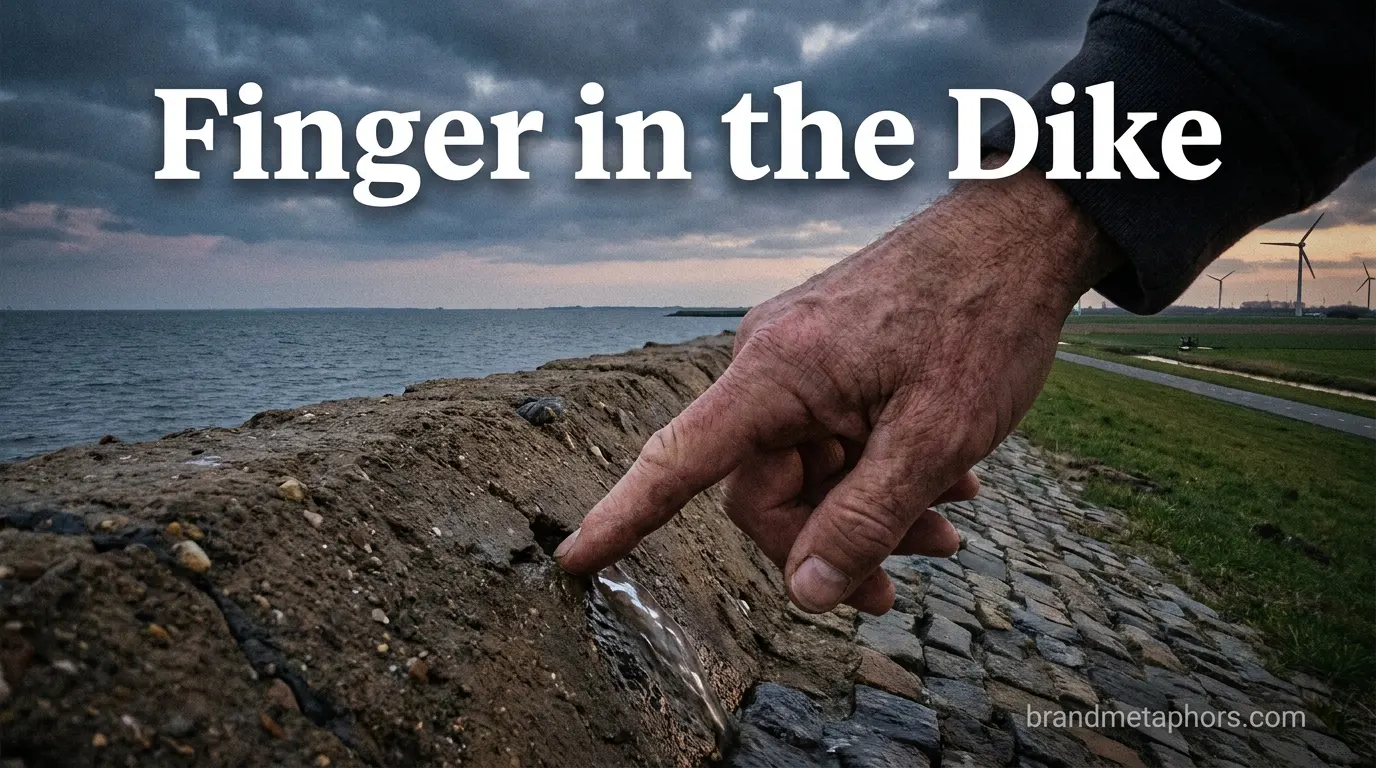
One interesting idiom is finger in the dike. This expression is commonly used to describe a temporary solution to a serious problem. Understanding its meaning, usage, and examples can help learners use it correctly in both academic and casual writing.
What Does Finger in the Dike Mean?
The idiom finger in the dike refers to a temporary action taken to stop a problem from becoming worse. It describes a short-term fix rather than a permanent solution.
Simple Definition
A small effort made to prevent a larger problem from growing.
Idiom Meaning
When someone puts a “finger in the dike,” they are trying to hold back trouble with limited resources or temporary measures until a better solution can be found.
Key Idea
- Temporary solution
- Emergency response
- Delaying a larger problem
- Not a permanent fix
Origin and Background of the Idiom

The phrase comes from a famous story about a Dutch boy who noticed water leaking through a dike. To prevent flooding, he placed his finger into the hole and stayed there until help arrived.
Although the story became popular around the world, historians debate whether it was based on a real event. Regardless of its historical accuracy, the story created a lasting metaphor for preventing disaster through quick action.
Today, the expression is used in business, politics, education, engineering, and everyday conversation.
Understanding the Figurative Meaning
This idiom is an example of figurative language because it does not literally refer to placing a finger into a wall of earth.
Instead, it symbolizes:
Literal MeaningFigurative MeaningBlocking a hole in a dikePreventing a larger problemTemporary protectionShort-term solutionEmergency actionCrisis managementHolding back waterHolding back trouble
The figurative meaning is much more common than the literal meaning.
Why Writers Use This Idiom
Writers often choose idioms because they create vivid mental images. The image of a person trying to stop a flood with only a finger immediately communicates urgency and difficulty.
Benefits in Writing
- Creates strong imagery
- Makes ideas memorable
- Improves descriptive language
- Adds emotional impact
- Enhances creative writing
- Develops vocabulary skills
Example
Instead of writing:
“The company used a temporary solution.”
You can write:
“The company’s latest policy was merely a finger in the dike against its financial troubles.”
The second sentence is more vivid and engaging.
Sentence Examples in Different Contexts
Understanding sentence examples helps learners use idioms naturally.
Business Examples
- The emergency loan was only a finger in the dike for the struggling company.
- Management knew the budget cuts were just a temporary measure.
- The new investment acted as a finger in the dike while larger reforms were planned.
School Examples
- Hiring one tutor was a finger in the dike for the school’s learning challenges.
- The teacher’s extra classes helped temporarily but did not solve the deeper issue.
- The quick revision session served as a finger in the dike before the final exam.
Personal Life Examples
- Borrowing money from friends was only a temporary solution.
- His apology was a finger in the dike after months of conflict.
- The repair tape was a finger in the dike until the plumber arrived.
Government Examples
- The relief package was a finger in the dike during the economic crisis.
- New regulations helped temporarily but failed to address the root causes.
- Emergency funding became a finger in the dike for public services.
Tone and Style Usage
The idiom can fit different tones depending on context.
Formal Tone
Suitable for:
- Essays
- Reports
- Academic writing
- Business discussions
Example:
“The policy changes represented a finger in the dike rather than a comprehensive solution.”
Informal Tone
Suitable for:
- Conversations
- Blogs
- Social media
- Personal stories
Example:
“That repair is just a finger in the dike. We need to replace the whole thing.”
Critical Tone
Used when highlighting weak solutions.
Example:
“The government response was merely a finger in the dike.”
Comparison with Similar Idioms
Many English idioms express related ideas.
Comparison Table
IdiomMeaningDifferenceFinger in the dikeTemporary fixFocuses on preventing disasterBand-Aid solutionQuick fixFocuses on superficial repairStopgap measureTemporary arrangementMore formal expressionPatch things upRepair a situationOften refers to relationshipsHold the linePrevent worseningFocuses on resistance
Example Comparison
- The software update was a Band-Aid solution.
- The emergency funding was a finger in the dike.
- The temporary manager served as a stopgap measure.
Each expression has a slightly different emphasis.
Literary Devices Related to the Idiom
This idiom connects with several literary devices.
Metaphor
The entire expression functions as a metaphor.
Example:
“The new policy was a finger in the dike.”
No actual dike is involved.
Imagery
The image of stopping a flood creates vivid mental pictures.
Symbolism
The finger symbolizes limited resources.
The dike symbolizes a larger problem.
Figurative Language
The phrase communicates an abstract idea through a concrete image.
Simile Examples and Metaphor Examples

Understanding comparisons helps learners master figurative language.
Simile Examples
- The emergency repairs were like a finger in the dike against the growing damage.
- His efforts were like a finger in the dike during the crisis.
- The temporary funding was like a finger in the dike for the project.
Metaphor Examples
- The new law was a finger in the dike.
- The charity donation became a finger in the dike.
- The repair team was a finger in the dike against disaster.
Similes use “like” or “as.”
Metaphors make direct comparisons.
Creative Writing Applications
Writers often use this idiom to add drama and realism.
Narrative Example
The storm raged through the night. Water leaked from every corner of the old dam. The workers knew their efforts were only a finger in the dike, but they continued fighting until reinforcements arrived.
Descriptive Writing Example
The city faced rising debt, shrinking resources, and growing unemployment. Officials introduced emergency measures that felt like a finger in the dike against an approaching flood of economic problems.
Poetic Expression Example
A hand against the rushing tide, A fragile stand where fears reside, One small effort in the night, Holding darkness from the light.
When to Use the Idiom
Use this expression when discussing:
Appropriate Situations
- Temporary solutions
- Crisis management
- Emergency responses
- Short-term fixes
- Problem prevention
Good Examples
- Economic issues
- Business challenges
- Infrastructure repairs
- Educational concerns
- Personal difficulties
The idiom works best when a larger problem remains unresolved.
When to Avoid the Idiom
Not every situation requires this expression.
Avoid When
- The solution is permanent.
- The audience may not understand idioms.
- Writing requires absolute clarity.
- Technical documents need precise language.
- The problem is already solved.
Better Alternatives
- Permanent solution
- Comprehensive reform
- Long-term strategy
- Complete repair
These alternatives may be clearer in certain contexts.
Common Mistakes Learners Make
Mistake 1: Using It for Permanent Solutions
Incorrect:
“The new building was a finger in the dike.”
Correct:
“The temporary repairs were a finger in the dike.”
Mistake 2: Taking It Literally
The phrase usually has a symbolic meaning.
Mistake 3: Using It Without a Major Problem
The idiom implies a serious issue that continues to exist.
Mistake 4: Confusing It with Other Idioms
A Band-Aid solution and a finger in the dike are similar but not identical.
Writing Exercises for Students and English Learners
Exercise 1: Fill in the Blank
- The emergency loan was a __________ against bankruptcy.
- The repair tape acted as a __________ until help arrived.
- The temporary policy became a __________ during the crisis.
Exercise 2: Create Sentences
Write three sentences using the idiom in:
- School context
- Business context
- Personal context
Exercise 3: Identify Meaning
Determine whether the idiom means:
A. Permanent success
B. Temporary solution
C. Complete failure
Answer: B
Exercise 4: Rewrite the Sentence
Original:
“The company used a temporary fix.”
Improved:
“The company’s response was a finger in the dike against growing losses.”
Exercise 5: Creative Writing Challenge
Write a short paragraph describing a difficult situation where someone uses a temporary solution to prevent a larger disaster.
Vocabulary Enhancement Through Related Words

Learning related vocabulary improves language skills.
Synonyms
- Temporary fix
- Stopgap measure
- Emergency solution
- Short-term remedy
- Interim action
Related Terms
- Crisis management
- Prevention
- Risk control
- Damage limitation
- Emergency response
Useful Academic Vocabulary
- Mitigation
- Intervention
- Stabilization
- Containment
- Resolution
Quick Reference Summary Table
FeatureDescriptionTypeIdiomMeaningTemporary solution to a serious problemCategoryFigurative languageToneFormal and informalCommon UsageBusiness, education, politics, daily lifeLiterary DeviceMetaphorPurposeDescribe emergency actionOpposite IdeaPermanent solution
Frequently Asked Questions (FAQs)
1. What does finger in the dike mean?
It means a temporary action taken to stop a larger problem from becoming worse.
2. Is it an idiom or a metaphor?
It is an idiom that works through metaphorical imagery.
3. Can it be used in formal writing?
Yes. It is commonly used in essays, reports, and professional discussions.
4. Is it always negative?
Not necessarily. It often highlights useful emergency action, even if the solution is temporary.
5. What is the closest synonym?
“Stopgap measure” is one of the closest formal synonyms.
Conclusion
The idiom finger in the dike is a powerful example of figurative language that illustrates how a small action can temporarily prevent a much larger problem. It is widely used in business, politics, education, and everyday communication to describe short-term solutions during difficult situations. By learning its meaning, sentence examples, literary devices, simile examples, metaphor examples, and correct usage, students and English learners can strengthen their writing skills, improve vocabulary enhancement, and create more engaging descriptive language. Mastering idioms like this not only improves communication but also makes creative writing richer, clearer, and more memorable.