
Few sights are as quietly beautiful as leaves dancing in the wind. Imagine standing beneath a towering tree on a crisp autumn afternoon. Golden, red, and amber leaves drift through the air like tiny pieces of art. Some twirl gracefully before touching the ground. Others cling stubbornly to branches, refusing to let go. In that moment, leaves become more than parts of a tree—they become symbols of life, change, growth, and memory.
This is the magic of leaf metaphors. A simple leaf can represent countless emotions, ideas, and experiences. Writers, poets, teachers, and storytellers often use leaves to paint vivid pictures in readers’ minds. Whether describing personal growth, the passing of time, or the fragility of life, leaf imagery adds depth and beauty to language.
Understanding and using these figurative expressions can make your writing more engaging and memorable. They help readers connect emotionally with your words while creating powerful mental images. In this guide, you’ll discover creative comparisons, practical writing tips, storytelling examples, and exercises that will help you use leaf-inspired imagery effectively.
Why Leaves Make Powerful Metaphors
The Symbolic Nature of Leaves
Leaves are present in nearly every landscape. They grow, flourish, change color, fall, and eventually return through new growth. This natural cycle mirrors many human experiences.
Because of this, leaves often symbolize:
- Growth
- Transformation
- Renewal
- Aging
- Hope
- Fragility
- Connection to nature
Writers throughout history have used leaves to express life’s changing seasons.
Cultural and Literary Significance
Many cultures see leaves as symbols of wisdom and renewal. In poetry, they frequently represent the passage of time. In stories, falling leaves often suggest endings, while budding leaves symbolize fresh beginnings.
Their universal presence makes them relatable to readers everywhere.
Leaves as Pages of Nature’s Diary
Meaning and Explanation
One of the most beautiful comparisons portrays leaves as pages in nature’s diary. Each leaf records a season’s story through its color, texture, and shape.
Just as diary pages preserve memories, leaves preserve evidence of changing weather, growth, and time.
Example Sentence
“The forest floor was covered with pages of nature’s diary, each leaf telling a different autumn story.”
Alternative Expressions
- Nature’s journal pages
- Earth’s scrapbook
- The tree’s memoir
Sensory Detail
Imagine crisp leaves crunching underfoot, each crackle sounding like an old page being turned.
Mini Storytelling Example
A young child collecting autumn leaves places them in a notebook. Years later, those preserved leaves become memories of childhood adventures, much like diary entries from the past.
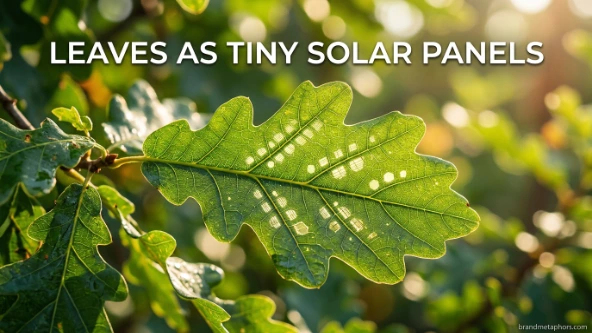
Leaves as Tiny Solar Panels
Meaning and Explanation
Scientifically, leaves collect sunlight and transform it into energy. This makes them excellent metaphors for people who absorb positivity and convert it into growth.
Example Sentence
“She was a tiny solar panel, gathering encouragement and turning it into confidence.”
Alternative Expressions
- Light collectors
- Sun catchers
- Energy harvesters
Emotional Detail
This metaphor often creates feelings of optimism and resilience.
Real-Life Application
Students, athletes, and professionals often act like leaves by absorbing knowledge and transforming it into achievement.
Leaves as Whispering Messengers
Meaning and Explanation
When wind moves through trees, leaves seem to whisper secrets. This creates a metaphor that suggests communication, wisdom, or hidden messages.
Example Sentence
“The leaves were whispering messengers, carrying the forest’s secrets through the breeze.”
Alternative Expressions
- Wind’s storytellers
- Nature’s messengers
- Silent speakers
Sensory Experience
Picture the soft rustling overhead. The sound feels like distant conversations between trees.
Literary Connection
Many fairy tales and fantasy stories use rustling leaves to create mystery and wonder.
Metaphors for Leaves and Personal Growth
Leaves as Symbols of Change
Leaves constantly change throughout the year. This makes them ideal symbols for personal development.
A green leaf may represent youth and potential. A golden leaf can symbolize wisdom gained through experience.
Example Scenario
A graduate leaving school might be described as a leaf ready to drift toward new opportunities.
Writing Tip
Use seasonal leaf imagery to match emotional journeys:
- Spring leaves = beginnings
- Summer leaves = success
- Autumn leaves = reflection
- Winter branches = preparation
Leaves as Travelers on the Wind
Meaning and Explanation
Falling leaves often seem like travelers embarking on uncertain journeys.
This metaphor represents:
- Adventure
- Freedom
- Life transitions
- New opportunities
Example Sentence
“The graduates scattered across the country like leaves carried by the wind.”
Alternative Expressions
- Windborne wanderers
- Nature’s travelers
- Drifting explorers
Storytelling Example
A young woman moves to a new city. Like a leaf leaving its branch, she faces uncertainty but discovers growth along the way.
Using Leaf Imagery in Creative Writing
Building Strong Descriptions
Leaf imagery can transform ordinary writing into vivid storytelling.
Instead of saying:
“The park looked beautiful.”
Try:
“The park shimmered beneath a blanket of golden leaves that glowed like scattered coins.”
Creating Mood
Different leaf descriptions create different feelings.
- Bright green leaves create hope.
- Golden leaves suggest nostalgia.
- Brown leaves evoke endings.
- Silver leaves create mystery.
Reader Engagement
Strong imagery helps readers experience scenes rather than simply read about them.
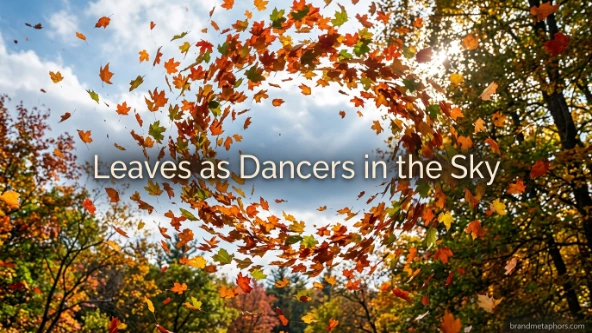
Leaves as Dancers in the Sky
Meaning and Explanation
Watching leaves fall often resembles watching dancers perform graceful movements.
This metaphor emphasizes elegance and freedom.
Example Sentence
“The leaves became dancers in the sky, spinning across the afternoon sunlight.”
Alternative Expressions
- Autumn ballerinas
- Nature’s performers
- Airborne dancers
Sensory Detail
Imagine leaves twirling in circles while sunlight flashes across their surfaces like stage lights.
Cultural Reference
Many autumn festivals celebrate the beauty of falling leaves because of their artistic movement and color.
Emotional Metaphors Inspired by Leaves
Leaves as Fragile Dreams
Leaves can symbolize hopes and dreams because both are delicate and vulnerable.
Example Sentence
“His ambitions fluttered like fragile leaves before a coming storm.”
Alternative Expressions
- Delicate hopes
- Tender wishes
- Fleeting visions
Emotional Impact
This comparison highlights both beauty and vulnerability.
Real-Life Example
Starting a new business often feels like protecting a fragile leaf from strong winds.
Practical Tips for Using Leaf Metaphors
Keep the Comparison Clear
Readers should easily understand the connection.
Good Example:
“The children scattered across the playground like leaves in the wind.”
Poor Example:
“The leaves were mathematical equations.”
The first creates a clear visual image.
Match the Mood
Choose leaf imagery that supports the emotion you want to create.
- Joy = bright green leaves
- Reflection = autumn leaves
- Sadness = fallen leaves
- Hope = budding leaves
Avoid Overuse
A few strong metaphors often work better than many weak ones.
Focus on Sensory Details
Include:
- Colors
- Sounds
- Movement
- Texture
These details make comparisons more memorable.
Interactive Exercises for Practicing Leaf Metaphors
Exercise 1: Complete the Comparison
Finish these sentences:
- Her thoughts were leaves because __________.
- The crowd moved like leaves __________.
- His memories drifted like leaves __________.
Exercise 2: Create Seasonal Symbolism
Write one sentence using leaves to represent:
- A new beginning
- A major life change
- A treasured memory
Exercise 3: Observation Challenge
Spend five minutes watching leaves outside.
Notice:
- Color
- Shape
- Movement
- Sound
Then create three original comparisons inspired by your observations.
Exercise 4: Story Prompt
Write a short story beginning with:
“The last leaf clung to the branch as if it knew a secret.”
Creative Growth Tip
Keep a notebook dedicated to nature-inspired imagery. Record interesting observations whenever you encounter trees or changing seasons.
Bonus Tips for Social Media, Poetry, and Everyday Writing
For Social Media Captions
Leaf imagery creates engaging captions.
Examples:
- “Turning pages like autumn leaves.”
- “Growing quietly like spring foliage.”
- “Dancing through life’s seasons.”
For Poetry
Experiment with personification.
Example:
“The leaves applauded the arriving rain.”
For Journaling
Use leaf symbolism to reflect on life changes.
Ask yourself:
- Which season matches my current life stage?
- What leaves do I need to let go?
- What new growth is beginning?
For Fiction Writing
Use leaf imagery to foreshadow events.
Falling leaves may hint at endings.
Fresh buds may suggest new opportunities.
For Daily Conversations
Simple comparisons can make ordinary communication more expressive and memorable.
The Timeless Beauty of Leaf Symbolism
Why Readers Connect With Leaf Imagery
Leaves are familiar to everyone. Their annual cycle mirrors the human experience.
People understand:
- Growth
- Change
- Loss
- Renewal
Because leaves embody these themes, they create immediate emotional connections.
The Lasting Power of Nature-Based Language
Nature offers endless inspiration. Among all natural symbols, leaves remain some of the most versatile.
A single leaf can represent:
- Hope
- Wisdom
- Freedom
- Memory
- Transformation
That flexibility makes leaf-inspired imagery timeless.
Conclusion
Leaves may seem simple, but they carry extraordinary symbolic power. They grow, change, dance, fall, and return, reflecting many of life’s most meaningful experiences. Through creative comparisons, writers can transform ordinary descriptions into vivid, emotional, and memorable scenes.
Whether you see them as pages in nature’s diary, whispering messengers, tiny solar panels, graceful dancers, or travelers on the wind, leaves offer endless inspiration. By observing their colors, movements, and seasonal transformations, you can create stronger stories, richer poetry, and more engaging everyday writing.
The next time you walk beneath a tree, pause for a moment. Listen to the rustling branches. Watch a leaf drift through the air. You may discover that nature is offering a metaphor waiting to be written.
FAQs
What are metaphors for leaves?
Metaphors for leaves are figurative comparisons that describe leaves as something else, such as dancers, diary pages, travelers, or messengers, to create vivid imagery and deeper meaning.
Why are leaves commonly used in literature?
Leaves symbolize growth, change, renewal, and the passage of time, making them powerful tools for writers and poets.
How can I create my own leaf-inspired metaphor?
Observe a leaf’s appearance, movement, color, or role in nature, then connect those qualities to a human experience, emotion, or idea.
Are leaf metaphors useful in modern writing?
Yes. They work well in fiction, poetry, blogging, social media captions, journaling, and personal storytelling.
What emotions do leaf metaphors usually express?
Leaf imagery can express hope, nostalgia, freedom, transformation, wisdom, fragility, loss, and renewal depending on the context.