
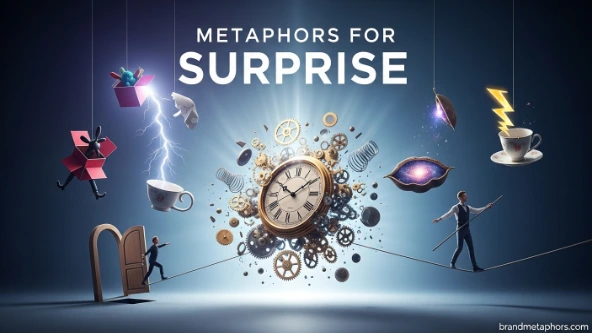
Have you ever opened a door expecting an ordinary day, only to find life waiting with a glittering secret? Perhaps it was an unexpected phone call, a forgotten gift, or news that changed everything in a heartbeat. Surprise has a way of arriving without warning. It crashes into our routines, shakes loose our assumptions, and reminds us that life is full of mysteries.
Writers, speakers, and storytellers often struggle to describe that sudden rush of shock, delight, wonder, or disbelief. This is where metaphors become powerful. A good metaphor transforms an abstract feeling into something vivid and memorable. Instead of saying someone was surprised, you can show the feeling through images, sounds, and experiences.
Metaphors for surprise help create stronger stories, richer poetry, more engaging social media posts, and more expressive everyday conversations. They allow readers to feel the emotion rather than simply read about it.
In this guide, you’ll discover creative ways to describe astonishment, understand their meanings, practice using them, and learn how to make your writing sparkle with unexpected energy.
Understanding Metaphors for Surprise
What Is a Metaphor?
A metaphor compares one thing directly to another without using words such as “like” or “as.” It helps readers visualize emotions and experiences more clearly.
For example:
- “Her news was a lightning bolt.”
- “The announcement was an earthquake.”
These phrases do not mean actual lightning or earthquakes occurred. Instead, they communicate the sudden and powerful nature of surprise.
Why Writers Use Surprise Metaphors
Surprise is difficult to describe because it happens so quickly. A metaphor captures the instant impact and emotional intensity.
Benefits include:
- Creating vivid imagery
- Improving reader engagement
- Adding emotional depth
- Making descriptions memorable
- Strengthening storytelling
Surprise as a Lightning Bolt
Meaning and Symbolism
One of the most common metaphors for surprise is a lightning bolt. Lightning appears suddenly, brightens the sky, and commands attention.
Surprise often feels exactly the same way.
Example Scenario
Sarah opened her email expecting routine updates. Instead, she found an acceptance letter from her dream university.
“The message was a lightning bolt splitting an ordinary afternoon.”
Alternative Expressions
- A flash from the heavens
- A spark across the sky
- A sudden electric shock
- A burst of white fire
Emotional Details
This metaphor suggests:
- Instant realization
- High energy
- Excitement
- Sudden change
Surprise as an Earthquake

Meaning and Symbolism
An earthquake shakes the ground beneath our feet. Likewise, surprising news can shake our understanding of reality.
Example Sentence
“The revelation was an earthquake that cracked his carefully built expectations.”
Mini Storytelling Example
Imagine a businessman who believes his company is failing. One morning, he learns a major investor has decided to support the project.
The news shifts his entire future. His plans, fears, and expectations tremble like buildings during an earthquake.
Alternative Ways to Express It
- A sudden tremor
- A crack in reality
- A shifting landscape
- A jolt beneath the surface
Surprise as a Firework Explosion
Meaning and Symbolism
Fireworks appear unexpectedly and fill the sky with color and excitement. This metaphor works especially well for joyful surprises.
Example Sentence
“Her birthday announcement exploded through the room like a firework.”
Sensory Details
Think about:
- Bright colors
- Loud pops
- Sparkling trails
- Crowds gasping in delight
These sensations mirror emotional excitement.
Cultural Connection
Fireworks are often linked to celebrations around the world. Because of this, they naturally symbolize happy surprises and unforgettable moments.
Surprise as a Hidden Treasure Chest
Meaning and Symbolism
Discovering treasure represents finding something valuable when it was least expected.
Example Scenario
A writer cleaning an old desk finds letters from a beloved grandparent.
“The bundle of letters was a treasure chest buried beneath years of dust.”
Alternative Expressions
- A buried jewel
- A golden discovery
- A secret vault
- An unexpected fortune
Emotional Impact
This metaphor combines surprise with gratitude, nostalgia, and wonder.
Surprise as a Door Swinging Open
Meaning and Symbolism
Doors often symbolize opportunities, mysteries, and new beginnings.
A surprising event can feel like a door suddenly opening into an unknown world.
Example Sentence
“The invitation was a door swinging open to possibilities she had never imagined.”
Real-Life Application
This metaphor works well when describing:
- Career opportunities
- Unexpected friendships
- New adventures
- Personal growth
Sensory Imagery
Picture:
- Hinges creaking
- Light pouring through
- Fresh air entering
- A hidden path revealed
Surprise as a Sudden Wave
Meaning and Symbolism
Waves arrive quickly and can overwhelm a person without warning.
Similarly, surprise often arrives all at once.
Example Sentence
“The news hit him as a towering wave.”
Mini Storytelling Example
A young athlete finishes a race expecting second place. Moments later, officials announce she actually won.
The realization rushes over her like a powerful ocean wave.
Alternative Expressions
- A tidal rush
- A crashing breaker
- A sea of emotion
- A flood of astonishment
Surprise as a Magic Trick
Meaning and Symbolism
Magic tricks challenge expectations. They make us question what we thought we knew.
Surprise works in much the same way.
Example Sentence
“The sudden proposal felt like a magician pulling a star from an empty hat.”
Why It Works
This metaphor suggests:
- Wonder
- Mystery
- Curiosity
- Delight
Literary Connection
Fantasy stories often use magical imagery to highlight moments of astonishment and discovery.
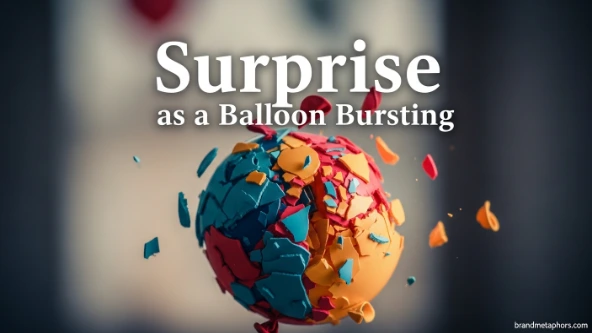
Surprise as a Balloon Bursting
Meaning and Symbolism
A balloon burst is sudden, loud, and impossible to ignore.
This metaphor often describes shocking or startling surprises.
Example Sentence
“The confession burst through the conversation like a balloon popping in a silent room.”
Alternative Expressions
- A sudden pop
- A sharp crack
- An exploding bubble
- A breaking silence
Emotional Details
This metaphor can suggest:
- Shock
- Alarm
- Tension
- Instant attention
Surprise as a Sunrise Over the Horizon
Meaning and Symbolism
Unlike some dramatic metaphors, this one conveys a gentle and beautiful surprise.
A sunrise gradually reveals something wonderful.
Example Sentence
“Her kindness rose over the day like a sunrise no one expected.”
Sensory Elements
Imagine:
- Golden light
- Warm colors
- Quiet beauty
- New beginnings
Best Uses
This metaphor is ideal for:
- Positive surprises
- Emotional discoveries
- Acts of kindness
- Personal revelations
Surprise as a Gift Wrapped in Mystery
Meaning and Symbolism
A wrapped gift contains something unknown. The excitement comes from anticipation and discovery.
Example Sentence
“The opportunity arrived as a gift wrapped in mystery.”
Real-Life Example
Receiving unexpected support from a friend during a difficult time can feel exactly like opening a meaningful present.
Alternative Expressions
- A secret package
- A hidden blessing
- An unopened box
- A ribbon-covered possibility
How to Create Your Own Metaphors for Surprise
Start With the Feeling
Ask yourself:
- Was the surprise shocking?
- Was it joyful?
- Was it overwhelming?
- Was it mysterious?
The emotion should guide your metaphor.
Think About Physical Experiences
People understand concrete experiences better than abstract emotions.
Examples:
- Storms
- Fireworks
- Waves
- Treasure hunts
- Open doors
Focus on Sensory Details
Include sights, sounds, textures, or movement.
Instead of:
“The news was surprising.”
Try:
“The news flashed through the room like lightning tearing across a midnight sky.”
Keep It Original
Fresh metaphors capture attention more effectively.
Experiment with unexpected images from nature, music, travel, sports, or everyday life.
Interactive Exercises to Practice Surprise Metaphors
Exercise 1: Finish the Sentence
Complete these prompts:
- The announcement was a __________.
- Her reaction was a __________.
- The discovery felt like a __________.
- The message arrived as a __________.
Exercise 2: Rewrite Plain Sentences
Transform these statements:
- I was surprised by the news.
- She received an unexpected gift.
- They won the competition.
Add creative metaphorical language.
Exercise 3: Create a Personal Metaphor
Think about a surprising moment from your life.
Ask:
- What did it feel like?
- What image comes to mind?
- What sound or movement matches the emotion?
Write one metaphor based on your answer.
Bonus Tips for Using Surprise Metaphors
In Creative Writing
Use metaphors to deepen emotional scenes.
Readers remember images more than explanations.
On Social Media
Short metaphors capture attention quickly.
Example:
“That email was a lightning bolt on a cloudy Monday.”
In Public Speaking
Metaphors make presentations memorable.
Instead of saying:
“We received unexpected results.”
Say:
“The results arrived like fireworks lighting up a dark sky.”
In Everyday Conversation
Metaphors add color and personality.
Friends often connect more strongly with vivid language than plain descriptions.
In Poetry
Surprise metaphors can create powerful emotional turns and memorable imagery.
Experiment with nature, weather, dreams, and light.
The Lasting Power of Metaphors for Surprise
Why They Stay With Readers
Humans naturally think in images. A metaphor transforms a fleeting emotion into a picture the mind can hold.
Building Emotional Connections
Good metaphors help readers:
- Feel emotions deeply
- Visualize experiences
- Remember important moments
- Connect with stories
Turning Ordinary Moments Into Memorable Ones
A simple surprise becomes unforgettable when described through vivid imagery.
Instead of reporting an event, you create an experience.
FAQs
What are metaphors for surprise?
Metaphors for surprise are creative comparisons that describe unexpected feelings or events through vivid imagery, such as lightning bolts, fireworks, waves, or hidden treasure.
Why are metaphors useful when describing surprise?
They help readers visualize and feel the emotion more strongly than straightforward descriptions, making writing more engaging and memorable.
What is a good metaphor for a happy surprise?
A firework explosion, a sunrise over the horizon, or a treasure chest discovery are excellent metaphors for joyful surprises.
Can surprise metaphors be used in everyday conversation?
Yes. Metaphors make conversations more expressive and memorable, helping people communicate emotions more effectively.
How can I create my own surprise metaphor?
Start by identifying the feeling, think of a physical experience that matches it, and add sensory details to make the comparison vivid and original.
Conclusion
Surprise is one of life’s most powerful emotions. It can arrive like a lightning bolt, shake us like an earthquake, sparkle like fireworks, or unfold gently like a sunrise. Metaphors allow us to capture these moments in ways that plain language often cannot. They transform emotions into images, helping readers see, hear, and feel the experience for themselves.
Whether you’re writing stories, crafting poetry, posting on social media, or simply trying to describe an unforgettable moment, these imaginative comparisons can make your words more vivid and impactful. The next time life catches you off guard, don’t just say you were surprised. Let your imagination open a door, uncover a treasure, or light up the sky with language that truly brings the moment to life.