
Candy glitters behind store windows, rattles inside colorful wrappers, and instantly awakens memories. A single sweet can transport someone back to childhood birthday parties, movie nights, holiday celebrations, or carefree afternoons spent with friends. Yet candy is more than a sugary treat. It can become a powerful metaphor that helps writers, speakers, and storytellers express emotions, personalities, experiences, and ideas in vivid ways.
Metaphors give ordinary language extra flavor. They help readers see familiar things through fresh eyes. Candy works especially well as a metaphor because it comes in countless shapes, colors, flavors, and textures. Some sweets melt gently, while others surprise with a sour kick. Some look simple but reveal rich layers inside. Human experiences often work the same way.
Whether you are writing poetry, creating social media captions, crafting stories, or improving everyday communication, candy-inspired metaphors can add sweetness and depth to your language. This guide explores creative ways to use these sugary comparisons while offering practical examples, storytelling inspiration, and exercises to strengthen your writing skills.
Why Candy Makes Powerful Metaphors
The Sweet Connection Between Candy and Life
Candy naturally connects to emotions and memories. Most people associate sweets with rewards, celebrations, comfort, or excitement. Because of these associations, candy metaphors instantly create vivid mental images.
For example:
- “Her smile was candy for the soul.”
- “Success became the candy at the end of a long journey.”
These comparisons create warmth and emotional resonance.
Why Writers Love Sweet Imagery
Candy offers:
- Strong sensory details
- Universal recognition
- Emotional connections
- Colorful visual imagery
- Flexible symbolism
A good candy metaphor can make writing memorable and engaging.
Candy as a Metaphor for Happiness
Sweet Moments That Brighten Life
One of the most common uses of candy metaphors is to represent joy and happiness.
Metaphor: “Happiness is a piece of candy tucked into an ordinary day.”
Meaning: Small pleasures can transform routine experiences.
Example Sentence: “The unexpected compliment was a piece of candy in an otherwise stressful afternoon.”
Alternative Expressions:
- A spoonful of sweetness
- A sprinkle of sugar
- A pocketful of treats
Mini Story
Imagine a student struggling through a difficult week. Then a teacher praises their effort. That simple encouragement feels like discovering a favorite candy in a forgotten pocket.
Candy as a Metaphor for Love
The Sweetness of Affection
Love often resembles candy because both bring delight and anticipation.
Metaphor: “Love is a box of chocolates waiting to be opened.”
Meaning: Relationships contain surprises, excitement, and variety.
Example Sentence: “Their relationship was a box of chocolates, filled with unexpected moments.”
Alternative Expressions:
- Sweet as caramel
- A sugar-coated dream
- A heart full of honey
Literary Connection
Romantic literature frequently uses sweet imagery to symbolize affection. Lovers are often compared to honey, sugar, or treasured treats.
Candy as a Metaphor for Personality
Different Sweets, Different Characters
Just as candies vary, personalities differ greatly.
Metaphor: “She was a peppermint in a world of plain sugar.”
Meaning: Someone stands out through uniqueness and freshness.
Example Sentence: “His creative ideas made him a peppermint among ordinary thinkers.”
Alternative Expressions:
- A rare chocolate truffle
- A colorful jellybean
- A sparkling lollipop
Real-Life Example
Think of a friend whose energy brightens every gathering. Their presence may feel like opening a bag of colorful candy at a dull event.
Candy as a Metaphor for Success
Rewards Worth Working For
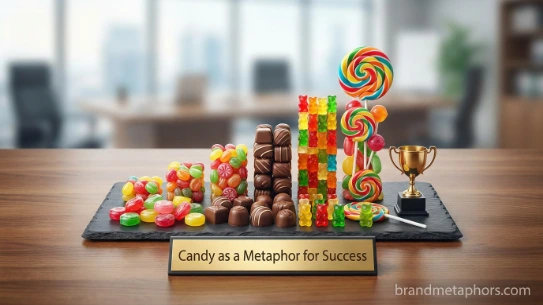
Success often comes after effort, making candy a fitting symbol for achievement.
Metaphor: “Success is the candy waiting at the finish line.”
Meaning: Hard work eventually brings rewarding outcomes.
Example Sentence: “After years of practice, the championship felt like candy at the finish line.”
Alternative Expressions:
- Sweet victory
- A golden caramel reward
- A sugary prize
Storytelling Moment
An athlete trains before sunrise for years. When they finally win, the moment tastes sweeter because of the struggle behind it.
Candy as a Metaphor for Temptation
Sweet but Difficult to Resist
Candy often represents temptation because it attracts attention immediately.
Metaphor: “The opportunity was candy hanging within reach.”
Meaning: Something desirable is hard to ignore.
Example Sentence: “The luxury purchase was candy dangling before her eyes.”
Alternative Expressions:
- Sugar-coated temptation
- A tempting chocolate bar
- A sweet distraction
Cultural Reflection
Many stories use sweets to symbolize desires that challenge self-control.
Candy as a Metaphor for Childhood
Wrapped Memories of Youth
Candy strongly connects with childhood experiences.
Metaphor: “Childhood is a jar filled with colorful candies.”
Meaning: Youth contains countless joyful memories and discoveries.
Example Sentence: “Looking through old photos felt like opening a jar of childhood candies.”
Alternative Expressions:
- A rainbow of sweets
- A pocket full of treats
- A sugary treasure chest
Nostalgic Story
A grown adult finds a candy they loved decades ago. One taste instantly revives forgotten memories.
Candy as a Metaphor for Hidden Depth
More Than the Wrapper
Many candies have layers, fillings, or surprises inside.
Metaphor: “She was a chocolate with a hidden center.”
Meaning: Someone possesses unseen depth beneath the surface.
Example Sentence: “His quiet personality concealed a chocolate-like center full of wisdom.”
Alternative Expressions:
- Layers of caramel
- A filled truffle
- A surprise inside
Writing Insight
These metaphors work especially well when describing complex characters.
Three Creative Candy Metaphor Examples
Example 1: The Lollipop of Hope
Meaning
Hope can provide encouragement during difficult situations.
Example Sentence
“Hope stood like a bright lollipop in the middle of life’s storm.”
Alternative Expressions
- A sweet light
- A sugar-colored promise
- A rainbow treat
Example 2: The Caramel Road
Meaning
Life’s journey may be sticky and challenging but still rewarding.
Example Sentence
“His career followed a caramel road filled with twists and rewards.”
Alternative Expressions
- A winding candy trail
- A sugary pathway
- A chocolate-covered road
Example 3: The Jellybean Heart
Meaning
Someone possesses colorful emotions and cheerful energy.
Example Sentence
“Her jellybean heart spread joy wherever she went.”
Alternative Expressions
- A rainbow spirit
- A colorful soul
- A cheerful spark
Using Candy Metaphors in Social Media
Sweeten Your Captions
Candy metaphors can make posts more engaging.
Examples:
- “Collecting sweet moments like candy.”
- “Today felt like finding chocolate on a rainy day.”
- “Life is sweeter when shared.”
Boosting Engagement
Metaphors encourage readers to visualize experiences, making posts more memorable.
Try combining candy imagery with:
- Travel photos
- Family moments
- Celebration posts
- Motivational messages
Interactive Exercises for Practicing Candy Metaphors
Exercise 1: Match the Emotion
Choose an emotion and match it with a candy.
Examples:
- Excitement = Popping candy
- Calmness = Smooth chocolate
- Curiosity = Mystery-flavored sweet
Write one sentence using your pairing.
Exercise 2: Create a Character
Imagine a fictional character.
Questions:
- What candy represents them?
- Why?
- What qualities match that candy?
Write three descriptive sentences.
Exercise 3: Transform Everyday Events
Take ordinary situations and turn them into candy metaphors.
Examples:
- Rainy day
- Job interview
- Family dinner
- Graduation
Challenge yourself to create unique comparisons.
Bonus Tips for Writing Better Candy Metaphors
Make Them Sensory
Include taste, smell, texture, and color.
Example:
“The memory melted like warm chocolate across her thoughts.”
Avoid Overused Comparisons
Instead of saying something is simply sweet, explore details.
Try:
- Tangy
- Crunchy
- Chewy
- Creamy
- Fizzy
Match the Mood
Different candies create different emotional effects.
Examples:
- Dark chocolate = sophistication
- Cotton candy = fantasy
- Sour candy = conflict
- Caramel = comfort
Use Cultural References
Candy traditions vary around the world. These references can enrich storytelling.
Keep Comparisons Relevant
The strongest metaphors connect naturally to the subject rather than feeling forced.
Frequently Asked Questions
What is a candy metaphor?
A candy metaphor compares a person, feeling, situation, or idea to candy without using the words “like” or “as.” It creates vivid imagery and emotional depth.
Why are candy metaphors effective in writing?
They appeal to the senses, trigger memories, and help readers connect emotionally with descriptions and stories.
Can candy metaphors be used in professional writing?
Yes. They can add creativity to speeches, presentations, marketing content, and motivational writing when used appropriately.
Which candy works best as a metaphor?
The best choice depends on the message. Chocolate may symbolize comfort, while sour candy might represent challenges or surprises.
How can beginners create original candy metaphors?
Think about a candy’s flavor, texture, appearance, and emotional associations. Then connect those traits to a person, experience, or idea.
Conclusion
Candy may seem simple, but it offers a treasure chest of metaphorical possibilities. Its colors, flavors, textures, and emotional associations make it an ideal tool for creative expression. Whether representing happiness, love, temptation, success, childhood, or hidden depth, sweet-inspired comparisons help writers transform ordinary language into memorable imagery.
The next time you unwrap a favorite treat, pause for a moment. Consider the stories, emotions, and ideas hidden beneath its wrapper. You may discover that the perfect metaphor has been sitting in your hand all along. With practice, imagination, and attention to sensory detail, candy metaphors can add richness, warmth, and sparkle to everything from poetry and fiction to social media posts and everyday conversations.