
Introduction: The Soft Footsteps of Imagination
Picture a quiet evening. The room glows with golden light. A cat slips across the floor without a sound. Its eyes shine like tiny lanterns in the dark. It pauses, watches, and then disappears around a corner as if it has melted into the shadows.
Cats have fascinated people for centuries. They are mysterious, graceful, playful, and independent. Because of these qualities, they inspire countless figurative expressions in stories, poems, conversations, and social media posts. One of the most powerful ways to describe a feline is through metaphor.
A metaphor compares one thing to another without using words like “as” or “like.” It helps readers see familiar things from a fresh angle. When we call a cat “a tiny tiger” or “a shadow with whiskers,” we create vivid mental images that bring writing to life.
Learning cat-related metaphors can strengthen creative writing, improve storytelling, and make everyday communication more memorable. Whether you are a student, blogger, poet, pet lover, or social media creator, these imaginative comparisons can help you express ideas with greater color and emotion.
In this guide, you’ll discover creative comparisons, practical examples, storytelling ideas, writing exercises, and useful tips that will help you use feline imagery in engaging and meaningful ways.
Why Metaphors for Cats Make Writing More Vivid
Understanding the Power of Figurative Language
Metaphors turn ordinary descriptions into memorable experiences. Instead of saying a cat is quiet, you might call it “a drifting shadow.”
That small change instantly creates atmosphere.
Readers can visualize the movement. They can feel the mystery. They become more connected to the scene.
Cats are ideal subjects for figurative language because they naturally possess qualities that inspire imagination:
- Grace
- Mystery
- Curiosity
- Independence
- Elegance
- Playfulness
Writers often use these traits to create strong emotional and visual effects.
The Cat as a Shadow
Meaning and Symbolism
One of the most popular feline metaphors is calling a cat a shadow.
This comparison highlights stealth, silence, and mystery. Cats move so quietly that they often seem to appear and disappear without warning.
Example Sentence
“The black cat was a shadow gliding through the moonlit garden.”
Alternative Expressions
- A whisper of darkness
- A piece of the night
- A silent ghost
- A moving silhouette
Emotional and Sensory Details
Imagine cool night air. Leaves rustle softly. A sleek figure slips between the bushes. The scene feels magical and slightly mysterious.
Mini Story
A young writer once described her rescue cat as “a shadow stitched from midnight.” That simple metaphor transformed a basic description into a memorable image that readers loved.
The Cat as a Tiny Tiger
Meaning and Symbolism
Domestic cats share many characteristics with wild cats. They stalk toys, pounce on prey, and defend their territory.
Calling a cat a tiny tiger emphasizes courage and hunting instincts.
Example Sentence
“During playtime, Milo became a tiny tiger ruling the living room jungle.”
Alternative Expressions
- Mini predator
- Pocket panther
- Household hunter
- Little beast of the wild
Emotional and Sensory Details
Picture a cat crouching low. Its eyes focus intensely. Muscles tighten. Then it leaps across the room after a feather toy.
The energy feels wild despite the safe indoor setting.
Cultural Reference
Ancient cultures often admired cats because they combined beauty and strength. This admiration still appears in modern literature and films.
The Cat as a Living Question Mark
Meaning and Symbolism
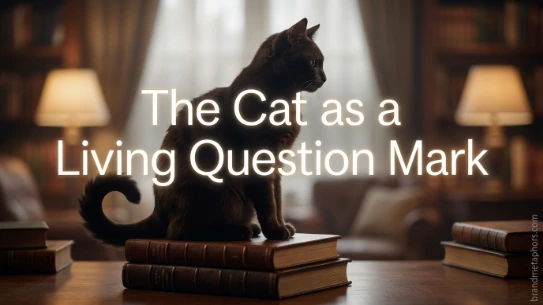
Cats are famously curious.
Their tilted heads, twitching ears, and investigative behavior make them seem full of questions.
Example Sentence
“She sat by the window, a living question mark studying the world outside.”
Alternative Expressions
- Bundle of curiosity
- Puzzle seeker
- Investigator in fur
- Explorer of mysteries
Emotional and Sensory Details
You can almost hear the soft chirps and curious meows as a cat examines a new object.
Real-Life Example
Anyone who has opened a box knows this metaphor is true. Before you can unpack it, your feline inspector is already investigating every corner.
Cat Metaphors in Literature and Storytelling
How Writers Use Feline Imagery
Authors frequently use cat metaphors to develop characters and moods.
A hero may move “like a cat through danger.”
A mysterious stranger might be described as “a cat waiting beside a mouse hole.”
These images instantly communicate personality traits.
Benefits for Storytelling
- Creates vivid imagery
- Builds atmosphere
- Reveals character traits
- Adds emotional depth
- Makes scenes memorable
Famous Themes
Cats often symbolize:
- Freedom
- Mystery
- Intelligence
- Patience
- Independence
These themes appear across myths, novels, poems, and folklore.
The Cat as a Velvet Ghost
Meaning and Symbolism
This metaphor combines softness and mystery.
A velvet ghost suggests a creature that moves quietly while remaining elegant and beautiful.
Example Sentence
“The cat drifted through the hallway, a velvet ghost beneath the dim lights.”
Alternative Expressions
- Silken spirit
- Whispering phantom
- Floating shadow
- Midnight visitor
Emotional Details
The image feels peaceful rather than frightening. It emphasizes smooth movement and quiet presence.
Storytelling Use
This metaphor works especially well in poetry, fantasy stories, and descriptive essays.
Using Cat Metaphors in Social Media Content
Making Posts More Engaging
Creative language captures attention.
Instead of posting:
“My cat is sleeping.”
Try:
“My furry cloud has claimed the couch kingdom once again.”
The second version creates a stronger visual image.
Sample Captions
- “The tiny tiger is patrolling the house.”
- “A shadow with whiskers guards the window.”
- “The couch belongs to the furry monarch.”
- “Today’s mission: follow the velvet ghost.”
Why It Works
Readers remember images more than plain facts. Metaphors encourage shares, comments, and engagement.
The Cat as a Furry Monarch
Meaning and Symbolism
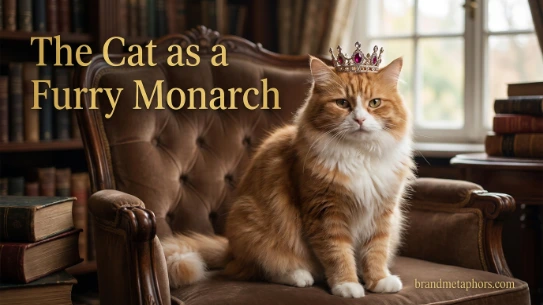
Many cats act as though they own the entire home.
This behavior inspires royal imagery.
Example Sentence
“The furry monarch inspected her kingdom from atop the bookshelf.”
Alternative Expressions
- Whiskered king
- Household queen
- Tiny ruler
- Throne keeper
Emotional and Sensory Details
Picture a cat sitting high above everyone else, observing the room with calm confidence.
Mini Story
A family joked that their cat controlled household schedules. Breakfast happened when she demanded it. Bedtime arrived when she occupied someone’s pillow. She truly behaved like royalty.
Creative Writing Exercises Using Cat Metaphors
Exercise One: Build a Character
Choose a metaphor:
- Shadow
- Tiger
- Ghost
- Monarch
Write a paragraph describing a cat entirely through that image.
Exercise Two: Create Your Own Comparison
Finish this sentence:
“My cat is a __________.”
Try to avoid common answers.
Exercise Three: Story Starter
Write about a cat entering a room.
Use three metaphors in the first paragraph.
Exercise Four: Social Media Challenge
Create five creative captions using feline imagery.
Aim for fewer than twenty words each.
Exercise Five: Observation Journal
Watch a cat for ten minutes.
Write down:
- Movements
- Sounds
- Expressions
- Behaviors
Turn your observations into metaphors.
The Cat as a Clock with Fur
Meaning and Symbolism
Cats often follow predictable routines.
They know exactly when meals arrive.
Example Sentence
“The clock with fur appeared beside the food bowl at precisely six o’clock.”
Alternative Expressions
- Fuzzy alarm clock
- Timekeeper
- Daily scheduler
- Routine master
Emotional Details
Pet owners often laugh at how accurately cats track time.
Real-Life Connection
Many people discover that their cats know breakfast time better than any watch.
Bonus Tips for Using Cat Metaphors Effectively
Match the Mood
Choose metaphors that fit the scene.
A playful moment may need a humorous image.
A nighttime scene may need a mysterious one.
Avoid Overuse
Too many metaphors can overwhelm readers.
Use them strategically for maximum impact.
Focus on Specific Traits
Ask yourself:
What quality am I highlighting?
- Curiosity?
- Grace?
- Strength?
- Independence?
Choose imagery that supports that quality.
Use Sensory Details
Combine metaphors with sights, sounds, and textures.
This creates richer descriptions.
Experiment with Original Ideas
Fresh comparisons stand out more than common ones.
Readers enjoy unexpected imagery.
Building Your Own Unique Cat Metaphors
Finding Inspiration
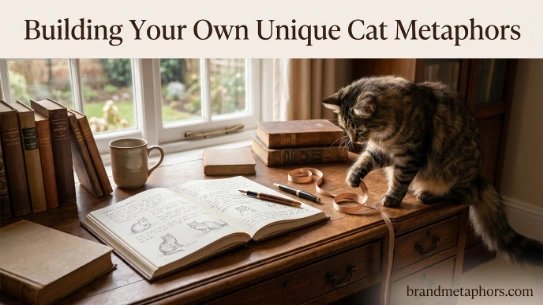
Observe feline behavior carefully.
Notice:
- Tail movements
- Eye contact
- Sleeping habits
- Hunting instincts
- Social interactions
Each behavior can inspire original comparisons.
Simple Formula
Use:
Cat Trait + Unexpected Image = Unique Metaphor
Examples:
- Curiosity + Compass = “A compass wrapped in fur.”
- Patience + Statue = “A living statue beside the window.”
- Agility + Water = “A stream flowing across furniture.”
Practice Prompt
Write ten original comparisons without judging them.
Creativity grows through experimentation.
Long-Term Benefits
Developing original metaphors improves:
- Creative writing
- Poetry
- Blogging
- Storytelling
- Communication skills
The more you practice, the easier vivid language becomes.
Conclusion
Cats inspire imagination unlike almost any other animal. They can be shadows, tigers, monarchs, ghosts, clocks, explorers, and countless other things in the world of figurative language. These creative comparisons transform simple descriptions into memorable images that capture attention and emotion.
Whether you are writing fiction, creating social media captions, crafting poetry, or simply looking for a more colorful way to describe your pet, feline metaphors offer endless possibilities. By observing real behavior, experimenting with original imagery, and practicing regularly, you can develop descriptions that feel fresh and engaging.
The next time a cat silently crosses a room or curls up in a patch of sunlight, look beyond the ordinary. You may discover a new metaphor waiting to be written.
FAQs
What is a metaphor for a cat?
A metaphor for a cat is a creative comparison that describes a cat as something else, such as a shadow, tiny tiger, velvet ghost, or furry monarch.
Why are cats often used in metaphors?
Cats possess qualities such as mystery, grace, independence, and curiosity, making them ideal subjects for vivid figurative language.
How can cat metaphors improve writing?
They create stronger imagery, engage readers, add emotion, and make descriptions more memorable.
Can cat metaphors be used in social media posts?
Yes. Creative comparisons make captions more entertaining, shareable, and visually appealing.
How do I create my own cat metaphor?
Observe a cat’s behavior, identify a key trait, and compare it to an unexpected object, creature, or concept that shares similar qualities.