
Autumn arrives quietly.
One morning, the air feels cooler. The trees seem to glow with gold and amber. Leaves drift from branches like tiny dancers saying goodbye. The scent of earth and wood smoke lingers in the breeze. It feels as though the world is turning a page.
This season has inspired poets, storytellers, songwriters, and everyday writers for centuries. Fall is more than a change in weather. It represents transition, maturity, reflection, beauty, and even letting go. Because of these rich meanings, writers often use metaphors for fall to capture emotions and paint vivid pictures.
A metaphor compares one thing to another without using “like” or “as.” It transforms ordinary descriptions into memorable images. Instead of saying autumn is beautiful, you might say, “Fall is nature’s farewell letter.” Suddenly, readers can see and feel the season in a deeper way.
In this guide, you’ll discover powerful metaphors for fall, learn how to use them effectively, explore creative examples, and practice crafting your own autumn-inspired imagery. Whether you’re writing poetry, social media captions, stories, speeches, or journal entries, these metaphors can help bring your words to life.
Why Metaphors for Fall Are So Powerful
The Emotional Connection of Autumn
Fall naturally evokes emotion. It reminds people of change, memories, and the passing of time.
When writers use metaphors, they tap into these feelings. A simple scene of falling leaves can become a symbol of growth, aging, or transformation.
For example:
“The forest wore a cloak of gold.”
Instead of merely describing color, the metaphor gives the forest personality and elegance.
Why Writers Love Autumn Imagery
Autumn offers endless inspiration because it contains contrasts:
- Beauty and decay
- Warmth and cold
- Growth and rest
- Endings and beginnings
These contrasts make fall one of the richest seasons for metaphorical language.
Fall as Nature’s Farewell Letter
Meaning of the Metaphor
One of the most popular metaphors for fall is viewing it as a farewell letter from nature.
The trees release their leaves as if writing final messages before winter arrives. Each leaf becomes a colorful sentence drifting toward the ground.
Example in Writing
“Fall was nature’s farewell letter, written in shades of crimson and gold.”
Alternative Expressions
- Nature’s goodbye note
- The earth’s final message
- A seasonal farewell
Mini Storytelling Example
Imagine walking through a quiet park. Leaves rustle beneath your feet. A red maple leaf lands on your jacket. It feels as though nature has handed you one final note before winter closes the chapter.
Sensory Details
- Crisp air
- Rustling leaves
- Warm afternoon sunlight
- Fading floral scents
Fall as a Golden Symphony
Meaning of the Metaphor
A symphony combines many instruments into one beautiful performance. Likewise, autumn combines colors, sounds, and textures into a grand seasonal masterpiece.
Example Sentence
“Autumn was a golden symphony playing across the hills.”
Alternative Ways to Express It
- A seasonal orchestra
- Nature’s concert
- A harvest melody
Literary Inspiration
Many poets describe autumn through music because falling leaves, wind, and rustling trees create natural rhythms.
Emotional Effect
This metaphor conveys harmony, beauty, and movement.
Readers can almost hear the season unfolding.
Fall as a Painter’s Masterpiece
Meaning of the Metaphor
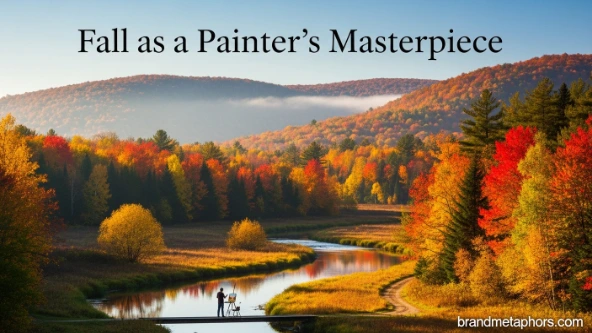
Autumn transforms landscapes into vibrant works of art.
The reds, oranges, yellows, and browns resemble brushstrokes across a giant canvas.
Example Sentence
“The valley became a painter’s masterpiece beneath the autumn sky.”
Alternative Expressions
- Nature’s gallery
- A living canvas
- The artist’s final exhibit
Real-Life Example
Many tourists travel great distances to see autumn foliage because entire forests resemble giant paintings.
Writing Tip
Use color-specific details:
- Amber
- Scarlet
- Bronze
- Copper
- Gold
Specific colors make metaphors more vivid.
Fall as Life’s Second Act
Meaning of the Metaphor
Fall often symbolizes maturity and wisdom.
Just as autumn comes after summer, later stages of life follow youth.
Example Sentence
“Grandfather entered the autumn of his life with grace and wisdom.”
Alternative Expressions
- Life’s golden season
- The season of reflection
- A mature harvest
Mini Story
An elderly woman sits on her porch, watching leaves fall. She smiles while recalling decades of memories. Like the trees around her, she has weathered many seasons and become stronger because of them.
Emotional Impact
This metaphor communicates wisdom, experience, and acceptance.
Fall as a Cozy Blanket
Meaning of the Metaphor
As temperatures drop, fall often feels comforting rather than harsh.
The season wraps people in warmth through sweaters, blankets, hot drinks, and glowing fireplaces.
Example Sentence
“Autumn spread a cozy blanket across the countryside.”
Alternative Expressions
- A warm embrace
- Nature’s comforter
- A soft seasonal quilt
Sensory Experience
Think about:
- Warm cider
- Wool sweaters
- Crackling fires
- Soft scarves
These images strengthen the metaphor.
Social Media Caption Example
“Wrapped in autumn’s cozy blanket and loving every moment.”
Fall as a Bridge Between Seasons
Meaning of the Metaphor
A bridge connects two places.
Fall connects summer’s warmth to winter’s cold.
Example Sentence
“Autumn stood as a bridge between sunshine and snowfall.”
Alternative Expressions
- A seasonal pathway
- Nature’s transition point
- The gateway to winter
Why This Metaphor Works
Fall represents change.
People often use it when discussing transitions in life, careers, or relationships.
Practical Writing Application
Use this metaphor when writing about:
- New beginnings
- Personal growth
- Career changes
- Life milestones
Fall as a Treasure Chest
Meaning of the Metaphor
Autumn is full of valuable gifts.
Harvests, colors, traditions, and memories make the season feel rich and abundant.
Example Sentence
“The countryside opened like a treasure chest filled with autumn jewels.”
Alternative Expressions
- Nature’s vault
- A seasonal collection of gems
- The harvest chest
Cultural Connection
Harvest festivals around the world celebrate abundance and gratitude, making this metaphor especially meaningful.
Emotional Detail
This metaphor creates feelings of appreciation and wonder.
Fall as a Slow Dance
Meaning of the Metaphor
Leaves drift gently through the air.
The movement resembles dancers gracefully crossing a stage.
Example Sentence
“The leaves performed a slow dance with the wind.”
Alternative Ways to Say It
- Nature’s waltz
- Autumn ballet
- The dance of seasons
Mini Storytelling Scene
A child watches leaves swirling in circles during a windy afternoon. The leaves spin and twirl like dancers at a grand ball.
Why Readers Love It
Movement makes writing feel alive.
This metaphor adds elegance and motion.
Fall as a Book of Memories

Meaning of the Metaphor
Many people become reflective during autumn.
The season encourages looking back and appreciating experiences.
Example Sentence
“Autumn opened a book of memories, each leaf a forgotten page.”
Alternative Expressions
- Memory album
- Seasonal journal
- The scrapbook of nature
Emotional Connection
This metaphor works especially well in:
- Personal essays
- Memoirs
- Journal writing
- Reflective poetry
Writing Tip
Connect specific memories to sensory details for greater emotional impact.
Creative Exercises for Using Metaphors for Fall
Exercise 1: Complete the Sentence
Finish these metaphors:
- Fall is a __________.
- Autumn is a __________.
- The leaves are __________.
- The wind is __________.
Challenge yourself to avoid common answers.
Exercise 2: Five-Sense Writing
Describe autumn using:
- Sight
- Sound
- Smell
- Taste
- Touch
Then turn those observations into metaphors.
Exercise 3: Personal Autumn Metaphor
Ask yourself:
What does fall remind me of?
Possible answers:
- Childhood
- Family gatherings
- Change
- Achievement
- Reflection
Create a metaphor based on your answer.
Bonus Tips for Using Fall Metaphors in Writing and Social Media
Make Metaphors Specific
Instead of saying:
“Fall is beautiful.”
Write:
“Fall is a painter scattering gold across the hills.”
Specific images create stronger reactions.
Match the Mood
Choose metaphors that fit your message.
happiness:
- Golden symphony
- Treasure chest
nostalgia:
- Book of memories
- Farewell letter
change:
- Bridge between seasons
- Life’s second act
Use Social Media-Friendly Versions
Examples:
- “Autumn is nature’s masterpiece.”
- “Leaves are love letters from the trees.”
- “Fall is a golden goodbye.”
- “Autumn writes poetry in every color.”
Avoid Overloading Your Writing
One strong metaphor often works better than several weak ones.
Let each image breathe.
Building Your Own Original Metaphors for Fall
Start with Observation
Look carefully at autumn.
Notice:
- Colors
- Sounds
- Weather
- Feelings
Ask Creative Questions
What does a falling leaf resemble?
What does autumn feel like emotionally?
That human experience mirrors the season?
Combine Ideas
Example:
Leaves + Letters = Farewell Letter
Colors + Painting = Masterpiece
Change + Journey = Bridge
Practice Daily
Write one autumn metaphor every day.
Over time, creating vivid imagery becomes easier and more natural.
Frequently Asked Questions About Metaphors for Fall
What is a metaphor for fall?
A metaphor for fall is a figurative comparison that describes autumn as something else, such as a farewell letter, golden symphony, cozy blanket, or painter’s masterpiece.
Why is fall commonly used in metaphors?
Fall naturally symbolizes change, maturity, reflection, beauty, and transition, making it ideal for metaphorical writing.
How can I create my own fall metaphor?
Observe the season closely, identify emotions or images it evokes, and connect those ideas creatively to another object, experience, or concept.
Are fall metaphors useful for social media captions?
Yes. Short metaphors such as “Autumn is nature’s masterpiece” or “Leaves are golden confetti” work especially well on social media.
What are the most popular metaphors for fall?
Popular choices include:
- Nature’s farewell letter
- A golden symphony
- A painter’s masterpiece
- A cozy blanket
- A book of memories
Conclusion
Fall is much more than a season. It is a storyteller, an artist, a musician, and a teacher. Through metaphors, ordinary autumn scenes become powerful symbols of change, beauty, wisdom, and reflection.
Whether you see autumn as a golden symphony, a cozy blanket, a treasure chest, or a farewell letter, metaphors help transform simple observations into memorable experiences. They allow readers to feel the crunch of leaves beneath their feet, hear the whisper of the wind, and sense the deeper meanings hidden within the changing landscape.
The next time autumn arrives, pause for a moment. Watch a leaf drift from a branch. Listen to the breeze move through the trees. Then ask yourself: What metaphor is unfolding before my eyes? The answer might inspire your most beautiful writing yet.