

The River of Human Thought
Why Language Feels Bigger Than Words
Imagine standing in a crowded market at sunset. Voices rise like birds into the warm air. A child laughs. Two strangers argue gently over fruit prices. Someone whispers a prayer. Someone sings half a song while carrying tea. None of these sounds are just noise. They are bridges, mirrors, flames, maps, and music all at once.
Language is more than vocabulary and grammar. It is the invisible thread that ties people together. Through language, we confess love, declare war, comfort grief, and build dreams. Yet plain definitions often fail to capture its emotional depth. That is why metaphors for language matter so much. They help us understand something abstract by comparing it to something vivid and familiar.
Writers, poets, teachers, and storytellers have long used metaphors to explain the power of communication. Some describe language as a river carrying ideas across generations. Others call it a key that unlocks hidden worlds. These comparisons make language feel alive rather than mechanical.
In this article, you will explore powerful metaphors for language, learn how to use them creatively, and discover ways they can improve your writing, speaking, and storytelling. Along the way, you will find examples, mini stories, practical exercises, and imaginative prompts that make the journey enjoyable and memorable.
Language as a Bridge
Connecting Hearts, Cultures, and Minds
One of the most common metaphors for language is the bridge. A bridge links two separate places, just as language connects one person’s thoughts to another’s understanding.
When people from different cultures speak kindly to each other, language becomes a bridge over fear and misunderstanding. A simple greeting can soften tension. A heartfelt apology can repair years of silence.
Example
“Her words became a bridge across their long years of conflict.”
This metaphor suggests communication repaired emotional distance.
Alternative Ways to Express It
- Language builds bridges
- Words connect worlds
- Speech creates pathways
- Conversation closes distances
Sensory Detail
Imagine a wooden bridge over a misty river at dawn. Each spoken sentence becomes another plank added carefully into place.
Mini Storytelling Example
A traveler lost in a foreign city struggled to ask for directions. Most people hurried past. Then an old shopkeeper smiled and spoke slowly in broken English. Their shared words were imperfect, but enough. In that moment, language became a bridge stronger than fluency.
Bonus Tip for Writers
Use the bridge metaphor when writing about reconciliation, friendship, diplomacy, or emotional healing. It works especially well in speeches and social media captions about unity.
Language as a Mirror
Reflecting Identity and Emotion
Language often reflects who we are. The words people choose reveal education, culture, mood, personality, and even hidden fears. That is why many writers compare language to a mirror.
A mirror shows both beauty and flaws. In the same way, language reflects inner truth.
Example
“His poetry was a mirror of his restless soul.”
The metaphor suggests the writer’s emotions appeared clearly through his words.
Alternative Expressions
- Words reveal the heart
- Speech reflects identity
- Language exposes emotion
- Vocabulary becomes a reflection
Emotional Detail
Think of fog gathering on a mirror after a hot shower. Sometimes language works like that too. Emotions blur meaning until clarity slowly returns.
Cultural Reference
In many classic novels, characters are recognized by how they speak. In Pride and Prejudice, speech patterns reveal class, confidence, and personality without direct explanation.
Interactive Exercise
Write three sentences describing yourself:
- One formal
- One playful
- One emotional
Notice how each version reflects a different side of your identity.
Language as Music
Rhythm, Melody, and Emotional Flow
Some sentences dance. Others crash like drums. Certain voices calm us like soft piano notes. Because of this emotional rhythm, language is often compared to music.
This metaphor highlights the sound and flow of communication rather than just meaning.
Example
“Her voice carried the music of comfort.”
Alternative Ways to Express It
- Words sing
- Speech has rhythm
- Conversation flows like melody
- Language creates harmony
Sensory Experience
Think about the difference between:
- sharp, clipped commands
- slow, smooth storytelling
- energetic public speaking
Each creates a different emotional soundtrack.
Literary Example
Poets such as William Shakespeare and Maya Angelou used rhythm to make language unforgettable.
Practice Prompt
Read one paragraph from your favorite book aloud. Listen for:
- rhythm
- pauses
- repetition
- emotional tone
Notice how language sounds like music even without instruments.
Social Media Tip
Short rhythmic phrases perform well online because they are memorable:
- “Words heal. Silence hurts.”
- “Speak gently. Echoes last.”
Language as a Key

Unlocking Knowledge and Opportunity
A key opens doors that would otherwise stay closed. In the same way, language unlocks opportunities, relationships, and understanding.
Learning a new language often feels like discovering hidden rooms in the world.
Example
“Education gave her the language key to a brighter future.”
Alternative Expressions
- Words unlock possibilities
- Language opens doors
- Communication reveals hidden worlds
- Speech grants access
Real-Life Example
A student learns English and suddenly gains access to international books, careers, and friendships. The language becomes a literal key to new experiences.
Emotional Layer
Keys are small, but powerful. A single encouraging sentence can unlock confidence in someone who feels invisible.
Interactive Exercise
Write down:
- one phrase that motivated you
- one phrase that discouraged you
Think about how words unlocked or closed emotional doors in your life.
Language as a River
The Endless Flow of Human Expression
Language constantly changes. Slang evolves. Meanings shift. New words appear while old phrases fade away. Because of this movement, language is often compared to a river.
A river flows through generations carrying stories, traditions, and emotions.
Example
“The river of language carried ancient wisdom into modern times.”
Alternative Expressions
- Words flow endlessly
- Speech moves like water
- Conversation streams forward
- Language never stands still
Sensory Detail
Picture a river sparkling under sunlight. Sometimes it moves calmly. Sometimes it rushes violently after storms. Human communication behaves the same way.
Historical Reference
Languages such as Latin transformed over centuries into modern languages including Spanish, French, and Italian. Like rivers splitting into branches, language evolves naturally.
Writing Exercise
Choose one old phrase from your grandparents’ generation and compare it with modern slang. Observe how language changes over time.
Bonus Writing Tip
River metaphors work beautifully in reflective essays and poetic storytelling because they create movement and emotional depth.
Language as Fire
The Power to Warm or Destroy
Fire can cook food, provide warmth, and light darkness. Yet it can also burn forests and homes. Language holds the same dual power.
Words can inspire revolutions or start conflicts. A compliment may stay in someone’s heart for years. An insult may wound just as deeply.
Example
“His angry words spread like wildfire through the crowd.”
Alternative Expressions
- Speech sparks emotion
- Words ignite change
- Language burns deeply
- Conversation fuels passion
Emotional Impact
Think about receiving unexpected praise after a difficult day. The warmth lingers like sitting beside a fire on a cold night.
Now imagine harsh criticism shouted publicly. The emotional burn can last much longer.
Literary Connection
In dystopian novels like Fahrenheit 451, language and books are portrayed as dangerous flames capable of changing society.
Practice Prompt
Write:
- one sentence that comforts
- one sentence that provokes anger
Notice how different emotional “temperatures” appear in language.
Language as a Garden
Growing Meaning Through Care
A garden does not bloom overnight. It needs patience, attention, and nurturing. Language works the same way.
Vocabulary grows gradually. Conversations deepen over time. Relationships flourish through thoughtful communication.
Example
“She cultivated her language like a careful gardener.”
Alternative Expressions
- Words bloom beautifully
- Communication grows naturally
- Speech requires nurturing
- Language bears fruit
Sensory Description
Imagine the smell of wet soil after rain. Picture colorful flowers opening slowly in morning sunlight. Rich communication develops with similar patience and care.
Real-Life Example
Teachers often plant “seeds” of confidence through encouraging language. Years later, students still remember those words.
Interactive Exercise
Create a “word garden”:
- Write five beautiful words
- Write five comforting phrases
- Write five inspiring expressions
Use them intentionally during the week.
Bonus Tip for Daily Life
Positive language strengthens friendships, workplaces, and families. Small verbal habits grow into emotional climates.
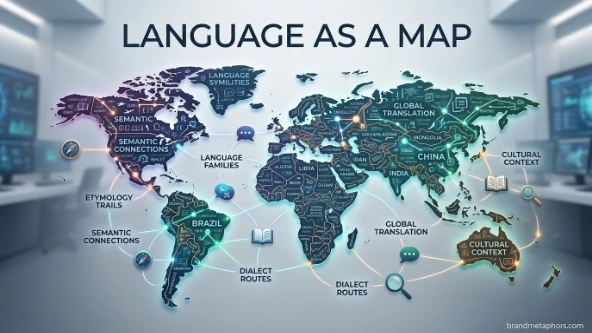
Language as a Map
Guiding Understanding and Direction
Maps help travelers avoid getting lost. Language guides people through ideas, emotions, and information in much the same way.
Clear communication provides direction. Confusing language creates chaos.
Example
“Her explanation became a map through the difficult subject.”
Alternative Expressions
- Words guide the journey
- Language provides direction
- Communication charts a path
- Speech navigates confusion
Mini Story Example
A nervous patient sat silently in a hospital office, overwhelmed by medical terms. Then a doctor explained everything using simple words and calm examples. Suddenly fear faded. Language became a map through uncertainty.
Practical Writing Tip
When explaining complex ideas:
- use short sentences
- add examples
- guide readers step by step
Good writers act like navigators.
Practice Prompt
Explain how to make tea in the clearest way possible. Notice how language guides action.
Language as a Window
Seeing Into Other Worlds
Windows allow people to see beyond their immediate surroundings. Language does the same thing emotionally and culturally.
Books, songs, films, and conversations let us experience lives we have never lived.
Example
“Literature became a window into another culture.”
Alternative Expressions
- Words reveal hidden worlds
- Language expands vision
- Stories open perspectives
- Communication invites understanding
Cultural Reference
Reading The Kite Runner allows readers to glimpse the emotional and cultural realities of Afghanistan through storytelling.
Emotional Detail
A window lets in both sunlight and storms. Language also introduces joy, grief, hope, and empathy into our lives.
Interactive Exercise
Read one poem or article written by someone from another culture. Write down:
- one surprising detail
- one emotional connection
- one new perspective
Language as a Living Creature
Breathing, Growing, and Changing
Some people describe language as a living thing because it evolves constantly. It adapts to technology, culture, migration, and creativity.
New slang appears online daily. Old expressions disappear quietly. Language breathes alongside society.
Example
“English is a living creature that never stops evolving.”
Alternative Expressions
- Language grows organically
- Words evolve naturally
- Speech adapts with time
- Communication lives and breathes
Real-Life Example
Social media has created entirely new forms of communication:
- emojis
- abbreviations
- internet slang
- memes
These modern expressions show language adapting to digital life.
Writing Prompt
Invent three new words and define them creatively. Imagine how future generations might use them.
Bonus Tip for Social Media
Playful language often attracts attention online. Creative metaphors and fresh expressions make posts memorable and shareable.
Creative Ways to Use Metaphors for Language
Bringing Writing and Speech to Life
Understanding metaphors is useful, but applying them creatively is even more powerful.
Here are three practical strategies for using metaphors for language effectively.
Match the Metaphor to Emotion
Use:
- fire for passion or anger
- rivers for reflection
- bridges for connection
- music for emotional flow
The right metaphor strengthens emotional impact.
Avoid Overused Comparisons
Instead of saying: “Words cut like knives”
Try: “His words fell like cold rain through the room.”
Fresh imagery feels more memorable.
Combine Sensory Details
Strong metaphors often include:
- sound
- texture
- movement
- temperature
- color
For example: “Her language wrapped around the audience like warm velvet.”
Practice Challenge
Write one metaphor for language using:
- weather
- animals
- space
- food
- light
This exercise expands creativity quickly.
Conclusion
The Endless Beauty of Human Expression
Language is never just language. It is a bridge between strangers, a mirror of identity, a river of history, and a fire capable of warmth or destruction. Through metaphors, we begin to see communication not as dry grammar rules but as something alive, emotional, and deeply human.
The beauty of metaphors for language lies in their ability to transform ordinary understanding into vivid experience. They help writers create memorable imagery, speakers communicate emotion, and readers connect more deeply with ideas.
Whether you describe language as music, a garden, or a window into other worlds, these comparisons reveal the extraordinary power hidden inside everyday words. All conversation carries possibility. Every sentence shapes emotion. Every story leaves an echo.
So the next time you speak, write, or listen carefully, remember this: language is not merely a tool. It is one of humanity’s greatest living works of art.
FAQs About Metaphors for Language
What are metaphors for language?
Metaphors for language are creative comparisons that describe language using vivid imagery, such as bridges, rivers, music, or fire. They help explain communication in emotional and imaginative ways.
Why are metaphors important in writing?
Metaphors make writing more engaging, emotional, and memorable. They help readers visualize ideas and connect more deeply with the message.
How can I create original metaphors?
Observe everyday objects, emotions, and experiences. Compare language to something unexpected yet meaningful, such as weather, light, or nature.
Are metaphors useful in everyday conversation?
Yes. Metaphors make communication more expressive and relatable. They can simplify difficult ideas and add emotional richness to speech.
What is the difference between a metaphor and a simile?
A metaphor directly compares two things, while a simile uses words like “as” or “like.” For example:
- Metaphor: “Language is a river.”
- Simile: “Language flows like a river.”