
The Music Hidden Inside Every Burst of Joy
A laugh can enter a room before a person does. It can crack through silence like lightning, ripple through a crowd like waves touching a shoreline, or bloom softly like flowers opening after rain. Think about the last time you laughed so hard your stomach hurt. Maybe it happened during a late-night conversation with friends, a childhood memory, or a tiny unexpected moment that turned ordinary life into something unforgettable.
Laughing is more than sound. It is emotion escaping the body. Writers, poets, storytellers, and everyday speakers often use metaphors for laughing to make emotions feel vivid and alive. Instead of simply saying “she laughed,” they compare laughter to waterfalls, bells, storms, sunshine, fireworks, or even dancing birds. These comparisons help readers hear the laughter, feel its energy, and imagine its emotional color.
Metaphors for laughing are useful in storytelling, poetry, social media captions, speeches, and daily conversation. They add warmth, humor, personality, and creativity to language. A simple metaphor can turn a plain sentence into something memorable and cinematic.
In this article, you will explore powerful metaphors for laughing, discover how they work, learn how to use them naturally, and practice creating your own. Along the way, you will find examples, mini stories, creative prompts, and writing tips that make language sparkle with emotion.
Why Metaphors for Laughing Make Writing More Powerful
Laughter Becomes Visible Through Imagery
When someone says, “Her laughter was a waterfall,” you instantly imagine movement, energy, and unstoppable emotion. A metaphor paints a picture instead of delivering plain information.
Simple descriptions tell readers what happened. Metaphors help readers experience it.
For example:
- Plain sentence: “He laughed loudly.”
- Metaphorical sentence: “His laughter thundered through the room.”
The second sentence creates sound, atmosphere, and emotional intensity.
Metaphors Add Emotional Texture
Different metaphors create different feelings.
- A laugh compared to wind chimes feels soft and delicate.
- A laugh compared to fireworks feels explosive and joyful.
- A laugh compared to an engine may sound rough or mechanical.
The metaphor shapes the mood.
They Make Dialogue and Stories Memorable
Readers often remember images more than facts. A unique metaphor gives personality to characters and scenes.
Imagine reading:
“Her laugh skipped across the café like sunlight on water.”
That image stays in the mind much longer than “She laughed happily.”
Laughter as Music: Metaphors That Sing
“Her Laugh Was a Songbird at Dawn”
This metaphor compares laughter to birds singing in the morning. It suggests freshness, hope, and beauty.
Meaning and Emotional Effect
- Cheerful
- Lighthearted
- Natural and bright
Example Sentence
“Her laugh fluttered through the garden like a songbird greeting the sunrise.”
Alternative Expressions
- Her laughter chimed like silver bells.
- His laugh danced like piano notes.
- Their laughter echoed like festival drums.
Mini Story Example
A grandmother sits on a wooden porch while children chase fireflies nearby. Suddenly, one child trips into a pile of leaves and bursts into giggles. The grandmother’s laugh rises behind them, soft and musical, blending with the evening crickets.
The moment feels alive because the laughter becomes part of the landscape.
Writing Tip
Use musical metaphors when describing warm, comforting, or affectionate scenes.
Metaphors for Laughing That Compare It to Nature
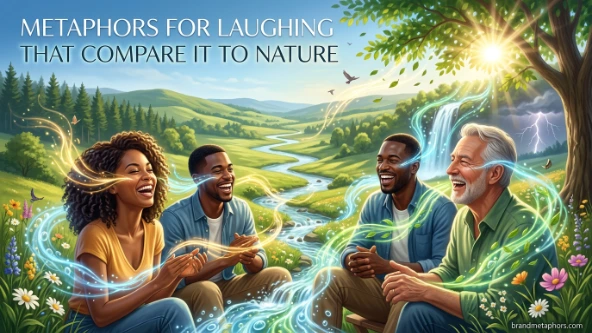
“His Laughter Was a Rolling Thunderstorm”
Nature metaphors create movement and energy.
Some laughter is gentle like rain. Some is wild like storms.
Meaning and Emotional Effect
This metaphor suggests:
- Loudness
- Power
- Uncontrollable emotion
Example Sentence
“His laughter rolled across the dinner table like thunder before summer rain.”
Alternative Ways to Say It
- Her laugh bubbled like a spring river.
- Their laughter exploded like fireworks in the night sky.
- His chuckle rustled like autumn leaves.
Sensory Detail
Nature metaphors help readers hear and feel the environment around the laughter.
For example:
“Their laughter crashed against the walls like ocean waves.”
You can almost hear the sound bouncing through the room.
Real-Life Connection
Think about family gatherings where one person laughs so loudly everyone else starts laughing too. That contagious energy feels almost weather-like, spreading through the space naturally.
Funny Metaphors for Laughing in Everyday Conversation
“She Laughed Like a Soda Bottle Exploding”
Humorous metaphors create playful imagery.
These are perfect for casual storytelling and social media captions.
Meaning
This comparison suggests sudden, energetic laughter bursting out unexpectedly.
Example Sentence
“The joke caught him off guard, and he laughed like a shaken soda bottle finally opened.”
Alternative Expressions
- He laughed like popcorn in a hot pan.
- Her giggles bounced like ping-pong balls.
- Their laughter spread like spilled glitter.
Bonus Tip for Social Media
Funny metaphors work well in captions because they are visual and relatable.
Example caption:
“We laughed like popcorn exploding in the microwave tonight.”
Short, vivid lines feel memorable online.
Interactive Exercise
Think of an object in your kitchen.
Now complete this sentence:
“My laugh sounded like __________.”
Try creating three unusual comparisons.
Soft and Gentle Metaphors for Laughing
“Her Laugh Was Falling Snow”
Not all laughter is loud. Some laughter feels delicate and comforting.
Soft metaphors create intimacy.
Meaning
This metaphor suggests:
- Quiet joy
- Calm emotion
- Tenderness
Example Sentence
“Her laugh drifted through the library like falling snow.”
Alternative Expressions
- His laughter floated like feathers.
- Her giggle shimmered like candlelight.
- Their laughter moved like silk in the wind.
Emotional Power
Gentle metaphors often appear in romantic scenes, reflective writing, or emotional storytelling.
They slow the pace and create warmth.
Literary Feel
Writers often use soft imagery when describing characters readers are meant to love or trust.
Compare:
- “She laughed loudly.”
- “Her laughter floated like warm smoke from a winter fire.”
The second line creates emotion and atmosphere together.
Dark or Sarcastic Metaphors for Laughing
“His Laugh Was Broken Glass”
Not every laugh is joyful.
Some laughter feels cold, bitter, fake, or dangerous.
Dark metaphors help writers describe emotional complexity.
Meaning
This metaphor suggests:
- Sharpness
- Cruelty
- Emotional discomfort
Example Sentence
“His laugh scraped across the room like broken glass.”
Alternative Expressions
- Her laughter hissed like steam escaping pipes.
- His chuckle creaked like an old door.
- Their laughter felt like smoke hiding a fire.
When to Use These Metaphors
These comparisons work well in:
- Villain descriptions
- Tense scenes
- Sarcastic dialogue
- Psychological storytelling
Cultural Reference
Many movie villains are remembered partly because of their unusual laughter. Writers often shape those laughs with disturbing imagery to create emotional unease.
Metaphors for Laughing in Poetry and Creative Writing
“Laughter Was Fireflies in the Dark”
Poetic metaphors focus more on beauty and emotion than realism.
They create atmosphere rather than literal description.
Meaning
This metaphor suggests hope and brightness appearing during sadness or darkness.
Example Sentence
“After weeks of grief, their laughter returned like fireflies blinking in the dark.”
Alternative Expressions
- Her laugh was moonlight on water.
- Their laughter bloomed like roses after rain.
- His chuckle flickered like lanterns in fog.
Why Poets Love Laughter Metaphors
Laughter is invisible. Metaphors make it visible.
Poets transform sound into:
- Light
- Motion
- Weather
- Music
- Color
This creates emotional richness.
Creative Exercise
Write one sentence comparing laughter to:
- A season
- A color
- A type of weather
Example:
“Her laughter felt like spring sunlight after endless winter.”
Powerful Metaphors for Laughing in Storytelling
“Their Laughter Was Wildfire”
Some laughter spreads quickly through groups.
One person starts giggling, then suddenly everyone joins in.
Meaning
This metaphor suggests contagious emotion.
Example Sentence
“Their laughter spread through the classroom like wildfire across dry grass.”
Alternative Expressions
- The laughter rippled like dominoes falling.
- Giggles bounced through the crowd like sparks.
- The joke traveled like electricity.
Real-Life Scenario
Imagine sitting in a quiet classroom during an exam. Someone accidentally drops a pencil box, and nervous laughter begins spreading from desk to desk. Within seconds, half the room is smiling.
That emotional chain reaction is why wildfire metaphors work so well.
Storytelling Tip
Use spreading metaphors when describing group laughter or emotional connection between characters.
Creative Ways to Invent Your Own Laughing Metaphors
Start With the Emotion
Ask yourself:
What kind of laughter is it?
- Happy?
- Nervous?
- Mean?
- Romantic?
- Awkward?
- Explosive?
The emotion guides the metaphor.
Match the Energy
Think about speed and sound.
A loud laugh may resemble:
- Thunder
- Fireworks
- Drums
A soft laugh may resemble:
- Rain
- Wind
- Candlelight
Use the Senses
Great metaphors often involve:
- Sound
- Texture
- Light
- Motion
- Temperature
For example:
“Her laughter crackled like a fireplace.”
You can almost hear and feel it.
Practice Prompt
Complete these lines:
- “His laugh moved through the room like…”
- “Her giggle sparkled like…”
- “Their laughter sounded like…”
Write without overthinking.
Unexpected ideas are often the best.
Best Metaphors for Laughing in Social Media and Modern Writing
Short Metaphors Create Big Impact
Modern readers love quick, vivid language.
Metaphors make captions, tweets, and short posts feel emotional and original.
Examples for Social Media
Playful
“We laughed like fireworks tonight.”
Romantic
“Her laugh felt like sunshine after rain.”
Funny
“I laughed like a kettle about to explode.”
Nostalgic
“Their laughter echoed like old summer memories.”
Bonus Tip
Keep social-media metaphors visual and short.
People remember images faster than explanations.
Interactive Challenge
Create a caption using one of these words:
- Ocean
- Lightning
- Glass
- Stars
- Coffee
Example:
“Her laughter was stronger than morning coffee.”
Three Detailed Metaphor Examples With Meanings and Variations
“Laughter Was a Fountain Overflowing”
Meaning
This metaphor suggests abundance, joy, and emotional release.
Example Scenario
At a wedding reception, the bride suddenly remembers a childhood joke. Her laughter spills out so naturally that everyone nearby starts smiling.
Alternative Expressions
- Laughter poured like rain.
- Joy bubbled like spring water.
- Giggles overflowed like a rushing stream.
Emotional Texture
This metaphor feels alive, fresh, and optimistic.
“His Laugh Was a Rusty Engine”
Meaning
This metaphor describes awkward, rough, or unusual laughter.
Example Scenario
A quiet man who rarely smiles suddenly laughs during dinner. The sound surprises everyone because it comes out rough and uneven.
Alternative Expressions
- His chuckle creaked like old wood.
- The laugh rattled like loose chains.
- His laughter coughed through the silence.
Writing Use
Perfect for eccentric characters or awkward moments.
“Her Giggle Was Champagne Bubbles”
Meaning
This metaphor suggests elegance, excitement, and sparkle.
Example Sentence
“Her giggle rose between conversations like champagne bubbles floating to the surface.”
Alternative Expressions
- Her laugh shimmered like diamonds.
- The giggle sparkled like city lights.
- Her laughter fizzed like soda.
Sensory Feeling
Readers can almost hear tiny popping sounds and imagine celebration.
Exercises to Practice Metaphors for Laughing
Exercise 1: Match the Mood
Choose a mood and invent a metaphor.
Moods
- Nervous
- Joyful
- Evil
- Romantic
- Childlike
Example:
“His nervous laugh fluttered like trapped birds.”
Exercise 2: Build a Scene
Write three sentences describing:
- A family dinner
- A school hallway
- A rainy café
Include at least one metaphor for laughing in each scene.
Exercise 3: Rewrite Plain Sentences
Turn these plain sentences into metaphorical ones.
Plain Sentences
- “She laughed softly.”
- “The group laughed loudly.”
- “He had a strange laugh.”
Possible Rewrite
“The group’s laughter exploded like fireworks across the rooftop.”
Bonus Tips for Using Laughing Metaphors Naturally
Avoid Overloading Every Sentence
Too many metaphors can overwhelm readers.
Choose moments that deserve emotional emphasis.
Match the Character and Tone
A poetic metaphor may not fit a serious detective scene.
Choose imagery that matches the atmosphere.
Use Fresh Comparisons
Avoid clichés when possible.
Instead of:
- “Laughing like a hyena”
Try:
- “Laughing like sparks escaping a fire.”
Read Your Sentence Out Loud
Laughter is sound-based, so rhythm matters.
If the metaphor sounds awkward aloud, revise it.
Conclusion
Laughter is one of the most human sounds in the world. It breaks tension, builds connection, heals sadness, and transforms ordinary moments into memories. Metaphors for laughing help writers capture that magic in ways simple descriptions cannot.
Whether laughter crashes like thunder, sparkles like champagne, drifts like snow, or spreads like wildfire, each metaphor reveals something unique about emotion and personality. These comparisons allow readers not only to understand laughter but to hear it, feel it, and see it moving through a scene.
The beauty of metaphor lies in creativity. There is no single correct comparison. Your own experiences, memories, and imagination can shape completely original ways to describe joy. The more you practice, the more naturally these images will appear in your writing and conversation.
So the next time someone laughs near you, pause for a moment. Listen carefully. Does it sound like music, rain, fireworks, or ocean waves? Somewhere inside that sound is a metaphor waiting to be discovered.
FAQs
What are metaphors for laughing?
Metaphors for laughing are creative comparisons that describe laughter by comparing it to something else, such as music, storms, fireworks, or flowing water.
Why should writers use metaphors for laughing?
They make writing more vivid, emotional, and memorable. Metaphors help readers imagine the sound, feeling, and energy of laughter.
Can metaphors for laughing be used in everyday conversation?
Yes. People often use playful metaphors naturally in speech, texting, social media captions, and storytelling.
What is an example of a poetic metaphor for laughing?
A poetic example is:
“Her laughter floated through the night like fireflies in summer darkness.”
How can I create my own laughter metaphors?
Focus on the emotion, sound, and energy of the laugh. Then compare it to something with a similar feeling, movement, or atmosphere.