
When Hatred Feels Like Fire in the Room
Imagine walking into a room where the air feels heavy. No one speaks loudly, yet tension crackles like sparks before a storm. A bitter glance lingers too long. A slammed door echoes harder than it should. Hatred often enters quietly before it erupts loudly.
It is one of the strongest human emotions—sharp, consuming, and difficult to ignore. Writers, poets, speakers, and storytellers have long used metaphors for hatred to describe its emotional weight. A metaphor turns abstract feelings into vivid images we can see, hear, and almost touch. Instead of simply saying “he was angry,” we say “rage boiled like lava beneath his skin.” Suddenly, the emotion becomes alive.
Understanding metaphors for hatred matters because they help us communicate powerful feelings with depth and creativity. They enrich storytelling, improve emotional writing, and allow readers to connect more deeply with characters and experiences. Whether you are crafting poetry, writing fiction, creating social media captions, or exploring emotions in everyday language, these metaphors can sharpen your expression.
In this article, you will explore imaginative and emotional metaphors for hatred, their meanings, examples, creative applications, and practical exercises to strengthen your writing voice.
Hatred as a Burning Fire
Fire is perhaps the most common metaphor for hatred because both spread quickly and destroy recklessly. Hatred can begin as a tiny spark of irritation and grow into an uncontrollable blaze.
Meaning and Symbolism
A fire consumes everything in its path. In the same way, hatred can consume relationships, peace, and rational thought. This metaphor highlights intensity, danger, and destruction.
Example Sentences
- “Hatred burned inside him like a forest fire.”
- “Her bitterness smoldered beneath every word.”
- “Their rivalry became an inferno no one could stop.”
Alternative Ways to Express It
- A volcano ready to erupt
- Scorching heat beneath the skin
- Flames licking through the heart
- Sparks of revenge
Sensory and Emotional Details
Think about the smell of smoke, the sting of heat, and the panic of spreading flames. These details make writing more immersive.
Mini Storytelling Example
In many revenge tales, hatred begins quietly. In Alexandre Dumas’ The Count of Monte Cristo, betrayal ignites a slow-burning fire that shapes the protagonist’s life. The flame of vengeance keeps him moving forward for years.
Bonus Writing Tip
When using fire metaphors, vary the intensity. A “spark” suggests irritation, while an “inferno” suggests uncontrollable rage.
Hatred as Poison in the Veins
Poison is another powerful metaphor because hatred often harms the person carrying it just as much as the target.
Meaning and Explanation
Poison spreads silently through the body. Hatred can work the same way, slowly infecting thoughts, relationships, and emotions.
Example Sentences
- “Jealous hatred poisoned his every thought.”
- “Bitterness dripped through her words like venom.”
- “The feud became toxic to everyone involved.”
Alternative Expressions
- Venom in the bloodstream
- Toxic thoughts
- Corrosion of the soul
- Emotional infection
Emotional Texture
Poison metaphors often create a cold, eerie feeling rather than explosive anger. They suggest hidden danger and gradual damage.
Real-Life Connection
History offers many examples of hatred poisoning societies through prejudice and division. Harmful ideologies often begin with small resentments that spread like contamination.
Creative Writing Exercise
Write about an argument using poison imagery only. Avoid direct words like “hate” or “anger.” Focus on slow corruption instead.
Hatred as a Dark Storm
Storm metaphors capture emotional chaos and unpredictability. Hatred rarely stays calm for long.
Meaning and Symbolism
Storms represent violence, confusion, and emotional turbulence. Hatred can arrive suddenly or gather slowly like thunderclouds.
Example Sentences
- “A storm of hatred gathered in his chest.”
- “Her fury thundered across the room.”
- “Their resentment crashed like violent waves.”
Alternative Comparisons
- Thunderclouds of rage
- Emotional hurricanes
- Lightning strikes of fury
- Tempest of bitterness
Sensory Elements
Add sounds and visuals:
- roaring thunder
- flashing lightning
- pounding rain
- darkened skies
These details create cinematic writing.
Literary Reference
In Shakespeare’s King Lear, storms often mirror emotional chaos and inner conflict. Nature reflects human hatred and madness.
Social Media Caption Idea
“Hatred is a storm that rarely leaves anything untouched.”
Hatred as Ice Around the Heart

Not all hatred burns. Some forms become cold, distant, and emotionally frozen.
Meaning and Interpretation
Ice metaphors describe emotional numbness, cruelty, and detached resentment. This type of hatred feels quiet yet deeply unsettling.
Example Sentences
- “His heart turned to ice after the betrayal.”
- “Her stare was colder than winter.”
- “Years of resentment froze their friendship solid.”
Alternative Expressions
- Frozen emotions
- Arctic silence
- Glacial resentment
- Frost-covered compassion
Emotional Effect
Cold metaphors create feelings of loneliness and emptiness rather than explosive rage.
Mini Storytelling Example
A former friend ignores messages for years after a painful betrayal. There are no arguments, no screaming matches—only silence colder than snow.
Bonus Tip for Writers
Use cold metaphors for characters who hide emotions beneath calm appearances.
Hatred as a Wild Beast
Hatred often feels uncontrollable, primal, and dangerous. Comparing it to an animal reveals its savage side.
Meaning and Symbolism
A beast symbolizes instincts without restraint. Hatred can overpower logic and unleash destructive behavior.
Example Sentences
- “Hatred growled inside him like a starving wolf.”
- “The beast of revenge awakened in her.”
- “Anger clawed at his patience.”
Alternative Animal Comparisons
- Snake of bitterness
- Rabid dog of fury
- Caged tiger of resentment
- Predator stalking revenge
Sensory Details
Describe snarling teeth, heavy breathing, sharp claws, or hunting eyes to intensify imagery.
Cultural Reference
In many myths and legends, monsters symbolize uncontrolled human emotions. Hatred often appears as dragons, wolves, or demons.
Interactive Prompt
Choose an animal that represents hatred to you. Write five sentences explaining why.
Hatred as Rot Beneath the Surface
Rotting imagery works well because hatred often grows secretly before becoming visible.
Meaning and Explanation
Rot suggests decay, corruption, and hidden damage. A relationship may appear healthy while resentment quietly destroys it from within.
Example Sentences
- “Hatred rotted their friendship from the inside.”
- “Bitterness spread like mold across the family.”
- “The town’s prejudice festered for generations.”
Alternative Expressions
- Emotional decay
- Corroded trust
- Mold of resentment
- Crumbling foundations
Emotional Tone
Rot imagery feels heavy, sad, and tragic rather than explosive.
Real-Life Example
Long-standing grudges in families often resemble slow decay. The damage grows gradually until communication collapses completely.
Writing Exercise
Describe a broken friendship using images of decay, rust, or crumbling walls.
Hatred as Chains and Prison Walls
Hatred often traps people emotionally. This metaphor emphasizes restriction and emotional captivity.
Meaning and Symbolism
Chains represent bondage. Hatred can imprison thoughts and prevent emotional freedom.
Example Sentences
- “He carried chains of hatred for years.”
- “Revenge locked her inside an emotional prison.”
- “Bitterness shackled his happiness.”
Alternative Comparisons
- Iron bars of resentment
- Prison of anger
- Locked emotional cages
- Heavy chains of revenge
Emotional Impact
This metaphor creates feelings of exhaustion and hopelessness.
Cultural Reflection
Many spiritual teachings describe hatred as a burden that imprisons the soul more than the enemy.
Bonus Tip
This metaphor works beautifully in motivational writing about forgiveness and healing.
Hatred as a Shadow Following Everywhere
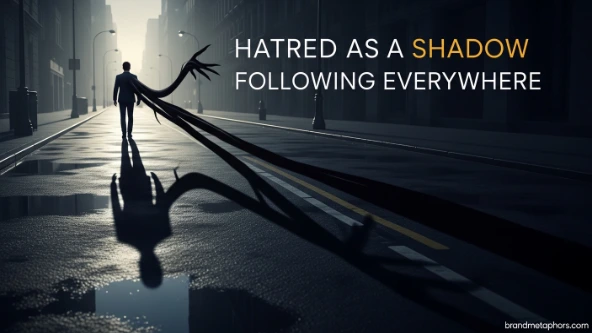
Shadow metaphors capture the lingering presence of hatred.
Meaning and Explanation
Shadows follow people silently and constantly. Hatred can haunt thoughts long after painful events end.
Example Sentences
- “Hatred followed him like a shadow.”
- “The memory cast darkness across her future.”
- “Resentment lingered in the corners of his mind.”
Alternative Expressions
- Darkness creeping behind
- Phantom bitterness
- Emotional ghosts
- Lingering shade of anger
Sensory Details
Use dim lighting, echoes, silence, or nighttime imagery to deepen atmosphere.
Literary Connection
In gothic literature, shadows often symbolize guilt, revenge, or hatred that refuses to disappear.
Creative Prompt
Write a scene where hatred literally appears as a shadow figure following someone through a city.
Hatred as a Weapon
Weapon metaphors emphasize emotional damage and conflict.
Meaning and Symbolism
Words fueled by hatred can cut as deeply as blades. This metaphor highlights aggression and pain.
Example Sentences
- “Her insults were knives sharpened by hatred.”
- “Bitterness became his weapon of choice.”
- “Their words fired like bullets across the table.”
Alternative Ways to Express It
- Daggers of resentment
- Emotional ammunition
- Sword of revenge
- Arrows dipped in venom
Emotional Tone
Weapon imagery creates intensity and confrontation.
Real-Life Observation
Online arguments often use weapon-like language. Harsh comments become emotional attacks rather than conversations.
Bonus Social Media Tip
Short, sharp metaphors work well online: “Hatred turns words into weapons.”
Hatred as an Endless Ocean
The ocean metaphor captures depth, danger, and emotional vastness.
Meaning and Explanation
Hatred can feel bottomless, overwhelming, and impossible to escape.
Example Sentences
- “He drowned in an ocean of resentment.”
- “Waves of hatred crashed through her thoughts.”
- “Their rivalry became a stormy sea without shore.”
Alternative Expressions
- Tidal waves of fury
- Deep waters of bitterness
- Whirlpool of revenge
- Endless emotional sea
Sensory Details
Describe crashing waves, cold water, sinking sensations, or roaring tides.
Mini Storytelling Example
A sailor lost at sea mirrors someone trapped in hatred—directionless, exhausted, and isolated from peace.
Interactive Exercise
Write three ocean-based metaphors for hatred using different moods:
- violent
- silent
- sorrowful
How to Use Metaphors for Hatred in Creative Writing
Strong metaphors do more than sound poetic. They deepen emotional impact and reveal character psychology.
Match the Metaphor to the Character
A fiery personality may suit flame imagery, while a cold, distant villain fits ice metaphors better.
Avoid Overusing One Image
Repeating “fire” too often weakens originality. Mix emotional textures.
Combine Senses
The best metaphors involve:
- sight
- sound
- smell
- touch
- movement
For example: “Hatred hissed through the room like steam escaping cracked pipes.”
Use Metaphors in Dialogue
Characters can reveal emotion indirectly:
- “You’ve poisoned everything.”
- “I’m tired of carrying this storm.”
Add Emotional Contrast
Hatred becomes more powerful when paired with softer emotions like love, guilt, or grief.
Interactive Exercises to Practice Hatred Metaphors
Creative practice helps metaphors feel natural instead of forced.
Exercise 1: Finish the Sentence
Complete these creatively:
- “Hatred spread through the town like…”
- “His anger slept beneath the surface like…”
- “Their rivalry tasted like…”
Exercise 2: Rewrite Plain Sentences
Turn this into vivid imagery:
- “She hated him deeply.”
Possible revision:
- “His name was acid on her tongue.”
Exercise 3: Build a Character Emotion Map
Choose:
- one color
- one weather pattern
- one animal
- one object
to symbolize your character’s hatred.
Exercise 4: Metaphor Challenge
Write a paragraph about hatred without using:
- hate
- anger
- rage
- fury
Rely entirely on imagery.
Exercise 5: Daily Observation
Notice emotional tension in movies, books, or conversations. Ask: “What metaphor could describe this feeling?”
Bonus Tips for Using Hatred Metaphors in Daily Life and Content Creation
Metaphors are not limited to novels and poetry. They work everywhere.
In Social Media Captions
Short emotional metaphors gain attention quickly.
Examples:
- “Bitterness is a cage disguised as armor.”
- “Hatred burns the hand holding the match.”
In Speeches and Essays
Metaphors make serious topics memorable and persuasive.
In Journaling
Using imagery can help process emotions safely and creatively.
In Fiction Writing
Metaphors create atmosphere and emotional depth instantly.
In Songwriting and Poetry
Hatred metaphors often become powerful recurring symbols throughout lyrics or poems.
Conclusion
Hatred is difficult to describe because it carries so many forms—burning rage, cold resentment, silent bitterness, explosive revenge. That is why metaphors matter. They transform invisible emotions into vivid experiences readers can feel deeply.
Whether hatred appears as fire, poison, storms, shadows, chains, or oceans, each metaphor reveals a different emotional truth. Some forms destroy loudly. Others decay quietly in darkness. By exploring these images, writers gain richer emotional language and stronger storytelling tools.
The beauty of metaphor lies in its ability to turn emotion into art. A single striking comparison can say more than a paragraph of explanation. When used thoughtfully, metaphors for hatred create unforgettable scenes, compelling characters, and emotional resonance that lingers long after the final sentence.
So the next time you write about resentment, conflict, or revenge, avoid simply saying a character is angry. Let the emotion roar like thunder, freeze like winter, or spread like poison through the veins of the story.
That is where language becomes alive.
FAQs About Metaphors for Hatred
What is a metaphor for hatred?
A metaphor for hatred compares hatred to another object, force, or experience to create vivid emotional imagery. Examples include fire, poison, storms, and ice.
Why are metaphors for hatred useful in writing?
They make emotions feel more vivid and relatable. Readers connect more strongly with imagery than simple emotional labels.
What is the most common metaphor for hatred?
Fire is one of the most common because hatred often feels intense, destructive, and difficult to control.
Can hatred metaphors be used in poetry?
Absolutely. Poets frequently use emotional metaphors to add symbolism, atmosphere, and emotional depth.
How can I create original metaphors for hatred?
Think about what hatred feels like physically or emotionally. Then connect it to nature, objects, animals, weather, or sensory experiences that share similar qualities.