
Introduction: The Trembling Cup in Your Hands
The room is quiet except for the soft hum of the ceiling fan. Your name is about to be called. Maybe it is for a speech, an interview, a difficult conversation, or a first date. Your palms grow damp. Your stomach tightens like a knotted rope. Thoughts scatter in every direction like frightened birds.
Nervousness is one of the most universal human emotions, yet it is surprisingly difficult to describe. Saying “I was nervous” often feels too small for what truly happens inside the body and mind. That is where metaphors become powerful. They transform invisible emotions into vivid images readers can see, hear, and feel.
Metaphors for nervousness help writers create emotional depth, help speakers communicate more honestly, and help everyday people explain experiences that ordinary language cannot fully capture. A student may describe anxiety as “a swarm of bees buzzing in the chest.” A novelist may compare fear to “thin ice cracking beneath every step.” Suddenly, the emotion becomes alive.
In this article, you will explore creative metaphors for nervousness, learn how to use them in writing and daily life, discover storytelling techniques, and practice crafting your own emotional imagery. Whether you are a student, blogger, poet, teacher, or curious reader, these examples will help you express nervousness with color, texture, and unforgettable detail.
Why Metaphors for Nervousness Matter in Writing and Communication
Nervousness is deeply physical. Hearts race. Hands shake. Thoughts blur. Yet people often struggle to communicate those sensations clearly. Metaphors bridge that gap between feeling and language.
When someone says, “My stomach was a washing machine,” you instantly understand the chaos inside them. The image is stronger than simply saying “I felt anxious.”
Writers use metaphors for nervousness because they:
- Create emotional connection
- Make scenes more cinematic
- Add originality to storytelling
- Help readers visualize emotions
- Improve poetry, fiction, speeches, and social posts
Think about classic literature. In many novels, fear and anxiety are described through storms, shadows, trapped animals, or trembling earth. These images stay in readers’ minds because humans naturally understand stories through comparison.
Even in daily conversation, metaphors shape how we relate to emotions. A teenager might say, “I had butterflies in my stomach.” An athlete may say, “The pressure sat on my chest like a heavy stone.” These phrases make feelings more human and relatable.
Using metaphors also softens vulnerability. Sometimes it is easier to say, “My thoughts were racing like runaway horses,” than to openly confess overwhelming anxiety.
The Most Common Metaphors for Nervousness and Their Meanings
Some metaphors for nervousness have become timeless because they perfectly capture physical sensations and emotional tension.
Butterflies in the Stomach
This is perhaps the most famous metaphor for nervousness. It describes the fluttery sensation before stressful or exciting moments.
Meaning: Anticipation mixed with anxiety.
Example Sentence: “Before stepping onto the stage, butterflies danced wildly in her stomach.”
Alternative Expressions:
- Moths fluttering in the chest
- Wings beating beneath the ribs
- Tiny birds trapped inside
This metaphor often appears in romance stories, public speaking scenes, and sports narratives because it carries both fear and excitement.
Walking on Thin Ice
This metaphor suggests emotional danger and uncertainty.
Meaning: Feeling fragile, cautious, or afraid of making mistakes.
Example Sentence: “During the interview, he felt like he was walking on thin ice.”
Alternative Expressions:
- Standing near a cliff edge
- Crossing a shaky bridge
- Tiptoeing through a minefield
The image creates suspense because readers can almost hear the ice cracking.
A Storm Inside the Mind
Storm metaphors are common because nervousness often feels chaotic and uncontrollable.
Meaning: Overwhelming thoughts or emotional turbulence.
Example Sentence: “Her mind churned like a thunderstorm before the exam.”
Alternative Expressions:
- Tornado of thoughts
- Hurricane in the chest
- Raincloud hanging overhead
Storm imagery works beautifully in poetry and emotional storytelling.
Animal Metaphors for Nervousness That Feel Alive
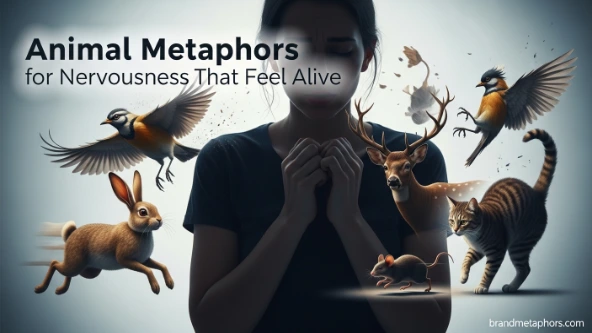
Animals provide vivid emotional symbolism because humans instinctively recognize their behaviors.
A Rabbit Cornered by Hunters
This metaphor captures panic and vulnerability.
Meaning: Feeling trapped or terrified.
Example Sentence: “He stood at the podium like a rabbit cornered by hunters.”
The image instantly creates sympathy and tension.
A Caged Bird Beating Its Wings
This metaphor highlights restless energy and emotional confinement.
Meaning: Wanting escape while feeling trapped.
Example Sentence: “Her heart fluttered like a caged bird desperate for freedom.”
This metaphor appears often in poetry because it combines beauty and distress.
Deer in Headlights
A modern classic.
Meaning: Frozen by fear or surprise.
Example Sentence: “When the teacher called on him unexpectedly, he looked like a deer in headlights.”
The phrase works especially well for awkward social moments.
Bees Swarming in the Chest
This metaphor captures buzzing, racing nervous energy.
Meaning: Agitated anxiety and restless thoughts.
Example Sentence: “Before the competition, it felt as though bees swarmed inside his chest.”
The sound imagery makes it especially sensory and memorable.
Nature-Inspired Metaphors for Anxiety and Nervousness
Nature offers endless inspiration for describing emotions because weather and landscapes mirror human feelings so well.
A Leaf Trembling in the Wind
This metaphor suggests fragility and sensitivity.
Meaning: Feeling weak, exposed, or emotionally shaken.
Example Sentence: “She stood there trembling like a leaf in the wind.”
This image feels poetic and gentle rather than dramatic.
Earthquake Beneath the Feet
Sometimes nervousness feels physically destabilizing.
Meaning: Sudden emotional shock or instability.
Example Sentence: “When he heard his name announced, it felt like the ground shifted beneath him.”
Fog Filling the Mind
Anxiety often clouds thinking.
Meaning: Confusion or mental overwhelm.
Example Sentence: “Nervousness spread through her thoughts like thick morning fog.”
This metaphor works beautifully in reflective essays and literary fiction.
Waves Crashing Against the Shore
Emotions often arrive in powerful cycles.
Meaning: Repeated surges of nervous feelings.
Example Sentence: “Waves of anxiety crashed over him before the performance.”
Readers connect with ocean imagery because it feels rhythmic and emotional.
Physical Sensation Metaphors for Nervousness
Some of the strongest metaphors connect directly to bodily sensations.
A Drum Beating in the Chest
This metaphor focuses on rapid heartbeat.
Meaning: Intense anticipation or fear.
Example Sentence: “His heart pounded like a war drum before the announcement.”
Knots in the Stomach
A classic image of tension.
Meaning: Emotional tightness and discomfort.
Example Sentence: “She felt her stomach twist into knots.”
Electricity Under the Skin
Nervousness often creates restless energy.
Meaning: Tingling anticipation or unease.
Example Sentence: “Nervous energy crackled beneath his skin like electricity.”
Frozen Hands and Feet
Fear sometimes feels cold rather than hot.
Meaning: Paralysis, hesitation, or fear.
Example Sentence: “Her fingers turned to ice before she opened the letter.”
These physical metaphors make emotional writing feel immersive and believable.
Literary and Cultural References to Nervousness
Many famous writers have used metaphors to describe fear and anxiety in unforgettable ways.
In Shakespeare’s plays, nervous characters often compare fear to storms, darkness, and trembling earth. In gothic novels, anxiety appears as flickering candle flames, creeping shadows, or pounding footsteps in empty halls.
Modern cinema also relies heavily on metaphorical imagery. Think of scenes where clocks tick louder during tense moments or where rain pours during emotional breakdowns. These external images mirror inner nervousness.
Even athletes and performers use metaphor naturally. A boxer may say, “The crowd sounded like thunder.” A singer might describe stage fright as “standing naked beneath a spotlight.”
These comparisons remind us that metaphor is not just decorative language. It is emotional translation.
How to Create Original Metaphors for Nervousness
The best metaphors feel personal and unexpected. Instead of repeating familiar phrases endlessly, try building fresh comparisons.
Step 1: Notice the Physical Sensation
Ask yourself:
- Does nervousness feel hot or cold?
- Fast or frozen?
- Heavy or fluttery?
Step 2: Connect It to Something Visual
For example:
- Racing thoughts = wild horses
- Tight chest = rope pulled too tight
- Shaking hands = leaves during a storm
Step 3: Add Sensory Details
Good metaphors often include sound, texture, or movement.
Instead of: “Her anxiety was strong.”
Try: “Her anxiety rattled inside her like coins in a glass jar.”
Step 4: Make It Personal
Unique experiences create stronger imagery.
A baker might say: “My nerves rose like dough left too long in the heat.”
A sailor might say: “My thoughts rocked like a ship in rough water.”
Personal metaphors feel authentic and memorable.
Three Powerful Examples of Metaphors for Nervousness
Here are three detailed examples with explanations, alternative phrases, and storytelling possibilities.
1. Nervousness as a Tightrope Walk
Meaning: Fear of failure and emotional imbalance.
Example Scenario: A young lawyer enters the courtroom for her first case. Every word feels dangerous. Every silence feels enormous.
Example Sentence: “She crossed the courtroom like a tightrope walker above a roaring crowd.”
Alternative Expressions:
- Balancing on a wire
- One misstep from falling
- Dancing above danger
Emotional Detail: This metaphor captures pressure, exposure, and vulnerability all at once.
2. Nervousness as a Flickering Candle
Meaning: Fragility and uncertainty.
Example Scenario: A teenager waits for exam results while staring at the rain outside.
Example Sentence: “His confidence flickered like a candle in the wind.”
Alternative Expressions:
- A fading ember
- A wavering flame
- A trembling lantern
Sensory Detail: Readers can imagine dim light, cold air, and uncertainty.
3. Nervousness as a Wild Horse
Meaning: Uncontrolled thoughts and emotional intensity.
Example Scenario: Before a championship game, an athlete cannot calm their racing mind.
Example Sentence: “Her thoughts galloped like wild horses across an open field.”
Alternative Expressions:
- Stampede in the mind
- Runaway carriage
- Thunder of hooves
Storytelling Bonus: This metaphor creates movement and cinematic energy.
Interactive Exercises to Practice Nervousness Metaphors
Creative practice helps metaphors become natural rather than forced.
Exercise 1: Finish the Comparison
Complete these sentences:
- My anxiety felt like __________.
- His nervousness buzzed like __________.
- The silence before the speech was __________.
- My thoughts raced like __________.
Try choosing unusual images instead of obvious ones.
Exercise 2: Use the Five Senses
Describe nervousness through:
- Sound
- Smell
- Texture
- Temperature
- Movement
Example: “Nervousness tasted like burnt coffee and sleepless midnight air.”
This technique creates vivid emotional writing.
Exercise 3: Rewrite a Simple Sentence
Original: “I felt nervous before the interview.”
Rewrite using metaphor: “My stomach twisted like tangled fishing lines before the interview.”
The second version feels more alive and memorable.
Bonus Challenge
Write about nervousness without using the words:
- Nervous
- Anxiety
- Fear
- Stress
This forces you to rely on imagery instead of labels.
Using Metaphors for Nervousness in Social Media and Daily Life
Metaphors are not just for poets and novelists. They make captions, speeches, and conversations more engaging too.
For Instagram Captions
Instead of: “I was nervous before presenting.”
Try: “My thoughts fluttered like trapped sparrows before I stepped on stage.”
Short poetic lines perform well because they feel emotional and visual.
For Journaling
Metaphors help people process emotions more honestly.
Example: “Today my worries followed me like storm clouds that refused to move.”
This style encourages reflection and emotional clarity.
For Fiction Writing
Metaphors build atmosphere.
Instead of constantly saying a character is nervous, show it indirectly:
- Fingernails tapping like rain
- Voices shrinking to whispers
- Coffee trembling in a cup
Readers feel the emotion rather than being told.
For Speeches and Storytelling
A good metaphor makes experiences relatable.
A speaker saying: “My first business pitch felt like jumping from a plane and learning to fly on the way down,”
will instantly capture attention.
Common Mistakes When Using Nervousness Metaphors
Even beautiful metaphors can lose power if overused.
Using Too Many at Once
Avoid stacking endless comparisons together.
Weak Example: “My heart was a drum, my thoughts were bees, my fear was a storm, and my stomach was lava.”
This overwhelms readers.
Choose one strong image instead.
Using Clichés Repeatedly
“Butterflies in the stomach” works, but repeating it constantly weakens originality.
Try fresh alternatives:
- Fireflies beneath the ribs
- Humming wires under the skin
- A shaken soda bottle ready to burst
Mixing Incompatible Images
Be careful not to confuse readers.
Confusing Example: “Her icy fear burned like thunder.”
The sensations clash awkwardly.
Consistency creates stronger imagery.
Bonus Tips for Writing Better Emotional Metaphors
Observe Real Reactions
Watch how people behave when nervous:
- Rapid blinking
- Fidgeting
- Voice cracks
- Foot tapping
Physical details inspire stronger metaphors.
Read Poetry and Fiction
Writers like Emily Dickinson, Sylvia Plath, and Virginia Woolf used emotional imagery masterfully. Reading literary work expands metaphor vocabulary naturally.
Keep a Metaphor Notebook
Whenever an interesting comparison comes to mind, write it down.
Examples:
- “Silence stretched like chewing gum.”
- “Worry perched on my shoulder like a crow.”
Over time, this habit sharpens creativity.
Use Environment to Reflect Emotion
Rain, shadows, crowded rooms, or flickering lights can mirror nervousness subtly without directly naming it.
This technique creates cinematic writing.
FAQs About Metaphors for Nervousness
What is a metaphor for nervousness?
A metaphor for nervousness compares anxious feelings to another image or experience, such as “butterflies in the stomach” or “a storm in the mind,” to make emotions more vivid.
Why are metaphors useful in emotional writing?
Metaphors help readers visualize and emotionally connect with feelings that are difficult to describe directly.
What are common symbols of nervousness?
Common symbols include storms, trembling leaves, trapped birds, thin ice, racing horses, and flickering candles.
Can metaphors help with public speaking or journaling?
Yes. Metaphors help people explain emotions clearly and creatively, making communication more relatable and expressive.
How can I create original metaphors for anxiety?
Focus on physical sensations, connect them to visual imagery, and add sensory details like sound, movement, or texture for uniqueness.
Conclusion
Nervousness is invisible, yet everyone knows its weight. This trembles in shaky hands before a speech. It whispers in sleepless thoughts before difficult decisions. It buzzes beneath the skin before life-changing moments.
Metaphors give shape to those hidden emotions. They turn anxiety into storms, birds, waves, candles, and cracking ice. They allow writers to paint feelings rather than simply name them.
Whether you are crafting poetry, writing fiction, creating social media captions, journaling your thoughts, or simply trying to explain how you feel, metaphors for nervousness add depth, beauty, and honesty to language.
The next time your heart races before an important moment, pause and ask yourself: What does this feeling resemble?
You may discover an image powerful enough to transform emotion into art.