
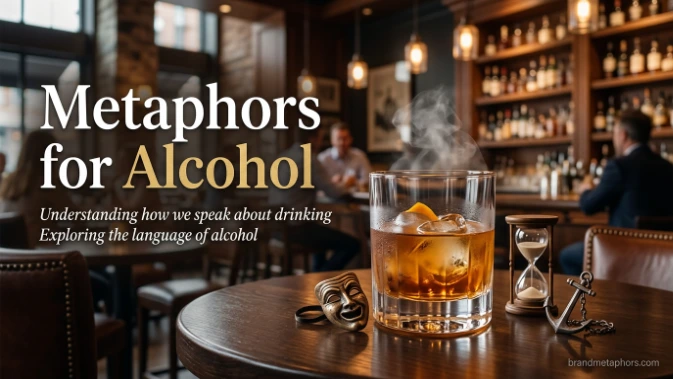
The first sip burned like a whispered secret—warm, thrilling, and just a little dangerous. It slipped down the throat like liquid courage, wrapping the chest in a soft illusion of comfort. Around the table, laughter bloomed louder, edges softened, and worries dissolved like sugar in tea. But beneath that glow, something else stirred—something quieter, heavier, harder to name.
This is the strange duality of alcohol: both celebration and escape, clarity and confusion, fire and fog. And sometimes, the best way to understand it isn’t through facts or warnings—but through metaphor.
Metaphors give us a language for what’s hard to explain. They transform abstract experiences into vivid images we can feel, see, and remember. When it comes to alcohol—its effects, its allure, its consequences—metaphors can help us express complex emotions, write more vividly, and reflect more deeply.
In this article, we’ll explore powerful metaphors for alcohol, break them down, and show you how to use them in writing, storytelling, and everyday life.
🔥 Alcohol as Fire: Warmth That Can Burn
Fire is one of the most common and powerful metaphors for alcohol—and for good reason.
Meaning & Explanation
Alcohol, like fire, can provide warmth, energy, and a sense of comfort. It can ignite celebration, spark conversation, and bring people together. But it also has a dangerous edge. Too much, and it consumes rather than comforts.
Example Sentence
“By the end of the night, the alcohol wasn’t warming him anymore—it was burning everything he had left.”
Alternative Expressions
- “Liquid fire running through his veins”
- “A spark that turned into a blaze”
- “A slow-burning flame that got out of control”
Sensory & Emotional Details
Think of the sting on your tongue, the heat spreading through your chest, the flickering excitement that turns into something sharper, harsher.
Mini Story
At a wedding, a man raises his glass for a toast. One drink becomes three. By midnight, his laughter is louder than everyone else’s—and by morning, the warmth is gone, replaced by ash-like regret.
🌫️ Alcohol as Fog: Blurring Reality
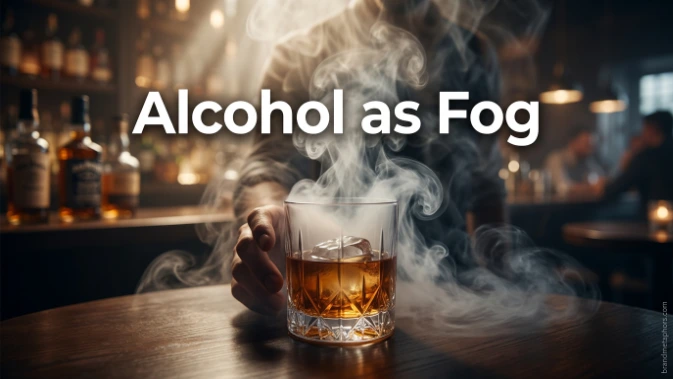
If fire represents intensity, fog represents confusion.
Meaning & Explanation
Alcohol clouds judgment, softens edges, and distorts perception. Like fog rolling in, it makes it harder to see clearly—both literally and emotionally.
Example Sentence
“Her thoughts drifted in a thick fog, every decision just out of reach.”
Alternative Expressions
- “A haze settling over the mind”
- “Drowning in a mental mist”
- “A blur of moments stitched together”
Sensory & Emotional Details
Muted sounds, softened lights, the slow disconnection from clarity. A sense of floating, detached from reality.
Cultural Reference
In many films, drunken scenes are shot with blurred lenses or dim lighting—visually mimicking the “fog” metaphor to show disorientation.
🎭 Alcohol as a Mask: Hiding the True Self
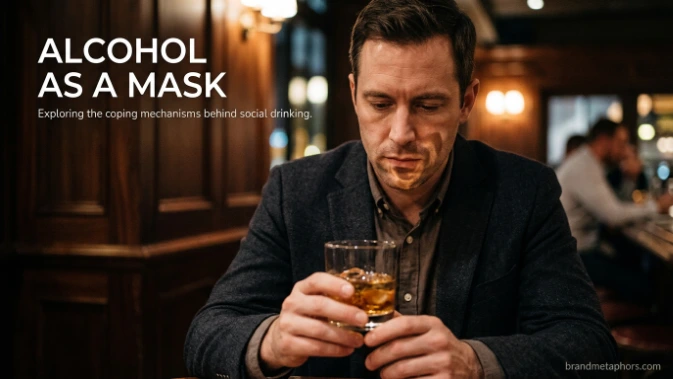
Alcohol often changes how people behave—and how they present themselves.
Meaning & Explanation
As a mask, alcohol can hide insecurities, fears, or pain. It allows people to act differently, sometimes more confident, sometimes more reckless.
Example Sentence
“He wore alcohol like a mask, smiling wider than he felt inside.”
Alternative Expressions
- “A borrowed personality in a glass”
- “Confidence poured from a bottle”
- “A disguise made of laughter”
Emotional Insight
This metaphor is especially powerful when writing about vulnerability or identity. It highlights the gap between who someone is and who they appear to be.
Real-Life Scenario
At a party, someone who is normally quiet becomes the center of attention after a few drinks. But the next day, they retreat again—mask removed.
🧊 Alcohol as Ice: Numbing the Pain
Sometimes, alcohol isn’t about excitement—it’s about escape.
Meaning & Explanation
As ice, alcohol numbs emotions. It dulls pain, freezes difficult thoughts, and creates temporary relief from emotional discomfort.
Example Sentence
“He drank to turn his feelings into ice—something cold, solid, and easier to carry.”
Alternative Expressions
- “Freezing the ache inside”
- “Emotions locked in a block of ice”
- “A chill that silenced everything”
Sensory Details
Coldness spreading, heaviness settling, a quiet stillness replacing chaos.
Mini Story
After a breakup, she sits alone with a glass in hand. Each sip quiets the storm inside—until the silence feels emptier than the pain ever did.
🎢 Alcohol as a Roller Coaster: Highs and Lows
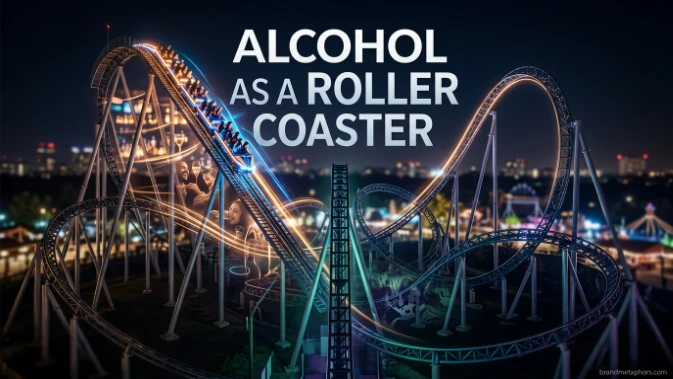
Alcohol rarely stays consistent—it moves in waves.
Meaning & Explanation
This metaphor captures the emotional ups and downs: the initial thrill, the peak of excitement, and the eventual crash.
Example Sentence
“The night was a roller coaster of laughter and regret, climbing high before dropping too fast.”
Alternative Expressions
- “A ride with no brakes”
- “Up in the clouds, down in the depths”
- “A dizzying spiral of emotions”
Emotional Layer
Excitement mixed with unpredictability. Fun that can quickly turn overwhelming.
🌊 Alcohol as an Ocean: Deep and Dangerous
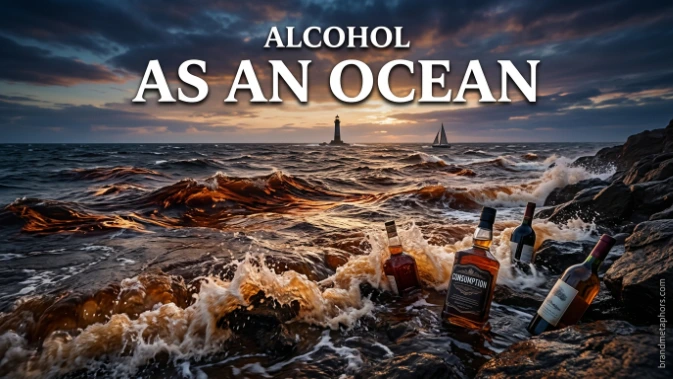
The ocean is beautiful—but also vast and unforgiving.
Meaning & Explanation
Alcohol, like the ocean, can feel freeing and expansive, but it can also pull people under if they go too far.
Example Sentence
“He waded into alcohol like an ocean, not realizing how deep it went until he couldn’t touch the ground.”
Alternative Expressions
- “Drowning in a sea of drinks”
- “Lost beneath the surface”
- “Carried away by the tide”
Literary Feel
This metaphor works beautifully in poetic writing, adding depth and emotional weight.
🎁 Alcohol as a Gift with a Price
Sometimes, alcohol feels like a reward—but it often comes with hidden costs.
Meaning & Explanation
This metaphor highlights the trade-off: temporary pleasure in exchange for consequences.
Example Sentence
“Alcohol was a gift that always came with a price tag he couldn’t afford.”
Alternative Expressions
- “A sweet deal with bitter terms”
- “Wrapped in pleasure, paid in regret”
- “A bargain that costs more than it gives”
🧠 Alcohol as a Thief: Stealing Clarity
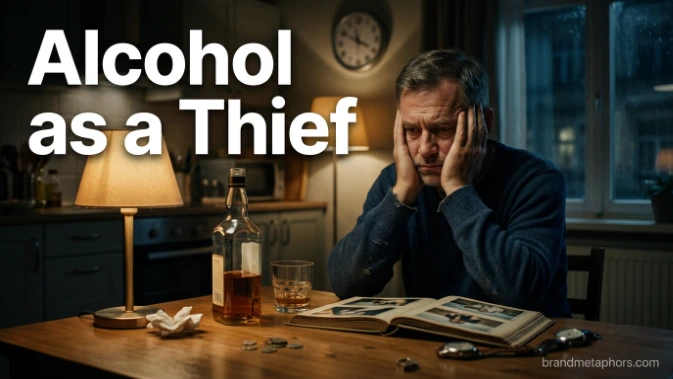
Not all metaphors are gentle—some reveal harsh truths.
Meaning & Explanation
Alcohol can “steal” memory, time, control, and clarity.
Example Sentence
“It crept in quietly, a thief stealing his judgment piece by piece.”
Alternative Expressions
- “A silent pickpocket of reason”
- “Robbing moments from memory”
- “Taking more than it gives”
✍️ How to Use Alcohol Metaphors in Writing
Metaphors aren’t just decorative—they’re powerful tools.
Tips for Writers
- Match tone to message: Use fire for intensity, fog for confusion, ice for numbness.
- Avoid clichés: Add your own twist or sensory detail.
- Blend metaphors carefully: Keep imagery consistent for clarity.
- Use sparingly: One strong metaphor is better than five weak ones.
Example Transformation
Basic: “He drank too much.” Enhanced: “He let the fire take over, burning through the night until nothing was left but smoke.”
🎨 Creative Exercises to Practice Metaphors
Want to sharpen your skills? Try these:
Exercise 1: Personal Reflection
Describe alcohol using a metaphor based on your own observation or imagination. Is it a storm? A mirror? A trap?
Exercise 2: Rewrite a Scene
Take a simple sentence like “She was drunk” and rewrite it using at least two different metaphors.
Exercise 3: Sensory Expansion
Write a paragraph describing a drinking scene using all five senses—taste, smell, sight, sound, and touch.
💡 Bonus Tips for Social Media & Daily Life
- Use metaphors in captions: “Dancing on the edge of fire tonight.”
- Add emotional depth to storytelling posts
- Make your writing more relatable and memorable
- Use metaphors to express feelings you can’t say directly
❓ FAQs About Metaphors for Alcohol
1. Why use metaphors for alcohol instead of direct language?
Metaphors make complex emotions and experiences easier to understand and more engaging to read.
2. Are alcohol metaphors always negative?
No. They can reflect both positive and negative aspects—celebration, escape, danger, or comfort.
3. Can I create my own metaphors?
Absolutely. The most powerful metaphors are often personal and original.
4. How do I avoid clichés?
Add unique sensory details or combine ideas in unexpected ways.
5. Where can I use these metaphors?
In creative writing, poetry, social media, storytelling, or even casual conversation.
Conclusion
Alcohol is more than a drink—it’s an experience layered with emotion, memory, and meaning. And metaphors give us a way to explore those layers, to turn something ordinary into something vivid and unforgettable.
Whether it’s fire that warms and burns, fog that blurs, or an ocean that pulls you under, each metaphor reveals a different truth. By learning to use them, you’re not just improving your writing—you’re learning to see the world in richer, more expressive ways.
So next time you lift a glass—or write about someone who does—ask yourself: What does it really feel like?
Because somewhere between the sip and the story, there’s a metaphor waiting to be discovered.