

The Sound of Victory: A Hook into Winning
The stadium roars like a rising tide. Sweat beads on your forehead, your heart thumps like a war drum, and in that suspended second—right before the finish—you feel it: victory, shimmering just ahead.
Winning is not just an outcome; it’s a sensation, a story, a spark. But how do we capture that electric moment in words? That’s where metaphors step in, transforming ordinary descriptions into unforgettable expressions.
Metaphors for winning help us communicate success in ways that resonate emotionally. Whether you’re writing, speaking, or posting online, using vivid comparisons can make your message more engaging, persuasive, and memorable. In this article, we’ll explore powerful metaphors for winning, how to use them effectively, and how to make them your own.
What Are Metaphors for Winning?
Metaphors for winning are creative comparisons that describe success by linking it to something vivid, familiar, or emotionally charged. Instead of saying “I won,” you might say, “I crossed the finish line with the wind at my back.”
These metaphors do more than decorate language—they amplify meaning. They help readers feel the triumph, visualize the journey, and connect with the experience on a deeper level.
Why Metaphors for Winning Matter in Writing and Life
Winning is universal, but how we describe it shapes how others perceive it. A strong metaphor can:
- Make your writing more memorable
- Add emotional depth to achievements
- Inspire and motivate others
- Strengthen storytelling and communication
Think about it: saying “She succeeded” is fine, but saying “She climbed the mountain and planted her flag at the peak” paints a picture of effort, struggle, and triumph.
Metaphor #1: Winning as Reaching the Summit
Meaning and Explanation
This metaphor compares winning to climbing a mountain and reaching its highest point. It emphasizes effort, perseverance, and the reward of overcoming obstacles.
Example Scenario
After months of preparation, Ahmed finally aced his exams. “It felt like I had reached the summit after a long, exhausting climb.”
Alternative Expressions
- “I stood at the peak of my efforts.”
- “Victory was the view from the mountaintop.”
- “I climbed my way to success.”
Sensory and Emotional Details
Imagine cold air biting your skin, your legs aching, and then suddenly—the breathtaking view. That’s the emotional payoff of winning.
Mini Storytelling
Just like climbers scaling Everest, success often comes with setbacks. Slipping, resting, pushing forward—until finally, you stand above it all.
Metaphor #2: Winning as Lighting a Fire

Meaning and Explanation
Winning is like igniting a flame—something that starts small but grows into something powerful and unstoppable.
Example Scenario
When she launched her first business and it succeeded, she said, “That win lit a fire in me I didn’t know existed.”
Alternative Expressions
- “Victory sparked a flame within me.”
- “Success ignited my passion.”
- “I’m burning bright with achievement.”
Sensory and Emotional Details
Feel the warmth spreading, the crackle of energy, the glow of confidence that comes from success.
Real-Life Connection
Athletes often describe their first win as the moment everything changes—the spark that fuels future success.
Metaphor #3: Winning as Crossing the Finish Line
Meaning and Explanation
This metaphor frames success as completing a race, highlighting endurance, timing, and determination.
Example Scenario
After years of hard work, she finally got her dream job. “Crossing that finish line felt unreal.”
Alternative Expressions
- “I broke through the tape.”
- “I sprinted to victory.”
- “The race ended in my favor.”
Sensory and Emotional Details
Hear the cheering crowd, feel your lungs burning, and then the rush of relief and triumph as you cross the line.
Cultural Reference
From Olympic races to marathon stories, this metaphor resonates globally because it mirrors real human effort.
Creative Ways to Use Metaphors for Winning in Writing
Metaphors can elevate your writing when used thoughtfully. Here’s how:
- Match the metaphor to the context (sports, nature, fire, etc.)
- Avoid clichés by adding unique details
- Combine metaphors carefully for richer imagery
- Use them sparingly for maximum impact
For example, instead of stacking too many metaphors, focus on one strong image and develop it fully.
Interactive Exercise: Create Your Own Winning Metaphors
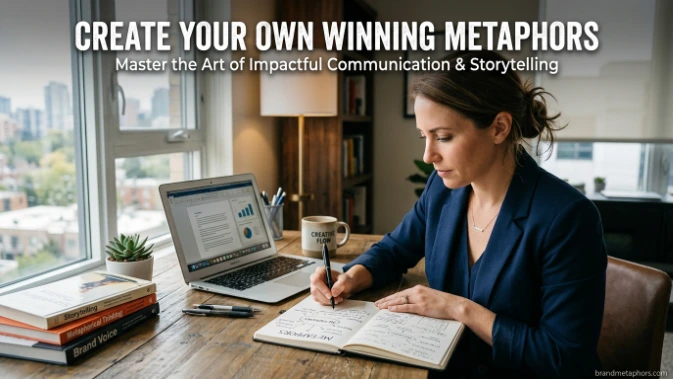
Try this simple exercise:
- Think of a recent success in your life
- Ask yourself: What did it feel like?
- Compare that feeling to something vivid
Prompt Ideas
- Winning felt like __________
- Success was like __________
- I achieved my goal as if __________
Example
“Winning felt like finally unlocking a door I had been knocking on for years.”
Using Winning Metaphors in Social Media and Daily Life
Want your words to stand out online or in conversation? Try this:
- Replace plain statements with vivid imagery
- Use metaphors in captions, speeches, or messages
- Keep them short and punchy for impact
Example
Instead of: “I did well today” Say: “Today, I planted my flag on a long-awaited peak.”
Bonus Tips for Making Your Metaphors More Powerful
- Use sensory details (sound, sight, touch)
- Add emotion to deepen connection
- Draw from personal experiences
- Experiment with unexpected comparisons
The more authentic your metaphor, the more it resonates.
Common Mistakes to Avoid When Using Metaphors
Even great metaphors can fall flat if misused. Watch out for:
- Overusing clichés (“on top of the world”)
- Mixing unrelated metaphors
- Being too vague or generic
- Forcing comparisons that don’t fit
Keep your metaphors clear, relevant, and meaningful.
Expanding Your Metaphor Toolbox for Success
To keep your writing fresh, explore different domains:
- Nature: storms, rivers, mountains
- Light: sparks, stars, sunrise
- Journey: roads, paths, destinations
- Battle: victories, triumphs, breakthroughs
Each domain offers unique ways to describe winning.
FAQs About Metaphors for Winning
1. What is a metaphor for winning?
A metaphor for winning is a creative comparison that describes success in vivid or symbolic terms, like “reaching the summit.”
2. Why should I use metaphors for winning?
They make your language more engaging, emotional, and memorable, helping others connect with your message.
3. Can I create my own metaphors?
Absolutely! Personal metaphors are often the most powerful because they reflect your unique experiences.
4. Are metaphors useful in professional writing?
Yes, when used appropriately, they can make presentations, speeches, and content more impactful.
5. How do I avoid clichés in metaphors?
Add specific details, use fresh comparisons, and draw from personal or less common experiences.
Conclusion
Winning is more than a moment—it’s a story waiting to be told. By using metaphors, you can transform simple success into something vivid, emotional, and unforgettable. Whether you’re scaling mountains, lighting fires, or crossing finish lines, your words can carry the same energy as the victory itself.
So next time you win—big or small—don’t just say it. Paint it.