
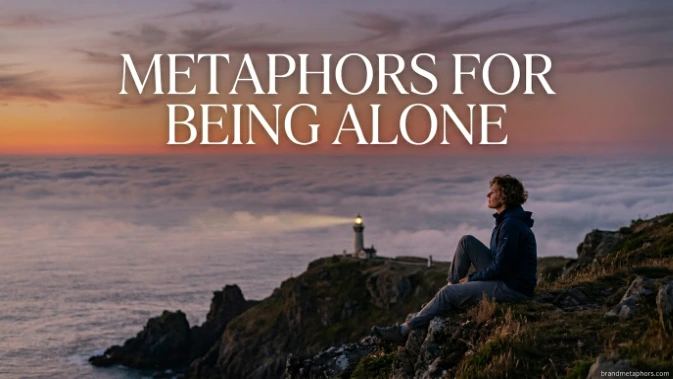
Sometimes being alone feels peaceful. You sit beside a window, hear the soft rain, and enjoy having the world to yourself. However, at other times, being alone feels much heavier. The room may be full of people, yet your heart can still feel like an empty house. That is why metaphors for being alone can be so powerful. Instead of simply saying “I feel lonely,” a metaphor gives that emotion a shape, sound, or image. It can turn an invisible feeling into something readers can almost see and touch. Moreover, these comparisons can help writers express loneliness, solitude, distance, and isolation in a more memorable way. Whether you are writing a poem, story, school assignment, journal entry, or social media caption, the right metaphor can make a quiet emotion speak loudly.
What Are Metaphors for Being Alone (and Why They Matter)
A metaphor is more than just a literary device—it’s a bridge between feeling and understanding. When you say, “I feel like an island,” you’re not just describing isolation; you’re painting a vivid emotional landscape.
Metaphors for being alone help:
- Give shape to complex emotions
- Make writing more relatable and expressive
- Transform loneliness into something meaningful, even beautiful
Whether you’re writing poetry, journaling, crafting stories, or posting on social media, metaphors allow you to show solitude rather than simply state it.
The Emotional Spectrum of Being Alone
Being alone is not a single feeling—it’s a spectrum.
It can be:
- Peaceful, like early morning sunlight
- Heavy, like fog pressing against your chest
- Liberating, like a bird finally leaving its cage
- Or aching, like an unanswered question
The right metaphor depends on the shade of solitude you want to capture. Let’s explore some powerful ones.
An Island in an Endless Sea”

Meaning & Explanation
This metaphor captures isolation and separation. An island exists, but it is surrounded—cut off from connection.
Example Sentence
“I felt like an island in an endless sea, watching ships pass but never stopping.”
Alternative Expressions
- A lone lighthouse in the dark
- A drifting boat without a shore
- A star far from its constellation
Sensory & Emotional Details
Imagine salt wind brushing your face, waves crashing endlessly, and the horizon stretching without promise. There’s beauty—but also distance.
Mini Story
A young writer moves to a new city, surrounded by millions, yet unseen. Every café is full, yet no one knows her name. She writes in her journal: “I am an island, learning to love the ocean around me.”
A Room Without Windows”

Meaning & Explanation
This metaphor emphasizes emotional confinement—being trapped in solitude without an outlet or connection.
Example Sentence
“My thoughts echoed like footsteps in a room without windows.”
Alternative Expressions
- A locked door with no key
- A maze with no exit
- A cage made of silence
Sensory & Emotional Details
Still air. Dim light. The feeling that time has slowed—or stopped entirely. You hear your own breathing louder than anything else.
Cultural/Literary Touch
This metaphor echoes themes often found in existential literature, where characters grapple with inner isolation despite physical surroundings.
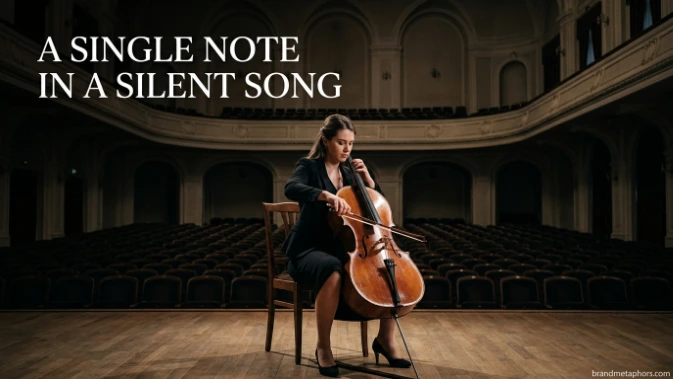
A Single Note in a Silent Song”
Meaning & Explanation
This metaphor highlights loneliness within a broader context—being present but disconnected, like a note that doesn’t belong.
Example Sentence
“I felt like a single note in a silent song, waiting for music that never came.”
Alternative Expressions
- A missing piece of a puzzle
- A lone dancer without music
- A word in an unfinished sentence
Sensory & Emotional Details
You can almost hear the absence—like a melody that should exist but doesn’t. There’s anticipation, but also emptiness.
Mini Story
At a wedding, surrounded by joy, someone sits quietly, smiling politely. Inside, they feel detached, like a note that doesn’t match the tune. Their laughter sounds slightly out of rhythm—even to themselves.
How to Create Your Own Metaphors for Loneliness
Creating metaphors isn’t about being perfect—it’s about being honest.
Try This Process:
- Identify the feeling – Is it emptiness? Peace? Confusion?
- Find a physical image – Nature, objects, or scenes
- Connect the two – What shares that same emotional tone?
Example
Feeling: Emotional distance Image: A fading photograph Metaphor: “I feel like a fading photograph—still visible, but slowly disappearing.”
Interactive Writing Exercises: Practice Solitude Metaphors

The Five Senses
Describe being alone using all five senses:
- What does it sound like?
- What does it feel like?
Prompt: “Being alone feels like…”
Nature Comparison
Complete this sentence:
- “My loneliness is like…”
Try at least 3 different comparisons:
- Weather (storm, fog, sunlight)
- Landscape (desert, forest, ocean)
Rewrite Your Day
Take a real moment from your day when you felt alone and rewrite it using a metaphor.
Example: Instead of: “I sat alone at lunch” Try: “I sat like a bookmark in a story no one was reading.”
Using Metaphors in Writing, Social Media, and Daily Life

as Writing
- Use metaphors to deepen emotional scenes
- Avoid clichés—add unique twists
- Pair metaphors with sensory details
For Social Media
- Short metaphors work best:
- “Alone, but not empty—just quietly full.”
- Combine with visuals (sunset, empty road)
For Daily Reflection
- Journaling with metaphors can help process emotions
- Naming your feeling creatively can make it easier to understand
Bonus Tips for Powerful Metaphors
- Be specific: “A cracked teacup” is stronger than “something broken”
- Mix beauty with sadness: Contrast creates depth
- Keep it relatable: Readers should feel it instantly
- Avoid overcomplicating: Simplicity often hits harder
The Hidden Beauty of Being Alone
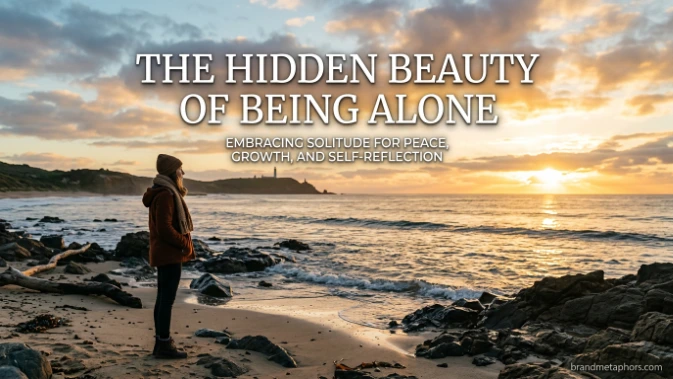
Not all solitude is sorrowful.
Sometimes, being alone is:
- A blank page waiting for your story
- A quiet garden where thoughts can grow
- A pause between chapters
The same metaphor that once felt heavy can become peaceful with time.
Frequently Asked Questions (FAQs)
What is a metaphor for being alone?
A metaphor for being alone is a figurative expression that compares solitude to something else (like an island or empty room) to convey emotion more vividly.
Why are metaphors useful in describing loneliness?
They make abstract feelings more concrete, relatable, and emotionally impactful.
Can metaphors for being alone be positive?
Yes. Solitude can be described as peaceful, freeing, or reflective using metaphors like “a quiet sunrise.”
How can I create better metaphors?
Focus on your emotions, connect them to vivid imagery, and keep your language simple but meaningful.
Where can I use these metaphors?
In writing, poetry, journaling, social media captions, storytelling, or even personal reflection.
What is a good metaphor for being alone?
A strong metaphor is “being alone is an empty house.” It suggests silence, missing companionship, and emotional emptiness while giving readers a clear image.
What is a metaphor for feeling lonely in a crowd?
“Being an island in a sea of people” works well. It shows that someone can be surrounded by others while still feeling emotionally distant.
What is a metaphor for peaceful solitude?
A private garden is a useful metaphor for peaceful solitude. It suggests a quiet space where someone can rest, think, and grow away from the noise of the world.
How can I describe loneliness without saying lonely?
Use an image that shows the emotion. For example, describe an empty chair, a dark room, a distant island, or a single candle instead of directly naming the feeling.
Can metaphors for being alone be positive?
Yes. Being alone can represent freedom, reflection, creativity, independence, or personal growth. Therefore, metaphors do not have to make solitude sound sad or negative.
Conclusion
The best metaphors for being alone do more than replace the word “lonely.” They give loneliness a shape. An empty house can show emotional emptiness, an island can represent separation, and a single candle can reveal both loneliness and quiet strength.
Moreover, being alone can carry different meanings. Sometimes it feels like rejection or distance. At other times, it becomes a peaceful space where someone can think, create, or grow.
Therefore, choose your metaphor based on the emotion beneath the silence. Add simple sensory details, keep the image clear, and let the comparison develop naturally.
Ultimately, being alone is not one single feeling. Sometimes the quiet is an empty room; sometimes it is a private garden; and sometimes, it is a small light learning how to shine on its own.